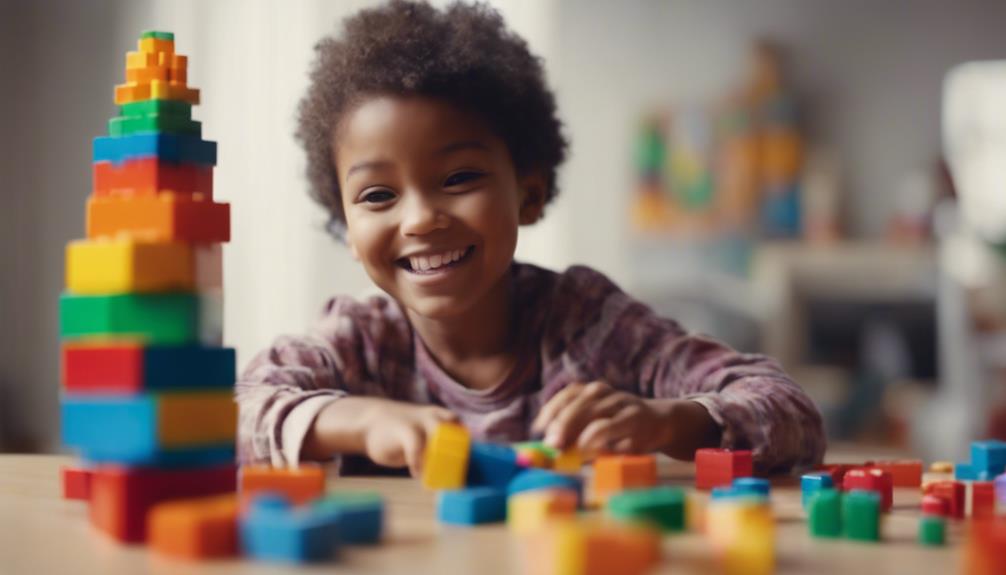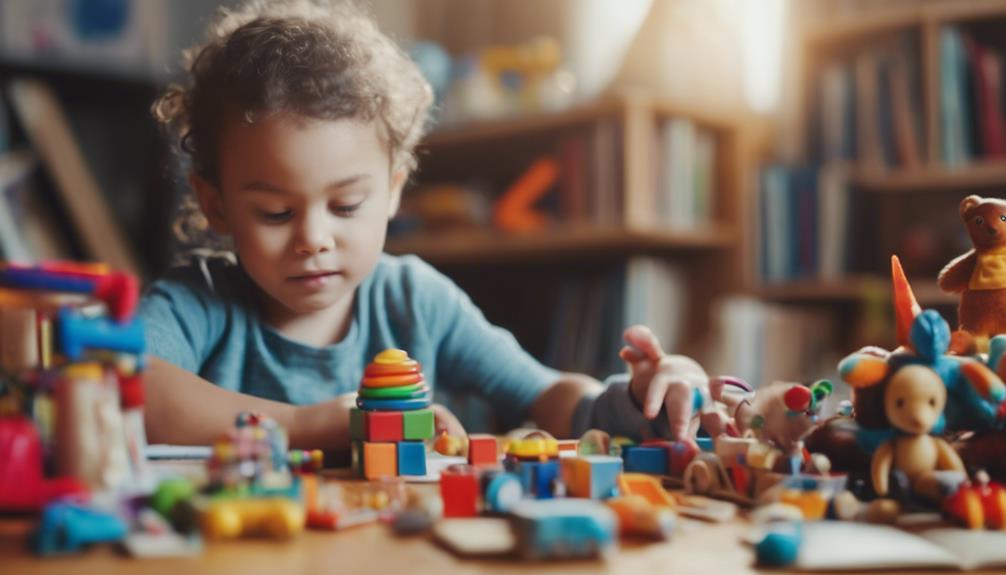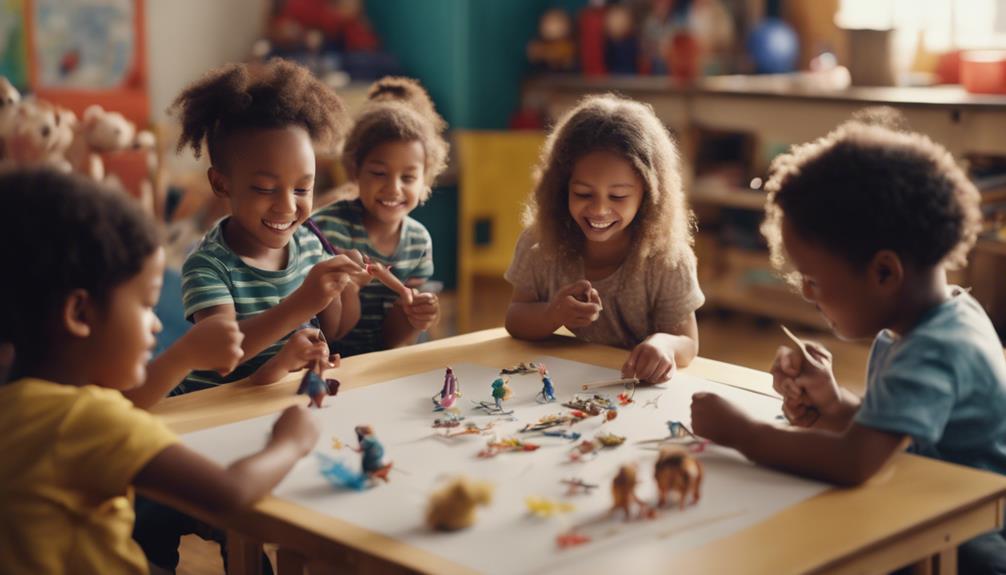
To help your toddler learn to share and take turns, focus on modeling positive behaviors, using visual cues or timers, and encouraging patience. Praise their efforts and guide them to express feelings with words during conflicts. These actions foster emotional awareness, empathy, and fairness, laying a strong foundation for future social skills. Continuing this approach will give you more ways to support your child’s growing ability to build healthy relationships.

Turn the school run and nap time into listening time
- Thousands of audiobooks, podcasts and originals
- Listen on your phone, tablet or Echo — also offline
- Cancel anytime
Key Takeaways
- Teaching sharing and turn-taking builds emotional intelligence and fosters positive social interactions.
- Using timers and visual cues helps toddlers understand patience and fairness during shared activities.
- Modeling sharing behaviors and demonstrating emotional regulation encourages children to imitate respectful interactions.
- Reinforcing successful sharing and turn-taking with praise promotes confidence and cooperative skills.
- Providing everyday opportunities for social practice supports long-term development of empathy and conflict resolution skills.
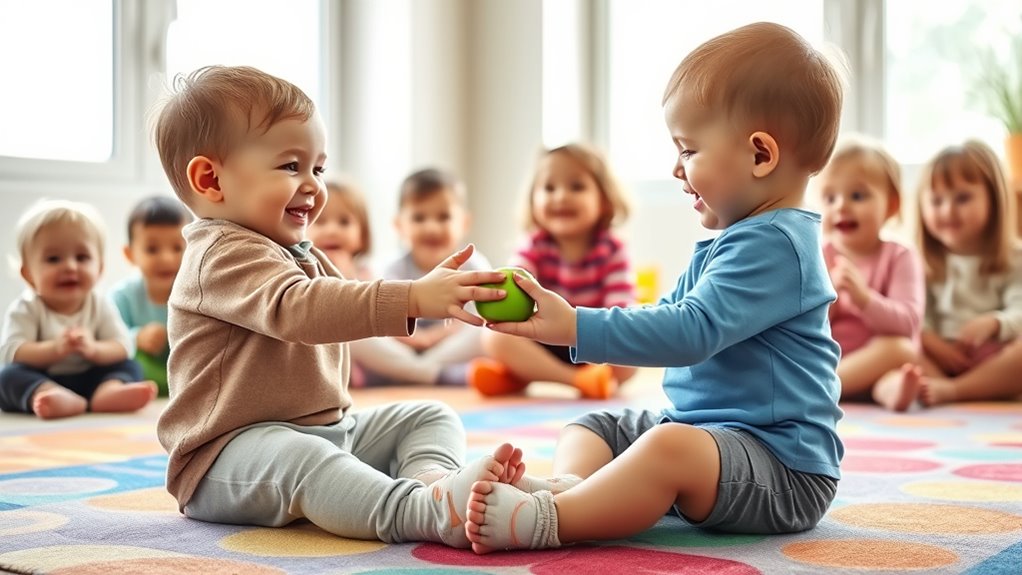
Helping your toddler develop social skills is essential for their overall growth and future relationships. One of the foundational aspects of social skills is teaching them how to share and take turns. When you guide your child through these interactions, you’re helping them build emotional intelligence, which allows them to understand and manage their feelings while recognizing others’ emotions. This understanding is *crucial* because it nurtures empathy and patience, making it easier for your toddler to navigate social situations with confidence.
Teaching toddlers to share and take turns builds emotional intelligence and confidence.
Encouraging your toddler to share toys or snacks might seem simple, but it’s a powerful way to promote emotional awareness. When they see that sharing can lead to positive interactions and even new friendships, they start to understand the value of cooperation. If your child is hesitant or upset about sharing, acknowledge their feelings and reassure them that it’s okay to feel that way. This validation helps them develop emotional resilience and patience, *vital* components of emotional intelligence. As they practice sharing, they also learn conflict resolution skills—how to navigate disagreements and find mutually acceptable solutions. Teaching your toddler to express their feelings calmly and listen to others’ perspectives sets the foundation for resolving conflicts peacefully.
Taking turns is another *crucial* skill that teaches patience and fairness. When you encourage your toddler to wait for their turn during playtime, you’re helping them understand the importance of respecting others’ needs and boundaries. Use timers or visual cues to make waiting manageable and less frustrating. Praising your child when they successfully take turns reinforces positive behavior and boosts their confidence. Over time, this practice helps your toddler develop a sense of fairness and self-control, *essential* qualities for healthy social interactions.
Integrating strategies that utilize integration with other tools can further enhance these social skills by providing consistent and engaging reinforcement. Incorporate opportunities for your toddler to practice these skills in everyday life—whether at the park, during playdates, or at home. Model the behavior yourself by taking turns and sharing openly, showing them how to handle situations with patience and kindness. When conflicts arise, guide your child to express their feelings using words rather than actions, and help them understand different perspectives. This approach not only teaches conflict resolution but also enhances their emotional intelligence, enabling them to build stronger, more empathetic relationships in the future. Remember, every interaction is a chance for your toddler to learn, grow, and develop the social skills that will serve them throughout their life.
toddlers sharing and turn-taking toys
As an affiliate, we earn on qualifying purchases.
As an affiliate, we earn on qualifying purchases.
Conclusion
By teaching your toddler to share and take turns, you’re helping them build essential social skills that last a lifetime. Remember, research shows that children who develop strong social skills by age three tend to perform better academically and socially later on. So, be patient and consistent—your efforts today set the foundation for confident, empathetic adults tomorrow. Keep encouraging positive interactions, and watch your child’s social confidence grow every day.
Halloween Picks
halloween
As an affiliate, we earn on qualifying purchases.