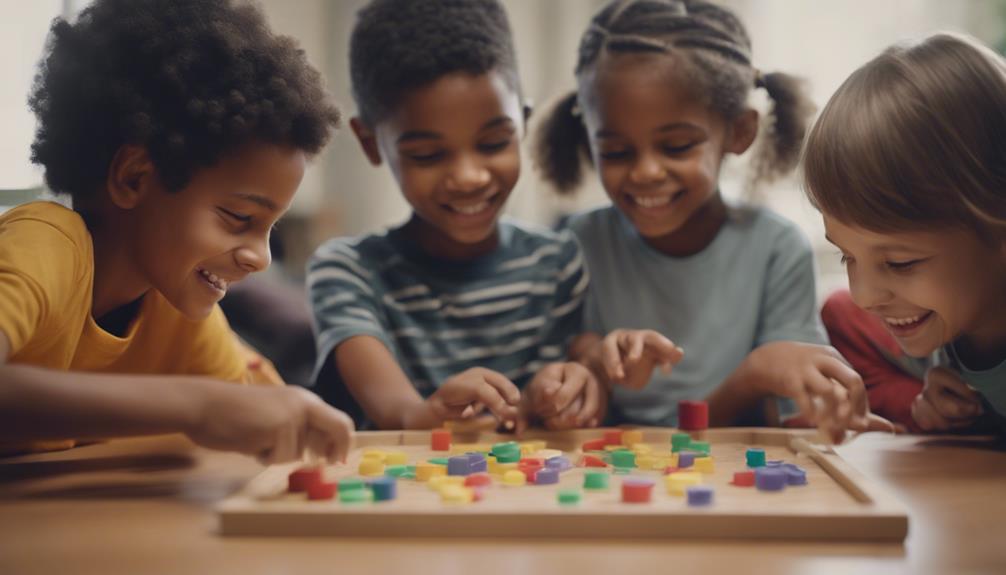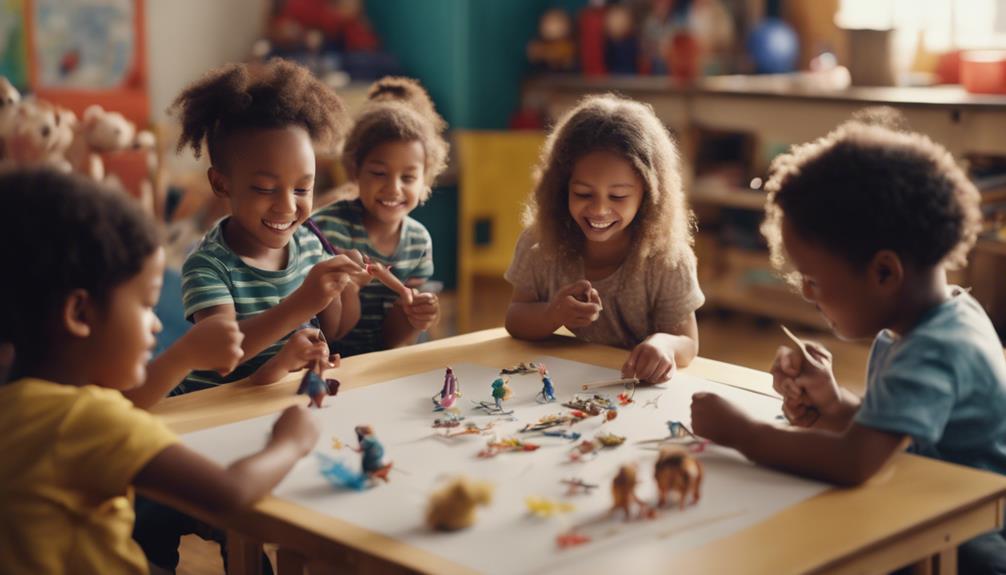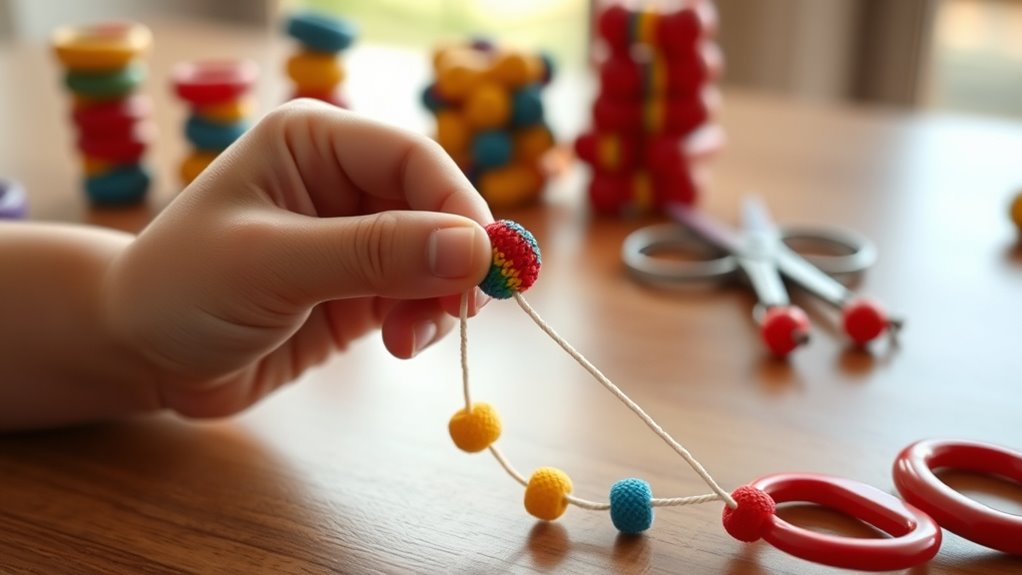

To help your little hands develop fine motor skills, try activities like playing with puzzles, threading beads, or catching small balls to improve hand-eye coordination. Strengthen finger muscles with stress balls or tearing paper, and include arts and crafts such as coloring, cutting, or sticking stickers for dexterity. Manipulating clay or shaping dough also boosts finger strength. Keep practicing these fun exercises regularly, and you’ll discover more effective ways to support their motor development.

Turn the school run and nap time into listening time
- Thousands of audiobooks, podcasts and originals
- Listen on your phone, tablet or Echo — also offline
- Cancel anytime
Key Takeaways
- Incorporate hand-eye coordination activities like puzzles and bead threading to enhance visual tracking and fine motor control.
- Use activities such as squeezing stress balls and tearing paper to strengthen finger muscles and grip.
- Engage children in arts and crafts like coloring, cutting, and sticker sticking to develop precision and tool control.
- Provide manipulatives like clay, Play-Doh, and dough for natural finger dexterity and sensory motor development.
- Integrate daily routines with fine motor exercises to promote independence, confidence, and overall hand skill improvement.
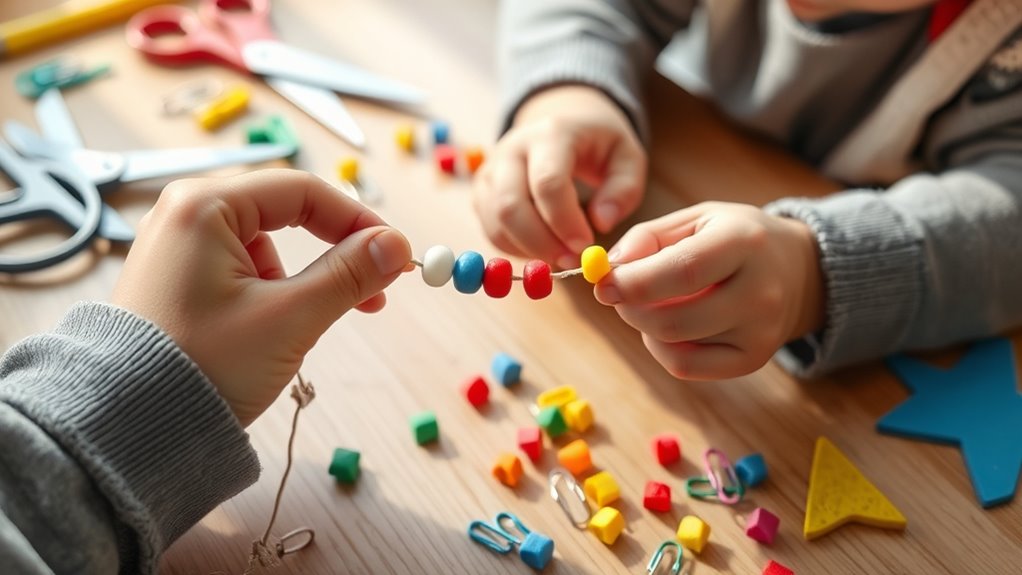
Are you looking for engaging ways to boost your child’s fine motor skills? Developing these skills is essential for their independence and confidence, especially when it comes to tasks like writing, buttoning, or tying shoelaces. One key area to focus on is hand-eye coordination, which helps your child synchronize their visual perception with their hand movements. Activities that challenge this coordination can be both fun and beneficial, such as playing with puzzles, threading beads, or catching and tossing small balls. These activities encourage your little one to track moving objects and improve their precision, making everyday tasks easier over time.
Another indispensable aspect is finger strength development. Strong fingers enable better grip and control, which are fundamental for writing and manipulating small objects. You can help foster finger strength through simple activities like squeezing stress balls, tearing paper into strips, or using tongs to pick up small items. These exercises strengthen the tiny muscles in their hands and fingers, laying a solid foundation for more complex fine motor skills. Incorporate these activities into daily routines to keep your child engaged and motivated.
Building finger strength with activities like squeezing stress balls and tearing paper boosts fine motor skills.
To make these skills more enjoyable, try incorporating arts and crafts into your routine. Activities like coloring with crayons, cutting shapes with safety scissors, or sticking stickers onto paper are fantastic for building finger strength and coordination simultaneously. These tasks require your child to grasp tools properly, control their movements, and coordinate their visual input with their hand movements, all while having fun. Plus, they foster creativity and patience, which are equally important for overall development.
You should also encourage activities that involve manipulating different objects, such as playing with clay or Play-Doh. Molding and shaping these materials enhance finger dexterity and strengthen hand muscles. Rolling small balls, pinching, or flattening dough allows your child to practice precise movements, reinforcing hand-eye coordination naturally. Additionally, engaging in fine motor skill activities can promote better overall development by integrating sensory input with motor control, making learning feel like play.
children's fine motor skills activity puzzles
As an affiliate, we earn on qualifying purchases.
As an affiliate, we earn on qualifying purchases.
Conclusion
By engaging your little one in these fun fine motor activities, you’re helping them develop essential skills for school and everyday life. Did you know that early fine motor skill development can predict future academic success? Just 15 minutes a day can make a big difference in their hand-eye coordination and dexterity. Keep encouraging their progress with playful activities, and you’ll set a strong foundation for their growth and confidence.
Halloween Picks
halloween
As an affiliate, we earn on qualifying purchases.