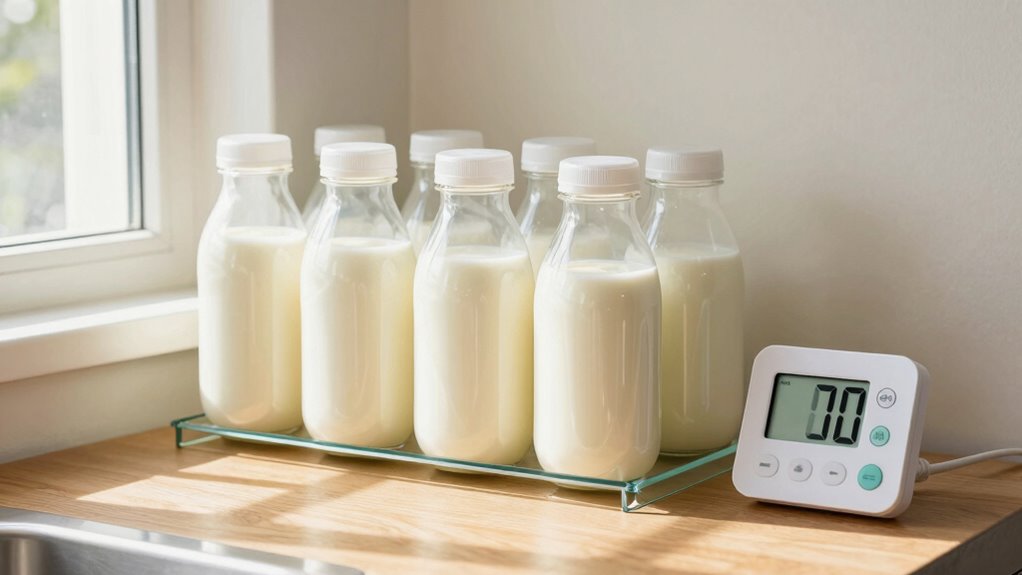

The most important rule you should remember is to label and date your breast milk right after pumping, then follow strict temperature and time guidelines to keep it safe and nutritious. Use proper containers, store milk at appropriate temperatures, and rotate older milk first by using the FIFO method. Proper thawing, smelling, and inspecting will help guarantee milk stays good. Keep these tips in mind, and you’re on the right track—there’s much more to discover to make storage easier.

Turn the school run and nap time into listening time
- Thousands of audiobooks, podcasts and originals
- Listen on your phone, tablet or Echo — also offline
- Cancel anytime
Key Takeaways
- Label and date milk immediately after pumping, following the FIFO rule to ensure freshness and proper rotation.
- Store breast milk at recommended temperatures: 77°F for 4 hours, refrigerator for 4 days, freezer up to 12 months.
- Thaw frozen milk safely in the refrigerator or warm water; avoid microwave heating to preserve nutrients.
- Use proper, sterile, BPA-free containers that match your pumping output to prevent waste and contamination.
- Regularly check and organize storage to identify older milk first and prevent spoilage or misuse.
BPA-free breast milk storage containers
As an affiliate, we earn on qualifying purchases.
As an affiliate, we earn on qualifying purchases.
What’s the Most Important Rule for Safe Breast Milk Storage?
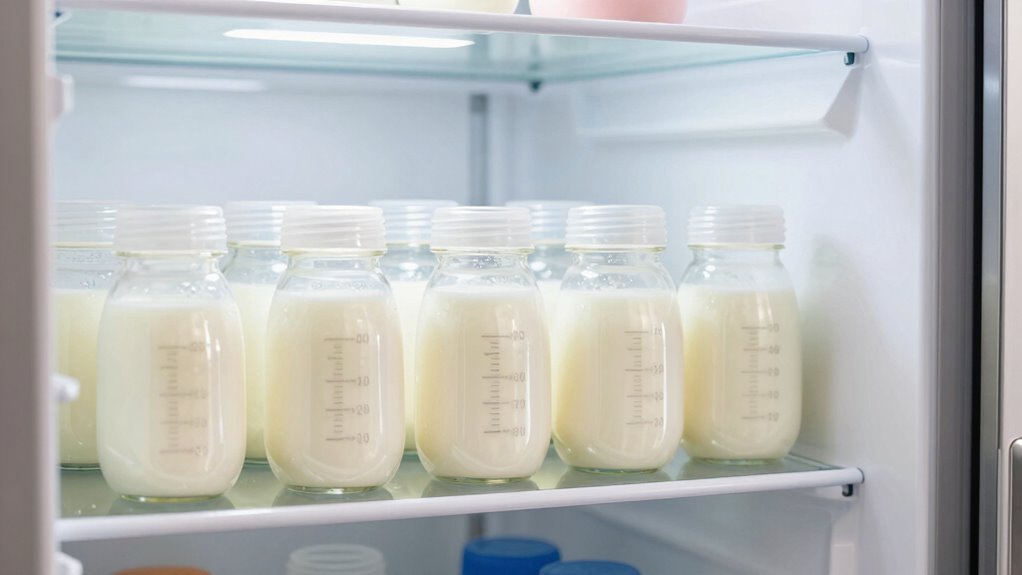
When it comes to safe breast milk storage, the most important rule is to always label and date the milk immediately after pumping. This helps you keep track of freshness and guarantees proper use within recommended timeframes. Proper milk expression techniques make pumping more efficient, so you get enough milk without discomfort. Seeking breastfeeding support can also offer tips on effective pumping methods, making storage easier and safer. Clear labels prevent confusion and reduce waste, giving you peace of mind. Remember, consistency is key—label each container right away, even if you’re in a rush. Additionally, understanding the importance of metabolic health can help you maintain overall wellness, which supports your ability to pump effectively. By following this simple rule, you protect your baby’s health and streamline your breastfeeding journey. Proper labeling is the foundation for safe and organized milk storage, and staying informed about breastfeeding techniques can further enhance your experience. Maintaining proper storage guidelines ensures your milk remains nutritious and safe for your little one. Incorporating safe handling practices can also help prevent contamination and spoilage of expressed milk, especially when combined with proper hygiene procedures.
How Long Can You Store Breast Milk at Different Temperatures?
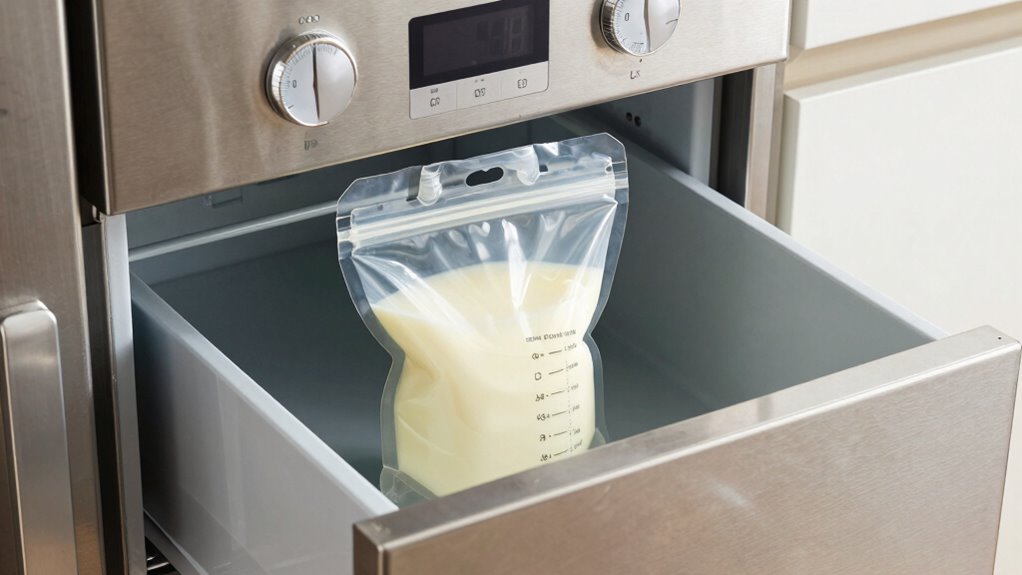
Ever wonder how long breast milk stays safe to use at different temperatures? Storage times vary depending on temperature and conditions. At room temperature (77°F or 25°C), freshly expressed milk is best used within 4 hours, respecting breastfeeding etiquette and safety. In a cooler with ice packs, it can last up to 24 hours, ideal for milk donation guidelines. Refrigerated milk (39°F or 4°C) stays fresh for up to 4 days, but always check for signs of spoilage. Proper storage guidelines can help maintain milk quality and safety. It’s also important to consider microplastics in dust and other environmental factors that may affect stored milk. Regularly monitoring storage conditions and ensuring the container is sealed properly are crucial for preserving milk integrity. Being aware of environmental contaminants helps ensure stored milk remains safe for your baby. Additionally, understanding proper handling techniques can further reduce the risk of contamination. Use the table below for quick reference:
| Temperature | Storage Time |
|---|---|
| Room temp | 4 hours |
| Cooler | 24 hours |
| Refrigerator | 4 days |
| Freezer | 6-12 months |
How to Choose the Best Storage Containers for Breast Milk
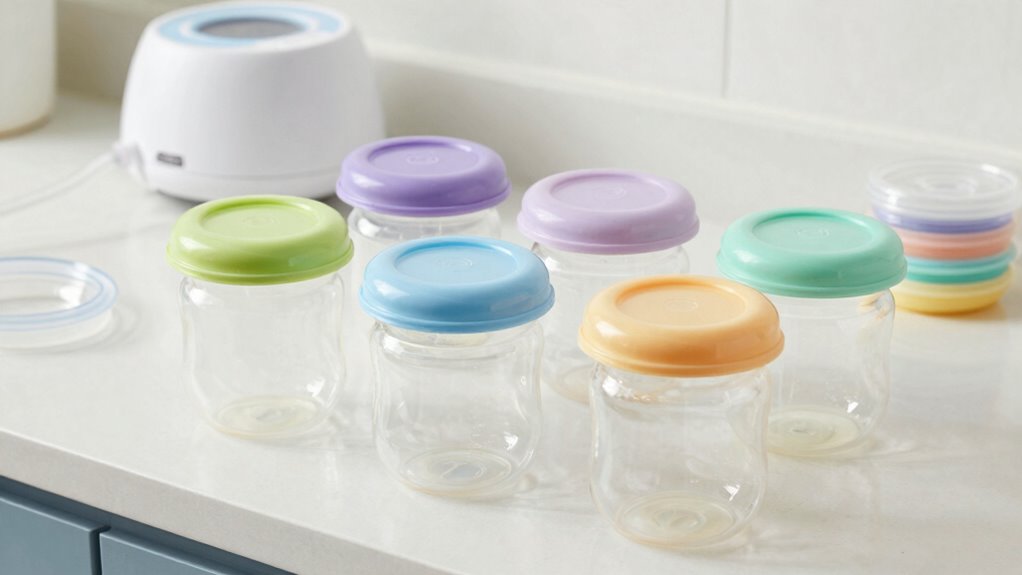
Choosing the right storage containers for breast milk is essential to keep it fresh, safe, and easy to use. When selecting containers, consider your needs and available breastfeeding accessories. Look for options that are BPA-free, leak-proof, and designed for freezing or refrigeration.
To make your milk storage more efficient, keep these milk storage tips in mind:
- Use sterile, BPA-free containers or bags specifically made for breast milk.
- Opt for containers with tight-fitting lids to prevent spills and contamination.
- Choose sizes that match your typical pumping output to avoid waste and simplify thawing.
How to Label and Date Breast Milk Properly
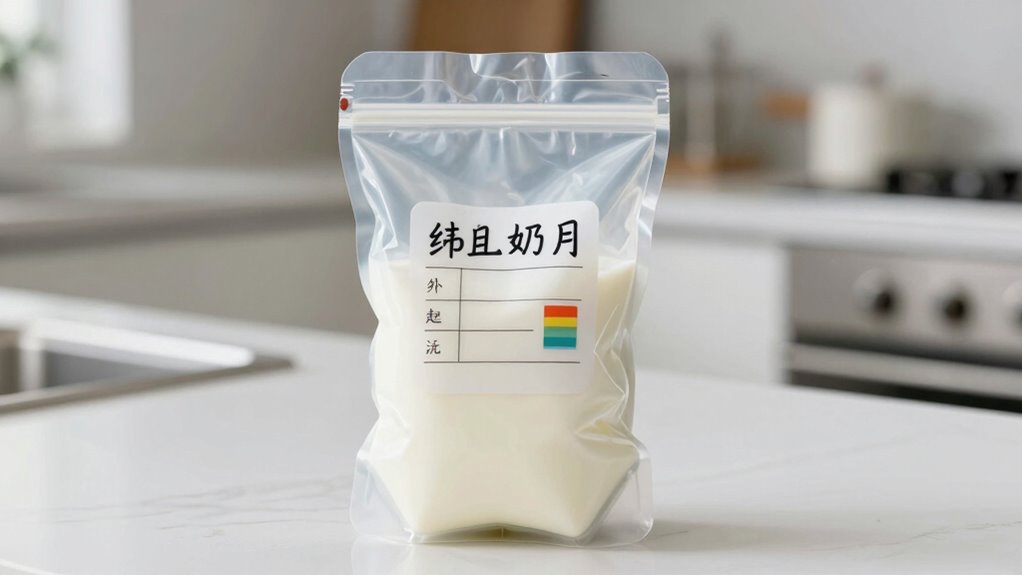
Labeling and dating your breast milk correctly guarantees you use the oldest milk first and maintain freshness. Use clear, waterproof labels or a permanent marker to mark each container with the date it was expressed. This helps prevent accidental mixing or waste. Many breastfeeding myths suggest you can’t tell how fresh milk is without labeling, but proper dating keeps you on track. If you’re unsure about storage times or techniques, consult a lactation consultant for guidance. Proper labeling also reduces stress and ensures your baby always has safe, fresh milk. Remember, consistency is key—make it part of your pumping routine to date every batch before storing it away. This simple step can save time and prevent unnecessary waste. Additionally, understanding the horsepower of electric dirt bikes can help you choose the right equipment if you’re interested in outdoor adventures. Knowing the contrast ratio of your projector can significantly impact the quality of your home cinema setup, ensuring vibrant images even in dimly lit rooms. To further optimize storage, consider using well-drained soil conditions to prevent spoilage and promote proper preservation.
How to Freeze Breast Milk Without Wasting It
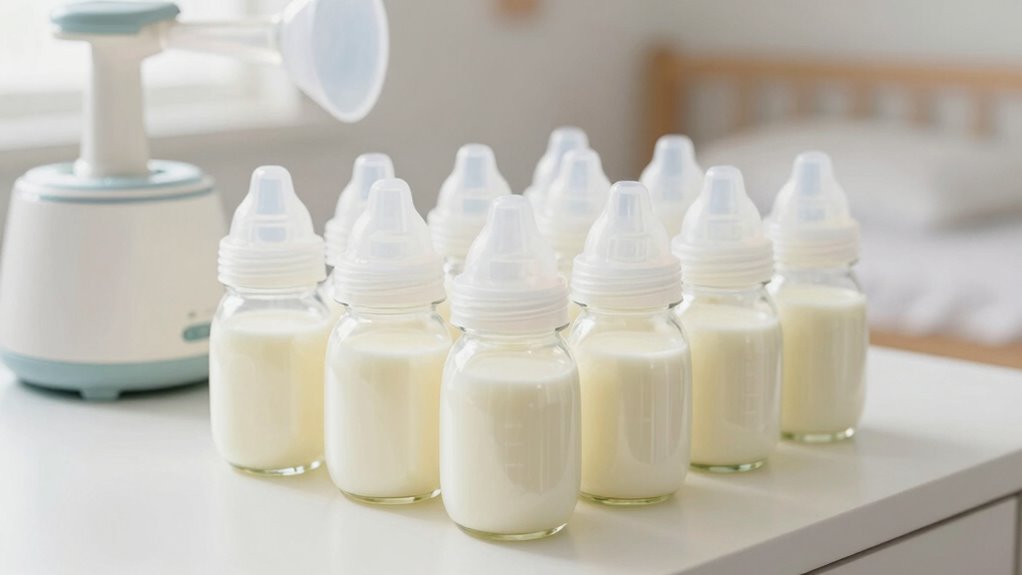
Using proper storage containers guarantees your milk stays fresh and prevents waste. Label each container with the date to help you rotate your supply efficiently. By following these steps, you can freeze breast milk confidently and minimize any leftovers. Additionally, using appropriate containers designed for freezing ensures the milk maintains its quality and safety. Incorporating water safety practices can also help protect your stored milk from contamination and spoilage. Understanding chemical properties of milk can further inform you on how to best preserve its nutrients during freezing, especially considering how freezing impacts milk composition and its nutritional value. Being aware of storage duration guidelines can help ensure you use your supply at its peak freshness and nutritional content.
Proper Milk Storage Containers
To freeze breast milk effectively and prevent waste, selecting the right storage containers is essential. Using proper containers supports milk supply management and helps dispel common breastfeeding myths about milk loss. Look for BPA-free, airtight options designed for freezing, such as:
- Special breast milk storage bags
- BPA-free plastic bottles with tight-fitting lids
- Glass containers with secure seals
Avoid regular food storage bags or containers not meant for freezer use, as they may leak or degrade. Proper containers keep milk fresh, prevent contamination, and make thawing easier. Ensuring the containers are freezer-safe is crucial for maintaining milk quality over time. Additionally, monitoring storage conditions can help preserve nutrients and prevent spoilage. Proper storage techniques are also influenced by door swings and space planning in your freezer, which can affect accessibility and organization. Using the right containers also helps minimize the risk of leakage or spoilage, ensuring your milk remains safe and nutritionally intact. Remember, using the right storage method can maximize your milk supply and reduce waste, giving you confidence in your breastfeeding journey. Choosing the right containers is key to maintaining milk quality and safety.
Labeling and Rotation Techniques
Keeping track of your frozen breast milk is essential to prevent waste and guarantee your baby always gets the freshest milk. Label each container with the date you expressed it, so you can follow the first-in, first-out rule. This helps you rotate your stash effectively within your parenting routines. Use waterproof markers or labels designed for freezing to assure clarity and durability. Regularly check your storage to identify older milk that should be used first, minimizing waste. Breastfeeding support groups can offer tips on organizing your freezer efficiently. By establishing consistent labeling and rotation techniques, you’ll streamline your pumping routine, reduce clutter, and guarantee your baby benefits from the best quality milk at all times. Incorporating glycolic acid products into your skincare routine can also help improve skin texture and radiance, complementing your overall self-care. Additionally, exploring alternative storage methods can help optimize space and improve accessibility in your freezer.
How to Thaw and Use Breast Milk Safely and Efficiently
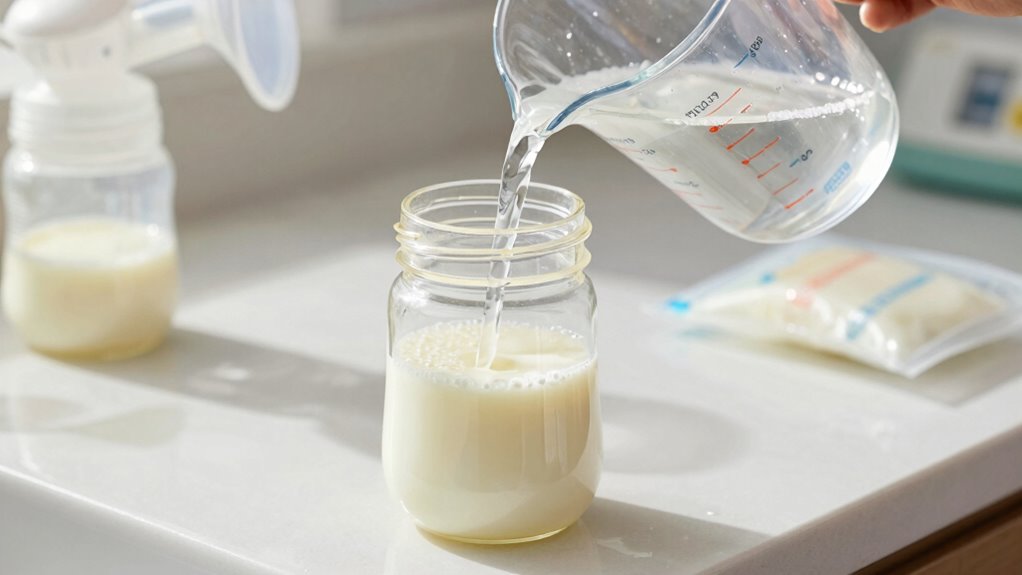
To guarantee your breast milk stays safe and nutritious, it’s important to follow proper thawing techniques. Always thaw milk in the refrigerator or using warm water, avoiding microwave heating. Remember to use the milk within the recommended time and discard any leftovers to keep your baby safe.
Proper Thawing Techniques
When thawing breast milk, doing so safely is vital to preserve its nutrients and prevent bacterial growth. To guarantee you’re following proper techniques, avoid common breastfeeding myths that can lead to unsafe practices. Instead, focus on effective milk supply techniques and safe thawing methods, like gentle warming.
Here are key tips:
- Thaw breast milk in the refrigerator overnight or place the sealed container in warm water for quick warming.
- Never microwave breast milk, as it destroys nutrients and creates hot spots.
- Use thawed milk within 24 hours and avoid refreezing.
Proper thawing preserves milk quality and supports your milk supply efforts. Remember, safe handling is essential for your baby’s health and your peace of mind. Following these techniques helps you stay confident and informed as a pumping parent.
Safe Milk Usage Tips
Ensuring safe and efficient use of breast milk involves following proper thawing and storage practices. To preserve breastfeeding benefits and milk composition, always thaw frozen milk in the refrigerator or with warm water, avoiding the microwave, which can create hot spots and degrade nutrients. Use thawed milk within 24 hours and never refreeze it. Before feeding, gently swirl the milk to mix the cream layer, but don’t shake vigorously. Always check the temperature—test a few drops on your wrist to prevent burns. Discard any leftover milk after feeding to prevent bacterial growth. Proper handling ensures your baby receives the full nutritional benefits while maintaining milk’s integrity. Staying vigilant about these practices helps maximize the health benefits of your breast milk.
How Can You Tell If Breast Milk Is Still Good?
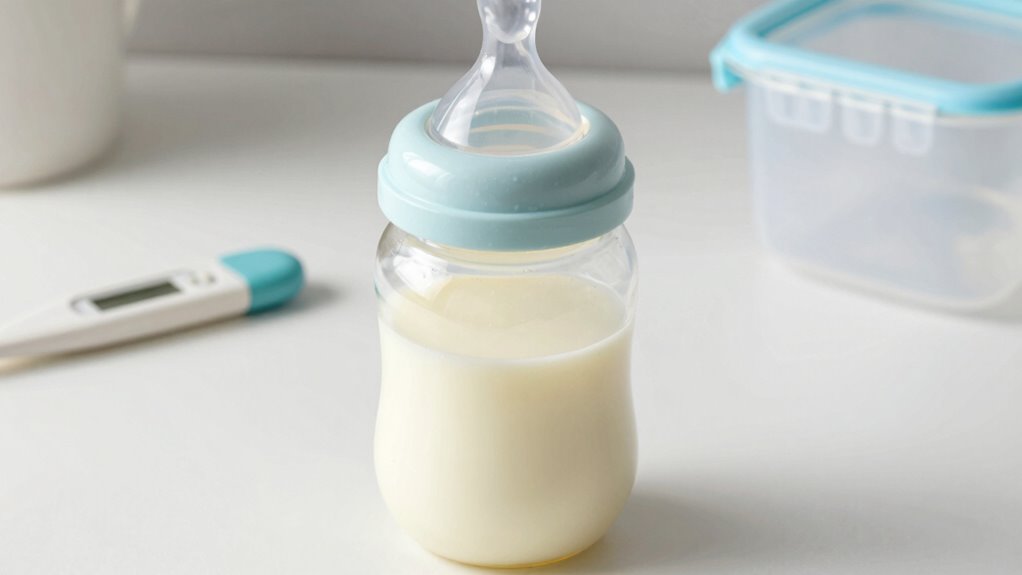
Wondering how to tell if your stored breast milk is still good? Freshly expressed milk preserves its breastfeeding benefits when stored properly. To check if it’s still good, look for a few signs.
- Smell the milk: it should have a mild, sweet scent. If it smells sour or off, discard it.
- Check the appearance: fresh milk is usually white or slightly yellow; look for any clumping or discoloration.
- Assess the storage time: breast milk can stay in the fridge 4-8 days or in the freezer up to 6 months, depending on storage conditions.
Tips for Managing Breast Milk Storage When You’re Out and About
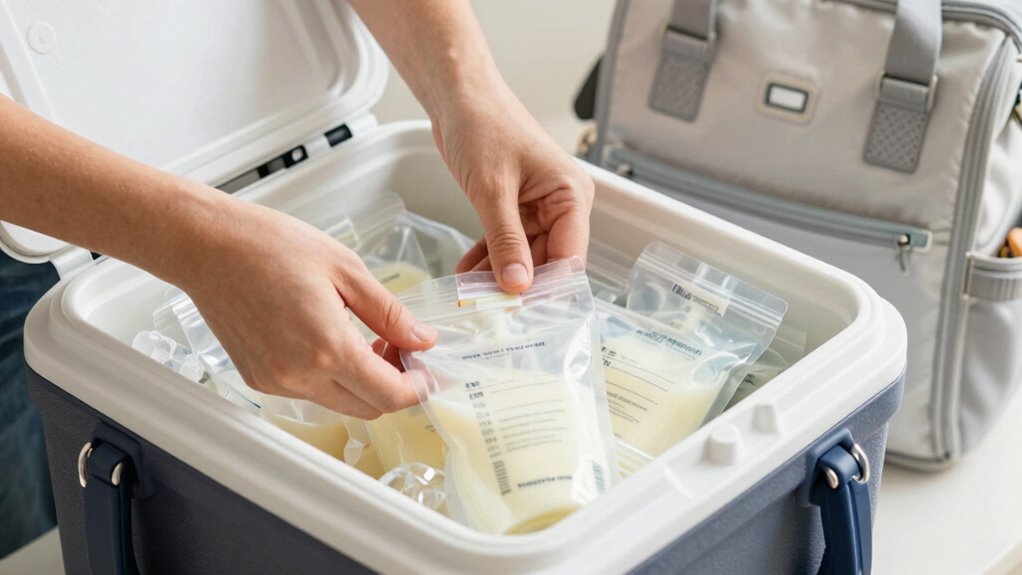
Managing breast milk storage on the go requires some planning to keep milk fresh and safe for your baby. Bring a well-insulated cooler with ice packs to maintain the proper temperature, and pack your expressed milk in clean, leak-proof containers. Label each container with the date and time to guarantee proper use. Seek breastfeeding support if you’re unsure about storage guidelines or handling pumped milk outside your home. Remember, taking care of yourself through parental self-care helps manage the stress of pumping in public or away from home. Plan ahead by knowing where to find designated pumping spaces or refrigeration options along your route. With these steps, you can confidently manage milk storage, ensuring your baby’s nourishment remains safe and fresh.
Common Mistakes to Avoid When Storing Pumped Milk

You might think you’re doing everything right, but common mistakes can compromise your pumped milk. Avoid improper labeling, incorrect storage temperatures, and keeping milk for too long, as these can affect quality and safety. Being aware of these pitfalls helps guarantee your milk stays fresh and safe for your baby.
Improper Labeling Practices
Proper labeling of pumped milk is essential to guarantee safe and effective storage, yet many parents make common mistakes that can lead to confusion or compromised milk quality. Incorrect labels can cause issues with breastfeeding etiquette and violate milk donation guidelines. To avoid these pitfalls:
- Forgetting to include the date and time of expression
- Using unclear or smudged labels that are hard to read
- Failing to specify if the milk is for personal use or donation
Proper labels help you track freshness and ensure proper use. Clear labeling is especially important if you’re donating milk or sharing with others. Always double-check your labels before storing and follow guidelines to maintain milk quality and safety. Consistent, accurate labeling makes pumping and storage stress-free and helps protect your baby’s health.
Incorrect Storage Temperatures
Incorrect storage temperatures are a common mistake that can compromise the quality and safety of pumped milk. If you don’t store milk at the right temperature, harmful bacteria can grow, risking your baby’s health. Use proper milk storage techniques to avoid this. Keep freshly expressed milk in the back of the fridge at 39°F (4°C) or colder, and never leave it out at room temperature for more than 2 hours.
| Proper Storage Temperature | Common Mistakes to Avoid |
|---|---|
| Fridge at or below 39°F | Storing milk at room temperature |
| Freezer at 0°F or colder | Using unclean containers |
| Ignoring temperature fluctuations | |
| Not checking temperature regularly | |
| Using expired breastfeeding accessories |
Lengthy Storage Times
Have you ever stored pumped milk for too long, only to worry about its safety and quality? Lengthy storage times are a common mistake among pumping parents, especially when breastfeeding challenges make frequent pumping difficult. To preserve milk’s nutrients and prevent spoilage, avoid keeping milk in the freezer or fridge longer than recommended.
Key points to consider:
- Follow recommended storage durations to prevent bacterial growth.
- Label your containers with the date to track freshness.
- Seek lactation support if you’re unsure about storage limits or facing breastfeeding challenges.
Storing milk beyond safe timeframes can compromise its quality, making it less beneficial for your baby. Staying informed helps ensure your little one receives safe, nutritious milk every time.
Troubleshooting Breast Milk Storage Problems and When to Seek Help
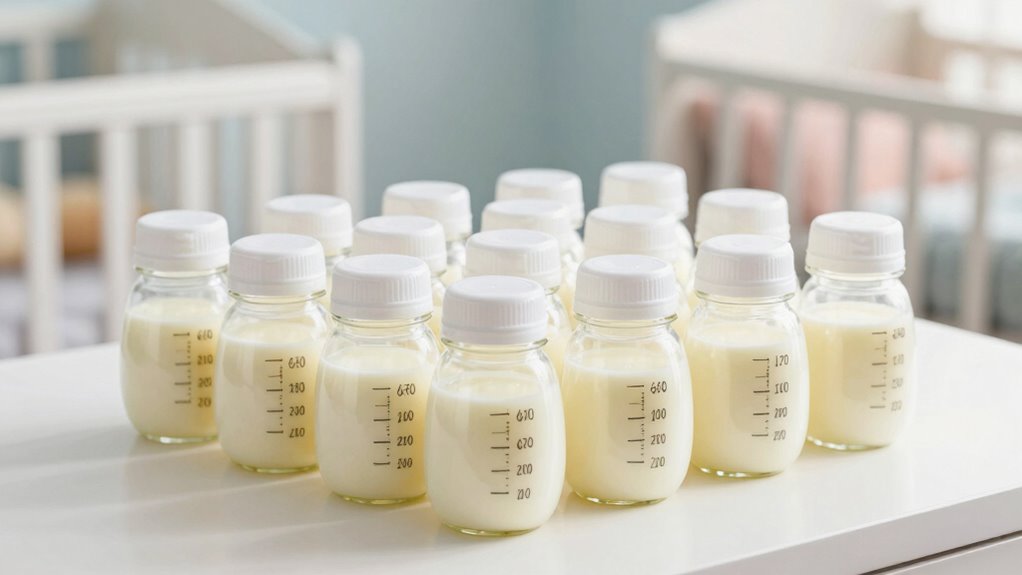
Even with careful planning, you might encounter issues when storing breast milk, and recognizing these problems early can make a big difference. If your milk smells sour or looks curdled, it may be spoiled, and it’s best to discard it. Leakage or unexplained decreases in milk supply could indicate equipment problems or a need for additional breastfeeding support. When storage issues persist, don’t hesitate to seek help from a lactation consultation or breastfeeding support group. They can offer personalized advice and troubleshoot storage techniques. Also, if you experience persistent discomfort, pain, or signs of infection, reach out to a healthcare professional promptly. Addressing these concerns early guarantees your baby’s safety and helps you maintain confidence in your milk storage practices.
Frequently Asked Questions
Can I Store Breast Milk in Regular Plastic Bags?
You can store breast milk in regular plastic bags, but it’s not the best choice for safety and freshness. Instead, consider specialized breast milk storage containers or designated breast milk storage bags designed for freezing. These alternatives help prevent contamination, leaks, and freezer burn. Always use clean, BPA-free containers, and label them with the date. Proper storage guarantees your breast milk remains nutritious and safe for your baby.
How Often Should I Rotate My Stored Breast Milk?
You should rotate your stored breast milk every 3 to 6 months to guarantee freshness and safety. When doing so, check your breast milk labeling to track the date it was expressed, and use appropriate storage container options like BPA-free bottles or bags. Regularly reviewing your stash helps prevent spoilage, maintain quality, and assure your baby always has fresh milk. Keep a record to simplify rotation and maintain peace of mind.
Is It Safe to Refreeze Thawed Breast Milk?
It’s not safe to refreeze thawed breast milk because it increases the risk of breast milk contamination. Once breast milk has been thawed, bacteria can grow, and refreezing doesn’t kill these bacteria. For safety, consider pasteurization if you need to extend storage, but avoid refreezing. Always store breast milk properly, keep track of thawed milk, and discard any unused milk after a certain period to protect your baby’s health.
What Are the Signs of Spoiled Breast Milk?
You’ll know breast milk is spoiled if it develops a sour odor or has a strange, rancid smell. Also, check for color changes; fresh milk is usually white or slightly yellow, but spoiled milk may turn yellow, brown, or have a lumpy texture. If the milk smells off or looks different from when you first expressed it, it’s safest to discard it to protect your baby’s health.
How Do I Transport Breast Milk Safely When Traveling?
When traveling, you can keep your milk fresh by packing it in insulated cooler bags with travel accessories like ice packs. Make certain to follow airline regulations regarding liquids, so check TSA guidelines before your trip. Carry bottles or storage bags in your carry-on for easy access and temperature control. This way, you guarantee your milk stays safe and fresh, no matter where your journey takes you.
Conclusion
By following these storage tips, you’ll guarantee your baby’s milk stays fresh and safe. Imagine a new mom forgetting to label her frozen milk, only to discover months later it’s no longer good—avoiding such mistakes is easy when you’re organized. Keep track of dates, choose the right containers, and stay vigilant about storage times. With these simple steps, you’ll confidently provide your little one with nourishing, safe breast milk every time.
Cold & flu season Picks
humidifiers
As an affiliate, we earn on qualifying purchases.