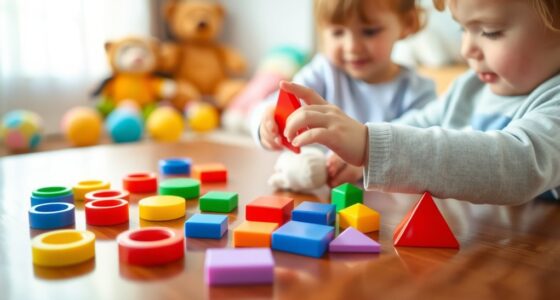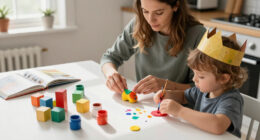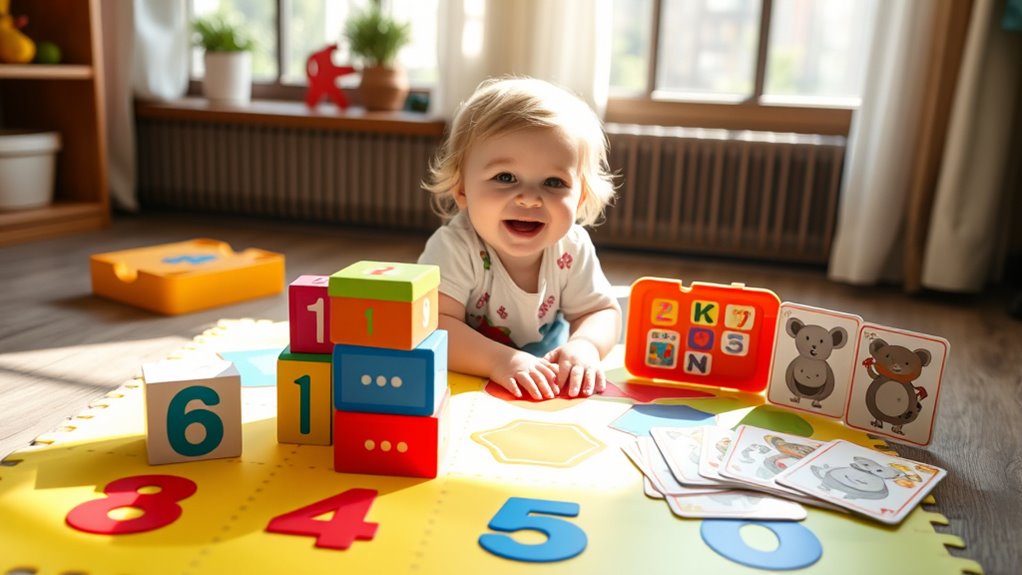

To teach your toddler numbers easily, turn everyday activities into fun games. Try simple scavenger hunts where they count items like toys or snacks, or sing catchy counting songs with clapping. Use tactile activities like tracing numbers in sand, and incorporate rhythm to make sequences stick. Start with easy challenges and gradually increase difficulty to build confidence. Keep the activities playful and consistent, and you’ll discover how simple and enjoyable learning numbers can become as you explore more ideas.

Turn the school run and nap time into listening time
- Thousands of audiobooks, podcasts and originals
- Listen on your phone, tablet or Echo — also offline
- Cancel anytime
Key Takeaways
- Turn counting into fun scavenger hunts, encouraging toddlers to find and count specific objects around the house.
- Use engaging songs like “Five Little Ducks” to teach counting sequences through music and rhythm.
- Incorporate tactile activities such as tracing numbers in sand or foam for multisensory learning.
- Play games with number cards or stickers, matching objects to numbers to reinforce recognition.
- Gradually increase counting challenges, promoting independence and confidence in various real-life situations.
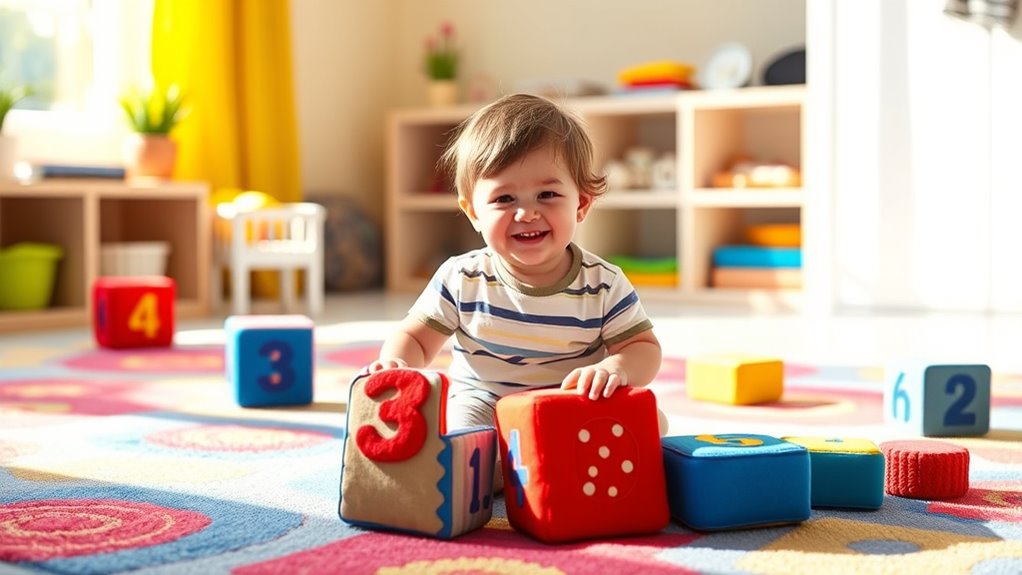
Counting can seem challenging at first, but with simple strategies, it becomes straightforward. When you start teaching your toddler about numbers, the key is to make learning engaging and fun. One of the most effective ways is through games that promote number recognition and counting strategies. These activities help your child understand the connection between numbers and quantities while building confidence in their abilities. Instead of overwhelming your little one with formal lessons, introduce counting through play, which naturally encourages curiosity and learning.
Begin with activities that involve everyday objects, like counting blocks, fruits, or toys. For example, you can gather a handful of small items and ask your toddler to count them aloud. As they do this, they develop number recognition—associating the spoken number with a specific quantity. To reinforce this, point to each item as they count, helping them connect the number words with the objects. Repetition is essential here; repeating these activities regularly solidifies their understanding and makes counting a familiar task.
You can also turn counting into a game by creating a simple scavenger hunt around the house. Ask your toddler to find and count specific items, like three books or five cars. This not only boosts their counting strategies but also improves their ability to recognize numbers in different contexts. Make sure to celebrate their success with praise, which encourages them to keep practicing. Using visual cues, like number cards or stickers, can further enhance their number recognition skills. Show them a card with the number “4” and then help them find four objects, reinforcing the association between the symbol and the quantity.
Turn counting into fun with scavenger hunts and praise to boost recognition and confidence.
Incorporating multisensory approaches, such as tactile activities like tracing numbers in sand or foam, can further strengthen their understanding of number forms and improve fine motor skills. Additionally, engaging in counting songs and rhymes into your routine can make learning even more enjoyable. Songs with numbers, like “One, Two, Buckle My Shoe” or “Five Little Ducks,” make counting memorable and enjoyable. These musical activities help your toddler internalize number sequences and improve their ability to count in order. To make it even more interactive, clap along or use finger puppets to represent the numbers, making the experience multisensory. As they become more confident, challenge them to count objects without assistance, gradually increasing the difficulty.
As an affiliate, we earn on qualifying purchases.
Frequently Asked Questions
How Can I Adapt These Games for Children With Special Needs?
To adapt counting games for children with special needs, you’ll want to incorporate individualized approaches that suit their unique learning styles. Use sensory modifications, like textured counters or visual aids, to make the activities engaging and accessible. Keep the activities simple, break them into smaller steps, and offer plenty of positive reinforcement. This personalized approach helps your child develop confidence and understanding while making learning fun and inclusive.
What Are the Signs My Toddler Is Ready to Learn Numbers?
You’ll notice your toddler shows signs of readiness for number learning when they start to recognize numbers, especially in familiar settings, and show interest in counting objects. They may begin to count confidently, recite numbers, or point to numbers on signs or puzzles. When they enthusiastically engage in counting activities and demonstrate curiosity about numbers, it’s a clear sign they’re ready to develop their number recognition skills and boost their counting confidence.
How Much Time Should I Dedicate to Number Games Daily?
Research shows toddlers benefit most from 10-15 minutes of learning activities daily. To support their learning milestones, you should dedicate this time to fun, engaging number games. Parental involvement is key; your enthusiasm helps your child stay motivated. Keep sessions consistent but short, allowing your toddler to enjoy the process without feeling overwhelmed. Regular, quality playtime fosters early numeracy skills and strengthens your bond.
Are There Recommended Toys or Materials for These Counting Games?
You should choose toys that make counting fun and engaging. Colorful counters are great for visual learners, helping your toddler connect numbers with objects. Plush counting toys add a soft, tactile element that encourages interaction. Use these materials to create simple games, like counting and sorting, which boost your child’s understanding of numbers while keeping the activity playful. Incorporating these recommended toys makes learning both effective and enjoyable.
How Can I Make Counting Activities More Engaging for Shy Children?
Think of yourself as a gentle guide, much like a storyteller in a cozy forest. To engage shy children in counting, use interactive storytelling that draws them in and makes learning fun. Incorporate visual cues like colorful pictures or objects, and create a calm, encouraging environment. This approach helps shy kids feel safe, boosting their confidence and making counting an exciting adventure rather than a task.
Conclusion
Now that you have these five playful games, counting becomes a joyful adventure, like uncovering hidden treasures in a treasure chest. Each game is a stepping stone, turning numbers into familiar friends you and your toddler can explore together. With patience and giggles, you’ll watch your child’s confidence grow like a blossoming garden. Before you know it, counting will be as natural as breathing, filling their world with colorful, sparkling possibilities.
Halloween Picks
halloween
As an affiliate, we earn on qualifying purchases.