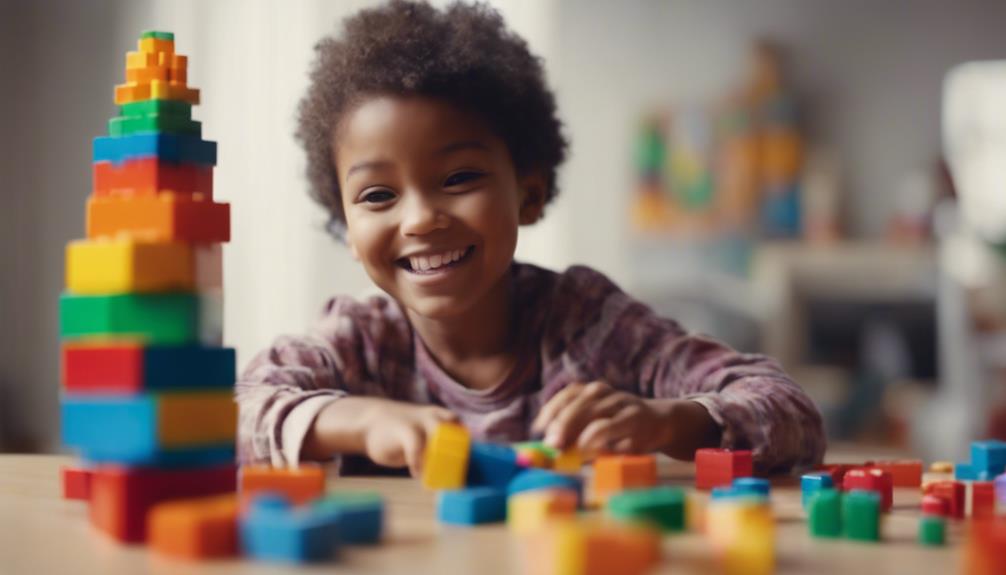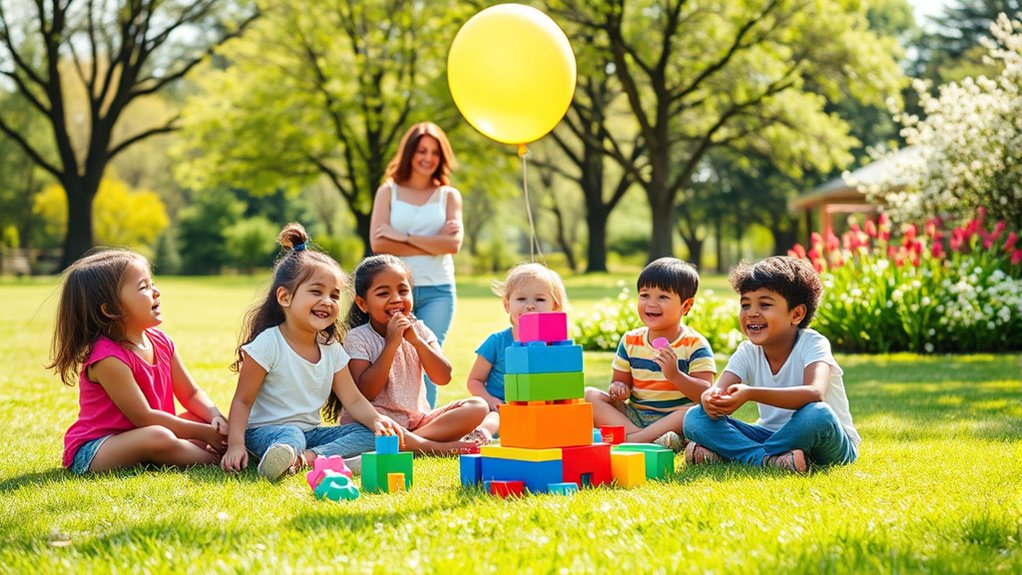

Playgroups help your child develop important social skills through regular peer interactions. They learn to read facial expressions, share, take turns, and resolve conflicts confidently. These experiences foster independence, boost self-esteem, and reduce social anxiety, preparing your child for school and future relationships. By participating in playdates, your kid builds a sense of community and belonging. Keep exploring to discover more ways these social activities support your child’s growth.

Turn the school run and nap time into listening time
- Thousands of audiobooks, podcasts and originals
- Listen on your phone, tablet or Echo — also offline
- Cancel anytime
Key Takeaways
- Playgroups promote essential social skills like sharing, turn-taking, and reading social cues through peer interactions.
- They help children develop independence and confidence by making choices and resolving conflicts independently.
- Playgroups prepare kids for school by teaching cooperation, patience, and appropriate social behaviors in a safe environment.
- Participation fosters a sense of belonging, builds friendships, and enhances self-esteem and social identity.
- Regular social activities support emotional regulation and establish a strong social foundation for long-term well-being.

Have you ever wondered how playgroups can boost your child’s development? When your little one joins a playgroup, they’re stepping into a dynamic environment that promotes essential social skills. As they engage with peers, you’ll notice their ability to monitor social skills improves. They learn to read facial expressions, understand turn-taking, and recognize social cues—all critical for building healthy relationships. Watching your child navigate these interactions helps you see their progress firsthand. They begin to grasp how their actions impact others and develop empathy, which is crucial for their emotional growth.
Playgroups help children develop social skills, empathy, and build healthy relationships through peer interactions.
In addition to monitoring social skills, playgroups are excellent for fostering independence. When kids play with others, they start making choices—what game to play, which toy to pick, or how to resolve a disagreement. These moments encourage them to think independently and make decisions without constant adult guidance. As they succeed in managing simple conflicts or sharing toys, their confidence grows. You’ll see them become more self-reliant, willing to try new things, and more comfortable taking the lead in social situations. This independence becomes a foundation for their future learning and problem-solving skills.
Playgroups also create a safe space where children can practice social interactions in a supportive setting. They learn to wait their turn, share, and cooperate, which are key skills for school readiness. By observing their peers, children gain a clearer understanding of appropriate social behavior. This environment allows them to experiment with different ways of expressing themselves, whether through words, gestures, or facial expressions, all under your watchful eye. Over time, these experiences help your child feel more secure in social settings, reducing anxiety about new environments or unfamiliar faces.
Furthermore, participating in regular playdates helps your child develop a sense of belonging and community. They learn that they are part of a group, which nurtures their social identity and boosts self-esteem. As they make friends and build relationships, they also learn about sharing responsibilities and developing patience. These interactions teach your child the importance of cooperation and respect, laying the groundwork for healthy friendships in the future.
Additionally, engaging in such social activities can support the development of foundational skills like emotional regulation and social skill monitoring, which are essential for long-term well-being. These interactions teach your child the importance of cooperation and respect, laying the groundwork for healthy friendships in the future.
In essence, playgroups are much more than just fun; they’re strategic tools for your child’s social development. They give your child opportunities to monitor social skills, foster independence, and cultivate meaningful relationships. By actively engaging in these playdates, you’re helping your child build a solid social foundation that will serve them well throughout their life.
As an affiliate, we earn on qualifying purchases.
Conclusion
As you watch your child thrive in playgroups, see each playdate as a seed planted in their social garden. These moments nurture kindness, patience, and sharing—roots that grow strong over time. Every giggle and game is a sunbeam, fueling their confidence. When you encourage these connections, you’re not just fostering friendships; you’re guiding your little one toward a future where they blossom into a caring, confident individual. The garden of social skills begins with each playdate.
Halloween Picks
halloween
As an affiliate, we earn on qualifying purchases.