Choosing between a baby carrier and stroller depends on your safety and convenience needs. A carrier provides ergonomic support, keeping your baby close and secure for short to medium outings, and is lightweight for easy mobility. Strollers offer more protection from the elements and extra storage for longer trips but are bulkier and less portable. Consider your routine; to discover which option suits your lifestyle best, explore more about their benefits and limitations.
Key Takeaways
- Baby carriers support ergonomic positioning, promoting healthy hip development and proper posture for the caregiver.
- Strollers offer stability, weather protection, and additional storage, suitable for longer outings.
- Carriers are lightweight and portable, ideal for quick errands and navigating crowded spaces.
- Strollers are less portable but provide comfort and safety for extended trips with more gear.
- Combining both can maximize safety, convenience, and comfort during different on-the-go situations.
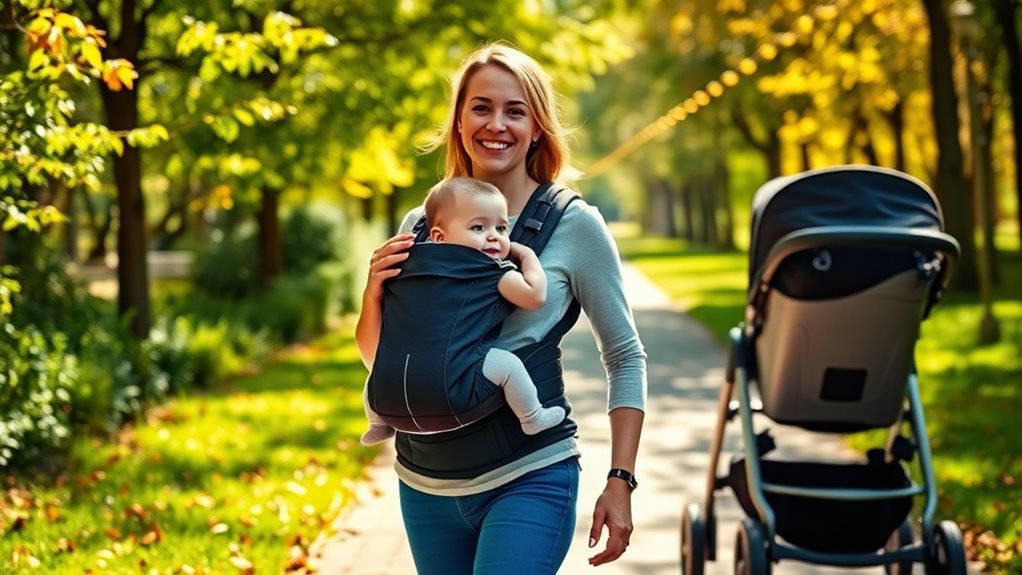
When choosing how to transport your baby, you might wonder whether a baby carrier or a stroller is the better option. Both have their advantages, but understanding their features can help you make the right choice for your needs. If you’re leaning toward a baby carrier, one of its main benefits is its ergonomic design. A well-designed carrier supports your baby’s hips, back, and neck, reducing discomfort and ensuring safety during prolonged use. Ergonomic features are essential because they promote healthy hip development and keep your baby comfortable, even during extended outings. Plus, a good carrier distributes your baby’s weight evenly across your shoulders and hips, minimizing strain on your body. This comfort can make longer walks or errands less tiring for you, especially if you’re constantly on the move.
Portability features are another key aspect to think about with baby carriers. They’re lightweight, compact, and easy to fold or roll up, making them simple to carry in a bag or store in your car. Unlike strollers, carriers don’t require a lot of space and are convenient for steering through crowded places or narrow spaces like shops or public transportation. If you frequently switch between walking and other modes of transit, a carrier can be a practical choice because it doesn’t add bulk or weight to your load. Many carriers are designed with adjustable straps and quick-release buckles, so you can put them on or take them off swiftly. This ease of use makes them ideal for spontaneous outings or quick errands, especially when you don’t want to fuss with assembling or collapsing a stroller. Additionally, understanding the benefits of ergonomic design can help ensure your baby’s safety and comfort during use.
However, it’s important to remember that carriers are best suited for short to medium durations and may not provide the same level of protection or storage space as a stroller. Strollers, on the other hand, tend to be larger but offer more stability, protection from the elements, and additional storage options for your essentials. They’re perfect for longer outings, hikes, or trips where you need to carry more gear and want your baby to have a comfortable, upright view. But they’re less portable and can be cumbersome to maneuver in tight spaces or crowded areas, which is where carriers shine. Ultimately, your choice depends on your lifestyle and the specific situations you encounter daily, but understanding the ergonomic design and portability features of each can help you decide which aligns best with your needs.
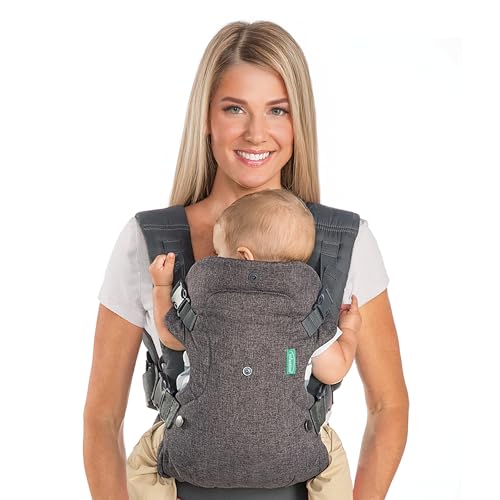
Infantino Flip 4-in-1 Convertible Baby Carrier, Adjustable, Ergonomic Babywearing, Registry Essential, Baby Carrier for Newborn to Toddler, Gray
4-IN-1 CARRYING POSITIONS FOR EVERY STAGE: Convertible baby carrier with facing-in (narrow/wide), facing-out, and back carry positions. Supports…
As an affiliate, we earn on qualifying purchases.
As an affiliate, we earn on qualifying purchases.
Conclusion
Choosing between a baby carrier and a stroller isn’t just about convenience; it’s about connection versus independence. While carriers keep your baby close, fostering intimacy, strollers offer freedom and ease of movement. Both keep your little one safe—just in different ways. Ultimately, your choice reflects your lifestyle and values. Whether you prioritize closeness or convenience, remember that safety and love are what truly matter, no matter which option you embrace.

Kolcraft Cloud Plus Lightweight Umbrella Stroller for Toddlers with Reclining Seat, Large Storage Basket, Canopy, Infant & Parent Trays, Compact Fold for Summer Travel, Durable Frame, Slate Gray
Ultra-Lightweight Baby Stroller that's Easy to Carry & Store – Lightweight stroller (only 13 lbs), best compact travel…
As an affiliate, we earn on qualifying purchases.
As an affiliate, we earn on qualifying purchases.
Infantino Flip 4-in-1 Convertible Baby Carrier, Adjustable, Ergonomic Babywearing, Registry Essential, Baby Carrier for Newborn to Toddler, Gray
4-IN-1 CARRYING POSITIONS FOR EVERY STAGE: Convertible baby carrier with facing-in (narrow/wide), facing-out, and back carry positions. Supports…
As an affiliate, we earn on qualifying purchases.
As an affiliate, we earn on qualifying purchases.

Baby Trend Expedition® Jogger, Dash Black
Lockable front swivel wheel for ease of maneuverability
As an affiliate, we earn on qualifying purchases.
As an affiliate, we earn on qualifying purchases.