Your baby loves dropping things because it helps them understand cause and effect—seeing how their actions produce results. It also supports their motor skills, like grasping and releasing, while encouraging curiosity about how objects fall and land. Every drop builds their confidence and helps them explore their environment safely. This playful activity is a essential part of their learning and development. Keep going, and you’ll discover even more ways this simple behavior benefits your child’s growth.

Get baby and family essentials delivered free — and shop member deals
- Fast, free delivery on millions of items
- Access to Prime Big Deal Days deals on October 6–7
- Prime Video, Amazon Music and more included
Key Takeaways
- Dropping toys helps babies understand that their actions create specific outcomes, reinforcing cause-and-effect learning.
- The act of hearing objects hit the floor strengthens their awareness of how actions lead to results.
- Repeated dropping builds motor skills like hand-eye coordination and grip control.
- Exploring dropping introduces basic concepts such as gravity and spatial relationships.
- Positive responses from caregivers encourage curiosity, confidence, and continued exploration.
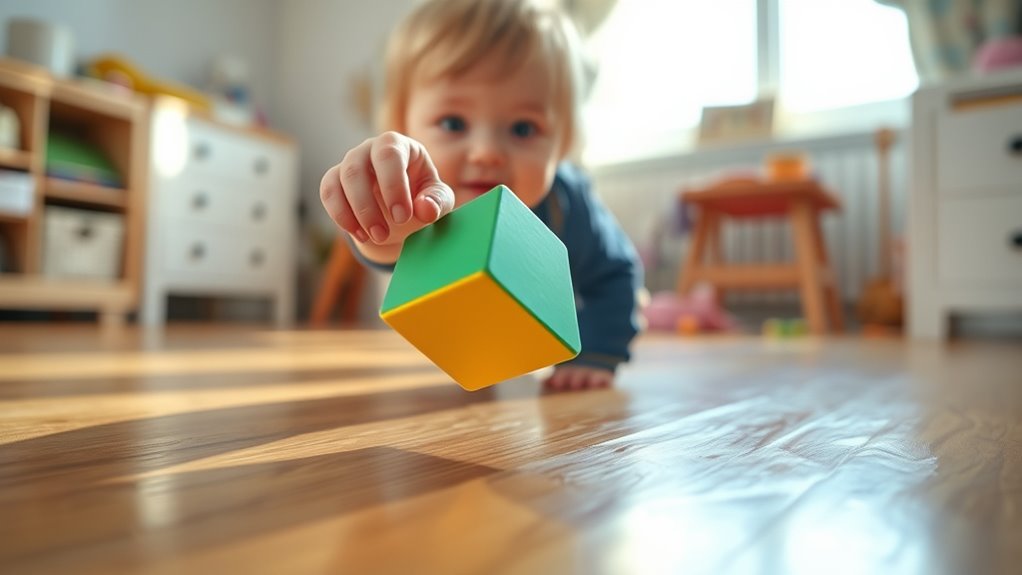
If your baby frequently drops toys and other objects, it’s not just a phase—they’re actually exploring cause and effect. This behavior is a crucial part of their development, especially in the domain of toy exploration and motor skills. When you see your little one reach for a toy and then let it go, they’re learning that their actions produce specific outcomes. For example, dropping a toy and hearing it hit the floor helps them understand that their movements can influence their environment. This process is fundamental to developing their understanding of how things work and building their confidence to experiment.
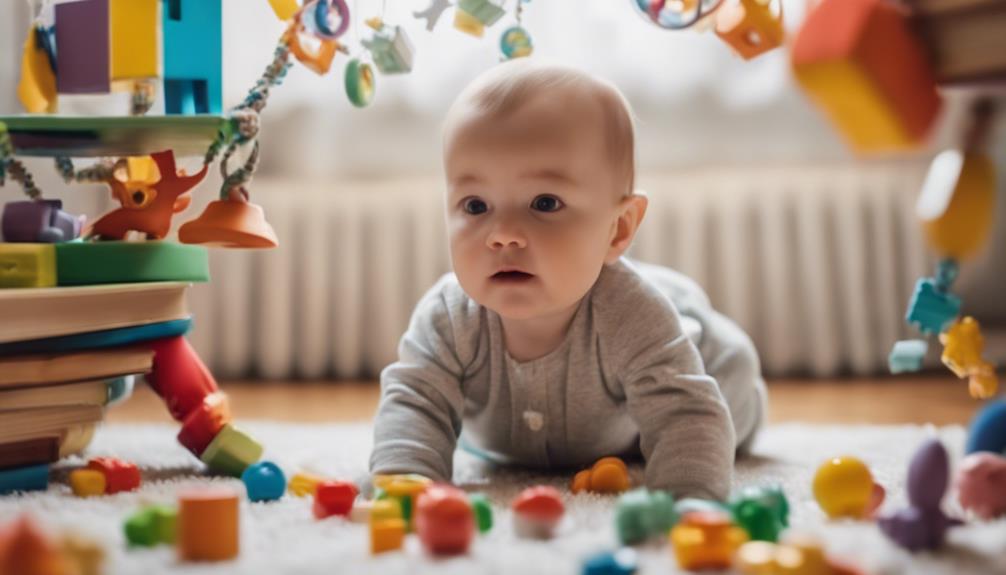
As your baby drops objects repeatedly, they’re practicing their motor development. They’re honing their hand-eye coordination, refining their grip, and improving their ability to control their movements. Each time they grasp and release a toy, they’re strengthening the muscles in their hands and fingers. This practice is essential for more complex skills like feeding themselves, dressing, or writing later on. You might notice that their dropping behavior becomes more deliberate over time, as they start to anticipate what will happen when they let go of a toy. This indicates they’re gaining better control over their movements and understanding the cause-and-effect relationship involved.
Repeated dropping helps your baby develop hand-eye coordination and muscle strength, building skills for feeding, dressing, and writing.
Toy exploration through dropping is also an engaging way for your baby to learn about their surroundings. They may be curious about what happens when they release a toy from different heights or onto various surfaces. This curiosity encourages them to experiment and discover new ways to interact with their environment. As they observe the consequences of their actions, they begin to grasp basic concepts like gravity and spatial awareness. You can support this learning by providing safe, varied objects to drop and encouraging them to observe the results. This kind of play not only boosts their cognitive development but also fosters problem-solving skills as they figure out what happens when they drop different toys.
Moreover, dropping objects is a social and emotional learning experience. When you respond to your baby’s actions with enthusiasm or gentle guidance, you reinforce their understanding of cause and effect. They learn to associate their actions with outcomes, which builds confidence and curiosity. It’s important to remember that this behavior is a normal part of their growth, and it’s a sign that they’re actively engaging with their world. Additionally, engaging in toys and objects exploration with your baby can further enhance their developmental progress. So next time your baby drops a toy, celebrate their curiosity and take it as an opportunity to support their motor development and toy exploration. By doing so, you’re helping them build the foundation for more complex skills they’ll need as they grow.
As an affiliate, we earn on qualifying purchases.
Conclusion
So, next time your little one gently lets go of their toy, remember it’s their way of discovering the world’s gentle rhythm. Each drop is a quiet conversation, a subtle lesson in cause and effect, helping them grow curious and confident. Embrace these small moments—they’re your baby’s way of exploring life’s gentle dance. With every drop, they’re softly learning, and in time, they’ll hold on a little longer.
Cold & flu season Picks
humidifiers
As an affiliate, we earn on qualifying purchases.