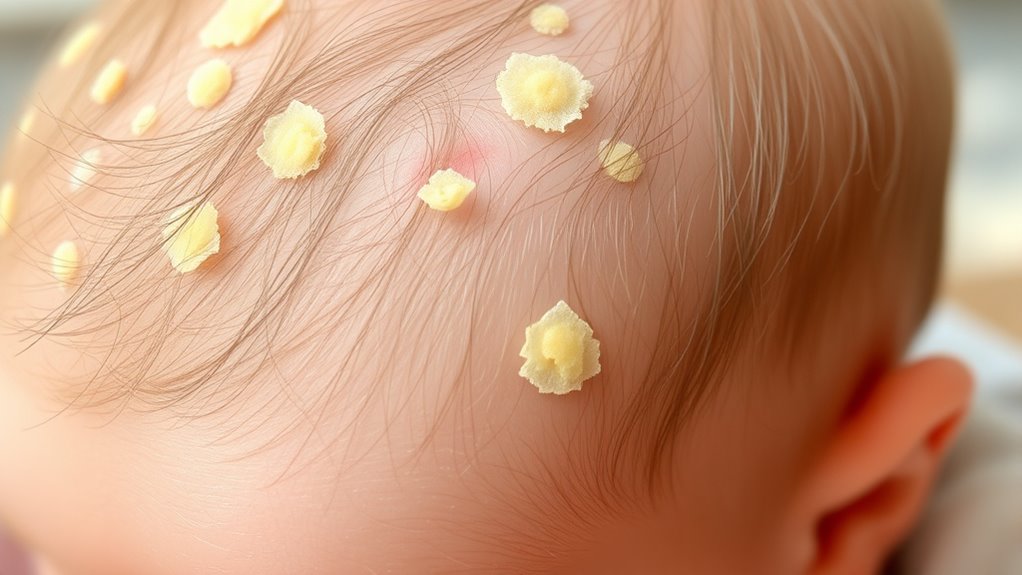

To treat cradle cap, gently massage your baby’s scalp with soft, circular motions using baby-safe oils like mineral oil or petroleum jelly to loosen scales, then wash with a mild, tear-free shampoo and carefully brush off flakes. Keep the scalp moisturized, and avoid harsh scrubbing. Regular gentle care helps prevent it from coming back. If you keep up with these tips, you’ll learn more about managing and preventing cradle cap effectively.
Key Takeaways
- Gently massage the baby’s scalp with soft circular motions to loosen crusts and promote blood circulation.
- Use mild, baby-safe oils like mineral oil or petroleum jelly before washing to help remove scales.
- Wash hair regularly with gentle, tear-free shampoos and thoroughly rinse to prevent residue buildup.
- Incorporate diaper-free time and keep the skin clean and dry to reduce cradle cap severity.
- Avoid harsh scrubbing and seek medical advice if cradle cap persists or worsens.
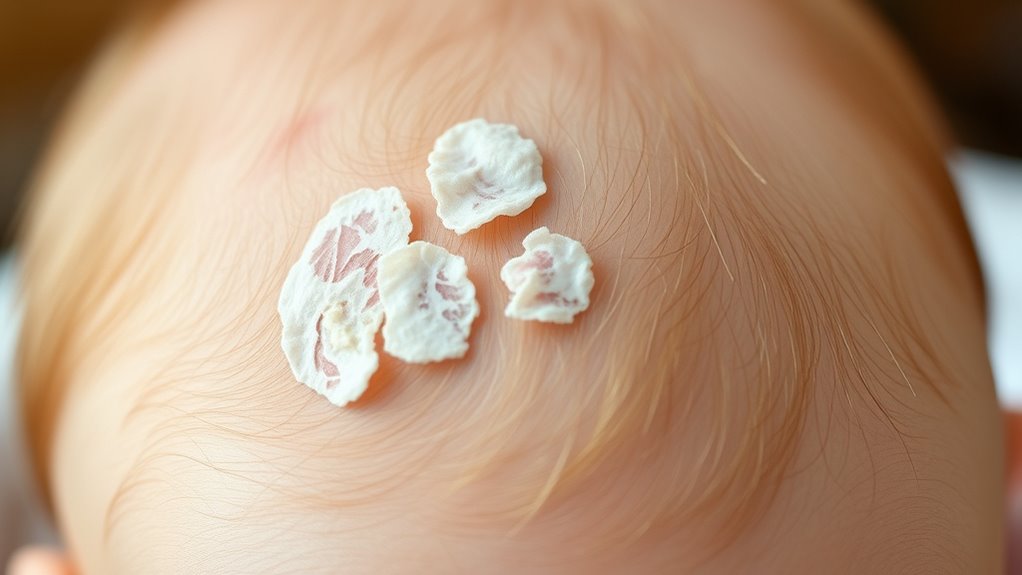
Cradle cap, a common condition that causes greasy, crusty patches on a baby’s scalp, can be concerning for new parents. You might worry about how to treat it or whether it signals a bigger problem. The good news is, cradle cap is usually harmless and manageable. One simple way to help soothe your baby’s scalp is through gentle baby massage. When you massage your baby’s head, you stimulate blood flow and loosen the scales, making it easier to remove the crusty patches. Use soft, circular motions with your fingertips or a gentle baby brush, and be careful not to scratch or irritate the skin. Consistency is key—regular massage can markedly reduce cradle cap over time.
You might also notice that your baby develops diaper rash alongside cradle cap, especially if they have sensitive skin. While diaper rash isn’t directly linked to cradle cap, both conditions benefit from good skin care routines. For diaper rash, keeping the diaper area clean and dry is essential. Change diapers frequently and gently clean the area with water or fragrance-free wipes. Allow the skin to breathe by giving your baby some diaper-free time, which can also help with cradle cap if flakes fall onto the skin around the scalp and forehead. Applying a barrier ointment like zinc oxide can protect against further irritation and help prevent both diaper rash and cradle cap from worsening.
If cradle cap persists or worsens, you might consider using mild, baby-safe oils or shampoos. Applying a small amount of mineral oil or petroleum jelly before washing can loosen the scales, making removal easier. When washing your baby’s hair, use a gentle, tear-free shampoo and rinse thoroughly to avoid residue that might irritate the skin. Be sure to brush off the loosened flakes softly with a soft-bristled brush or washcloth. Avoid scrubbing harshly, which can cause discomfort or damage delicate skin. Additionally, understanding the potential pitfalls in adopting new payment technologies can help ensure the safety and security of your baby’s information if you are using digital services related to parenting or healthcare.
Top picks for "cradle treat prevent"
Open Amazon search results for this keyword.
As an affiliate, we earn on qualifying purchases.
Conclusion
Now that you know how to treat and prevent cradle cap, you’ll feel more confident caring for your little one’s scalp. With gentle daily care, you’ll keep their skin healthy and free from stubborn flakes. Think of it like tending a tiny garden—patience and love nurture growth. Remember, with consistent effort, cradle cap will become just a distant memory, like a forgotten chapter in a well-loved story. You’ve got this!