

If you notice your baby tugging at their ears, fussiness, trouble sleeping, or changes in feeding habits, they might have an ear infection. Prevent it by feeding them upright and maintaining good hygiene of bottles and nipples. Teething can also cause similar signs, so managing their discomfort helps. Congestion from colds or allergies increases infection risk, so keeping nasal passages clear is important. Continue exploring ways to protect your little one and recognize early symptoms more effectively.

Turn the school run and nap time into listening time
- Thousands of audiobooks, podcasts and originals
- Listen on your phone, tablet or Echo — also offline
- Cancel anytime
Key Takeaways
- Look for signs like ear tugging, fussiness, trouble sleeping, or feeding changes to identify ear infections in babies.
- Proper feeding position, such as keeping your baby upright during feeds, helps prevent fluid buildup in the ears.
- Managing teething discomfort and maintaining good ear hygiene can reduce the risk of ear infections.
- Reducing nasal congestion with gentle suction and humidifiers can help keep Eustachian tubes clear.
- Consult a pediatrician for persistent symptoms or if you suspect an ear infection for appropriate diagnosis and treatment.
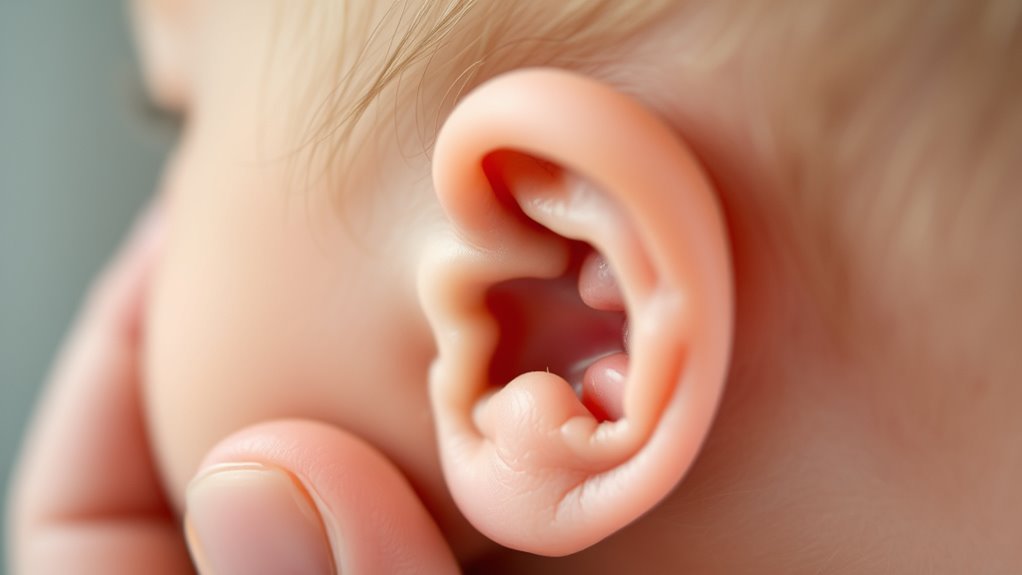
Ear infections are a common concern for babies, often causing discomfort and fussiness. If your little one is tugging at their ears, crying more than usual, or having trouble sleeping, an ear infection might be the culprit. But sometimes, their behaviors can be linked to teething discomfort or changes in feeding habits. Understanding these connections can help you identify the problem quickly and seek appropriate care.
Ear tugging and fussiness may signal ear infections, teething, or feeding issues—understanding these signs helps ensure proper care.
When babies are teething, they often experience increased drooling, gum swelling, and irritability. This discomfort can make them more prone to ear infections because the nerves in the gums and ears are closely connected. As your baby chews on toys or fingers to soothe teething pain, they may also introduce bacteria into their mouth that can travel to the middle ear, increasing infection risk. Additionally, teething can cause changes in feeding habits—your baby might refuse certain bottles or breastfeeds, or they might want to feed more frequently because of sore gums. These altered feeding patterns can sometimes lead to more fluid buildup in the middle ear, creating a breeding ground for bacteria.
Feeding habits play a significant role in the development and prevention of ear infections. For example, feeding your baby in an upright position helps prevent milk or formula from flowing into the Eustachian tubes, which connect the middle ear to the throat. When your baby is lying flat, liquids can easily travel back into the ear, promoting infection. If you notice your baby prefers lying down during feeds, try to adjust their position to keep their head elevated. Also, ensure that bottles and nipples are clean, as bacteria from contaminated feeding equipment can contribute to ear infections.
Another factor to contemplate is the type of milk or formula your baby consumes. Sometimes, excessive mucus production caused by allergies or illness can clog the Eustachian tubes, making infections more likely. If your baby is congested or has a cold, their risk of developing an ear infection increases. Keeping their nose clear with gentle suction and using humidifiers can help reduce congestion and support their overall comfort.
Monitoring your baby’s feeding habits and teething behaviors can give you clues about their discomfort. If you notice persistent fussiness, ear tugging, or changes in feeding routines, consult your pediatrician. They can determine whether an ear infection is present and recommend appropriate treatment. Taking steps to support good feeding practices, manage teething discomfort, and maintain hygiene can help lower the chances of infections and keep your baby comfortable and healthy.
baby ear infection relief products
As an affiliate, we earn on qualifying purchases.
As an affiliate, we earn on qualifying purchases.
Conclusion
In short, spotting signs, staying vigilant, and seeking swift support can markedly soothe your baby’s suffering. By being prepared and proactive, you prevent potential problems from piling up. Remember, prompt prevention and proper treatment turn troubling ear infections into tiny troubles you can tame. Trust your instincts, keep communication clear, and comfort your little one with care and compassion. With these simple steps, you’ll confidently conquer common childhood challenges and create calm, cozy moments for your baby.
Evergreen bestsellers Picks
bestsellers
As an affiliate, we earn on qualifying purchases.