

At 18 months, your toddler makes exciting strides in language, exploring sounds, words, and simple phrases like “mama” or “dada.” They become more curious and confident, exploring new objects and attempting to imitate actions. Their physical activity increases as they become more mobile, supporting growth through play. Proper nutrition and establishing routines help with their development. If you keep exploring, you’ll discover more ways to support their ongoing growth and curiosity.

Turn the school run and nap time into listening time
- Thousands of audiobooks, podcasts and originals
- Listen on your phone, tablet or Echo — also offline
- Cancel anytime
Key Takeaways
- Your 18-month-old imitates sounds, words, and simple phrases while expanding their vocabulary rapidly.
- They explore their environment confidently, demonstrating curiosity and engaging in active learning.
- Nutrition should include a variety of soft, nutrient-dense foods, avoiding sugary snacks and drinks.
- Physical activity increases as your toddler becomes more mobile, supporting motor skill development.
- Establishing consistent routines and encouraging independence foster healthy habits and security.
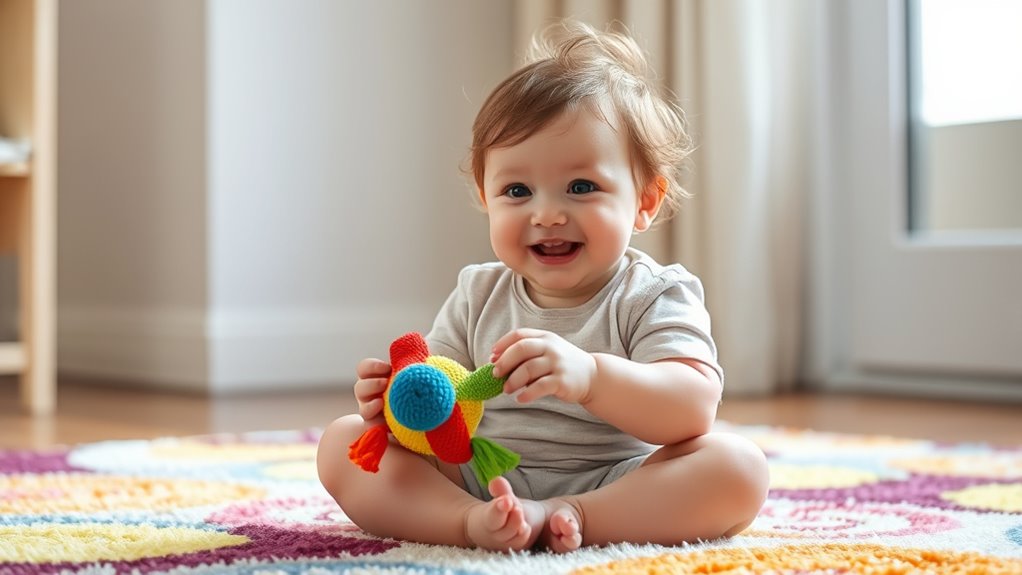
At 18 months, your toddler is exploring the world with increasing confidence and curiosity. This is a time of rapid growth, especially in language development. You’ll notice your little one trying to imitate sounds, words, and even simple phrases. They may say “mama” or “dada,” and might even attempt to name familiar objects or people. Their vocabulary is expanding quickly, and they’re beginning to understand more of what you say. Engaging with them through conversations, reading books, and singing songs can boost their language skills. You’ll find that they respond to their name and understand simple instructions like “bring me the toy” or “stop.” It’s crucial to support this language growth through patience and frequent, meaningful interactions.
At 18 months, toddlers explore and imitate, rapidly expanding their vocabulary and understanding through engaging interactions.
Alongside their language development, their nutritional needs are also evolving. At this stage, toddlers require a well-balanced diet that provides essential nutrients to support their growth. They’re likely eating a variety of foods, including fruits, vegetables, grains, proteins, and dairy. Since their appetites can fluctuate, offering small, frequent meals works best. Focus on providing nutrient-dense options to ensure they get enough vitamins and minerals, especially iron, calcium, and vitamin D. Avoid sugary snacks and drinks, which can lead to dental issues and unhealthy weight gain. As they become more mobile and active, their energy requirements increase, so make sure their diet supports their physical activity and brain development. Also, remember that at this age, they’re still learning to chew and swallow, so textures should be appropriate—soft, manageable pieces that encourage safe eating habits.
Your toddler’s nutritional needs aren’t just about what they eat but also about establishing healthy eating habits. Offer a variety of flavors and textures to prevent picky eating later on and to foster a positive relationship with food. Drinking water regularly is essential, and milk continues to be an important source of calcium and vitamin D. Be attentive to their cues for hunger and fullness, and try to create a consistent mealtime routine, which helps them feel secure and promotes good eating habits.
This period is a perfect opportunity for you to encourage their independence during mealtimes and conversations. Supporting their language development and meeting their nutritional needs in these formative months helps set the stage for healthy growth, learning, and exploration. Keep in mind that every child develops at their own pace, so stay patient and celebrate each new word, skill, and milestone they reach along the way.
Products Worth Considering

Owlet Dream Duo Smart Baby Monitor System – includes 3 months of Owlet360

Owlet Dream Sight Smart Baby Monitor Camera with Floor Stand

Owlet Dream Duo 3 Smart Baby Monitor System with Dream Sock and 2K HD Camera
As an affiliate, we earn on qualifying purchases.
Conclusion
At 18 months, your toddler is a whirlwind of growth, curiosity, and discovery. Embrace each new milestone as a stepping stone on their unique journey, knowing that every little achievement builds the foundation for their future. Remember, while this stage might feel fleeting, it’s also the start of endless possibilities. Like a seedling reaching for the sun, your little one’s potential is boundless—nurture it with love, patience, and wonder.