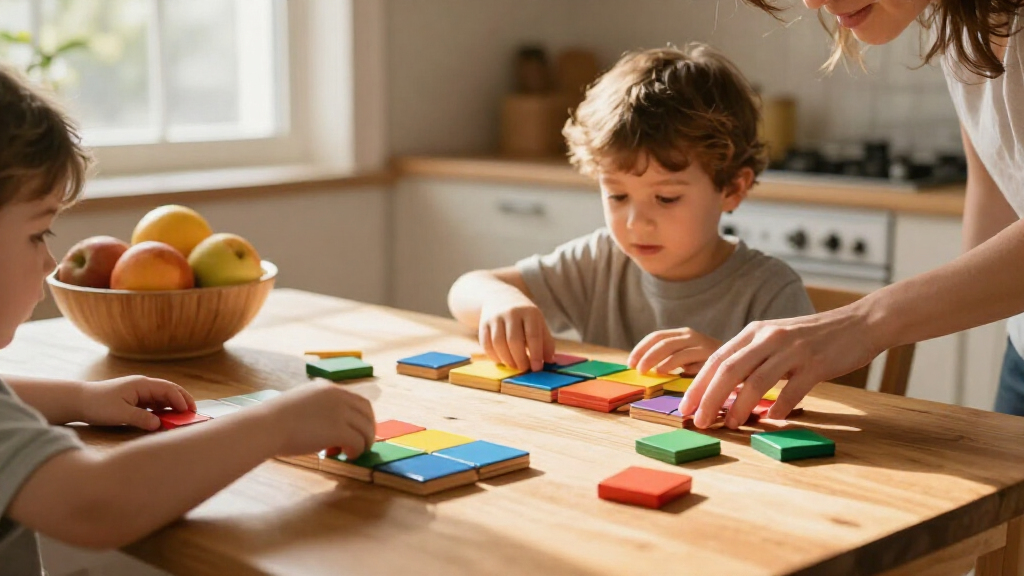

For most families, Ravensburger Colorino is the best overall color matching game because its simple, hands-on color recognition format is accessible to young children. Hues and Cues stands out for family groups who want conversation and creative color guessing, while Toywoo Wooden Color Matching and Stacking Game suits children who learn through arranging physical pieces. The main choice is between straightforward matching, broader sorting and memory activities, and head-to-head challenge games; age, piece size, and how many people can play also matter. Some sets offer more varied learning tasks, while simpler games can be easier for beginners to understand and repeat. Read on for the full breakdown of all 15 options and how I’d match each one to a household.

Turn the school run and nap time into listening time
- Thousands of audiobooks, podcasts and originals
- Listen on your phone, tablet or Echo — also offline
- Cancel anytime
Complete the kit


Key Takeaways
- Ravensburger Colorino is the clearest beginner pick: its color-recognition focus is more approachable for very young children than games built around strategy or open-ended clues.
- Hues and Cues serves a different kind of play: it asks players to describe and interpret colors, making it better for group conversation than direct color sorting.
- Several two-player challenge sets share a similar format: compare the Minoskia, FLLOBE, LLESSOO, Askemio, and other challenge kits by setup, included pieces, and storage rather than assuming the category name means a distinct game.
- Wooden and Montessori-style toys favor hands-on sorting: options such as Toywoo and the 4-in-1 wooden set may offer varied manipulation, but buyers should check piece size and activity complexity for the intended age.
- Busy books and animal sorting sets broaden the activity: MUONE, the animal sorting toys, and Raccoon Rumpus add sorting, counting, or memory elements, which can suit children who want more than color-to-color matching.


| color matching game | Brand | Players | Recommended age | Material |
|---|---|---|---|---|
| Minoskia Color Matching Challe | Minoskia | 2–4 | 3 years and up | Plastic |
| Askemio Giant Color Matching S | Askemio | 2 | 3 years and up | Plastic |
| Color Challenge Game 2-Pack Co | Hcusus | 2 | — | — |
| Toywoo Wooden Color Matching a | Toywoo | — | 3 years and up | Wood |
| Ravensburger Colorino Color Re | — | 1–4 | — | Plastic |
| Rumexeng Color Match Challenge | Rumexeng | 1 or 2 | 14 years and up | — |
| MUONE Montessori Color Sorting | MUONE | — | 36 months–6 years | Thick, tear-resistant cardboard |
| Animal Color Sorting and Count | FQKIOMY | — | — | Plastic |
| Hues and Cues Color Guessing B | USAopoly | 3–10 | — | — |
| FLLOBE Color Challenge Game | FLLOBE | Solo or 2 players | 6 years and up | — |
| Montessori Animal Color Sortin | Skrtuan | — | 36 months to 6 years | Rubber |
| LLESSOO Color Challenge Game f | LLESSOO | 2 | 6 years and up | — |
| Color Matching Challenge Game | iuuoi | 2 | 36 months to 12 years | Plastic |
| 4-in-1 Wooden Montessori Color | MTTIERY | — | 12 months to 3 years | Natural wood |
| Educational Insights Raccoon R | Educational Insights | 2–4 | — | Paper and plastic |
More Details on Our Top Picks
Minoskia Color Matching Challenge Game, 2-Pack
The Minoskia 2-Pack suits households that want color matching to work as a solo activity or a shared challenge. Players copy patterns by sorting and stacking rings, while individual, cooperative, timed, and competitive modes let the same pieces support different kinds of play. Its 2–4-player range gives it a group-play advantage over the Askemio Giant Color Matching Strategy Game, which is limited to two players. Two sets also make side-by-side play possible without taking turns on one board. The tradeoff is that the listed description gives fewer specifics about challenge-card volume and difficulty progression than the Askemio or Hcusus sets. I’d pick Minoskia for varied play modes, but skip it if you need a clearly detailed card library or an outdoor activity.
Pros:- Two tabletop sets support shared or head-to-head play.
- Four play modes offer more variety than a single race format.
- Designed for 2–4 players, unlike two-player-only options such as Askemio.
- Ring sorting and stacking exercise color recognition and fine motor skills.
Cons:- Designed for indoor use only.
- Play depends on recognizing and reproducing color patterns.
- The product details do not specify a challenge-card count or graded difficulty levels.
Best for: Families with children ages 3 and up who want a ring-stacking color game that can shift between solo, team, and competitive play.
Not ideal for: Buyers who want a specified set of challenge cards or an activity for outdoor use; this is described for indoor play and does not list a card count.
- Brand:Minoskia
- Model:207-94D
- Number of games:2
- Players:2–4
- Recommended age:3 years and up
- Material:Plastic
- Dimensions:5.5 × 2.5 in
- Usage:Indoor
Our verdict“Choose Minoskia if you want a flexible indoor ring-matching game for a small group rather than a card-heavy, two-player race.”
Askemio Giant Color Matching Strategy Game, 2-Player Set
For a pair of players who enjoy racing to reproduce a pattern, the Askemio Giant Color Matching Strategy Game makes the competition easy to understand: follow a challenge card and arrange rings on the matching or empty pegs. Its 50 double-sided cards offer easy and hard levels, giving players a way to raise the challenge without changing games. Compared with the Minoskia Color Matching Challenge Game, Askemio is more firmly built around two-player head-to-head play, rather than offering several group and cooperative modes. Two bases and storage bags also make it more travel-ready than the Toywoo wooden set. The compromises are a strict two-player limit and assembly before play. It is a strong fit for siblings or a parent-child matchup, but less suited to a larger family wanting everyone involved at once.
Pros:- Two bases support simultaneous head-to-head play.
- Fifty double-sided cards provide easy and hard challenges.
- Two storage bags help keep the rings and cards together for travel.
- Pattern play draws on observation, memory, and logic.
Cons:- Limited to two players.
- Requires assembly before play.
- The large listed dimensions may take more room than compact tabletop sets.
Best for: Two children, siblings, or an adult and child who want a portable, card-led pattern race with adjustable difficulty.
Not ideal for: Families seeking a game for three or more players, or buyers who want a ready-to-play set without assembly.
- Brand:Askemio
- Model:207-95
- Players:2
- Recommended age:3 years and up
- Included components:2 bases, 2 storage bags, 50 double-sided challenge cards, 80 colorful rings
- Material:Plastic
- Dimensions:22 × 6.69 in
- Operation mode:Manual
Our verdict“Pick Askemio for a portable two-player pattern race with varied card difficulty, not for group play.”
Color Challenge Game 2-Pack Color Matching Puzzle
The Hcusus Color Challenge Game is the most structured pick here for players who want a clear step up from simpler color copying. Its 100 cards split between Easy and Hard modes create a defined progression, while 120 rings and two stack racks let two players work at once. The included bell adds a race element that the Toywoo Wooden Color Matching and Stacking Game does not specify, and the drawstring bag makes the set easier to put away. Although the listing describes solo and head-to-head play, its player specification says two, so I would not choose it for a larger group. It also asks players to sort and stack many loose rings by hand; younger children may find that more fiddly than the large-peg Ravensburger Colorino.
Pros:- One hundred cards are divided into Easy and Hard challenges.
- Two stack racks support simultaneous head-to-head play.
- Includes 120 rings, a bell, and a drawstring storage bag.
- Designed to encourage focus, color recognition, and problem-solving.
Cons:- Listed for two players, limiting larger-group play.
- Manual sorting and stacking can feel fiddly, especially for younger players.
- The bell and competitive setup may not suit players who prefer relaxed, untimed matching.
Best for: Children age 6 and up who enjoy progressing from easier color patterns to harder puzzles, alone or against one opponent.
Not ideal for: Preschoolers who need larger, simpler pieces, or families wanting a game that supports more than two players.
- Brand:Hcusus
- Players:2
- Minimum age:6 years
- Modes:Easy and Hard
- Challenge cards:100 (50 Easy, 50 Hard)
- Rings:120
- Poles:16
- Stack racks:2
- Dimensions:10 × 7 in
Our verdict“Choose Hcusus if you want a two-player color puzzle with a large, tiered card set and do not mind handling many rings.”
Toywoo Wooden Color Matching and Stacking Game
The Toywoo Wooden Color Matching and Stacking Game is the straightforward choice for buyers who prefer a wooden tabletop set to the mostly plastic ring games in this lineup. Its rack and 60 rings provide the basic materials for color sequencing, while the listed learning aims include counting, pattern recognition, and fine motor practice. Compared with the Minoskia Color Matching Challenge Game, Toywoo’s appeal is its wooden construction, not a wider selection of stated modes: it is listed for two players, and the product details do not explain the rules or how long a round takes. That lack of guidance makes it harder to judge whether the activity is a quick race or open-ended stacking. I’d choose it for simple tabletop play and a wood-component preference, but not for card-driven challenges or a well-defined game format.
Pros:- Wooden rack and rings offer an alternative to plastic-heavy sets.
- Sixty rings provide pieces for color sequencing and stacking.
- Supports pattern recognition, counting, and hand-eye coordination.
- Compact tabletop format is suited to play at a table.
Cons:- Listed for two players, which limits group play.
- Product details do not specify the rules or play duration.
- No challenge-card system or difficulty levels are listed.
Best for: Caregivers seeking a wooden color-sequencing activity for two players, with counting and fine motor practice.
Not ideal for: Buyers who want clearly explained rules, challenge cards, or a game for more than two players.
- Brand:Toywoo
- Material:Wood
- Included components:1 wooden rack, 60 rings
- Recommended age:3 years and up
- Number of players:2
- Item dimensions:11 in L × 3.1 in W
- Item weight:2.2 lb
- Model number:YW-188
Our verdict“Pick Toywoo for a wooden two-player stacking activity, but choose Hcusus or Askemio for more explicit card-based rules and challenges.”
Ravensburger Colorino Color Recognition Game for Ages 2+
Ravensburger Colorino is the gentlest entry point in this group: instead of racing to stack rings, young children place large pegs on a transparent board to match colors and complete picture designs. The 40 large pegs are easier for small hands to grasp than the rings in Hcusus or Askemio, and six double-sided boards offer 12 motifs to revisit. It also accommodates one to four players, a wider range than those two-player ring challenges, with a listed play time of 15 minutes. The tradeoff is a narrower challenge: Colorino focuses on basic color recognition and picture completion, rather than the strategy or escalating difficulty of the Hcusus Color Challenge Game. Older children may outgrow its simple format. I’d choose it for early color learning, not for a competitive puzzle night.
Pros:- Large pegs are designed for young children to handle.
- Twelve picture designs provide varied ways to practice matching.
- Supports one to four players, including solo activity.
- A listed 15-minute play time suits short activity sessions.
Cons:- The simple matching format may not hold older children’s attention.
- Focuses on basic color recognition rather than strategy or advanced pattern puzzles.
- The plastic pegboard format offers a different, less portable play style than the bagged ring sets.
Best for: Caregivers of toddlers and preschoolers who want a short, hands-on introduction to six basic colors and picture matching.
Not ideal for: Older children seeking timed competition, strategic ring puzzles, or more demanding difficulty levels.
- Age range:2+
- Players:1–4
- Play time:15 minutes
- Included components:40 pegs in 6 colors, 6 double-sided motif boards (12 designs), 1 transparent pegboard, instructions in 7 languages
- Material:Plastic
- Model number:20832
- Model year:2022
Our verdict“Choose Colorino for toddler-friendly color and picture matching; choose Hcusus or Askemio when players are ready for more competitive pattern challenges.”
Rumexeng Color Match Challenge Game, Wooden Ring-Stacking Puzzle, 2-Pack
For older players who want color matching to involve planning, Rumexeng’s wooden ring puzzle offers a more deliberate challenge than the picture-based matching in the MUONE Montessori Color Sorting Busy Book. Players recreate patterns by moving rings onto a rack, with 50 cards per game and three stated difficulty levels. Two sets make it possible to race another player or work through challenges alone, so the matching stays focused on solving patterns rather than identifying colors in illustrations. The wooden racks and rings give it a different feel from FLLOBE’s similarly competitive challenge set, though FLLOBE is listed for younger players and includes a bell and storage bag. The tradeoff here is age and pace: it is recommended for ages 14 and up, and moving rings one at a time may feel repetitive.
Pros:- Supports solo puzzles and two-player competition
- Includes 100 challenge cards across the two games
- Three difficulty levels provide a path from easier to harder patterns
- Wooden racks and rings offer a tactile alternative to card-based matching
Cons:- Recommended for ages 14 and up, limiting its use with younger children
- Moving rings one at a time can make rounds feel repetitive
- Designed for one or two players rather than group play
Best for: Teens and adults who enjoy quiet pattern puzzles or one-on-one races with tactile wooden pieces.
Not ideal for: Families looking for a game for young children, larger groups, or fast-changing gameplay; the age guidance starts at 14, and ring moves may feel repetitive.
- Brand:Rumexeng
- Pack size:2 games
- Players:1 or 2
- Recommended age:14 years and up
- Challenge cards:50 per game; 100 total
- Difficulty levels:Easy, Hard, Ultimate
- Rack material:Natural wood
- Ring material:Wood
- Rack size:11.02 × 9.84 × 3.15 inches
Our verdict“Choose Rumexeng for an older player who wants tactile, increasingly challenging pattern puzzles rather than early-learning color activities.”
MUONE Montessori Color Sorting Busy Book for Toddlers
MUONE’s busy book is the most child-centered choice here for matching colors through pictures and hands-on placement. Its 12 colors and more than 48 hook-and-loop pieces give toddlers repeated chances to identify colors while also learning vocabulary and practicing small hand movements. Compared with the Animal Color Sorting and Counting Toy Set, MUONE keeps the activity in a book format rather than asking children to sort loose counters into cups; that can make shared parent-child play feel more guided, but it offers less open-ended sorting. Thick cardboard, rounded corners, and smooth edges suit supervised use, though the book still calls for adult attention. Its age guidance begins at 36 months, so it is not a choice for infants or unsupervised play.
Pros:- Introduces 12 colors alongside vocabulary
- More than 48 hook-and-loop pieces provide repeated matching practice
- Book format supports guided parent-child play
- Thick pages, rounded corners, and smooth edges suit supervised toddler activities
Cons:- Recommended only for children 36 months and older
- Adult supervision is required during play
- Book-based matching is less open-ended than sorting counters and cups
Best for: Caregivers of children ages 3–6 who want a guided, sit-together activity that combines color matching with vocabulary and fine motor practice.
Not ideal for: Buyers seeking independent play for children under 3, open-ended loose-piece sorting, or a game for older kids and groups.
- Brand:MUONE
- Recommended age:36 months–6 years
- Colors:12
- Matching pieces:48+
- Material:Thick, tear-resistant cardboard
- Safety:Non-toxic; meets ASTM F963; rounded corners and smooth edges
- Included components:Sticker book and hook-and-loop fastener
- Set count:1
Our verdict“Pick MUONE for supervised, early color and vocabulary practice in a guided book format, not for independent or group game play.”
Animal Color Sorting and Counting Toy Set
This animal-counter set suits children who learn by sorting, counting, and handling pieces rather than matching a fixed picture. Six colors of animal counters, six cups, and tweezers support several activities, from basic color grouping to patterns and early counting. That makes it more flexible for a caregiver or classroom than the MUONE Montessori Color Sorting Busy Book, whose matching is guided by pages and hook-and-loop pieces. The tradeoff is that this set uses loose plastic parts: they can be easy to grasp and wash, but require supervision and tidying. Its listed capacity of four players also makes it more shareable than the two-player FLLOBE Color Challenge Game, though it is an activity set rather than a structured head-to-head race.
Pros:- Combines color sorting with counting, patterns, and early math activities
- Tweezers add a fine motor challenge beyond simple matching
- Six cups and 36 animal counters support hands-on sorting
- Storage bucket helps keep loose pieces together
Cons:- Plastic components may not suit buyers seeking wooden materials
- Loose counters and tweezers need adult supervision and cleanup
- Recommended for children aged 3 and older
Best for: Preschool teachers, daycare staff, and families who want reusable loose-piece activities for color sorting, counting, and fine motor practice.
Not ideal for: Buyers who want a board-game format, sturdy wooden components, or a no-mess activity with few loose pieces.
- Brand:FQKIOMY
- Age range:3+ years
- Piece count:44
- Animal counters:36 in 6 colors
- Included components:2 tweezers, 6 sorting cups, and storage bucket
- Material:Plastic
- Number of players:4
- Dimensions:3.6 × 3.6 × 6.2 inches
Our verdict“Choose this set for flexible, hands-on sorting and counting with preschoolers, especially in a home or classroom that can manage loose pieces.”
Hues and Cues Color Guessing Board Game
Hues and Cues turns color matching into a group word game: one player gives a one- or two-word clue, and others try to locate the intended shade among 480 hues. That makes it a stronger party pick than FLLOBE’s ring-stacking challenge, which is built around solo or two-player play, and a better fit for conversation than the individual sorting practice in the Animal Color Sorting and Counting Toy Set. The fun depends on how well players communicate—and whether they interpret a clue like “sea glass” in similar ways. That ambiguity is part of the challenge, but it can frustrate players who want one plainly correct match. It also needs at least three players, so it is less flexible for a small household playing as a pair.
Pros:- Large board of 480 hues creates a wide range of possible guesses
- Clue-giving encourages communication and creative thinking
- Supports 3–10 players for family gatherings and parties
- Rules are described as easy to learn
Cons:- Requires at least three players
- Different interpretations of color clues can lead to disagreement
- Its word-game format is less suited to children seeking hands-on sorting practice
Best for: Families and friend groups of three to ten who enjoy word clues, creative interpretation, and conversational party games.
Not ideal for: Two-player households, children under 8, or players who prefer exact-answer matching over subjective color clues.
- Brand:USAopoly
- Players:3–10
- Age range:8 years and up
- Playing time:30 minutes
- Number of colors:480
- Game mechanics:Word game
- Included components:Game board, 100 color cards, 30 player pieces, rulebook, and scoring frame
- Language:English
- Weight:1.22 kg
Our verdict“Pick Hues and Cues when your group wants a social color-guessing game and is comfortable with subjective clues.”
FLLOBE Color Challenge Game, 2-Pack
For families who want a color-matching race that younger children can join, FLLOBE’s 2-pack is more accessible by age than Rumexeng’s wooden ring puzzle, which is recommended for ages 14 and up. Its easy and hard modes change the number of colors and poles, giving children a way to start with simpler patterns before trying a more involved arrangement. The 100 challenge cards, bell, and two racks support quick solo rounds or a head-to-head contest. Compared with Hues and Cues, this is a tactile puzzle rather than a large-group clue game, so it works better for a pair than a party. The main limitation is exactly that: it is designed around one or two players, and the product details do not identify component materials or dimensions.
Pros:- Two difficulty modes vary the number of colors and poles
- Supports solo play and two-player races
- Includes 100 challenge cards for repeated pattern challenges
- Storage bag makes the set easier to pack away or carry
Cons:- Designed for solo or two-player play, limiting group participation
- Component materials and dimensions are not specified
- A race-and-rack format may be less suitable for children who prefer open-ended sorting
Best for: Families with children ages 6 and up who want a portable color-pattern activity for solo play or races between two players.
Not ideal for: Large families or party groups, and buyers who need specified component materials or dimensions before choosing.
- Brand:FLLOBE
- Model:SCDD002
- Recommended age:6 years and up
- Players:Solo or 2 players
- Game modes:Easy: 4 colors, 6 poles; Hard: 6 colors, 8 poles
- Challenge cards:100 total: 50 easy and 50 hard
- Included components:2 stack racks, 16 poles, 120 rings, 100 challenge cards, 1 bell, 1 storage bag, and instructions
- Unit count:2
Our verdict“Choose FLLOBE for an age-accessible, two-player color-pattern race with graded challenges and portable storage.”
Montessori Animal Color Sorting and Counting Toy Set
Animal-based color sorting gives this set a different feel from the ring-and-card races in the LLESSOO Color Challenge Game for 2 Players. Children sort forest animals into bowls, compare colors, and count pieces, while the included tweezers add a fine-motor task that keeps the activity hands-on. At 36 animals and six bowls, there are enough pieces for repeated sorting patterns without requiring a board or challenge cards. Washable rubber pieces also suit play that may involve frequent handling. The tradeoff is its preschool focus: it is less suited to older children seeking timed competition or layered puzzles. The listing specifies one player, so it works better for independent practice than group game night.
Pros:- Combines color recognition with counting and sorting
- Tweezers encourage fine-motor practice and hand-eye coordination
- Washable rubber animals suit frequent handling
- Includes six bowls for organizing color-sorting activities
Cons:- Designed for ages 3 to 6, limiting its appeal to older children
- One player is listed, so it is not geared toward group competition
- Open-ended sorting offers less structured challenge progression than card-based games
Best for: Preschool families seeking a hands-on solo activity that combines color sorting, counting, and tweezer practice
Not ideal for: Older children or families looking for a competitive game with explicit multiplayer rules
- Brand:Skrtuan
- Included animals:36
- Sorting bowls:6
- Tweezers:2
- Material:Rubber
- Recommended age:36 months to 6 years
- Players listed:1
- Educational objectives:Hand-eye coordination, motor skills, and sorting
Our verdict“Choose this set for preschoolers who learn through sorting and counting, but pick a challenge-card game for competitive play.”
LLESSOO Color Challenge Game for 2 Players
Competitive color sorting is the main draw here: players use challenge cards to arrange rings on poles, with rules that require moving a ring to an empty pole or onto a ring of the same color. That makes it more structured and race-ready than the open-ended Montessori Animal Color Sorting and Counting Toy Set. With 100 cards in two difficulty levels, it offers a clearer path from easier puzzles to tougher ones, and the bell gives races a definite finish. Solo timed play is also listed, which adds flexibility when a second player is unavailable. The tradeoff is its two-player emphasis; it is a weaker fit for larger groups. The listing also omits component materials and dimensions, so buyers have less detail about the physical set than the iuuoi Color Matching Challenge Game Set, 2 Pack.
Pros:- Includes 100 challenge cards split between easy and hard levels
- Supports both timed solo puzzles and two-player races
- Winner bell makes head-to-head rounds easy to finish
- Storage bag helps keep rings and game pieces together
Cons:- Two-player setup limits use for larger groups
- Materials and component dimensions are not specified
- Ring-moving rules may take more explanation than open-ended matching toys
Best for: Families with children six and older who want structured color puzzles for one-on-one races or timed solo play
Not ideal for: Larger households or buyers who want clear information about component materials and dimensions
- Brand:LLESSOO
- Players:2
- Recommended age:6 years and up
- Easy mode:6 poles and 40 rings
- Hard mode:8 poles and 60 rings
- Challenge cards:100 (50 easy and 50 hard)
- Included components:2 stack racks, 120 colored rings, winner bell, storage bag, and quick-start guide
- Model:SCDD002
Our verdict“Pick this for structured two-player color races with a range of card challenges, not for larger-group play.”
Color Matching Challenge Game Set, 2 Pack
Two ways to play set this compact kit apart: players can race to copy card patterns, or connect the bases to work on a solo puzzle. Its 50 double-sided cards include easy and hard challenges, giving it more guided variety than the 4-in-1 Wooden Montessori Color Sorting Toy, which focuses on hands-on sorting rather than card-driven puzzles. The listed five-minute playing time suits short rounds, while the small collection of bases, pillars, rings, and connectors is easier to pack away than a larger sorting setup. There is a notable limitation: it is listed for two players, so its solo mode does not make it a group game. Age guidance also appears inconsistently in the description and specifications, making age suitability less clear.
Pros:- Double-sided cards provide easy and hard pattern challenges
- Bases can connect for a solo puzzle option
- Compact set is suited to storage and travel
- Short listed playing time supports quick rounds
Cons:- Listed for two players, limiting group play
- Age guidance is inconsistent between the description and product details
- Plastic components offer less of a natural-material feel than wooden sorting toys
Best for: Caregivers seeking a portable color-pattern activity that can work as a short two-player race or solo puzzle
Not ideal for: Families needing a game for more than two players or wanting consistent age guidance before buying
- Brand:iuuoi
- Model:207-94B
- Pack count:2
- Players:2
- Recommended age:36 months to 12 years
- Included components:50 double-sided cards, 2 bases, 12 pillars, 80 rings, connectors, and manual
- Material:Plastic
- Dimensions:17 x 2.5 inches
- Estimated playing time:5 minutes
Our verdict“Choose this for portable, short pattern challenges with a solo option, provided its age guidance fits your child.”
4-in-1 Wooden Montessori Color Sorting Toy
Four sorting formats in one wooden set make this a tactile alternative to the card-based Color Matching Challenge Game Set, 2 Pack. Lids, colored sticks, shape sticks, popsicle sticks, and discs invite toddlers to match and sort through different kinds of hand movements, so the activity goes beyond identifying colors alone. Natural wood, rounded edges, and non-toxic paint are listed as design features, while the drawstring bag makes the pieces easier to carry or store. Compared with the rubber animals in the Montessori Animal Color Sorting and Counting Toy Set, this pick offers more variation in piece shapes but less emphasis on counting animals. Its main drawback is age uncertainty: the listing gives differing age guidance, and small pieces call for adult supervision around young children.
Pros:- Four types of lids and multiple stick and disc shapes support varied sorting tasks
- Natural wood construction offers a different tactile experience from plastic or rubber sets
- Rounded edges and non-toxic paint are listed features
- Drawstring canvas bag helps with storage and carrying
Cons:- Small pieces require supervision around young children
- Age guidance varies across the listing
- Sorting play is less structured than games with challenge cards and race rules
Best for: Caregivers of toddlers who want a wood-based sorting activity with several piece shapes and play formats
Not ideal for: Buyers who need consistent age guidance or a game for independent play with very young children
- Brand:MTTIERY
- Material:Natural wood
- Pieces:22
- Contents:4 types of lids, 8 colorful sticks, 8 popsicle sticks, 5 shape sticks, and 5 discs
- Recommended age:12 months to 3 years
- Included accessory:Drawstring canvas bag
- Manufacturer part number:Yhhy-btsg-4pcs
Our verdict“Choose this wooden set for supervised toddler sorting with varied shapes, but favor a card game for rules-based challenges.”
Educational Insights Raccoon Rumpus Matching and Memory Game
Color matching becomes a social game in Raccoon Rumpus: players roll color and costume dice, then match outfits to raccoon cards. Its two modes—matching and memory—give it more variety than the Montessori Animal Color Sorting and Counting Toy Set, which is listed for one player and centers on sorting practice. The two-to-four-player format also makes this a stronger fit for siblings or a small preschool group, with turn-taking built into play. Costume vocabulary adds another learning angle beyond color recognition. The tradeoff is a narrower age range of 3 to 6 years, and at least two players are required, unlike the solo option listed for the LLESSOO Color Challenge Game for 2 Players. Buyers seeking a quiet independent activity should look elsewhere.
Pros:- Matching and memory modes provide two ways to play
- Combines color recognition with clothing vocabulary and recall
- Supports turn-taking among two to four players
- Jumbo dice are part of the included components
Cons:- Requires at least two players
- Age range of 3 to 6 years limits its longer-term appeal
- Paper and plastic components provide a different tactile experience from wooden sorting sets
Best for: Families or preschool groups with two to four children ages 3 to 6 who can play together
Not ideal for: Caregivers seeking a solo activity or a game that will remain challenging for older children
- Brand:Educational Insights
- Model:EI-1734
- Age range:3–6 years
- Players:2–4
- Included components:4 raccoon cards, 20 costume cards, 1 jumbo color die, 1 jumbo costume die, and game guide
- Material:Paper and plastic
- Game modes:Matching and memory
- Warranty:1 year against manufacturer defects
Our verdict“Pick Raccoon Rumpus for preschoolers learning colors and turn-taking together, not for solo play or older children.”
How We Picked
I compared the 15 options by how directly they support color recognition and matching, how easy the rules and pieces appear for the intended age, and how well each format fits its likely setting. I also weighed play variety, player count, portability, and material style: a tabletop challenge game has different strengths from a wooden sorting toy or a soft busy book. Clear age guidance and the practical fit of the components matter because a game that is too complex or awkward to handle can undermine its learning purpose.
The order favors options with a clear use case and accessible play, then distinguishes picks for group interaction, hands-on practice, and specialized needs. Similar two-player challenge sets are not treated as automatically interchangeable in every household; buyers should compare their exact included components and instructions. I give less weight to broad educational claims than to the actual play format, since direct matching, open-ended guessing, sorting, and memory practice build different experiences.
| color matching game | Material |
|---|---|
| Minoskia Color Matching Challe | Plastic |
| Askemio Giant Color Matching S | Plastic |
| Color Challenge Game 2-Pack Co | — |
| Toywoo Wooden Color Matching a | Wood |
| Ravensburger Colorino Color Re | Plastic |
| Rumexeng Color Match Challenge | — |
| MUONE Montessori Color Sorting | Thick, tear-resistant cardboard |
| Animal Color Sorting and Count | Plastic |
| Hues and Cues Color Guessing B | — |
| FLLOBE Color Challenge Game | — |
| Montessori Animal Color Sortin | Rubber |
| LLESSOO Color Challenge Game f | — |
| Color Matching Challenge Game | Plastic |
| 4-in-1 Wooden Montessori Color | Natural wood |
| Educational Insights Raccoon R | Paper and plastic |
Factors to Consider When Choosing Best Color Matching Games
Color games can look alike in a listing while asking children to do very different things. I’d start with the kind of play you want to repeat at home, then check age fit, supervision needs, and whether the game can grow with the child.
Choose the skill, not just the color theme
Direct matching asks a child to identify two colors that correspond, while sorting adds the task of grouping several items by a shared trait. Guessing games ask players to communicate what a color looks like, and memory games add recall to the color task. These are related but not identical skills, so a bright palette alone does not tell you what the game teaches through play. A common mistake is choosing a more complicated activity because it appears to offer more learning, even when the child is still practicing basic recognition. Pick one main skill the child can enjoy repeating, then look for added activities only if they feel manageable.
Match piece size and handling to the child
Young children often benefit from components that are easy to grasp, place, and distinguish without delicate movements. Small pieces may make a set compact, but they can also be harder to manage and may require closer adult supervision; check the manufacturer’s age guidance and warnings. Wooden pieces can feel sturdy, while cards, books, and lightweight components may be easier to carry or store. Neither material guarantees a better game: the important question is whether the child can handle the pieces safely and independently enough for the intended activity. If several ages will share the set, plan for the youngest player’s abilities rather than buying around the oldest child.
Decide whether play should be solo, cooperative, or competitive
A solo sorting activity can suit short independent play, while a two-player challenge creates turn-taking and a clear shared goal. Group guessing games bring more voices into the activity but depend on players being comfortable giving clues and interpreting them. Think about who will actually be present during play: a set designed for two may be less useful for a larger family, and a group game can lose its appeal when only one child is available. Competitive formats may motivate some children and frustrate others, especially when speed or accuracy drives the outcome. Choose the social format that fits your household’s usual play time rather than the biggest advertised player count.
Look for variety that adds replay, not clutter
Extra cards, sorting tasks, counting prompts, or memory rounds can extend a game’s usefulness, but only when the activities are easy to understand and use. A multi-activity set may be a good fit for a child whose interests change quickly; a focused matching game can be better for a beginner who benefits from repetition. Check whether different modes use the same pieces or require separate setup, since a long setup can discourage frequent play. Instructions should make it clear how to adapt an activity as the child gains confidence. I would favor a small number of usable variations over a large feature list that is difficult to put into practice.
Think about storage and where the game will be played
Tabletop games with many loose components may be best for a dedicated play space, while a busy book or compact kit can suit travel and waiting-room use. Before choosing, check how the pieces are stored and whether the container closes securely enough for your routine. Large-format games can be easier to see and share across a table, but they need more room. A portable set is convenient only if its pieces are not so small or numerous that they become difficult to keep together. Match the format to the places you expect to use it, rather than assuming every color game is equally easy to take along.
Pay for a better fit, not a longer feature list
A higher-cost set makes more sense when its materials, number of activities, or group format will be used regularly. For a child learning basic color recognition, a simple, clear activity may serve better than a complex set with extra components. If the game will be shared by siblings or used in repeated family play, broader modes and sturdy construction may matter more. Compare what is actually included, the age guidance, and the expected play setting before weighing the number of pieces. The best value is the option that fits the child and gets used, not the one with the most tasks on its packaging.
Frequently Asked Questions
Which kind of color matching game works best for a toddler who is just learning colors?
Start with a game that has a direct, visible match and a small number of choices at a time. Clear pieces and simple rules can make it easier for a toddler to focus on the color rather than remembering several steps. Check the stated age range and any small-piece warnings before buying, and stay nearby during play when needed. Sorting toys may suit a child who likes handling objects, while a structured recognition game can help when you want a more guided activity. If the child loses interest quickly, shorter rounds are usually more practical than a set with many modes.
Are two-player color challenge games meaningfully different from one another?
They may share a challenge-and-match concept, but the included pieces, rules, and setup can still affect how they play. Compare the actual component list and instruction details rather than relying on a similar product name or photo. Also check whether the activity rewards speed, careful matching, or strategy, since those formats suit different players. If you are choosing between several similar kits, storage and clarity of the rules can matter more than small cosmetic differences. For a first game, favor the set whose instructions and play objective are easiest to understand.
Should I choose a wooden sorting toy or a card-and-board game?
Choose based on how the child prefers to interact with a task. Wooden sorting toys offer physical pieces to place, stack, or group, which may appeal to children who enjoy hands-on manipulation. Card-and-board games can be easier to set up for turn-taking and may suit family play or activities with defined rules. Check the size and number of the pieces, along with cleanup and storage, because those practical details shape how often a toy gets used. Neither format is automatically more educational; the stronger choice is the one that matches the child’s age, handling ability, and play style.
Can one color game work for children at different skill levels?
It can, particularly when the game allows adults to vary the number of choices or add simple challenges for older players. A basic matching round can give a beginner a clear task, while sorting, counting, memory, or clue-based play can extend the activity for a more experienced child. Before buying, check whether those variations are explained or whether you would need to invent them yourself. Keep the shared activity cooperative when a competitive format could make the skill gap frustrating. A flexible game is useful only if its pieces and rules remain approachable for the youngest player.
What should I check before choosing a color game for travel or waiting rooms?
Look for a compact format with pieces that can be contained securely and a setup that does not require a large flat surface. A busy book or small sorting kit may be easier to manage than a wide tabletop challenge, though its activities should still suit the child’s age. Consider whether pieces could be lost easily and whether an adult will need to sort or reset them after each round. Check the product’s age guidance and component details instead of assuming a portable size is automatically suitable for every child. For travel, simple rules and quick cleanup often matter more than having many play modes.
Conclusion
Best overall: I’d start with Ravensburger Colorino for a clear, beginner-friendly focus on recognizing colors. Best for family group play: Hues and Cues offers a more social guessing format, while best for hands-on sorting: Toywoo’s wooden game suits children who like manipulating and arranging pieces. For young beginners who need broader practice, compare the Montessori-style sorting options and Raccoon Rumpus by age fit, component handling, and activity type. If you want a two-player challenge, choose among the challenge sets by the exact contents and instructions rather than their similar names. There is no single best format for every child: match the game to the skill, setting, and playmates you have in mind.