

Playing hide-and-seek with your child helps develop their memory and understanding of object permanence by encouraging them to remember hiding spots and realize that hidden people or objects still exist. It promotes visual tracking, focus, and attention, which are essential for cognitive growth. By varying hiding locations and encouraging your child to seek, you strengthen their problem-solving skills and confidence. Keep exploring how this simple game boosts your child’s brain development even further.

Turn the school run and nap time into listening time
- Thousands of audiobooks, podcasts and originals
- Listen on your phone, tablet or Echo — also offline
- Cancel anytime
Key Takeaways
- Hide-and-seek enhances children’s memory and understanding of object permanence by encouraging repeated hiding and seeking experiences.
- The game improves visual tracking and focus as children follow the hidden or moving objects with their eyes.
- Parental guidance and varied hiding spots challenge children’s recall and observation skills, supporting cognitive development.
- Repeated play fosters anticipation, builds confidence, and strengthens neural pathways related to memory and attention.
- Engaging in hide-and-seek promotes overall cognitive, visual, and motor skills essential for early childhood development.
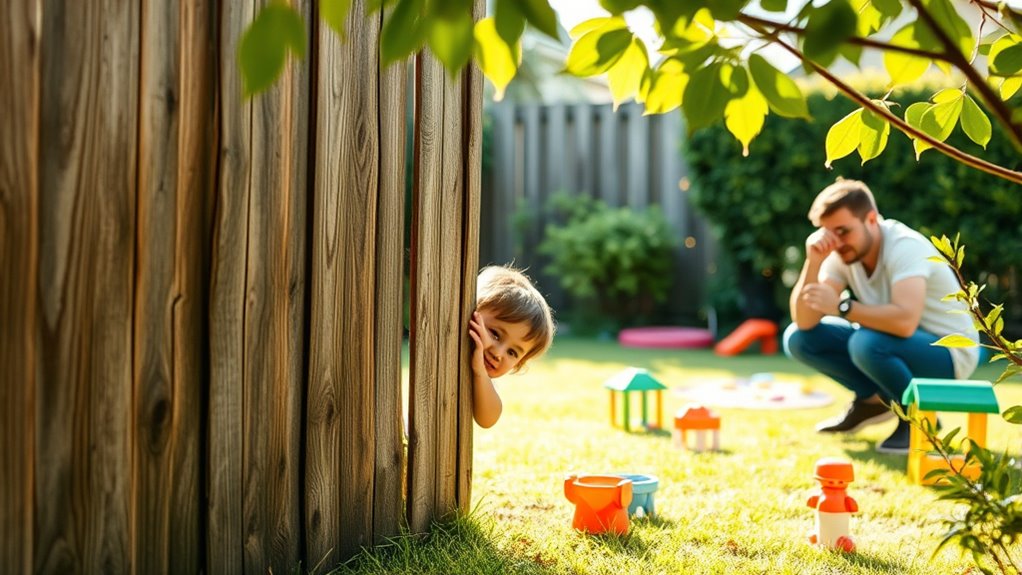
Hide-and-seek is more than just a fun game; it’s a powerful tool for helping children develop essential cognitive skills like memory and object permanence. When you play this game, you’re not only providing entertainment but also engaging your child’s brain in ways that promote critical growth. One key aspect of this process is visual tracking, which is the ability to follow moving objects with the eyes. As you hide and then call out or peek out from different spots, your child learns to focus and follow your movements or the hidden object. This skill is fundamental for overall cognitive development because it enhances attention span, improves hand-eye coordination, and lays the groundwork for more complex visual processing tasks.
During hide-and-seek, your child begins to understand that objects and people continue to exist even when they are out of sight. This concept, known as object permanence, is essential for developing a sense of stability and understanding of the environment. When you hide behind a curtain or under a blanket, your child observes that you haven’t disappeared forever. Instead, they start to grasp that you are still present, just out of view. This realization boosts their confidence and encourages curiosity about the world around them. Playing hide-and-seek repeatedly helps strengthen this understanding, as children learn to anticipate where you might be hiding and remember previous hiding spots.
Your role in guiding your child through these experiences is indispensable. By encouraging them to watch your movements carefully and remember where you hid, you’re supporting their visual tracking skills and memory development simultaneously. As they become more adept at following your cues and recalling hiding spots, they’re building neural pathways that support more advanced cognitive functions later on. Moreover, as your child practices searching and remembering, they develop problem-solving skills and gain independence. You can make the game more engaging by varying hiding spots or hiding in different ways, which challenges their visual tracking and memory even further.
As an affiliate, we earn on qualifying purchases.
Conclusion
Playing hide-and-seek isn’t just fun; it actually helps develop your child’s memory and understanding of object permanence. Some experts believe that this game stimulates brain connections, making it easier for your little one to remember objects and realize they still exist even when out of sight. While not all agree on every detail, many agree that engaging in such playful activities fosters essential cognitive skills, setting a strong foundation for your child’s learning and development.
Fall Picks
fall essentials
As an affiliate, we earn on qualifying purchases.