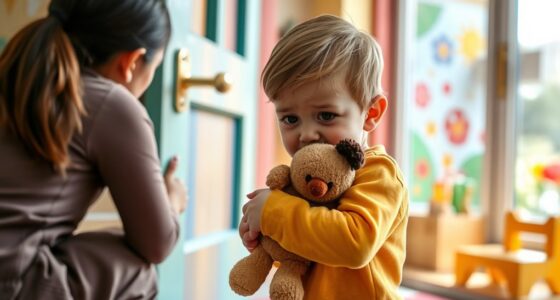
Stranger anxiety happens because your child is developing emotional awareness and trust, making them wary of unfamiliar people. It’s a normal part of their growth, showing they’re learning to differentiate between familiar and new faces. To manage it, introduce new people gradually, stay close to provide reassurance, and let your child engage at their own pace. Keep supporting and understanding them; if you explore further, you’ll discover more helpful ways to guide this stage seamlessly.
Key Takeaways
- Stranger anxiety is a normal developmental phase indicating emotional growth and the ability to differentiate between familiar and unfamiliar people.
- It typically manifests through clinginess, caution, or distress around new faces, signaling increased social awareness.
- Managing it involves introducing new people gradually, staying close, and offering reassurance without forcing interactions.
- Supporting emotional development includes talking about feelings, using stories, and respecting the child’s pace to foster security.
- This phase is temporary; patience and understanding help children build confidence and healthy social skills over time.

Stranger anxiety is a common phase in a child’s development when they become wary or nervous around unfamiliar people. During this time, your child’s emotional development is rapidly evolving, and their reactions to new faces reflect their growing awareness of the world around them. This behavior isn’t a sign of insecurity or shyness alone but a natural part of how children learn to navigate social interactions. As they encounter new people, your child may cling to you more or show signs of distress, which can be challenging for you as a parent, but it’s a sign they’re developing important emotional skills.
Stranger anxiety signals your child’s emotional growth and social development.
At this stage, your child’s feelings of discomfort are often rooted in their need for safety and trust. Their emotional development involves learning to differentiate between familiar and unfamiliar, which helps them build confidence in their surroundings. When they see someone new, their brain processes this as unfamiliar, triggering a cautious response. This isn’t just about fear but a way of processing social cues—your child is figuring out who can be trusted and how to respond appropriately. These reactions are essential steps in developing social interactions that will serve them throughout life.
Managing stranger anxiety requires patience and understanding. You can support your child’s emotional development by introducing new people gradually and in a familiar setting. When you do meet someone new, stay close and provide reassurance, demonstrating that it’s safe to explore new social interactions. Encourage your child to observe others and engage at their own pace. Avoid forcing interactions, as this can increase anxiety and hinder their social confidence. Instead, give them control over the situation, which helps them feel secure and respected.
It’s also helpful to talk to your child about their feelings. Use simple language to explain that it’s okay to feel shy or unsure around new people. Sharing stories or role-playing social scenarios can make unfamiliar situations less intimidating. Incorporating positive reinforcement can encourage your child to approach new social settings with more confidence. Remember that this phase is temporary; most children outgrow stranger anxiety as their emotional development matures and they become more comfortable with social interactions. Your support and patience help lay the foundation for healthy social skills and emotional resilience.
Ultimately, understanding that stranger anxiety is a normal part of development allows you to approach it with empathy and calmness. By fostering a safe environment and respecting your child’s pace, you help them build the confidence needed for future social encounters. This period of wariness is a sign they’re learning, growing, and developing the emotional tools necessary for forming meaningful relationships as they continue to explore their social world.

Who What Why Conversation Cards for Kids, Speech Therapy Materials, Ages 4+
- Builds Emotional & Social Skills: Uses real-life scenarios and questions
- Enhances Observation & Critical Thinking: Includes visual clues for analysis
- Engaging Animal Characters: Features 60 relatable scenarios for kids
As an affiliate, we earn on qualifying purchases.
As an affiliate, we earn on qualifying purchases.
Conclusion
So, next time you notice your little one feeling uneasy around strangers, remember it’s a normal part of their development—like discovering a new favorite book or bumping into an old friend unexpectedly. Stranger anxiety isn’t just a coincidence; it’s a sign they’re growing, learning, and building trust. With patience and gentle reassurance, you’ll soon find those moments become smaller coincidences, making way for new adventures and deeper bonds.