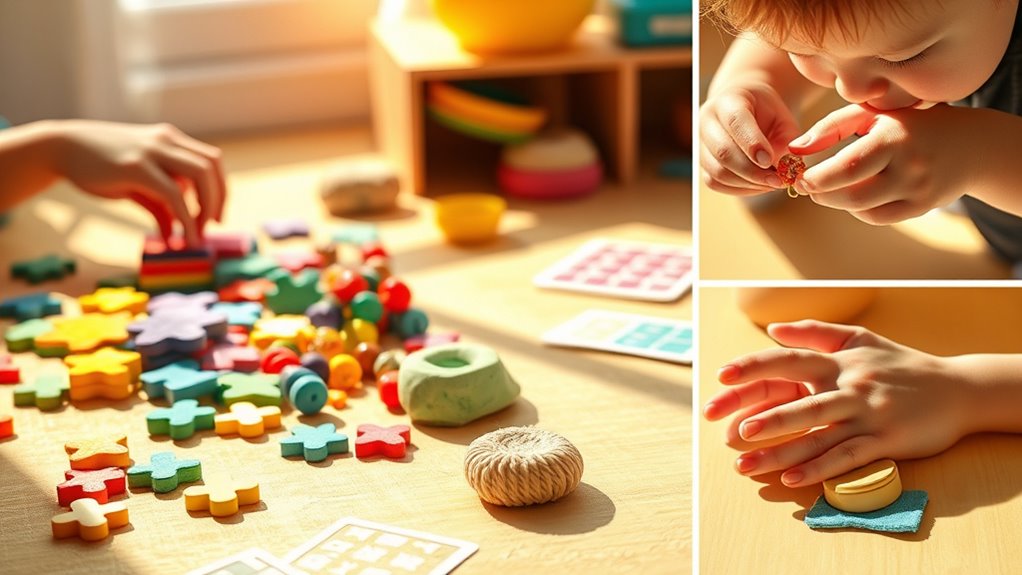

To strengthen little fingers and minds, try engaging in fun activities like shaping playdough or creating themed clothespin crafts. Playdough encourages precise fingertip movements and hand strength, while clothespins improve pincer grip and finger control. These activities boost coordination, patience, and confidence, all while being inexpensive and easy to set up. Keep exploring different ideas to make learning both enjoyable and beneficial for your child’s fine motor development.

Turn the school run and nap time into listening time
- Thousands of audiobooks, podcasts and originals
- Listen on your phone, tablet or Echo — also offline
- Cancel anytime
Key Takeaways
- Incorporate playdough activities like shaping, rolling, and pinching to enhance finger strength and hand-eye coordination.
- Use clothespin crafts to improve pincer grip and fine motor control through creative clipping exercises.
- Set up sensory stations with tactile materials to promote precise finger movements and shape recognition.
- Combine fine motor tasks with educational themes, such as letter or shape recognition, to boost learning and skill development.
- Make daily activities fun and engaging to foster concentration, patience, and independence in little learners.
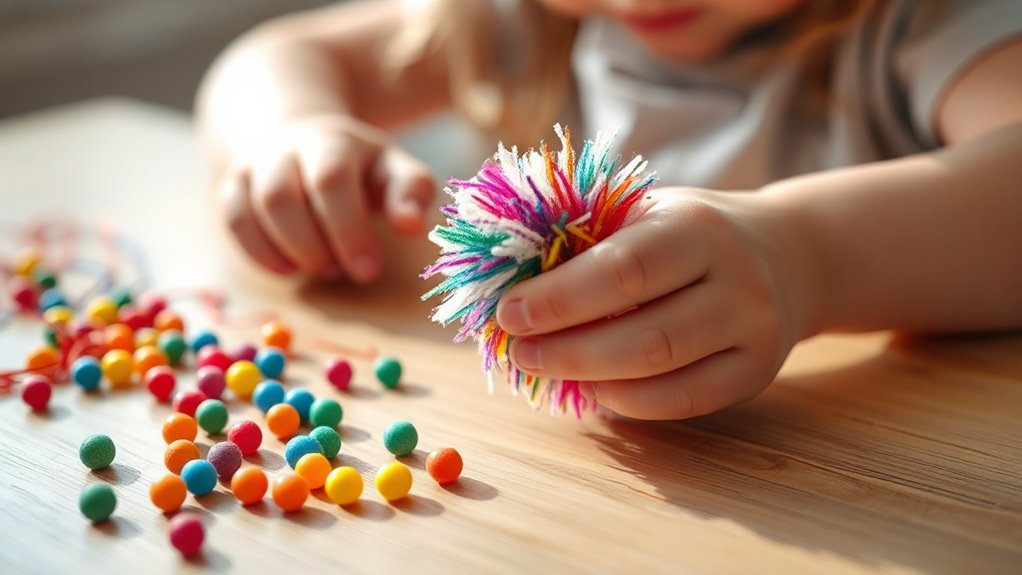
Have you ever noticed how engaging activities can boost your child’s fine motor skills? When kids manipulate objects, they strengthen the small muscles in their fingers and hands, which are essential for tasks like writing, buttoning, and tying shoelaces. One simple yet effective way to promote this development is through playdough activities. Rolling, pinching, and shaping playdough encourages kids to use their fingertips with precision. You can set up stations where your child rolls out snakes, presses cookie cutters into the dough, or pinches off small pieces to create tiny sculptures. These movements promote hand-eye coordination and finger strength while keeping the activity fun and tactile. Plus, they’re a great way to introduce basic concepts of shape and size, all while developing those *crucial* fine motor skills.
Engaging playdough activities strengthen fine motor skills through fun, tactile, and precise hand movements.
Another fantastic activity to try is clothespin crafts. It might sound basic, but clipping clothespins onto paper or small objects is a powerful way to strengthen those tiny muscles. You can create colorful art projects by having your child clip clothespins onto drawings, which improves their pincer grip—the ability to hold objects between thumb and forefinger. This skill is *vital* for more complex tasks like writing. Clothespins also encourage hand stability and finger control, as your child learns to open and close them repeatedly with precision. To make it more engaging, you can introduce themed crafts, such as clipping clothespins onto outlines of animals or letters, which adds an educational element to the activity. Incorporating motor skill development activities like these can also boost your child’s confidence and independence.
Both playdough activities and clothespin crafts are versatile, inexpensive, and adaptable to any age or skill level. They allow your child to practice fine motor skills without feeling like they’re doing “work.” Instead, they see it as play—an essential part of learning and growth. These activities also promote concentration and patience, as your child focuses on manipulating small objects or completing a craft. As they develop better hand strength and coordination, you’ll notice improvements in their ability to perform everyday tasks more easily. Plus, these activities foster creativity and problem-solving, making the process even more beneficial.
Incorporating playdough activities and clothespin crafts into your daily routine isn’t just about fun; it’s about laying a foundation for your child’s future independence and confidence. When they develop strong fine motor skills early on, they’re better equipped to handle the challenges of school and everyday life with ease. So, gather some dough, clothespins, and your imagination—your child’s hands and mind will thank you for it.
As an affiliate, we earn on qualifying purchases.
Frequently Asked Questions
When Should I Start Introducing Fine Motor Activities to My Child?
You should start introducing fine motor activities when your child reaches age-appropriate goals, which typically vary from one child to another. Early on, look for signs of readiness, like grasping objects or hand-eye coordination. Activity timing is key; begin with simple, engaging tasks and gradually increase difficulty. By watching your child’s development, you can guarantee activities are suitable and help foster their fine motor skills at the right moment.
How Can I Tell if My Child’s Fine Motor Skills Are Developing Properly?
Think of your child’s development as a garden needing regular care. You’ll notice their hand-eye coordination improves as they pick up small objects, draw, or tie shoelaces. Their sensory integration skills are developing if they can comfortably handle different textures and respond to sensory input. Keep an eye on their ability to perform age-appropriate tasks, and consult a specialist if you notice delays, so their skills grow strong and steady.
Are There Specific Toys Recommended for Strengthening Little Fingers?
When considering toy recommendations for strengthening finger strength, focus on options that promote gripping, pinching, and manipulating small objects. Toys like building blocks, play dough, tweezers for picking up items, and squeeze toys are excellent choices. These activities help develop dexterity and finger muscles. By choosing engaging toys that challenge your child’s fine motor skills, you support their developmental progress in a fun, interactive way.
How Do I Modify Activities for Children With Developmental Delays?
Imagine a tailor adjusting a suit to fit perfectly; you can do the same for children with developmental delays. Use adaptive strategies and sensory modifications to modify activities—like adding textured materials or simplifying tasks. This helps engage their senses and build skills at their pace. Focus on offering supportive, accessible options that encourage success, fostering confidence and fostering their fine motor development in a way that feels manageable and fun.
What Are Signs of Frustration or Fatigue During Fine Motor Activities?
When observing signs of frustration or fatigue during fine motor activities, you’ll notice tiring cues like fidgeting, decreased focus, or withdrawing. Emotional responses such as irritability, tears, or vocal protests also indicate your child may be overwhelmed or tired. Pay close attention to these cues, and if you see them, it’s best to offer breaks or switch activities to prevent burnout and keep the experience positive.
Conclusion
Now that you’ve explored these fun activities, you realize strengthening tiny fingers can be as exciting as a game. Just like building a puzzle, it takes patience and a little bit of play. While little fingers work on their dexterity, their minds are also growing, proving that fun and learning go hand in hand. So, keep the activities lively and light—because nurturing tiny hands and big minds is the best kind of adventure.
Columbus Day / Indigenous Peoples' Day Picks
long weekend sales
As an affiliate, we earn on qualifying purchases.