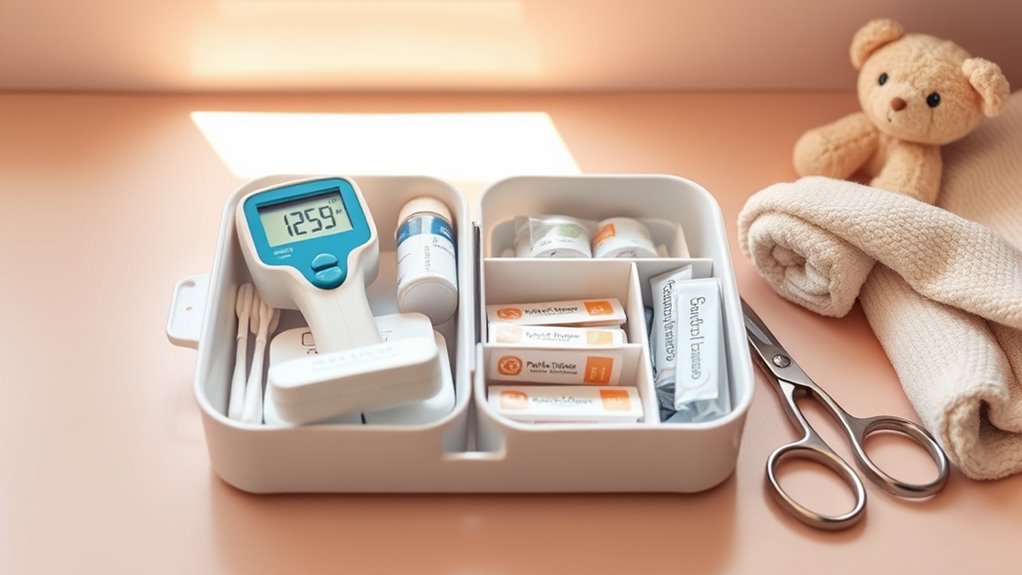

To guarantee your baby’s safety, your home first aid kit should include essential items like fever reducers, saline spray, and baby-safe scissors. Add adhesive bandages, sterile gauze, and antiseptic wipes for quick wound care, along with a digital thermometer and bulb syringe for common issues. Keep everything organized in a waterproof, childproof container, regularly check for expiration dates, and stay familiar with basic first aid steps. Keep exploring to learn how to keep your baby safe and prepared.
Key Takeaways
- Include essential medications like fever reducers, saline spray, and teething gels, ensuring they are within expiration dates.
- Store a comprehensive emergency contact list, including pediatrician, poison control, and emergency services, in a waterproof container.
- Equip the kit with basic supplies such as adhesive bandages, sterile gauze, antiseptic wipes, and antibiotic ointment.
- Add baby-specific tools like a digital thermometer, bulb syringe, and baby-safe scissors for common health issues.
- Keep the first aid kit in a childproof, accessible location, regularly review supplies, and familiarize yourself with basic first aid procedures.
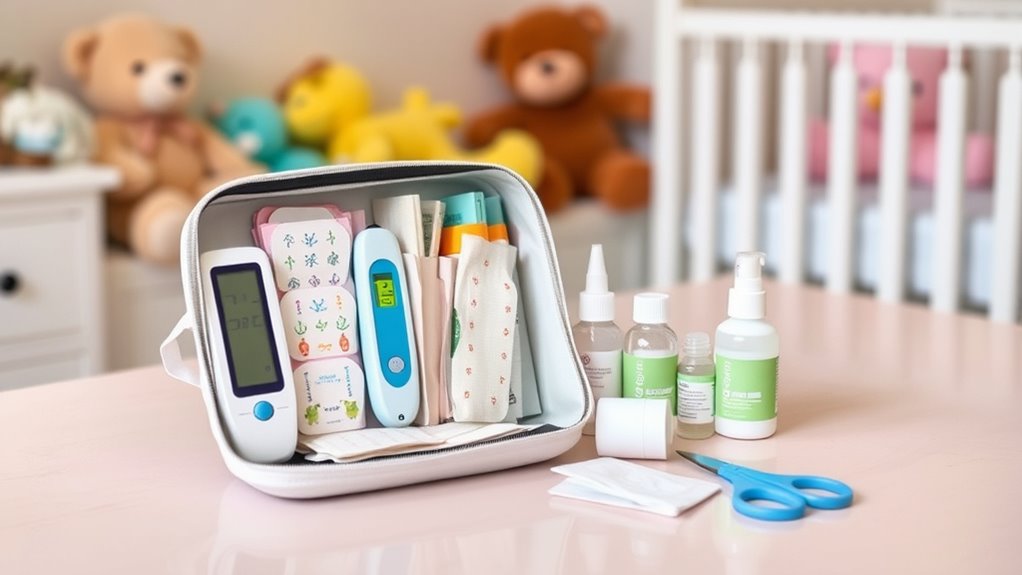
Having a well-stocked home first aid kit is essential for handling everyday injuries and emergencies quickly and effectively. When caring for a baby, being prepared means more than just having bandages and antiseptic; it requires specific items tailored to their needs. One of the most important components is infant medication, which can include fever reducers like acetaminophen, saline nasal spray, and teething gels. These items help you manage common issues without unnecessary trips to the pharmacy or doctor. Keep these medications in a clearly labeled, accessible section of your first aid kit, and always check expiration dates regularly to guarantee safety.
A well-stocked baby first aid kit with essential medications ensures quick, safe, and effective care during minor emergencies.
In addition to medications, an up-to-date emergency contact list is vital. This list should include your baby’s pediatrician, local poison control center, emergency services, and any other healthcare providers involved in your child’s care. Make sure it’s stored in a readily reachable spot, perhaps in a waterproof container within your kit, so you can access it quickly during a stressful situation. Sharing this information with all caregivers ensures everyone is on the same page during an emergency.
Beyond medications and contacts, your kit should contain basic supplies like adhesive bandages of various sizes, sterile gauze pads, medical tape, antiseptic wipes, and antibiotic ointment. These help treat cuts, scrapes, and minor burns effectively. For baby-specific needs, include a digital thermometer, bulb syringe for nasal congestion, and a pair of baby-safe scissors. These tools allow you to manage common health issues calmly and efficiently, reducing discomfort and preventing infections. Additionally, having infant-specific medications on hand, such as saline nasal spray and teething gels, can make a significant difference in comfort and recovery.
It’s equally important to think about the storage of your first aid kit. Keep it in a dedicated, childproof location that’s easy to access but out of reach of curious little hands. Regularly review and update your supplies, especially infant medication, to guarantee everything is current and safe to use. Familiarize yourself with basic first aid procedures, so you’re prepared to act swiftly if your baby needs help. This preparation can make a significant difference in managing minor emergencies and providing peace of mind.
Ultimately, having a comprehensive first aid kit tailored for your baby’s needs, complete with essential infant medication and an emergency contact list, helps you respond confidently to everyday mishaps. It’s a proactive step that guarantees you’re ready for whatever comes, safeguarding your child’s health and comfort with every situation.
Top picks for "home first baby"
Open Amazon search results for this keyword.
As an affiliate, we earn on qualifying purchases.
Conclusion
Having a well-stocked home first aid kit is essential for your baby’s safety. With over 60% of parents experiencing minor injuries at home each year, being prepared can make all the difference. Regularly check your kit to guarantee everything is up-to-date and accessible. By staying proactive, you can respond swiftly to emergencies, giving you peace of mind and keeping your little one safe and healthy in your everyday environment.