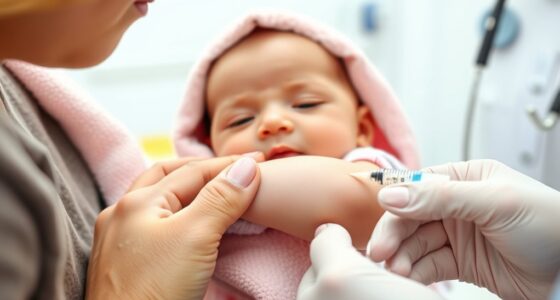
If your newborn develops a yellowing of the skin or eyes, it might be jaundice caused by a buildup of bilirubin, which occurs because their immature liver isn’t processing it properly. It’s common in healthy babies, especially during the first week, and often improves with treatment like phototherapy. Ensuring frequent feeding can help reduce bilirubin levels naturally. To learn more about how to recognize and manage this condition, keep exploring helpful tips and advice.
Key Takeaways
- Jaundice in newborns results from bilirubin buildup due to immature liver function.
- Signs include yellowing of skin and eyes, usually appearing within the first week.
- Treatment options include phototherapy, which safely reduces bilirubin levels.
- Proper breastfeeding helps prevent jaundice by promoting bowel movements and bilirubin elimination.
- Regular monitoring and early intervention ensure full recovery and prevent complications.
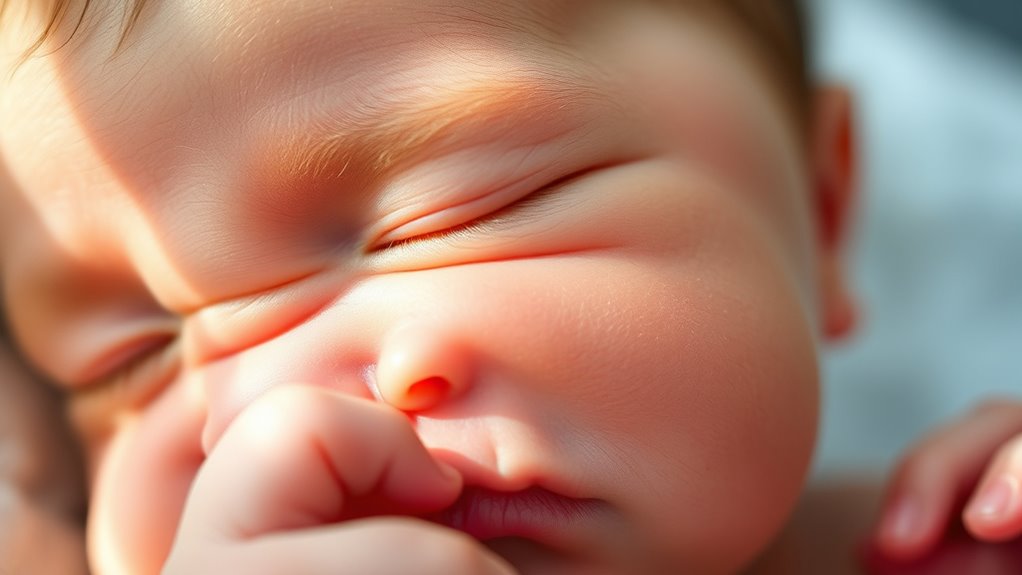
Have you noticed your newborn’s skin or eyes turning yellow? This common sign of jaundice can be concerning, but understanding what’s happening can help ease your worries. Jaundice occurs when there’s a buildup of bilirubin, a yellow pigment produced during the breakdown of red blood cells. In newborns, especially during the first week of life, their immature liver may struggle to process bilirubin efficiently, leading to visible yellowing. While mild cases often resolve on their own, some infants require treatment to prevent complications.
One of the most effective treatments for jaundice is phototherapy. This method exposes your baby to a special type of blue light that helps break down bilirubin in their skin. The benefits of phototherapy are well-documented; it’s a safe, non-invasive way to lower bilirubin levels quickly. During treatment, your baby is usually placed under a light blanket or on a special bed, with minimal discomfort. Many parents appreciate that phototherapy allows their babies to recover without the need for invasive procedures like blood transfusions. It’s also reassuring to know that the benefits of phototherapy outweigh the minimal risks, making it a widely used and trusted approach.
Phototherapy safely helps reduce bilirubin levels in newborns without invasive procedures.
A key aspect to take into account with jaundice is breastfeeding. While breastfeeding is highly beneficial for your newborn’s health, there’s a specific form of jaundice called breastfeeding jaundice that can occur if your baby isn’t feeding well or if milk intake is insufficient. Proper breastfeeding and jaundice are closely linked because regular feeding helps promote bowel movements, which aid in eliminating bilirubin from your baby’s system. When you breastfeed frequently and ensure your baby latches well, it can help reduce bilirubin levels naturally. In some cases, supplementing with formula temporarily might be recommended, but always consult your pediatrician. Supporting breastfeeding and managing jaundice together often leads to the best outcomes, ensuring your baby gets both the nutrition and treatment they need.
If your newborn shows signs of jaundice, stay vigilant but don’t panic. Regular check-ups and monitoring bilirubin levels can guide your healthcare provider’s decisions. Whether through phototherapy, improved breastfeeding techniques, or other interventions, most babies recover fully. Remember, jaundice is common and usually temporary, but early treatment can prevent any potential complications. By working closely with your healthcare team, you’ll help your little one heal quickly and safely, giving you peace of mind during this delicate time.

Jaundice Light Therapy Newborn Baby Infant Portable Blue Lamp for Physical Jaundice Skin Care Machine with 18pcs LED Light Chips Devices for All Skin Types for Professional and Home
【Improve Jaundice】Useful for treating jaundice as it can convert bilirubin in the body into other substances
As an affiliate, we earn on qualifying purchases.
As an affiliate, we earn on qualifying purchases.
Conclusion
You might wonder if newborn jaundice is always harmless. Some believe it’s just a normal part of early life, but in rare cases, it signals serious issues like liver problems. Recent studies suggest that early detection and treatment can prevent complications. So, don’t dismiss any yellowing of your baby’s skin—trust your instincts and consult your doctor. Staying vigilant could be the difference in ensuring your little one stays healthy and happy.
Jaundice Light Therapy Newborn Baby Infant Portable Blue Lamp for Physical Jaundice Skin Care Machine with 18pcs LED Light Chips Devices for All Skin Types for Professional and Home
【Improve Jaundice】Useful for treating jaundice as it can convert bilirubin in the body into other substances
As an affiliate, we earn on qualifying purchases.
As an affiliate, we earn on qualifying purchases.

Breastfeeding Telephone Triage and Advice
As an affiliate, we earn on qualifying purchases.
As an affiliate, we earn on qualifying purchases.

ANMEATE 5" HD Video Baby Monitor with Camera and Audio – No WiFi, 48H Battery Life,720P Remote Pan Tilt Zoom, Two-Way Talk, Night Vision, Thermal Room Monitor, Lullabies & White Noise, 1000ft Range
SOOTHE BABY REMOTELY WITH TWO-WAY AUDIO & LULLABIES – Keep your little one comforted instantly. This baby monitor…
As an affiliate, we earn on qualifying purchases.
As an affiliate, we earn on qualifying purchases.