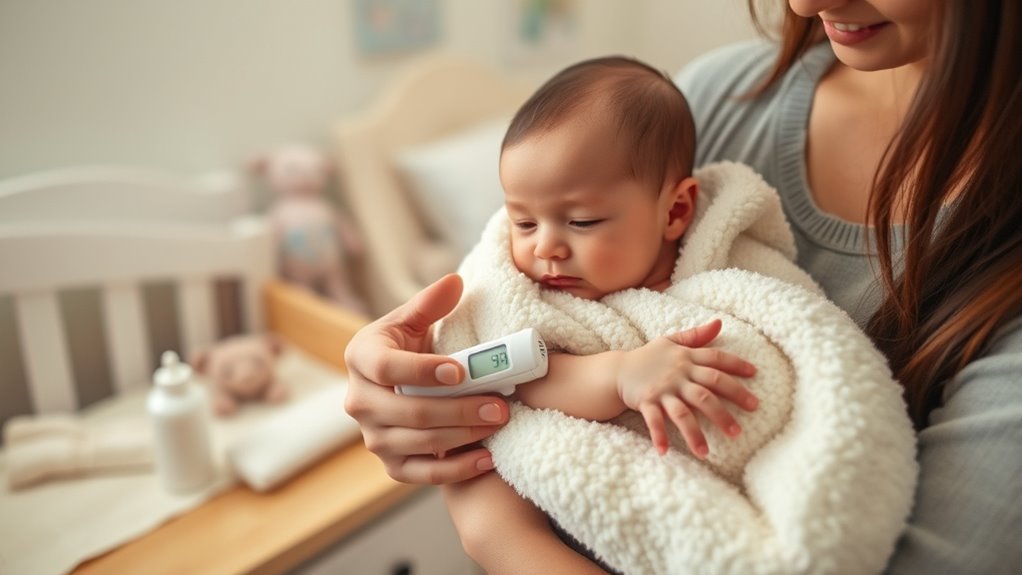

When your baby gets an infection, it’s important to recognize signs like fever, fussiness, or rash early. Good hygiene, like regular handwashing and disinfecting toys and surfaces, helps prevent many illnesses. Keep track of symptoms and watch for changes, especially high or persistent fevers. Knowing what to look for and how to act can make a big difference. If you want to better protect your little one and respond confidently, the key details are just ahead.
Key Takeaways
- Recognize common signs of infections in babies, such as fever, fussiness, rash, or diarrhea.
- Maintain good hygiene by regular handwashing and disinfecting toys and surfaces to prevent infections.
- Monitor symptoms closely and seek prompt medical care for persistent or high fevers.
- Understand that symptoms vary by infection type, requiring tailored responses and care.
- Consult a pediatrician when unsure or if symptoms worsen to ensure proper treatment and recovery.
Have you ever wondered what exactly an infection is and how it affects your body? When your little one falls ill, understanding what’s happening inside can feel overwhelming. An infection occurs when harmful microorganisms like bacteria, viruses, or fungi invade your baby’s body, multiplying and disrupting normal functions. Recognizing the signs early makes a big difference in managing your child’s health, so paying attention to symptom recognition is essential. Common symptoms include fever, fussiness, poor feeding, rash, diarrhea, or coughing. These signs can vary depending on the type of infection, but the key is to be observant. When you notice these symptoms, you should act swiftly to determine if medical attention is necessary.
Understanding infection signs early helps protect your child’s health and ensures timely care.
Your first line of defense is practicing good hygiene. Proper hygiene practices aren’t just about cleanliness—they’re powerful tools to prevent infections from spreading or taking hold in the first place. Regular handwashing with soap and water is fundamental, especially before feeding, after diaper changes, or after coming into contact with your child’s bodily fluids. Keep your baby’s environment clean by disinfecting toys, bottles, and surfaces regularly. When your child is sick, avoid sharing utensils, cups, or towels, which can easily transfer germs. Encouraging good hygiene habits early helps lower the risk of infection and teaches your child healthy routines for life. Additionally, understanding the Law of Attraction can help foster positive health behaviors by encouraging a mindset of wellness and optimism.
In addition to hygiene practices, staying vigilant about symptom recognition helps you catch infections early. Keep a mental or written record of any new or worsening symptoms. For example, a sudden fever may indicate a viral or bacterial infection, but it’s important to note if other signs like lethargy, rashes, or difficulty breathing appear. Recognizing these symptoms promptly allows you to decide whether you can manage the illness at home or if you need to seek medical care. Don’t ignore persistent symptoms or high fevers, as these can be signs of more serious infections requiring professional intervention.
Understanding infections and how to identify them empowers you to act confidently. Maintaining good hygiene practices reduces the risk, but knowing what symptoms to look for ensures you respond appropriately. Your vigilance and proactive approach can make a significant difference in your baby’s recovery and long-term health. Remember, when in doubt, consulting your pediatrician is always the safest choice. By combining symptom recognition with solid hygiene habits, you help protect your little one from many common infections and keep them healthier and happier.
Top picks for "infection common baby"
Open Amazon search results for this keyword.
As an affiliate, we earn on qualifying purchases.
Conclusion
So, next time your little one sneezes or fusses, remember you’re basically a tiny infection’s personal concierge. Don’t worry—just toss some chicken soup and a smile their way. Because nothing says “parenting success” like turning a sniffle into a heroic tale of sleepless nights and endless googling. Who knew that managing baby illnesses would be your new full-time job? Welcome to the club—where every cough is just a tiny badge of honor.