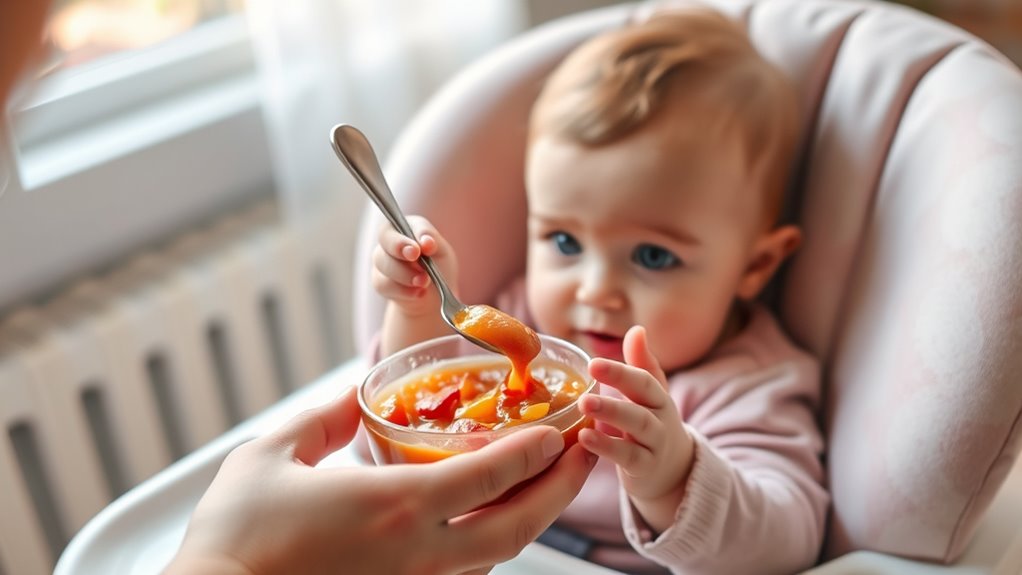

You can start introducing solid foods around six months, once your baby shows readiness signs like sitting with support, good head control, and interest in food. Begin with purees and iron-rich options, offering single-ingredient foods one at a time. Gradually introduce allergens and a variety of tastes and textures, always ensuring food safety and supervision. As you explore these steps, you’ll find helpful tips to make the process smooth and enjoyable for both of you.

Turn the school run and nap time into listening time
- Thousands of audiobooks, podcasts and originals
- Listen on your phone, tablet or Echo — also offline
- Cancel anytime
Key Takeaways
- Begin solids around six months when your baby shows signs of readiness, like sitting with support and interest in food.
- Start with single-ingredient purees and iron-rich foods, introducing one at a time every 3-5 days.
- Gradually introduce common allergens to help reduce allergy risks, observing for any reactions.
- Offer a variety of tastes and textures in a positive, relaxed environment; avoid forcing eating.
- Ensure food textures are safe to prevent choking; continue breastfeeding or formula feeding as main nutrition until 12 months.

Deciding when and how to introduce solid foods is an important milestone in your baby’s development. It marks a transition that requires careful planning and awareness of your baby’s feeding milestones. Typically, babies are ready to start solids around six months, but every child develops at their own pace. Before starting, you’ll want to watch for signs of readiness, such as good head and neck control, showing interest in your food, and the ability to sit with support. These cues help ensure your baby is prepared for new textures and tastes, making the process smoother and more enjoyable for everyone involved.
Introducing solids around six months requires observing your baby’s readiness cues for a smooth transition.
Once you determine your baby is ready, start with small, single-ingredient purees that are easy to swallow and digest. Begin with iron-rich foods like iron-fortified cereals or pureed meats, as these support your baby’s growth and development. Introduce new foods one at a time, waiting three to five days before adding another. This approach helps you identify any potential food sensitivities or allergies early on, especially when introducing allergens. Introducing allergens early, and in small amounts, is now recommended by many pediatricians, as it can help reduce the risk of allergies developing later. Common allergens such as eggs, dairy, nuts (but in safe forms like nut butters), soy, wheat, fish, and shellfish can be introduced gradually, observing your baby closely for any reactions like rashes, vomiting, or swelling.
As you introduce new foods, aim for a variety of tastes and textures to encourage your baby’s palate and help develop healthy eating habits. Keep in mind that mealtimes should be positive experiences. Be patient and gentle if your baby refuses certain foods initially; it often takes multiple exposures for them to accept new tastes. Avoid forcing your baby to eat, and instead, focus on offering a range of nutritious options.
Throughout this process, maintain a focus on safety. Always check the texture of foods to prevent choking, and never leave your baby unattended while eating. Remember, breast milk or formula should still be the main source of nutrition until your baby is about 12 months old, with solids complementing milk feeds. Introducing solids is an exciting step in your baby’s growth, but it’s also a gradual process that requires attentiveness and patience. By carefully observing feeding milestones and introducing allergens thoughtfully, you’re setting the foundation for a healthy relationship with food that can last a lifetime.
As an affiliate, we earn on qualifying purchases.
Conclusion
As you begin this flavorful journey, remember that introducing solids is like planting seeds in your baby’s garden—patience and care will nurture their palate over time. Trust your instincts and watch as their taste buds blossom, turning mealtime into a vibrant tapestry of textures and flavors. With gentle guidance and love, you’ll help them blossom into a curious eater, savoring the rich tapestry of food that awaits beyond the initial spoonful.
Halloween Picks
halloween
As an affiliate, we earn on qualifying purchases.