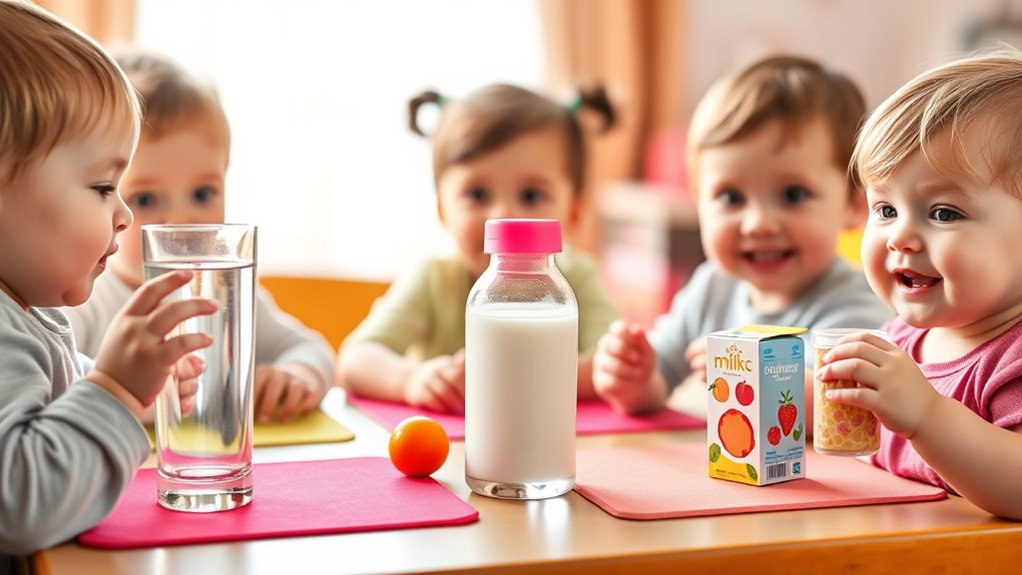

For your little one, breast milk or formula provides the perfect hydration in the first six months, so extra water isn’t necessary. Around six months, you can start offering small sips of water alongside solids, but milk remains the main drink until about age one. Juice should be limited because of its sugar. To learn how to keep your child properly hydrated at each stage, keep exploring these helpful tips.

Turn the school run and nap time into listening time
- Thousands of audiobooks, podcasts and originals
- Listen on your phone, tablet or Echo — also offline
- Cancel anytime
Key Takeaways
- Breast milk provides optimal hydration for infants up to six months, eliminating the need for additional water.
- Small amounts of water can be introduced around six months, but breast milk or formula remains the primary fluid.
- Juice should be limited and given sparingly, mostly after one year, to prevent excessive sugar intake and dental issues.
- Avoid giving infants unnecessary water early on, as it can interfere with nutrient absorption and cause health problems.
- Use fun cups and establish routines to encourage water and milk intake as children grow, while minimizing sugary drinks.
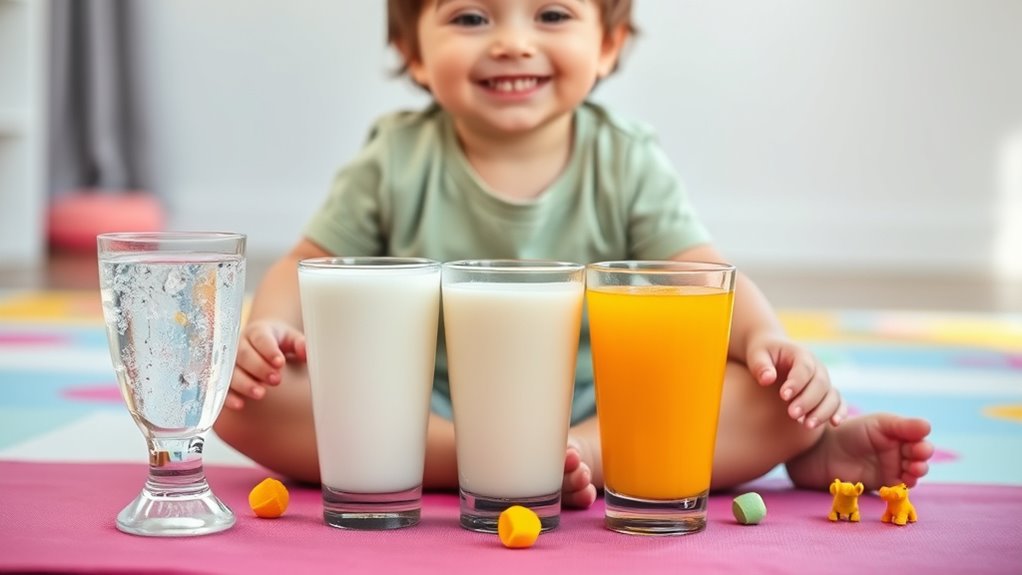
Keeping little ones properly hydrated is essential for their growth, energy, and overall health. When it comes to hydration, many parents wonder about the benefits of breastfeeding and whether certain hydration myths are true. Breastfeeding benefits extend beyond nutrition, offering fluid that perfectly matches your baby’s needs. Breast milk contains the right balance of water, sugars, fats, and antibodies, helping your baby stay hydrated without the risk of overhydration. Many hydration myths suggest that babies need additional water early on, but that’s not accurate. Giving your infant extra water can interfere with their ability to absorb nutrients and may even lead to water intoxication. Trust that breast milk provides all the hydration your baby needs during the first six months, dispelling common hydration myths that suggest otherwise.
As your baby grows and begins to eat solid foods, their hydration needs change. Around 6 months, you can start introducing small amounts of water, but breast milk or formula should remain their primary source of fluids. Water complements their diet but shouldn’t replace milk entirely. When your little one reaches their first year, you can gradually introduce small sips of water in addition to milk, especially during hot weather or active play. Juice is often considered an option, but it should be given sparingly, as it can be high in sugar and may cause digestive issues or tooth decay. Instead, focus on offering water and milk first, reserving juice for occasional treats.
It’s also common for parents to hear hydration myths that suggest fruit juices or flavored drinks are necessary for hydration. These myths can lead to overfeeding sugary drinks, which isn’t healthy. Water remains the best choice for hydration once your child is eating solids. As your child’s palate develops, offering water in fun, colorful cups can encourage good hydration habits. Remember, the goal is to keep your little one well-hydrated without overdoing it or relying on unnecessary drinks. While breastfeeding benefits are well-documented, understanding the facts about hydration myths helps prevent misconceptions that could compromise your child’s health. Always consult your pediatrician for personalized advice on your child’s hydration needs, especially if they have health concerns or special dietary requirements. Staying informed and cautious about hydration myths ensures you’re making the best choices to support your child’s growth and well-being. Additionally, understanding the role of support breakfast can help you establish a balanced routine that includes hydration and nutritious meals to promote overall health.
baby sippy cups with colorful designs
As an affiliate, we earn on qualifying purchases.
As an affiliate, we earn on qualifying purchases.
Frequently Asked Questions
When Should I Start Offering My Baby Water?
You should start offering your baby water around 6 months, once they begin solids. This helps with teething relief and keeps them hydrated, especially if they’re teething and drooling more. Water also helps prevent constipation. While breast milk or formula provides essential dietary calcium, small amounts of water introduce healthy habits. Just make certain the water is safe, and avoid giving too much, as their kidneys are still developing.
How Can I Tell if My Toddler Is Dehydrated?
Think of your toddler like a vintage car needing regular check-ups. Signs of dehydration include dry mouth, sunken eyes, and fewer wet diapers. If you notice your little one is cranky, sleepy, or has dark urine, it’s time to bolster hydration. Maintaining good hydration habits, like offering water frequently, helps prevent dehydration. Keep an eye on these cues to ensure your toddler stays happy and healthy.
Are Flavored Waters Safe for Young Children?
Flavored waters can be tempting for young children, but safety concerns exist. Many contain added sugars or artificial sweeteners, which aren’t ideal for kids. Always check labels and choose options with little to no added ingredients. It’s safer to offer plain water or natural options like infused water with fruit. This way, you minimize health risks and guarantee your child stays hydrated without exposure to unnecessary additives.
What’s the Best Way to Encourage My Child to Drink More Fluids?
Think of encouraging your child to drink more fluids as planting a garden; patience and variety help it flourish. Offer fun, colorful cups and serve fluids with snacks for pairing, which makes drinking more appealing. You can also make teething comfort a priority by offering cold drinks or teething-friendly options. Consistently model good habits and praise their efforts, turning hydration into a positive, everyday adventure.
How Do I Balance Juice Intake With Water and Milk?
To balance juice intake with water and milk, focus on juice moderation and hydration strategies. Offer water regularly to keep your child hydrated, and serve milk at mealtimes for calcium. Limit juice to small servings, around 4 ounces, and avoid giving it freely. This way, your child enjoys flavorful drinks without overdoing sugar, ensuring proper hydration and a healthy diet.
Conclusion
Staying hydrated is key to your little one’s health and development. Remember, babies under six months need only breast milk or formula, while older kids can enjoy water, milk, and limited juice. Did you know that dehydration can start with just a 5% loss of body fluids? By paying attention to your child’s hydration cues and offering the right drinks at the right ages, you help them grow strong and healthy every day.
Columbus Day / Indigenous Peoples' Day Picks
long weekend sales
As an affiliate, we earn on qualifying purchases.