
Babies can perceive basic tastes like sweet, sour, salty, and bitter from birth, but their ability to truly taste complex flavors and spicy foods develops gradually. Their taste buds are still maturing, and spicy tolerance is low early on. Offering gentle, mild spices over time helps them become more accepting and supports their flavor development. If you’re curious about how to introduce spices safely and effectively, there’s much more to discover below.

Turn the school run and nap time into listening time
- Thousands of audiobooks, podcasts and originals
- Listen on your phone, tablet or Echo — also offline
- Cancel anytime
Key Takeaways
- Babies are born with basic taste senses but limited ability to perceive complex spices initially.
- Early, gentle exposure to mild herbs can help develop a baby’s flavor preferences over time.
- Introducing spices gradually and in small amounts encourages acceptance without causing discomfort.
- Baby reactions to spices vary; patience and observation are key to successful flavor development.
- Proper spice exposure supports sensory growth and can foster healthier eating habits later in life.
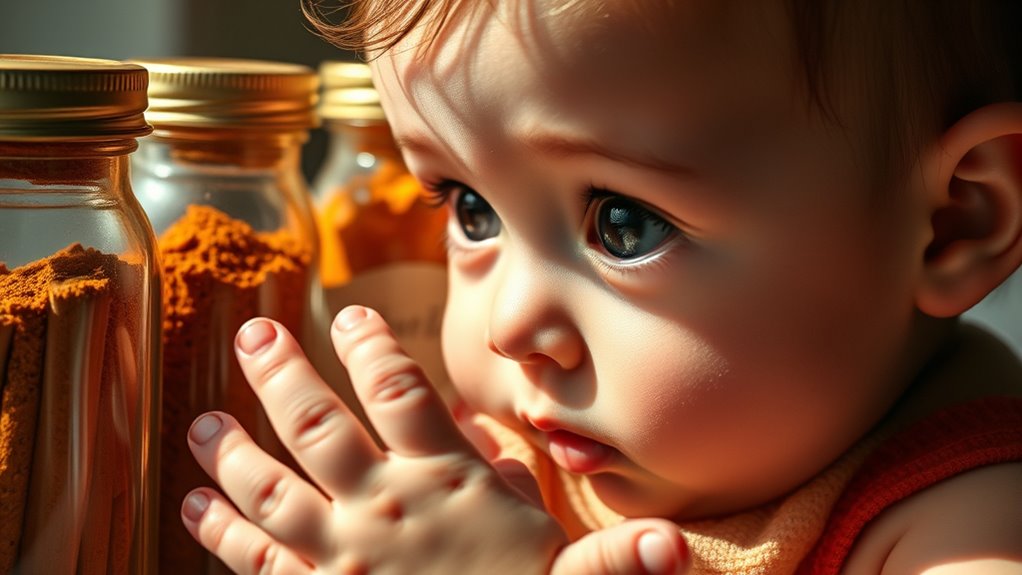
Have you ever wondered what truly makes spices so powerful in your kitchen? It’s not just their vibrant colors or aromatic scents that catch your attention; it’s the way they transform dishes and influence taste. But when it comes to babies, the question arises: can they really taste flavor? The answer lies in understanding spice tolerance and flavor development from an early age. While infants have a limited ability to perceive strong spices initially, their palate develops over time, and exposure plays a pivotal role.
Babies are born with a basic sense of taste, primarily sweet, sour, salty, and bitter. Their ability to perceive complex flavors, especially those from spices, is limited at first. This is because their taste buds are still developing, and their spice tolerance is quite low. Introducing spicy foods too early may lead to discomfort or negative associations with new flavors. However, research suggests that early exposure to mild spices can actually aid in flavor development, helping babies become more accepting of a variety of tastes as they grow. It’s a gradual process—starting with gentle herbs like basil or cinnamon can build their spice tolerance without overwhelming their delicate palate.
As you introduce spices into your baby’s diet, remember that flavor development is key. The goal isn’t to make their food fiery but to gently familiarize them with different aromas and tastes. Over time, exposure helps their taste buds adapt, making them more open to diverse flavors. This process not only broadens their palate but also encourages healthier eating habits later in life. The trick is to start small, using milder spices and gradually increasing intensity as they become more accustomed to new flavors. This approach ensures that your baby’s spice tolerance builds naturally, without causing distress or rejection.
It’s also essential to pay close attention to your baby’s reactions. If they seem uncomfortable or show signs of distress, it’s best to back off and try again later. Every child is different, and their taste development may progress at varying rates. Patience is essential here. Over time, their taste buds will become more sensitive and capable of perceiving a wider range of flavors, including those from spices. This doesn’t mean you need to turn every meal into a spicy adventure, but a little experimentation can help shape their palate positively. Additionally, proper exposure to a variety of flavors can support their overall sensory development and help them become more adaptable eaters.
As an affiliate, we earn on qualifying purchases.
Frequently Asked Questions
When Can I Start Introducing Spices to My Baby’s Diet?
You can start introducing spices to your baby’s diet around 6 months, especially if you’re practicing baby-led weaning. Start with mild spices like cinnamon or turmeric, and watch for any signs of spice allergies. Gradually add small amounts to meals to help your baby get used to new flavors. Always consult your pediatrician before introducing new spices, especially if your family has a history of spice allergies.
Are All Spices Safe for Newborns to Consume?
Imagine a world bursting with flavor—spice cultivation’s vibrant colors and cultural spice uses reveal just how diverse and exciting spices can be. But, when it comes to your newborn, not all spices are safe. You should avoid giving babies any spices until they’re older, as their delicate systems can’t handle strong or unfamiliar flavors. Always consult your pediatrician before introducing spices, and remember, safety comes first.
How Do Spices Affect a Baby’s Digestion and Allergies?
You might wonder how spices impact a baby’s digestion and allergies. Spices can influence spice metabolism, possibly causing stomach upset or discomfort if introduced too early. They also have allergenic potential, which means they could trigger allergic reactions in sensitive babies. To keep your little one safe, it’s best to introduce spices gradually, observe for any adverse reactions, and consult your pediatrician before adding new flavors to their diet.
Can Spices Influence a Baby’s Developing Taste Preferences?
You might wonder if spices influence a baby’s developing taste preferences. When you introduce a variety of spices, you’re supporting their spice sensory development, which helps shape their flavor preference formation. Early exposure to different flavors can make them more open-minded about new foods later. So, including mild spices in their diet encourages a broader palate and healthy eating habits, fostering a positive relationship with diverse tastes from a young age.
What Are the Best Spices to Begin With for Infants?
You might worry about introducing spices to your infant, but gentle options support their spice flavor development and respect their infant taste sensitivity. Start with mild, familiar spices like cinnamon, nutmeg, or cumin, which add flavor without overwhelming their palate. These spices help expand their taste horizons gradually, encouraging healthy eating habits. Always introduce new spices slowly, observing your baby’s reactions, and consult your pediatrician if unsure.
Conclusion
So, while your little one might not be ready for a spice adventure just yet, introducing gentle flavors gradually can gently open their taste buds. Remember, every tiny step builds a foundation for future culinary explorations. Patience and subtlety are your best allies on this flavorful journey. Keep offering new tastes with love and care, and before long, your baby will be savoring the world’s delicious possibilities—one gentle bite at a time.
Halloween Picks
halloween
As an affiliate, we earn on qualifying purchases.