
To prevent choking in babies and toddlers, choose soft, easily chewable foods like mashed fruits, cooked vegetables, and small, manageable pieces of bread. Always cut foods into small, uniform shapes and avoid giving whole grapes, nuts, or cherry tomatoes. Shaping foods to prevent large pieces helps reduce airway blockages. Staying vigilant during meal times is key, and learning about safe eating habits can make a big difference—stay tuned to discover more ways to keep them safe.

Get baby and family essentials delivered free — and shop member deals
- Fast, free delivery on millions of items
- Access to Prime Big Deal Days deals on October 6–7
- Prime Video, Amazon Music and more included
Key Takeaways
- Offer soft, cooked fruits and vegetables cut into small, manageable pieces to reduce choking risk.
- Avoid giving whole grapes, cherry tomatoes, nuts, or hot dogs; cut them into small, appropriate shapes.
- Use safe food shapes that are less likely to lodge in the throat, such as small, uniform pieces.
- Encourage children to chew thoroughly, sit calmly, and eat slowly without distractions.
- Caregivers should be trained in first aid and CPR to respond effectively to choking emergencies.
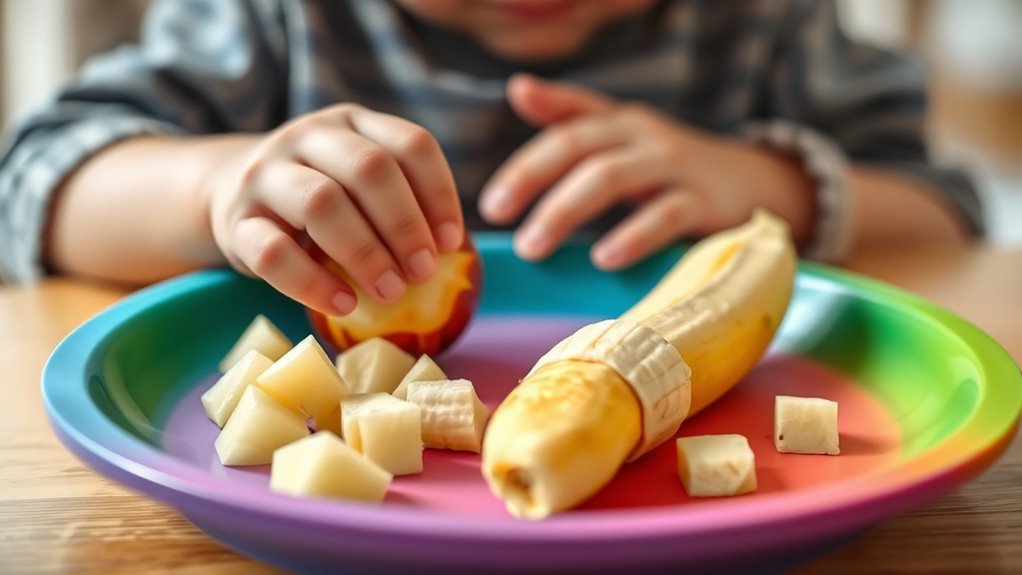
Choking can happen suddenly and without warning, but many incidents are preventable with the right knowledge and precautions. As a caregiver, understanding how to recognize and reduce choking risks is essential, especially when it comes to choosing safe foods and shapes for babies and toddlers. One of the most important considerations is being aware of food allergies, which can cause severe reactions and complicate choking incidents. If your child has known allergies, you must be vigilant about avoiding allergenic foods and knowing how to respond quickly if accidental exposure occurs. Even without allergies, some foods are more likely to cause choking because of their size, texture, or shape.
Awareness of food allergies and safe food shapes helps prevent choking incidents in children.
To minimize risks, you should focus on offering foods that are easy to chew and swallow. Soft fruits like bananas or cooked vegetables cut into small, manageable pieces are safer options. Avoid giving whole grapes, cherry tomatoes, or nuts, as these can easily block a child’s airway. Instead, cut foods into small, uniform pieces, and aim for shapes that are less likely to lodge in your child’s throat. For example, slice hot dogs lengthwise and then into small pieces, and always supervise eating to catch any signs of difficulty early.
Caregiver training plays a crucial role in preventing choking. It’s important that anyone caring for your child understands basic first aid, including how to perform infant and child CPR and the Heimlich maneuver. Proper training ensures that if an emergency arises, you can respond swiftly and confidently, potentially saving your child’s life. Regularly updating your knowledge through certified courses helps you stay prepared for various situations. Also, teaching your child to chew thoroughly and sit down while eating fosters safe eating habits from an early age.
Creating a safe eating environment is equally important. Avoid distractions during meals, such as screens or toys, which can cause your child to rush and choke. Encourage your child to eat slowly, chew carefully, and take small bites. Always stay close during meals and snacks to monitor their progress and intervene immediately if they show signs of choking, like coughing, gagging, or difficulty breathing. Additionally, selecting foods with appropriate shapes can further reduce choking hazards, especially for young children still developing their chewing skills.
As an affiliate, we earn on qualifying purchases.
Conclusion
By choosing safe foods and shapes, you protect your little one from choking hazards. It’s easy to think that giving them a variety of foods means more fun, but safety should always come first. Just as a tiny piece of a hard snack can cause trouble, a simple cut can make all the difference. Remember, your careful choices today create a safer, happier mealtime tomorrow—where fun and safety go hand in hand.
Cold & flu season Picks
humidifiers
As an affiliate, we earn on qualifying purchases.