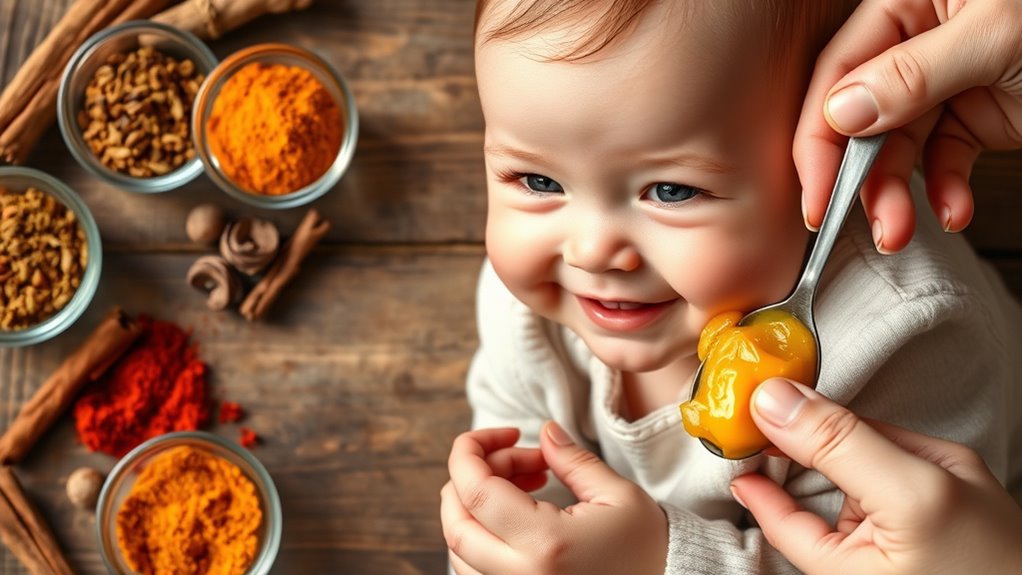

You can start introducing mild spices to your baby around 8 to 10 months old, gradually offering small amounts to help them develop a taste for different flavors. Begin with gentle herbs like basil or coriander, and introduce each spice one at a time to watch for reactions. Using fresh, natural ingredients and starting with tiny quantities guarantees safety and acceptance. Keep exploring to learn more about safe and enjoyable spice options for your little one.

Turn the school run and nap time into listening time
- Thousands of audiobooks, podcasts and originals
- Listen on your phone, tablet or Echo — also offline
- Cancel anytime
Key Takeaways
- Introduce spices around 8 to 10 months, once the digestive system matures.
- Start with mild herbs like basil, parsley, or coriander in small amounts.
- Introduce one spice at a time to monitor for allergic reactions or sensitivities.
- Use fresh, high-quality ingredients without artificial additives for safety.
- Observe your baby’s response and consult a pediatrician if any adverse reactions occur.
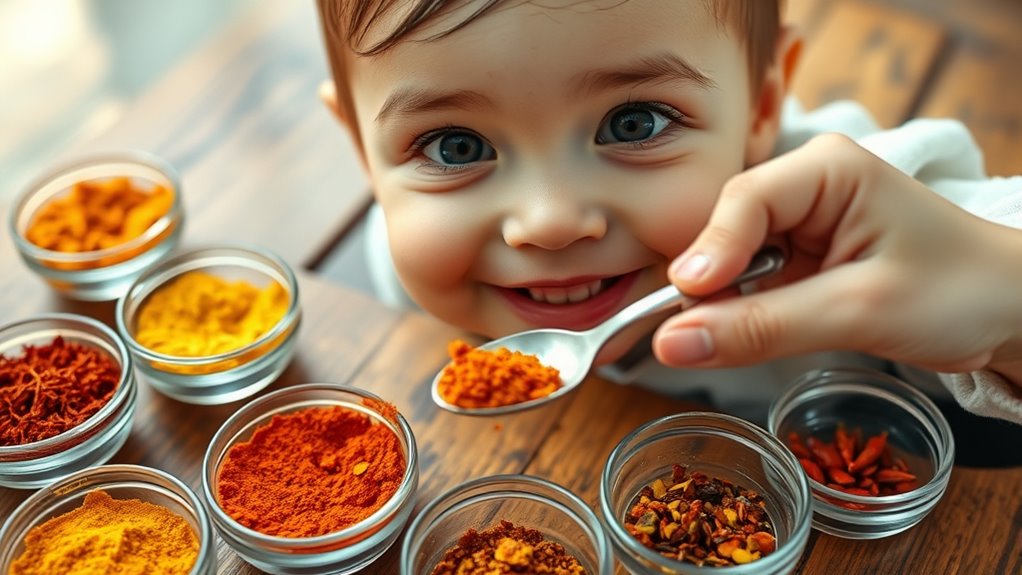
Exploring new spices and flavors can transform your cooking and elevate everyday dishes. When you’re considering adding seasonings to your baby’s meals, it’s natural to wonder about the right timing and safety. Understanding toddler taste preferences is essential, as young children often have sensitive palates that might initially reject strong or unfamiliar flavors. Introducing spices gradually helps your little one develop an appreciation for different tastes without overwhelming them. Start with mild herbs like basil, parsley, or coriander, and observe how your baby responds. Over time, as they become more accustomed to these flavors, you can gently expand their palate by introducing gentle spices, always paying close attention to their reactions.
While experimenting with spices, spice allergy awareness should remain a top priority. Although allergies to common spices are relatively rare, they can still occur and cause serious reactions. It’s wise to introduce new seasonings one at a time, especially if your family has a history of food allergies. Watch for any signs of allergic response, such as hives, swelling, difficulty breathing, or vomiting, and consult your pediatrician if you have concerns. When in doubt, avoid using spices that are known to cause allergies until your child is older and has been tested. Always choose fresh, high-quality ingredients and avoid spice blends with added preservatives or artificial flavors, which could irritate sensitive stomachs or cause allergic reactions.
Timing is another vital factor when introducing spices. Many health professionals recommend waiting until your baby is around 8 to 10 months old before adding spices to their food, as their digestive system matures and they become more interested in trying new textures and tastes. Start by adding tiny amounts of spice to familiar foods, like mashed vegetables or pureed fruits, to gauge their acceptance and tolerance. Keep an eye on their cues—if they seem hesitant or uncomfortable, hold back and try again later. Remember, every child is different; some might be more receptive to new flavors early on, while others prefer milder tastes for longer. Understanding spice introduction guidelines can help you make informed decisions about when and how to safely expand your child’s palate.
Patience and observation are your best tools during this stage. The goal isn’t just to add flavor but to foster a positive relationship with food and help your child develop healthy eating habits. As you introduce spices thoughtfully and carefully, you’re not only expanding their palate but also teaching them about variety and nutrition. Stay informed about spice allergy awareness and always prioritize your child’s safety, but don’t shy away from exploring new flavors. With gentle persistence, you’ll help your little one discover a world of tastes that can make mealtime more exciting and nutritious.
As an affiliate, we earn on qualifying purchases.
Conclusion
So, start slowly and savor the spicy and savory surprises. By seasoning your little one’s plate with patience and prudence, you’ll promote a palate that’s open and adventurous. Remember, gradual introductions and gentle encouragement create a confident, curious, and craving child. With wisdom and wonder, you’ll weave a world of wondrous flavors, fostering a fearless foodie from the very first bite. Spice up their journey—safely, steadily, and surely!
Cold & flu season Picks
humidifiers
As an affiliate, we earn on qualifying purchases.