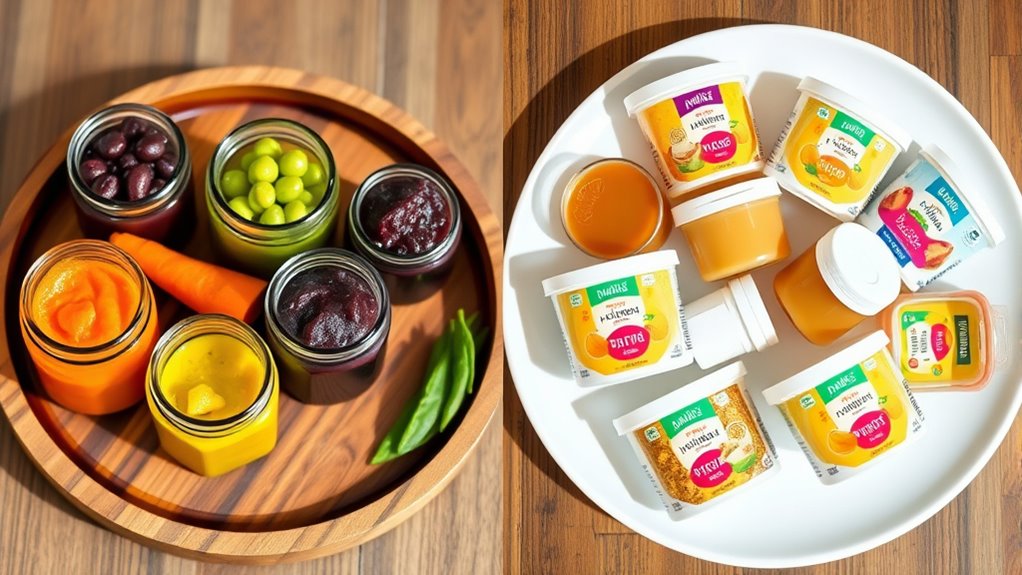

Homemade baby food often retains more nutrients because you can use fresh, minimally processed ingredients and cook gently. It also lets you control what goes in, avoiding preservatives and additives typically found in store-bought options. Store-bought foods are convenient, undergo strict safety testing, and often have added nutrients like iron. Balancing safety, nutrition, and convenience is key — explore how each option impacts your baby’s health as you learn more.

Turn the school run and nap time into listening time
- Thousands of audiobooks, podcasts and originals
- Listen on your phone, tablet or Echo — also offline
- Cancel anytime
Key Takeaways
- Homemade baby food often retains more nutrients due to gentle cooking methods like steaming.
- Store-bought options are usually fortified with vitamins and minerals to meet nutritional standards.
- Homemade foods allow for ingredient control, reducing exposure to preservatives and additives.
- Commercial foods may contain thickeners or flavorings that can impact natural nutrient content.
- Both options can be nutritionally adequate when prepared with attention to ingredient quality and variety.

Choosing between homemade and store-bought baby food can be a tough decision for parents. When it comes to nutritional differences, it’s essential to weigh how each option impacts your baby’s health and development. One of the key factors in this decision is food safety. With homemade baby food, you have direct control over how it’s prepared, stored, and handled. You can guarantee that ingredients are fresh, clean, and cooked thoroughly, reducing the risk of contamination. However, it also means you need to be vigilant about sanitation and proper cooking techniques to prevent foodborne illnesses. On the other hand, store-bought baby foods are manufactured under strict safety standards, with testing and quality controls in place. This can provide peace of mind for parents concerned about food safety, especially when sourcing ingredients might be uncertain or inconsistent.
Choosing homemade or store-bought baby food depends on safety, ingredient control, and convenience for your baby’s health.
Ingredient sourcing plays a significant role in the nutritional content of both homemade and store-bought options. When you prepare baby food at home, you have the advantage of choosing specific ingredients, often organic or locally sourced, making sure freshness and minimizing exposure to pesticides or preservatives. You can tailor recipes to include a variety of fruits, vegetables, and grains, potentially enriching your baby’s diet with diverse nutrients. Conversely, store-bought baby foods are made from ingredients that meet regulatory standards, but they often contain added preservatives, thickeners, or flavorings to extend shelf life. While these additives are generally safe, they can sometimes impact the purity of the food and its nutritional value. Many brands now offer organic and preservative-free options, giving you alternatives that align more closely with homemade choices.
Nutritionally, both homemade and store-bought baby foods can be comparable if prepared thoughtfully. Homemade options allow you to preserve more nutrients by steaming or blending fresh ingredients immediately after cooking. You can also control the consistency, texture, and portion sizes, which is helpful as your baby transitions through different eating stages. Store-bought foods are often fortified with iron or vitamins to meet developmental needs, which can be beneficial if you’re concerned about ensuring your baby gets enough of these nutrients. However, they may lack some of the natural enzymes and phytochemicals found in freshly prepared foods. Additionally, utilizing appropriate cooking techniques can further enhance the nutrient retention in homemade baby foods.
Ultimately, the decision hinges on balancing convenience, safety, ingredient sourcing, and nutritional quality. Both options can support your baby’s growth when chosen carefully, with attention to ingredient quality and preparation methods. Whichever route you choose, staying informed and vigilant to ensure your little one receives safe, nutritious food that promotes healthy development.
As an affiliate, we earn on qualifying purchases.
Conclusion
In the grand battle of homemade versus store-bought baby food, your choice could determine the fate of your little one’s health—like wielding a magic wand or releasing chaos. While homemade options seem to hold the secret to perfect nutrition, store-bought varieties offer convenience that might just save your sanity. Ultimately, it’s about striking a balance—because your baby’s well-being deserves nothing less than a culinary masterpiece, whether crafted by your hands or carefully curated from the store.
Cold & flu season Picks
humidifiers
As an affiliate, we earn on qualifying purchases.