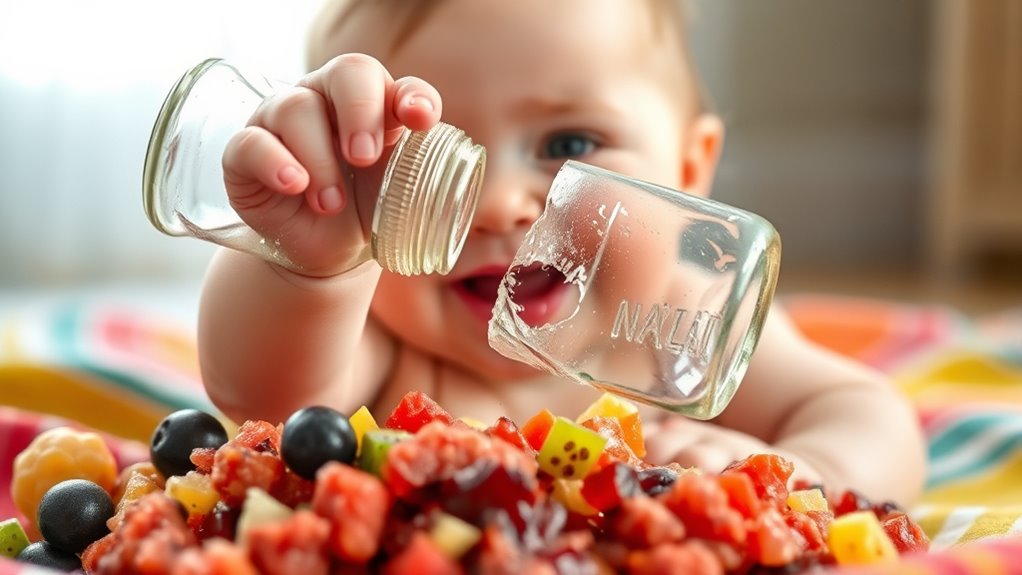

To shift from formula to solids, start by gradually replacing one bottle feeding with a small, manageable meal, offering soft, easy-to-eat foods like mashed fruits or vegetables. Pay attention to your baby’s cues and let them guide you; their interest and readiness are key. Be patient, introduce new textures slowly, and keep offering a variety of flavors. If you keep exploring these steps, you’ll find helpful tips to make this change smoother.

Turn the school run and nap time into listening time
- Thousands of audiobooks, podcasts and originals
- Listen on your phone, tablet or Echo — also offline
- Cancel anytime
Key Takeaways
- Gradually replace bottle feedings with solids, starting with one meal per day.
- Offer a variety of textures and flavors to encourage acceptance and exploration.
- Watch for signs of readiness, like sitting upright and showing interest in eating.
- Use responsive feeding cues to prevent overfeeding and respect your baby’s fullness.
- Continue providing formula or milk until your baby consistently eats enough solids for nutritional needs.
When your baby reaches around 4 to 6 months old, it’s time to start introducing solid foods alongside their usual formula. This shift marks an exciting milestone, but it can also feel overwhelming. One approach many parents find helpful is baby led weaning, which encourages your little one to explore new textures and flavors by self-feeding. Instead of spoon-feeding purees, you offer soft, manageable pieces of food that your baby can pick up and taste at their own pace. This method promotes independence, improves fine motor skills, and helps your baby develop a healthy relationship with food. As you begin on this journey, it’s essential to be patient and observant, watching for signs that your baby is ready, such as sitting upright with minimal support and showing interest in what you’re eating.
Introducing allergenic foods is an important part of early solid foods. Recent guidelines suggest that delaying the introduction of potential allergens, like peanuts, eggs, or fish, may not be necessary and could even increase the risk of allergies. Instead, you should aim to introduce these foods gradually and in small amounts, ideally around 6 months, while monitoring for any reactions. When offering allergenic foods, do so in a safe environment, and keep an eye out for signs of allergic reactions, such as hives, swelling, vomiting, or difficulty breathing. If your family has a history of allergies, consult your pediatrician beforehand to develop a tailored plan for introducing these foods safely. The goal is to diversify your baby’s diet early, reducing the chances of food allergies and ensuring they get essential nutrients. Additionally, understanding the role of color accuracy in visual appeal can encourage your baby to try new foods by making them look more appetizing.
As you shift away from bottles and formula, remember that the process should be gradual. Start by replacing one feeding with solids, and gradually increase the amount as your baby gets more comfortable with chewing and swallowing. This step-by-step approach helps prevent frustration and ensures your baby doesn’t get overwhelmed. Keep offering a variety of foods, textures, and flavors, and don’t worry if your little one rejects certain foods initially. Persistence and patience are key. Also, maintain a routine that includes responsive feeding—pay attention to your baby’s cues, such as turning away or closing their mouth, which indicate they’re full or need a break. Over time, your baby will become more adept at self-feeding, and the bottle or formula will become less central to their diet. Remember, this transition is about nurturing curiosity and independence while ensuring your baby receives the nutrition they need to grow and thrive.
As an affiliate, we earn on qualifying purchases.
Frequently Asked Questions
When Should I Introduce Allergenic Foods to My Baby?
You should introduce allergenic foods around 6 months, but it’s best to consult your pediatrician first. If your family has a history of allergies, allergy testing might be suggested before trying new foods. Start with small amounts and watch for any reactions. Early introduction can sometimes reduce allergy risks, but always follow your doctor’s guidance to ensure your baby’s safety during this important stage.
How Do I Know if My Baby Is Ready for Solids?
Did you know that around 4 to 6 months, most babies show signs they’re ready for solids? You’ll notice feeding cues like sitting up with support, opening their mouth when food nears, and showing interest in your meals. Watch for developmental milestones like improved hand-eye coordination. When these signs appear, it’s time to start introducing solids, making mealtime exciting and safe for your little one.
What Are Safe First Foods for My Infant?
You can start with safe first foods like soft fruits, cooked vegetables, and iron-fortified cereals. Baby-led weaning encourages your infant to explore self-feeding with appropriately-sized pieces, promoting independence. Homemade purees are also a great option, allowing you to control ingredients and guarantee safety. Always watch for choking hazards, and introduce new foods gradually, one at a time, to monitor for allergies.
How Can I Prevent Choking During Solid Food Introduction?
Think of introducing solids as steering a minefield—choking hazards are lurking, but you can keep your little explorer safe. Always supervise your infant closely, and serve soft, manageable pieces to match their developing gag reflex. Keep small, hard foods away, and encourage slow, mindful eating. By understanding their gag reflex and staying vigilant, you create a safe path as your baby learns to enjoy new tastes without risking choking.
Should I Continue Giving Formula After Starting Solids?
You might wonder if you should continue giving formula after starting solids. It’s generally a good idea to continue with formula or breast milk because it provides essential nutrients that solids may not fully supply yet. Comparing nutrient content, formula offers balanced vitamins and minerals vital for your baby’s growth. Keep offering formula until your pediatrician recommends shifting fully, ensuring your little one gets a complete nutritional profile during this important stage.
Conclusion
As you guide your little one from the gentle stream of formula to the vibrant river of solids, remember this journey is a delicate dance of trust and discovery. Every spoonful is a stepping stone across uncharted waters, shaping their palate and independence. Embrace the ebb and flow, knowing that with patience and love, you’re nurturing a curious adventurer ready to explore the vast ocean of flavors ahead. Together, you’re forging a path that blossoms into a lifetime of nourishment and wonder.
Halloween Picks
halloween
As an affiliate, we earn on qualifying purchases.