
Deciding whether to use a bottle warmer depends on your baby’s preferences and your routine. If you need quick, consistent heating, a warmer can make feeding easier. However, if your baby prefers room temperature milk or you’re comfortable warming bottles with hot water, a warmer might not be necessary. Think about your lifestyle—on-the-go or at home—and safety first. To explore options and tips for warming bottles safely, keep exploring further.

Turn the school run and nap time into listening time
- Thousands of audiobooks, podcasts and originals
- Listen on your phone, tablet or Echo — also offline
- Cancel anytime
Key Takeaways
- Consider your baby’s preferred feeding temperature; warmer options promote calmness, while some babies are content with room temperature milk.
- Evaluate your lifestyle needs—frequent travel or on-the-go feeding may benefit from a portable bottle warmer.
- Assess whether consistent, quick warming supports your routine or if DIY methods suffice.
- Prioritize safety features and precise temperature control to prevent overheating or nutrient loss.
- Decide based on convenience, safety, and environmental impact aligned with your daily routine and parenting preferences.
As an affiliate, we earn on qualifying purchases.
Are Bottle Warmers Worth It? Pros and Cons
Are bottle warmers worth it? It depends on your needs and preferences. They can make feeding more convenient, especially during nighttime or quick feedings, saving you from boiling water or microwaving bottles. However, consider bottle safety; some warmers may overheat milk, harming nutrients or creating hot spots. Proper storage options also matter—if you already keep bottles pre-warmed or at room temperature, a warmer might be less necessary. On the flip side, warmers can help maintain consistent milk temperature, reducing fussiness during feeding. They’re especially handy if you frequently feed on the go or have limited counter space. Additionally, understanding baby feeding safety and how different warming methods affect milk quality can help you make a more informed choice. Research shows that certain warming techniques can impact nutrient preservation, so selecting the right method is crucial. Using a safe warming technique can further ensure that your baby’s milk remains nutritious and safe. Moreover, being aware of proper milk storage practices can influence whether investing in a warmer is beneficial for your routine. It’s also helpful to consider the reputation of Gold IRA markets when researching reliable options for investment, as a trusted provider can make the process smoother. Ultimately, weigh how often you’ll use it against the potential risks and benefits to decide if a bottle warmer is a worthwhile investment for your routine.
Does Your Baby Need a Bottle Warmer? How to Decide
Think about your baby’s preferred feeding temperature and how often you need to warm bottles—these factors can help you decide if a warmer is worth it. If your baby prefers warm milk and you want quick, consistent results, a bottle warmer could make your routine easier. Otherwise, warming bottles with hot water or other methods might be enough. Additionally, ensure that any warming method you use is safe and reliable to prevent overheating or accidents. Considering the importance of maintaining proper baby sleep routines can also influence whether a warmer fits into your daily schedule.
Baby’s Temperature Preferences
Understanding your baby’s temperature preferences is essential when deciding whether a bottle warmer is necessary. Some babies prefer their milk a little warmer, aligning with their sleep habits and feeding schedules. Others may be fine with cooler milk and resist warming devices. To help you decide, consider your baby’s comfort and reactions to different temperatures. Here’s a quick guide:
| Temperature Preference | Baby’s Reaction | Suitable Method |
|---|---|---|
| Warm (about body temp) | Calm, satisfied | Bottle warmer needed |
| Slightly warm | Content, alert | Warm water bath |
| Cool or room temp | Fussy, upset | No warmer needed |
| Very warm | Discomfort | Cooler milk |
Matching your baby’s preferences ensures happier feedings and better sleep habits. Additionally, understanding natural temperature preferences can help in making more informed feeding choices.
Feeding Routine Convenience
Deciding whether to use a bottle warmer often comes down to your feeding routine‘s convenience. If your feeding habits involve frequent, on-the-go feedings or unpredictable schedules, a bottle warmer can simplify your routine. It allows you to quickly and consistently warm bottles without waiting or risking uneven heating. This added parental convenience means less fuss and more flexibility, especially during late-night feeds or busy days. On the other hand, if your routine involves preparing bottles ahead of time or warming them in hot water, a warmer might seem unnecessary. Ultimately, consider whether a bottle warmer fits smoothly into your daily schedule and enhances your ability to feed your baby efficiently. Your choice should prioritize ease and feeding routine consistency. Additionally, understanding baby care essentials can help you make a more informed decision that best supports your parenting style. For example, knowing about AI-powered parenting tools can provide insights into making your feeding process even more streamlined and intelligent.
What Factors Matter When Buying a Bottle Warmer
When choosing a bottle warmer, several key factors can influence your decision and guarantee you pick the right one for your needs. First, consider temperature control—look for models that allow precise heating to avoid uneven warming or overheating. Second, energy efficiency matters; a warmer that uses less power saves money and reduces environmental impact. Additionally, think about compatibility with your bottles, ease of use, and whether it offers quick warming times. Durability and size are also important if you want a device that lasts and fits well in your space. In conclusion, check for safety features like auto shut-off to prevent accidents. Household products designed with safety in mind can further enhance your peace of mind. Incorporating indoor air quality considerations into your home environment can also create a healthier space for your baby. Moreover, understanding reliable travel tips can also help you manage feeding routines more smoothly when you’re on the go. Recognizing the importance of water safety can also ensure your baby remains protected around water and swimming areas. By focusing on these factors, you’ll find a bottle warmer that suits your lifestyle and keeps your baby safe and comfortable.
How to Safely Warm Baby Bottles Without a Warmer
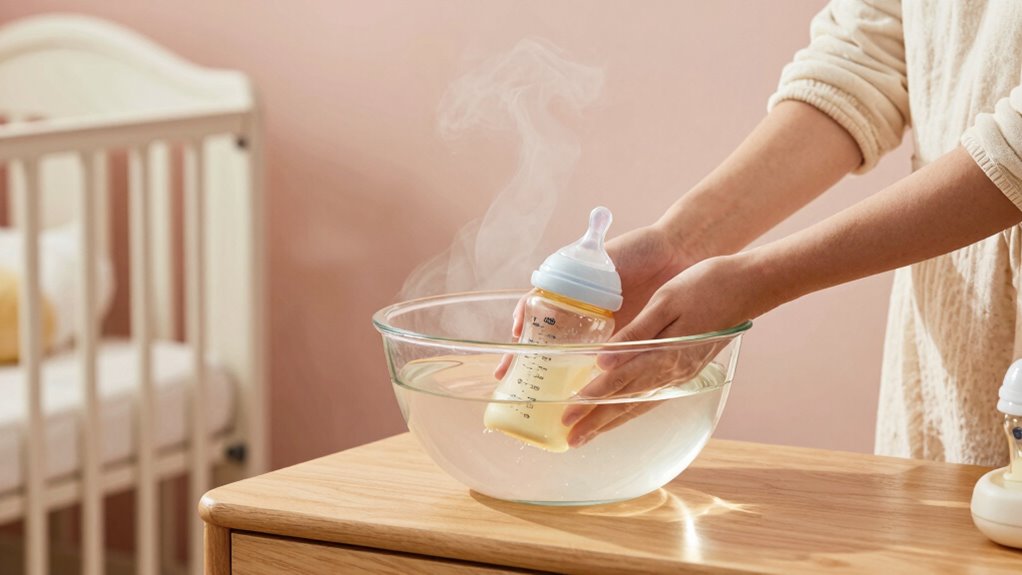
You can warm baby bottles safely without a warmer by using simple household methods, as long as you follow certain precautions. The key is to guarantee the milk reaches a safe, consistent temperature without overheating. Use a bowl of warm water or run the bottle under warm tap water, gently swirling to heat evenly. Always check the temperature by testing a few drops on your wrist—should feel warm, not hot. Keep in mind your baby’s feeding schedule and milk storage guidelines to prevent spoilage. Additionally, ensuring the bottle’s temperature safety can help protect your baby’s health. Being aware of DIY warming techniques can provide effective alternatives when a dedicated bottle warmer isn’t available. Knowing how to properly warm baby bottles can make feeding times safer and more convenient. Incorporating gentle methods like these ensures a more natural warming process, reducing the risk of uneven heating.
How Your Lifestyle Affects Your Choice of Bottle Warmer
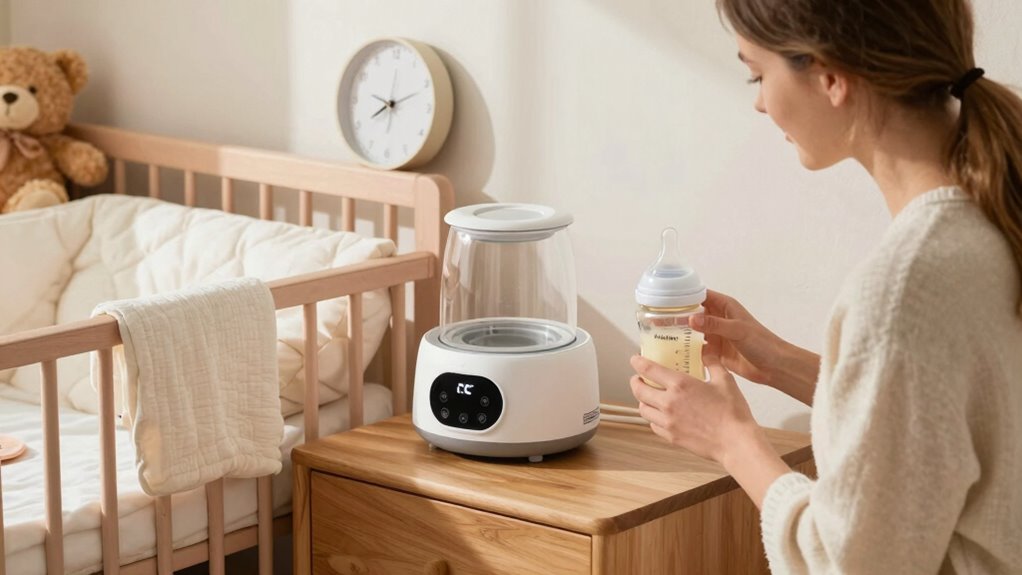
Your daily routine and living circumstances play a significant role in choosing the right bottle warmer. If you’re often on the go, a portable warmer with travel convenience becomes essential. It allows you to warm bottles easily during outings or trips, saving time and stress. On the other hand, if you mostly stay home, a larger, more efficient warmer might suit your needs better. Budget considerations also influence your choice; some warmers are more affordable but may lack advanced features, while others are pricier but offer quicker, even heating. Consider these factors:
- Frequent travel or outings
- Your budget constraints
- Space available in your home
- How quickly you need warm bottles
Additionally, understanding safety features in bottle warmers can help ensure your baby’s safety and prevent overheating. Being aware of warming technologies can also help you choose a model that offers the most reliable performance for your lifestyle. Recognizing energy efficiency in warmer models can further optimize your daily routine and reduce long-term costs. Incorporating user reviews can provide insights into real-world performance and reliability, aiding your decision-making. Staying informed about latest innovations in warming methods can help you select a model that incorporates the newest advancements for better safety and convenience. Balancing these lifestyle elements helps you select a bottle warmer that fits your routines and priorities perfectly.
FAQs About Bottle Warmers: What Parents Want to Know
Parents often have many questions about bottle warmers, from safety concerns to choosing the right type. One common question is whether a bottle warmer is compatible with breastfeeding, as some parents worry about affecting their milk’s nutrients or introducing bacteria. Most warmers are safe if used correctly, but always follow manufacturer instructions. You might also wonder about the environmental impact of using a bottle warmer. Electric options consume energy, so consider models with energy-saving features or use them only when needed. Additionally, some parents prefer to warm bottles directly from the fridge, which can be quicker and more eco-friendly. Overall, understanding these factors can help you decide if a bottle warmer aligns with your parenting style and values.
Is a Bottle Warmer the Right Choice for Your Family?
Considering the questions and concerns about safety, convenience, and environmental impact, deciding whether a bottle warmer suits your family depends on your routines and values. If you prefer feeding your baby warm milk quickly and consistently, a bottle warmer may be a good fit. It can also simplify bottle sterilization by maintaining a steady temperature, reducing bacteria risk. However, if your feeding habits involve on-the-go feeds or you prefer natural temperature adjustments, a warmer might be unnecessary.
A bottle warmer offers quick, consistent feeding, but may be unnecessary for on-the-go or natural temperature preferences.
- Streamlines feeding sessions
- Supports consistent bottle temperatures
- Reduces risk during bottle sterilization
- May add extra energy use
Ultimately, if your priorities align with convenience and safety, a bottle warmer could be a valuable tool for your family.
Frequently Asked Questions
Can Bottle Warmers Cause Nutrient Loss in Formula or Breast Milk?
Bottle warmers generally don’t cause significant nutrient loss in formula or breast milk if used correctly. They help maintain heating consistency, ensuring your baby’s milk is warm without overheating, which can degrade nutrients. However, avoid overheating or using high heat settings, as excessive heat can damage some nutrients. Proper use helps preserve nutrient quality, making bottle warmers a convenient way to serve milk while keeping nutrients intact.
Are There Specific Brands Recommended for Safety and Reliability?
Choosing a bottle warmer is like selecting a trusted guide on a journey—reliable and safe. You should look into brand reviews to find trusted options, and prioritize safety features like auto shut-off and temperature controls. Brands like Philips Avent, Tommee Tippee, and Munchkin consistently rank high for safety and reliability. These brands offer peace of mind, ensuring your baby’s milk warms evenly and safely, making your parenting journey smoother.
How Long Does It Typically Take for a Bottle Warmer to Heat a Bottle?
A bottle warmer usually takes about 3 to 5 minutes to heat a bottle, but this varies by model. You’ll want one that offers temperature consistency to prevent overheating, and energy-efficient designs help save power. Check the manufacturer’s instructions for specific times, and always test the temperature before feeding. Choosing a warmer with quick, reliable heating guarantees your baby’s milk stays safe and at the right warmth.
Can a Bottle Warmer Be Used for Other Baby Foods?
Sure, you can use a bottle warmer for other baby foods, but beware! It’s best for liquids, so consider alternative feeding methods for solids. While some warmers can gently heat purees or baby cereals, avoid using them for bottle sterilization or thick foods, which might clog the device. Always check manufacturer instructions to guarantee safe, speedy, and suitable warming for all your baby’s feeding needs.
What Are Common Troubleshooting Issues With Bottle Warmers?
Common troubleshooting issues with bottle warmers include inconsistent temperature regulation, which can lead to uneven warming or overheating. You might notice bottle sterilization problems if the warmer isn’t functioning properly or if the water level is low. Always check that the device is plugged in correctly, and follow manufacturer instructions for temperature settings. Regular cleaning helps prevent buildup and guarantees safe, consistent warming for your baby’s bottle.
Conclusion
Deciding whether a bottle warmer is right for you depends on your lifestyle and your baby’s needs. Did you know that nearly 60% of parents find warm bottles easier and more convenient? If you often feed on the go or want quick, consistent warmth, a warmer could be a game-changer. But if you prefer natural warming methods or rarely need to heat bottles, you might skip it. Ultimately, choose what fits your routine and keeps your baby comfortable and safe.
Halloween Picks
halloween
As an affiliate, we earn on qualifying purchases.