Whether you really need a bottle sterilizer depends on your baby’s age and health. For newborns and preemies, sterilizers offer extra protection against germs, but regular hot water and thorough cleaning often suffice for older babies. You can choose from different types like electric steam, microwave, or boiling. While sterilizers provide peace of mind, they aren’t always necessary—continuing to explore can help you decide the best approach for your family.

Turn the school run and nap time into listening time
- Thousands of audiobooks, podcasts and originals
- Listen on your phone, tablet or Echo — also offline
- Cancel anytime
Key Takeaways
- Sterilizers reduce bacteria risk, especially for newborns and preemies, but thorough cleaning may suffice for older infants.
- Regular hot water and soap cleaning can often replace sterilizers, saving time and cost.
- The necessity of sterilization depends on the baby’s age, health, and immune system; it’s more critical for younger or vulnerable infants.
- Different sterilization methods—boiling, steaming, UV, or chemical—offer effective options without always needing a dedicated sterilizer.
- Consulting pediatric advice helps determine if sterilization is necessary, balancing safety with convenience and lifestyle.
As an affiliate, we earn on qualifying purchases.
What Are Bottle Sterilizers and How Do They Work?

Bottle sterilizers are devices designed to eliminate harmful bacteria and germs from baby bottles and accessories. They work by exposing bottles to high heat, steam, or UV light, depending on the sterilizer type. Some sterilizers use steam heat, which is effective for plastic and glass bottles, regardless of their material. Others may use UV light or chemical sterilization methods. There are different sterilizer types, including electric steam sterilizers, microwave sterilizers, and manual boiling methods. The choice depends on your lifestyle and the bottle material you prefer. For plastic bottles, verify the sterilizer’s heat won’t cause warping. Glass bottles typically tolerate higher temperatures. Understanding how each sterilizer type interacts with bottle material helps you keep your baby’s bottles safe and hygienic. Additionally, consider the sterilization process to ensure it effectively eliminates bacteria without damaging your bottles. It’s also helpful to check the manufacturer’s instructions to ensure proper use and safety. Selecting the right sterilizer according to material compatibility can help you maintain optimal hygiene standards for your baby’s health. Knowing the temperature tolerance and sterilizer features can further ensure the longevity and safety of your bottles.
Are Baby Bottle Sterilizers Necessary for Newborns?
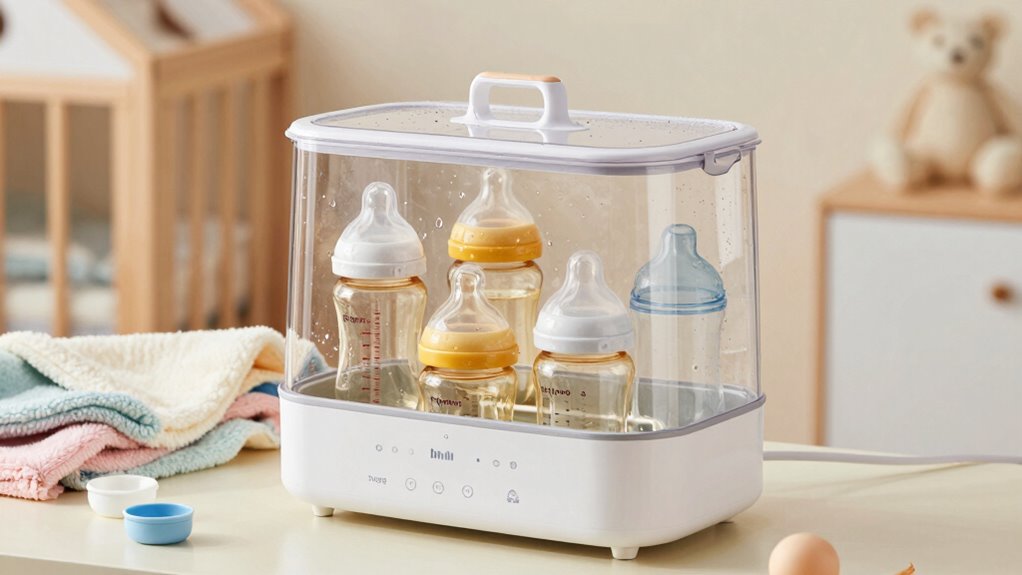
You might wonder if a bottle sterilizer is really necessary for your newborn. While it can help prevent bacterial growth, it’s not always essential, especially with proper cleaning. Consider your situation and comfort level before deciding if a sterilizer is worth the investment.
Prevents Bacterial Growth
Since newborns have developing immune systems, preventing bacterial growth on their bottles is essential. Using a sterilizer can effectively reduce bacteria, especially after cleaning. The choice of bottle material influences sterilization methods—glass and certain plastics withstand heat better. Here’s a quick comparison:
| Bottle Material | Suitable Sterilization Methods |
|---|---|
| Glass | Boiling, steam sterilizers |
| Plastic | Boiling, microwave sterilizers |
| Silicone | Steam sterilizers, boiling |
Sterilization minimizes bacteria that can linger despite washing, offering peace of mind. While some bottles are easier to sterilize, others require specific methods. Ensuring proper sterilization consistently helps keep your baby safe from harmful bacteria.
Not Always Essential
While sterilizing bottles can provide extra assurance, it’s not always a necessary step for every newborn. Many parents find that alternative cleaning methods, like thorough washing with hot soapy water, effectively reduce bacteria. If your baby’s immune system is healthy, sterilization might be more about parental convenience than a medical necessity. Consider that:
- Regular cleaning can be sufficient for daily use
- Boiling bottles for a few minutes kills most germs
- Proper drying prevents bacterial growth
- Sterilizers are helpful during early weeks but not critical afterward
- Consulting your pediatrician can clarify your specific needs
- Using evidence-based methods ensures safe practices while minimizing unnecessary steps
Ultimately, whether you choose sterilizing or alternative cleaning depends on your comfort level, lifestyle, and your baby’s health. It’s about finding the right balance that ensures safety without added hassle.
Which Types of Bottle Sterilizers Are Available? Pros and Cons

There are several types of bottle sterilizers available, each with its own advantages and disadvantages. Electric steam sterilizers are popular for quick, effective sterilization and help keep nursery organization tidy by drying bottles as well. They’re convenient but can be bulky and expensive. Microwave sterilizers are compact and easy to use, making them perfect for busy parents. However, they might not hold as many bottles at once. Sterilizing bags are portable and great for travel, but they’re single-use and can become costly over time. Some parents prefer boiling water or washing with hot soapy water as alternatives. Each option impacts how you organize nursery space and store baby bottle accessories, so consider your lifestyle when choosing the best sterilizer for your needs.
Do Boiling and Washing Baby Bottles Work as Alternatives?

Boiling and washing can be effective ways to clean baby bottles if done correctly. Proper washing techniques, like scrubbing all surfaces and using hot water, are essential for removing germs. But you’ll want to guarantee the boiling process reaches the right temperature for it to truly sterilize. Additionally, understanding halal hygiene practices can help ensure that sterilization methods align with cultural and religious standards. Incorporating proper water quality is also crucial, as impurities in water can affect the effectiveness of sterilization processes. Ensuring the water temperature is sufficiently high during boiling is vital for effective sterilization. Being aware of water purity standards can help improve sterilization outcomes and maintain safety. Regularly monitoring medication management and ensuring proper handling can further enhance overall infant care.
Effectiveness of Boiling Method
Many parents rely on boiling as a quick and straightforward way to sterilize baby bottles, but questions about its effectiveness are common. Boiling can kill most germs, but it doesn’t guarantee complete sterilization, especially if bottles aren’t thoroughly cleaned beforehand. Additionally, frequent boiling may impact the nutritional quality of expressed milk or formula, as high heat can degrade some nutrients. Environmental concerns also arise, since boiling consumes significant energy and water. To maximize effectiveness, make sure bottles are scrubbed well before boiling. Keep in mind that:
- Some bacteria may survive if bottles aren’t cleaned properly
- Overboiling can cause plastic bottles to degrade
- Nutritional value of milk may diminish with repeated boiling
- Boiling doesn’t remove chemical residues or pesticides
- It’s less eco-friendly compared to other sterilization methods
- Fostering a digital-friendly environment at home can help parents access resources and tips for safer and more efficient sterilization options.
Proper Washing Techniques
Proper washing techniques are essential for guaranteeing your baby bottles are safe and clean, especially since neither boiling nor simple rinsing can eliminate all germs or residues on their own. To maximize safety, wash bottles thoroughly with hot, soapy water, paying close attention to crevices and nipples. Rinse well to remove soap residue, which can affect bottle material safety, especially in plastic bottles that may degrade or harbor bacteria over time. While boiling can help sterilize, it shouldn’t replace proper cleaning. Remember, breastfeeding benefits are best supported when bottles are hygienic, so maintaining proper washing routines protects your baby from harmful germs. Combining thorough washing with occasional sterilizing ensures your bottles remain safe, clean, and ready for use.
How Often Should You Sterilize Baby Bottles?
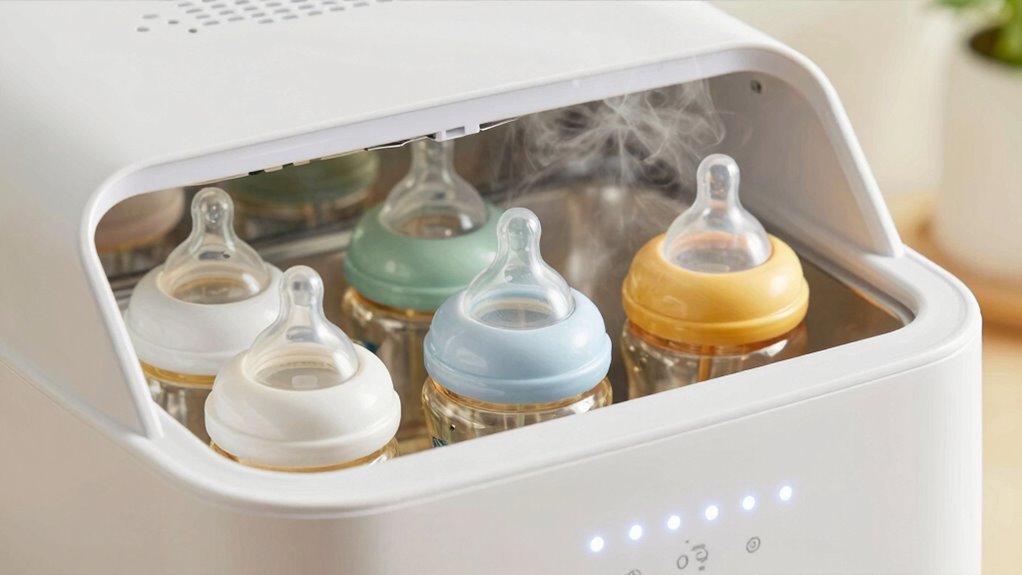
You should sterilize your baby bottles regularly to keep harmful bacteria at bay, but how often depends on your baby’s age and feeding habits. For newborns and infants under three months, sterilize after each use to protect their delicate immune systems. As your baby grows and starts eating solids, you can extend sterilization to once daily or every few days. If your baby is sick or has a compromised immune system, sterilize more frequently. Proper bottle feeding hygiene is essential for baby health and reducing infection risks. Consider these points:
- Sterilize after each feeding during the first few months
- Clean bottles thoroughly before sterilizing
- Use sterilizers or boiling methods for safety
- Avoid cross-contamination with clean hands and surfaces
- Adapt frequency as your baby’s immune system develops
- Incorporating herbal herbal baths can support overall immune health in infants and promote relaxation. Additionally, understanding the importance of clinical assessments can help ensure your baby’s health is monitored effectively during these early stages.
Are Sterilizers Worth the Cost and Effort?

Deciding whether sterilizers are worth the expense and effort depends on your priorities and your baby’s health needs. If you frequently use bottles made from materials like plastic or silicone, sterilization can help prevent bacteria buildup and guarantee safety. However, consider the sterilizer cost—some models are affordable, while others can be pricey. If you’re comfortable with thorough cleaning and boiling bottles regularly, you might not need a sterilizer at all. Also, think about your lifestyle; busy schedules or travel might make a sterilizer more convenient. Additionally, understanding the science behind sterilization can help you make more informed decisions about your baby’s health practices. Being aware of the benefits of sterilization can further guide you in choosing the best approach for your family. Exploring hygienic practices can also enhance your routine and provide additional peace of mind. Incorporating proper sterilization techniques can ensure your baby’s bottles remain safe and germ-free.
What Do Pediatric Experts Recommend About Bottle Sterilization?
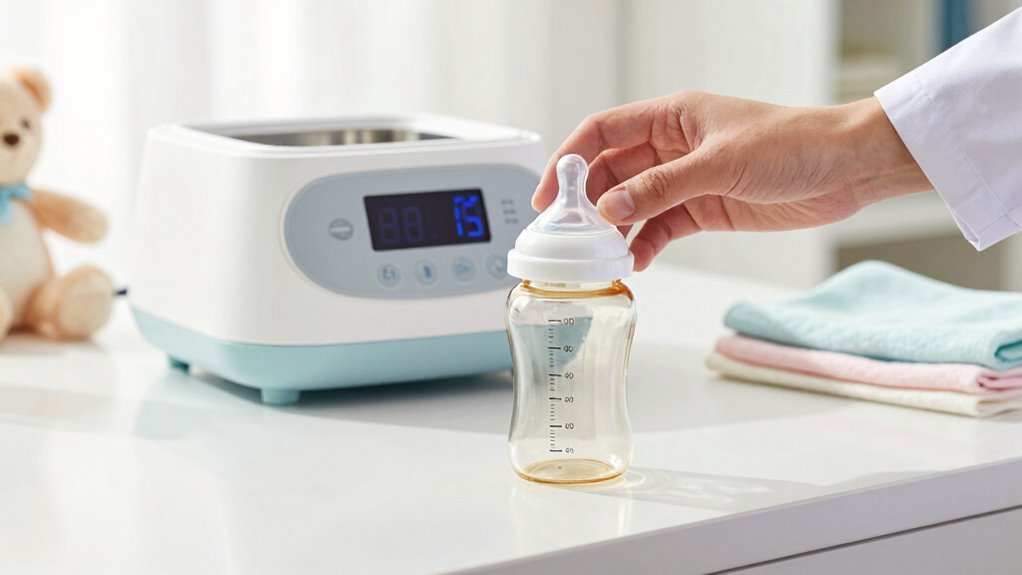
Pediatric experts generally recommend sterilizing bottles, especially for newborns and infants with developing immune systems. Proper sterilization helps assure bottle safety and reduces infection risks. While some parents skip sterilizing daily, experts suggest incorporating it into your parenting routines during the first few months. This practice helps eliminate harmful bacteria and build healthy habits. Consider these points:
- Sterilize bottles after each use for newborns and preemies
- Use boiling, steaming, or chemical sterilizers as recommended
- Focus on thorough cleaning before sterilizing
- Prioritize sterilization during illness or when your baby’s immune system is vulnerable
- Balance sterilization with regular washing to maintain bottle safety without overdoing it
- Incorporating high-temperature sterilization methods can provide additional peace of mind by ensuring thorough bacterial elimination. Additionally, understanding sterilization techniques can help you choose the safest method for your baby’s needs, especially since the power output of electric sterilizers can vary based on the method used.
Following pediatric guidance can help you create effective, safe parenting routines that protect your little one.
Frequently Asked Questions
Can Sterilizers Prevent All Bacteria and Viruses on Bottles?
Sterilizers can’t prevent all bacteria and viruses on bottles because of sterilizer limitations and bacterial resistance. While they markedly reduce harmful germs, some resilient bacteria or viruses may survive, especially if the sterilizer isn’t used properly or if bottles aren’t cleaned thoroughly beforehand. As a result, sterilization is an essential step, but not foolproof. Combining sterilization with proper cleaning provides the best protection for your baby.
Are Sterilizers Necessary if I Breastfeed Exclusively?
If you’re breastfeeding exclusively, a sterilizer isn’t strictly necessary for maintaining bottle hygiene. Regularly washing bottles with hot, soapy water and rinsing thoroughly can effectively remove most bacteria. Sterilizer alternatives, like boiling bottles or using dishwasher cycles, work well too. While sterilizers offer convenience and extra reassurance, ongoing cleaning and proper handling are key to keeping bottles safe for your baby.
How Long Does a Typical Bottle Sterilization Process Take?
Imagine a gentle steam cloud enveloping your bottle—this is how quick sterilization can be. Typically, sterilization methods like electric steam sterilizers or boiling water take about 5 to 10 minutes, depending on the method. Consider bottle material considerations—plastic bottles may need less time, while glass might require a slightly longer process. You’ll find sterilization is a swift step, giving you peace of mind in just a few minutes.
Do Sterilizers Improve the Safety of Formula Feeding?
Sterilizers do improve the safety of formula feeding by reducing harmful bacteria, especially when you use the right sterilizer type for your needs. They work well with various bottle materials like glass or plastic, ensuring thorough cleaning. Using a sterilizer adds an extra layer of protection, making sure your baby’s bottles are hygienic. Whether you choose electric or microwave sterilizers, they help keep feeding safe and bacteria-free, giving you peace of mind.
Are Portable Sterilizers Effective for Travel Purposes?
Yes, portable sterilizers are effective for travel purposes, offering convenient sterilization on the go. They’re compact, lightweight, and simple to use, making travel easier while ensuring bottles stay clean. However, keep in mind their limitations—some may not fit larger bottles or have limited capacity. Despite these, they provide essential travel convenience, helping you maintain hygiene even when you’re away from home.
Conclusion
Ultimately, whether you need a bottle sterilizer is like choosing to light a candle in a dark room—it’s about your peace of mind. While sterilizers can be a gentle shield against germs, simple boiling or thorough washing often do the trick. Trust your instincts and consult pediatric advice, but remember, in the end, you’re the captain steering your baby’s health through calm or stormy waters. Your care is the real magic making everything safe.
Cold & flu season Picks
humidifiers
As an affiliate, we earn on qualifying purchases.