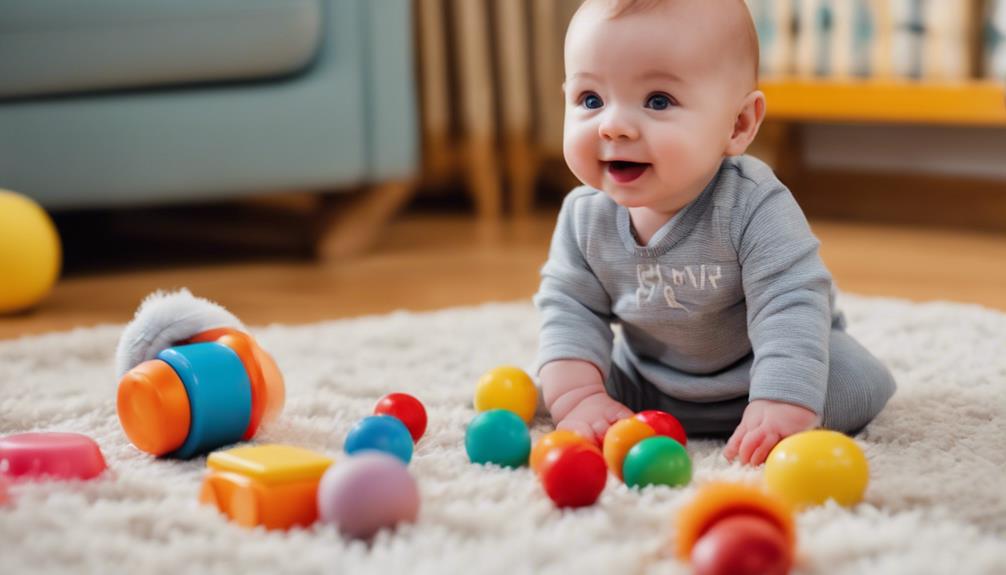

You can start tummy time with your newborn as early as their first week to help build strength, coordination, and confidence in motor development. Begin with just a few minutes daily, gradually increasing as your baby gets comfortable. Use soft blankets and eye-level engagement like toys or your face to encourage them. Consistency and patience are key, and supporting your baby’s cues will make it a positive experience. Keep going — you’ll discover more tips to support their growth.
Key Takeaways
- Start tummy time as early as the first few weeks after birth.
- Begin with short sessions of 2-3 minutes daily, gradually increasing over time.
- Ensure the baby is comfortable and alert during each session.
- Use engaging toys and eye-level positioning to encourage lifting the head.
- Monitor your baby’s cues and take breaks if they show signs of fatigue or discomfort.

Starting tummy time early in your newborn’s life is essential for their development and helps prevent future motor delays. This simple activity is a critical part of reaching important development milestones, such as lifting the head, strengthening neck muscles, and improving coordination. By introducing tummy time from the beginning, you’re giving your baby the opportunity to build strength and confidence in their physical abilities. It’s normal to feel unsure about when to start or how much time to spend, but remember, parental guidance and patience are key. Small, consistent sessions can make a big difference in your baby’s growth.
Starting tummy time early helps your baby reach key development milestones safely and confidently.
In the first few weeks, aim for a few minutes of tummy time each day, gradually increasing as your baby becomes more comfortable. You might find that your newborn initially resists this position, which is completely normal. To make it more engaging, you can lie down at their eye level or place colorful toys just within reach to encourage them to lift their head. Keep a close eye on your baby during these sessions, ensuring they’re comfortable and never fatigued. Comfort is essential, so use a soft blanket or pad under their chest to provide support. As your baby gains strength, you’ll notice their ability to lift the head and push up with their arms improving, which are key indicators of reaching motor development milestones.
Additionally, engaging in developmentally appropriate activities during tummy time can support their growth and encourage active exploration. Remember, every baby develops at their own pace, so don’t compare your child’s progress with others. Your role in guiding and supporting them through tummy time is critical. If your baby shows signs of discomfort or fatigue, take breaks and try again later. Consistency is more important than duration—short, regular tummy time sessions are more effective than long, infrequent ones. Over time, your baby will gradually enjoy tummy time more, and you’ll see their skills advance. Celebrating small victories like lifting the head or rolling over encourages further effort and builds their confidence.
Ultimately, your involvement and encouragement during tummy time foster a positive experience that supports healthy development. Keep in mind that parental guidance plays a significant role in shaping your baby’s attitude toward physical activity. With patience and persistence, you’ll help your newborn reach those important milestones, setting a strong foundation for their motor skills and overall growth. Starting tummy time early and making it a supportive activity will serve your baby well as they grow and explore their world with increasing strength and curiosity.
Conclusion
Starting tummy time early is like planting a seed that grows stronger muscles and happier babies. By giving your little one this gentle exercise, you’re helping them blossom into confident movers. Remember, patience and consistent practice turn tiny steps into big leaps. So, don’t wait for the perfect moment—just begin today, and watch your baby’s strength and curiosity flourish like a beautiful garden in full bloom.