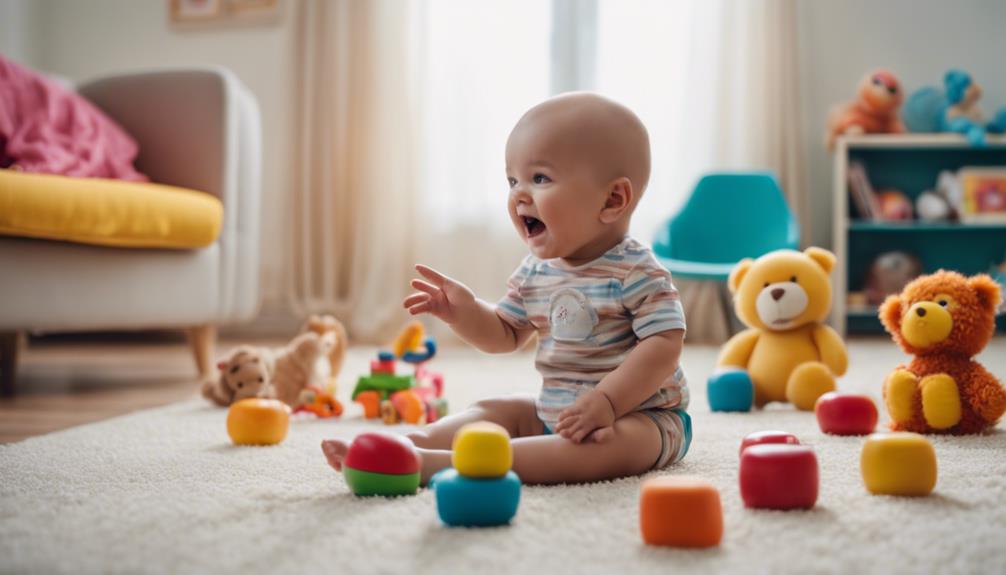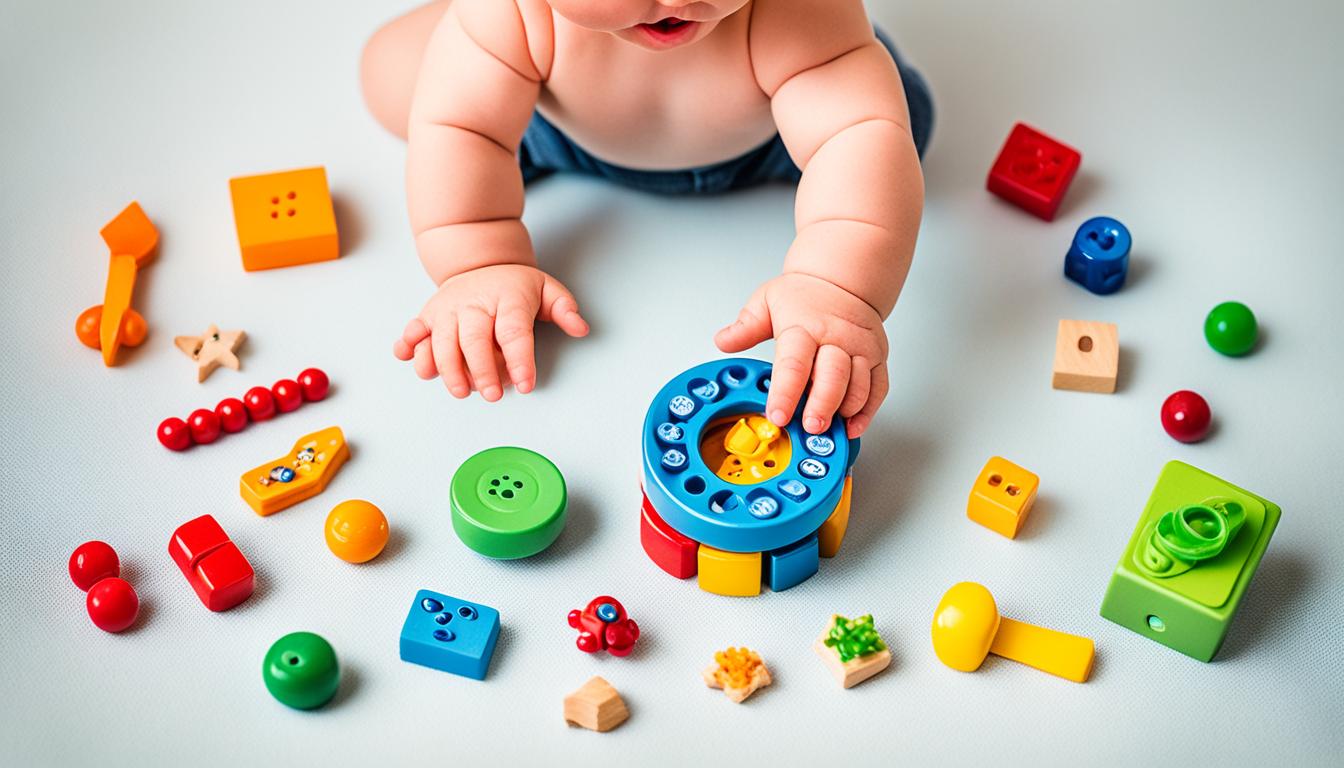
To help your toddler develop coordination skills like throwing, kicking, and catching, encourage plenty of practice with soft, lightweight objects and simple activities. Focus on patience and providing supportive feedback as they learn to reach, grasp, swing, and judge distances. These experiences strengthen their hand-eye coordination, balance, and timing, setting a foundation for more complex play. Keep guiding them steadily, and you’ll discover more ways to support their physical growth.
Key Takeaways
- Developing coordination involves practicing throwing, kicking, and catching to improve motor skills and hand-eye coordination.
- Using lightweight, soft objects and targets supports safe, effective skill development for toddlers.
- Balance, timing, and leg control are essential for successful kicking, with activities like rolling balls aiding progress.
- Catching skills start with trapping soft balls against the chest, enhancing anticipation and motor control through simple games.
- Patience, encouragement, and regular practice help toddlers gradually master coordination in these physical activities.
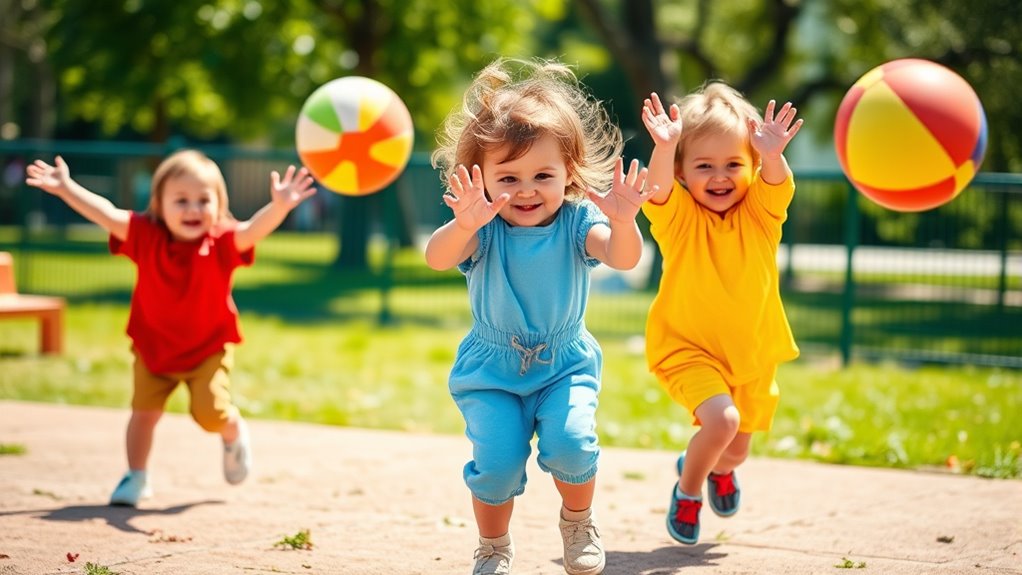
Coordination is the backbone of effective teamwork, enabling individuals to work seamlessly toward common goals. When it comes to toddlers, developing coordination isn’t just about working with others—it’s about mastering their own bodies. One of the most important aspects of this development involves fine motor skills and hand-eye coordination. These skills are essential as your little one learns to control their movements, and they form the foundation for more complex actions like throwing, kicking, and catching.
Your toddler’s ability to throw a ball accurately depends on their fine motor skills and hand-eye coordination. At first, they may toss objects randomly, but with practice, they’ll begin to aim better and control their movements. You can encourage this by providing lightweight balls or soft objects that are easy for small hands to grasp. When they reach out, grasp, and release, they’re refining their hand-eye coordination. This process helps them learn how to coordinate visual input with muscle movements, making their actions more precise over time. The more you play catch or encourage them to throw objects at targets, the more their coordination develops naturally.
Kicking, on the other hand, requires a different set of skills, combining balance, leg control, and timing. Your toddler will initially kick without much control, often just swinging their leg in the general direction of a ball. As they practice, they’ll learn to judge distances and time their kicks better. To support this, set up simple activities like rolling a ball toward them or encouraging them to kick a ball back and forth. These exercises help improve their gross motor skills while reinforcing their ability to coordinate their visual perception with their physical actions. Over time, they’ll start to kick with more accuracy and confidence.
Catching is often the trickiest skill for toddlers because it demands quick hand-eye coordination and timing. When they attempt to catch a ball, they’re learning to track the object with their eyes, judge its trajectory, and coordinate their hands to grasp it. Initially, they might just try to trap a large, soft ball against their chest or catch it with open hands. You can make this easier by using larger, softer balls and gradually decreasing the size as they improve. Simple games like bouncing a ball on the ground and encouraging them to catch it reinforce their hand-eye coordination. As they practice, you’ll notice their ability to anticipate where the ball will land and catch it improves, which boosts their confidence and motor control.
In all these activities, patience and consistent encouragement are key. By providing ample opportunities for your toddler to practice throwing, kicking, and catching, you’re helping them develop the coordination skills that will serve as a foundation for more complex physical activities later on. Additionally, understanding the importance of visual perception in these skills can further enhance their development. Their progress might be gradual, but with your support, they’ll be mastering these skills in no time.
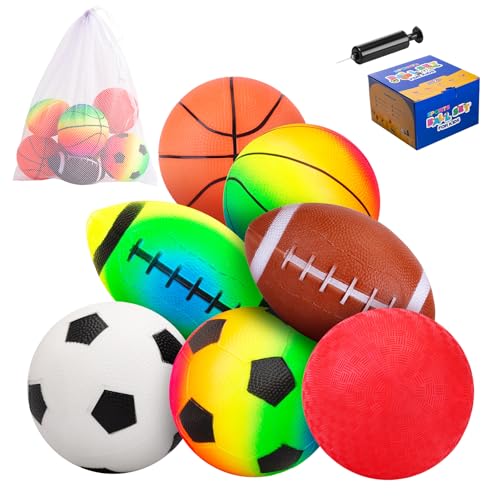
PlayZap 7-Piece Soft Ball Set for Toddlers & Kids – Includes 5” Playground Balls, Soccer, Football & Basketball – Great for Home, Yard, Pool, Classroom & Park for Boys & Girls Easter Gifts
【Classic Ball Set】This sports balls for toddlers comes with 2 rubber basketballs (1 common +1 rainbow color), 2…
As an affiliate, we earn on qualifying purchases.
As an affiliate, we earn on qualifying purchases.
Conclusion
As you watch your toddler throw, kick, and catch, you’re witnessing a tiny superhero in the making. Each movement might seem simple now, but it builds the foundation for incredible skills ahead. With every practice, you’re revealing the potential for your little one to master coordination that could rival even the most agile athletes. Keep encouraging their efforts, because before you know it, they’ll be conquering the world—one playful throw at a time.

Non-Slip Wood Wobble Exercise Balance Board,up to 350 Ibs for Coordination Skills Obstacle Courses Sensory Toys for Kids and Adult,Professional Rocker Balance Board for Physical Therapy,Indoor or
BALANCE BOARD:17.5” L × 13.5″ W × 3” H; one-piece design comes fully assembled that supports the body’s…
As an affiliate, we earn on qualifying purchases.
As an affiliate, we earn on qualifying purchases.
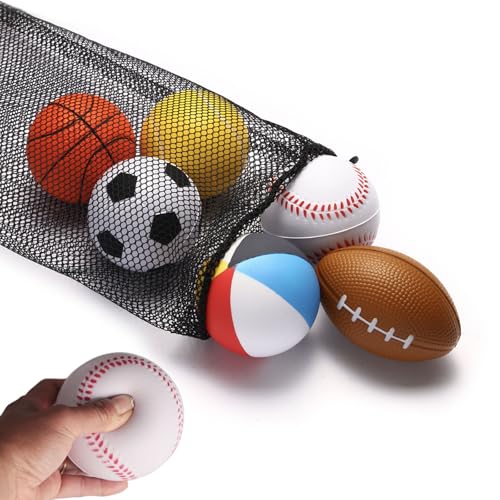
Mini Sports Balls Set of 6 Foam Ball for Kids 2.8 inch Soft Balls for Toddlers with Bag Includes Soccer, Basketball, Football, Baseball ,Tennis and Beach ball- Throwing Toys for Baby Boy and Girl
1. Perfect for Small Hands –Each ball measures 2.8 inches in diameter, making them ideal for toddlers aged…
As an affiliate, we earn on qualifying purchases.
As an affiliate, we earn on qualifying purchases.

Bedwina Knobby Balls – (Pack of 6) Bulk 7 Inch Sensory and Spiky Massage Stress Balls for Toddlers, with Pump, Fun & Bouncy for Toddler, Kids Party Favors, Stocking Stuffers
PACK OF 6 KNOBBY SENSORY BALLS: Each bulk pack of knobby balls includes 6 sensory balls for toddlers…
As an affiliate, we earn on qualifying purchases.
As an affiliate, we earn on qualifying purchases.