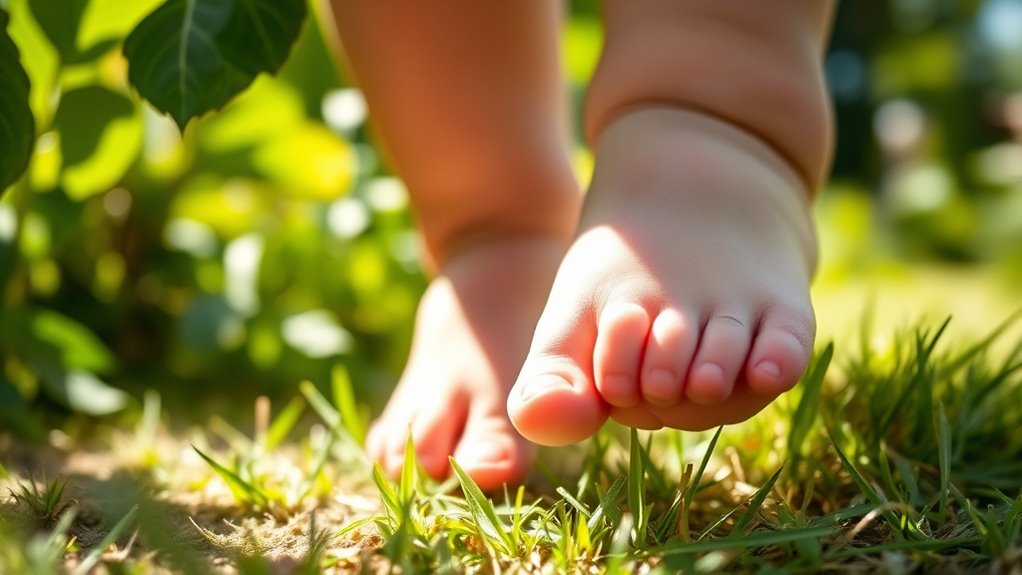

Walking barefoot supports your child’s foot development by strengthening muscles, improving balance, and increasing sensory awareness from an early age. Start with brief sessions on soft surfaces like grass or sand, and pay attention to their toe response and comfort. Incorporate toe exercises to boost strength and flexibility gradually. Staying cautious and consistent helps prevent discomfort or injuries. Keep exploring these tips, and you’ll find ways to encourage safe, healthy foot growth for your little one.
Key Takeaways
- Start with brief barefoot sessions on soft surfaces like grass or sand to support natural foot development.
- Incorporate toe exercises such as curls and picking up objects to strengthen toe muscles.
- Gradually increase barefoot time, paying attention to foot response and avoiding overstressing.
- Use textured surfaces to stimulate nerve endings, enhancing foot sensitivity and balance.
- Prioritize safety by resting if discomfort occurs and practicing consistent, gradual barefoot activities.

Growing barefoot can be a natural way to support your foot development, but it requires mindful practices to guarantee your feet grow strong and healthy. When you walk without shoes, you give your toes the chance to move freely, which is essential for building toe strength. Strong toes help stabilize your foot, improve balance, and prevent issues like bunions or hammertoes later in life. As your toes work harder to grip and push off the ground, they develop better muscle tone, making your foot more resilient.
Walking barefoot strengthens toes, enhances balance, and promotes healthy foot development.
Another critical benefit of barefoot walking is enhanced sensory feedback. When you’re barefoot, your feet directly feel the texture, temperature, and shape of the ground beneath you. This improved sensory input sharpens your ability to sense subtle changes, helping you adjust your gait naturally. Strong sensory feedback means your brain receives more detailed information about your environment, leading to better coordination and balance. Over time, this can reduce the risk of falls and injuries, especially as you become more active or encounter uneven surfaces.
To maximize these benefits, start gradually. Don’t rush into walking barefoot all day; instead, begin by spending a few minutes each day barefoot on safe, soft surfaces like grass, sand, or smooth dirt. This allows your toes and foot muscles to adapt without overstressing them. Pay close attention to how your toes respond—do they grip and stretch naturally? If they feel weak or unsteady, incorporate exercises that target toe strength, like toe curls or picking up small objects with your toes. These simple actions boost muscle tone and coordination.
Equally important is ensuring your sensory feedback remains sharp. Choose varied textures for your barefoot sessions—rocky patches, pebbles, or textured mats—to stimulate nerve endings in your feet. This variety helps your nervous system become more attuned to different ground conditions, improving your overall foot awareness. Be cautious, though. If you experience pain or discomfort, give your feet time to rest and recover. Overdoing it can cause injuries or strain. Additionally, staying informed about AI security can help ensure that your health data and personal information remain protected as you explore new health practices.

JOINFREE Toddler Boys Girls Barefoot Shoes Kids Wide Sneakers Adjustable Walking Athletic Shoe with Zero Drop for Toddler/Little Kid Black Size 13
- Breathable Knit Upper: High-stretch, quick-dry, all-season fabric
- Wide Toe & Barefoot Design: Allows toe movement, promotes foot development
- Easy On & Off: Elastic openings and pull tabs for convenience
As an affiliate, we earn on qualifying purchases.
As an affiliate, we earn on qualifying purchases.
Conclusion
So, go ahead—ditch those fancy shoes and let your little one embrace the wild, untamed world of barefoot freedom. After all, who needs proper foot development when you can have a lifetime of awkward gait and costly podiatrist visits? Embrace the chaos, trust nature’s design, and watch those tiny toes thrive—because nothing says “healthy foot” like a good old-fashioned dirt massage. Happy barefoot adventures!