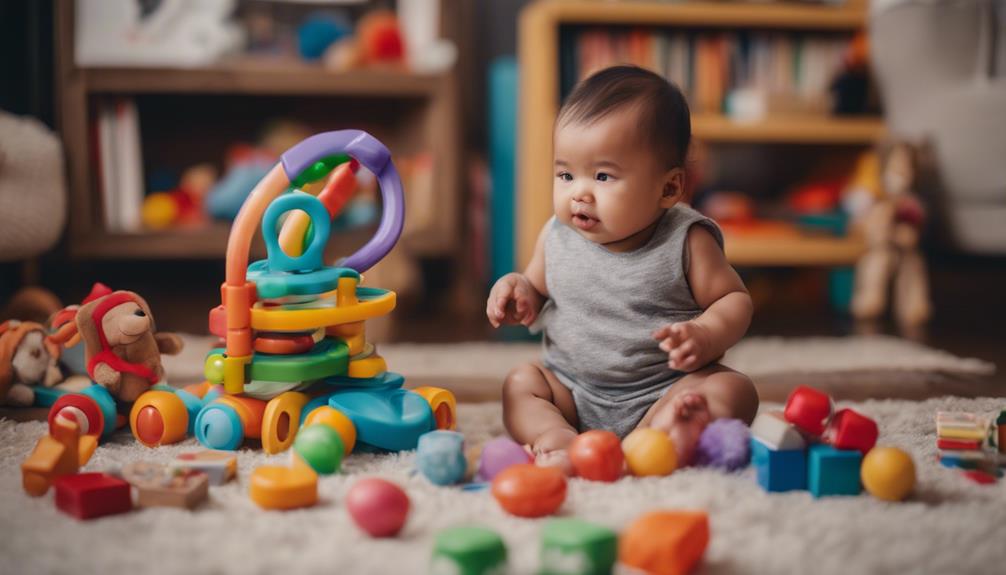
Research shows that excessive screen time for your baby can slow down brain development and delay important milestones. Early childhood is vital for building neural connections through hands-on play, exploration, and social interaction. Too much screen exposure may interfere with language, motor skills, and emotional growth. By setting limits and choosing quality content, you help support healthy development. Keep going to discover practical tips on fostering your child’s growth in a digital age.

Turn the school run and nap time into listening time
- Thousands of audiobooks, podcasts and originals
- Listen on your phone, tablet or Echo — also offline
- Cancel anytime
Key Takeaways
- Excessive screen time in early childhood can disrupt neural connections vital for language, motor, and social development.
- The American Academy of Pediatrics recommends avoiding screens for children under two to support healthy brain growth.
- Interactive, real-world experiences are more beneficial for infants’ brain development than passive screen exposure.
- Parental modeling and limited screen use promote better developmental milestones and social skills in babies.
- Moderating screen time and emphasizing active play foster neural development and lifelong learning capacities.

In today’s digital age, many parents wonder how screen time affects their baby’s developing brain. As you navigate this new territory, understanding the importance of parental guidelines becomes essential. Experts agree that early childhood is a critical period for brain development, and the amount of screen exposure can influence how your baby’s brain forms neural connections. While technology offers educational benefits, excessive screen time might interfere with reaching developmental milestones like language acquisition, motor skills, and social interaction. That’s why following parental guidelines helps you strike a balance, guaranteeing your baby’s growth isn’t compromised.
Research shows that infants and toddlers learn best through direct, hands-on experiences with people and their environment. When your baby spends too much time staring at screens, they miss out on crucial opportunities for real-world exploration. This can hinder the development of foundational skills such as crawling, walking, and fine motor coordination. The American Academy of Pediatrics recommends avoiding screen time for children under two, emphasizing instead the importance of interactive play and responsive caregiving. These guidelines are designed to promote healthy brain development and help your child reach key developmental milestones naturally.
Your role involves setting boundaries around screen use and creating a nurturing environment that encourages active engagement. For example, instead of passive screen viewing, you can introduce age-appropriate toys, books, and outdoor activities. These experiences stimulate your baby’s senses and foster cognitive and emotional growth. Remember that the quality of screen content also matters; educational programs designed for young children can be beneficial when used in moderation and with your active participation. Watching together offers a chance to explain what’s happening on the screen, helping your baby connect images to real-world objects and experiences. Additionally, understanding that early brain development is highly influenced by sensory and social interactions can guide you in prioritizing activities that promote neural connections.
It’s vital to be mindful of your own screen habits as well. When you’re glued to your phone during your baby’s playtime, you inadvertently send signals that screens are more important than direct interaction. Setting a good example by limiting your screen time and prioritizing face-to-face interactions reinforces healthy habits and supports your baby’s developmental progress. As your child grows, continue to adapt your guidelines based on their changing needs and abilities, always aiming to foster curiosity, language skills, and social competence.
Ultimately, understanding and applying parental guidelines around screen time helps you nurture your baby’s brain health. By focusing on meaningful interactions and active exploration, you guarantee your little one hits those vital developmental milestones, laying a healthy foundation for lifelong learning.
As an affiliate, we earn on qualifying purchases.
Conclusion
So, when it comes to your baby’s brain development, it’s clear less screen time is better. Research shows that babies under two spend about 2.5 hours daily on screens, which can hinder healthy growth. Instead, focus on interactive play and real-world experiences. Remember, your baby’s brain is like a sponge—soaking up everything around them. By limiting screen time, you’re giving your little one the best start for a curious, thriving mind.
Evergreen bestsellers Picks
bestsellers
As an affiliate, we earn on qualifying purchases.