
Gross motor skills involve larger movements like crawling, walking, climbing, and jumping, helping your baby explore their environment. Fine motor skills focus on smaller actions such as grasping, drawing, and stacking blocks, which build independence and coordination. Both types of milestones develop at different rates but are equally important. Watching your baby’s progress in these areas shows how they’re growing. Keep exploring for more tips on supporting each stage and encouraging your child’s development.

Turn the school run and nap time into listening time
- Thousands of audiobooks, podcasts and originals
- Listen on your phone, tablet or Echo — also offline
- Cancel anytime
Key Takeaways
- Gross motor skills involve large muscle movements like crawling, walking, and jumping, supporting mobility and independence.
- Fine motor skills focus on small muscle movements such as grasping, drawing, and buttoning, enabling detailed tasks.
- Milestones for gross motor development include crawling, climbing stairs, and jumping; fine motor milestones include stacking blocks and drawing.
- Play activities like running or threading beads help assess and promote both gross and fine motor progression.
- Proper nutrition and safe environments are essential for supporting the development of both gross and fine motor skills.
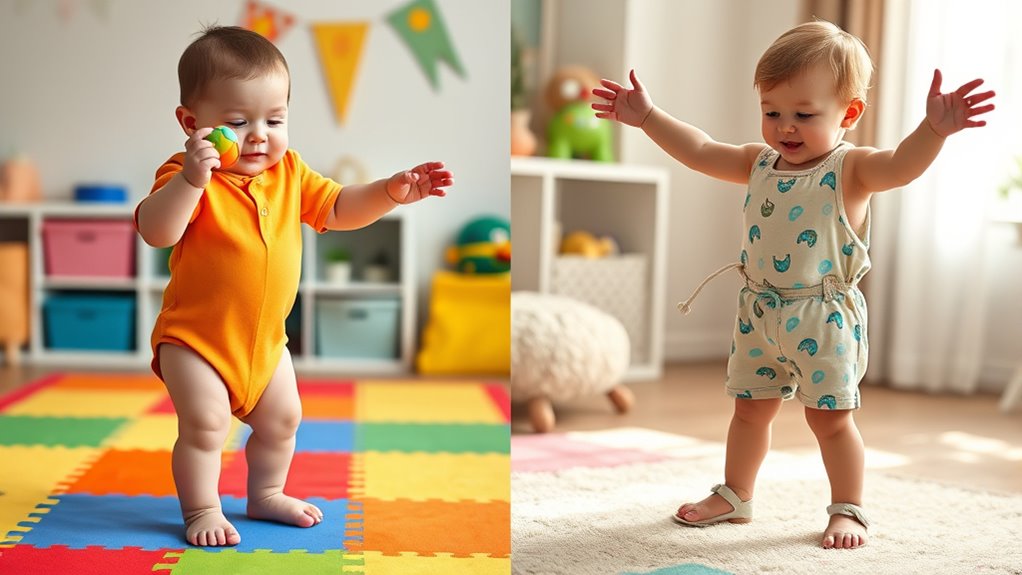
Have you ever wondered how children develop their physical skills? It’s a fascinating process that unfolds through various milestones, primarily involving gross motor and fine motor skills. As a parent or caregiver, understanding these developmental stages can help you support your little one’s growth effectively. Playtime activities are essential in this journey, providing opportunities for children to practice and strengthen different muscle groups. Engaging your child in activities like crawling, walking, or climbing encourages gross motor development, while puzzles, drawing, and stacking blocks boost fine motor skills. These activities are not just fun; they serve as natural play-based developmental assessments, helping you observe how your child is progressing and identify any areas that might need extra support.
Gross motor skills involve larger muscle groups responsible for movements like sitting, standing, walking, jumping, and running. These skills typically develop first because they are fundamental to a child’s independence and exploration. During playtime, you might notice your child scooting across the floor, reaching for toys, or attempting to stand with support. These actions indicate that their gross motor skills are advancing. Supporting this development is as simple as creating a safe space for your child to move freely, encouraging them to practice these movements regularly. Over time, as they gain confidence, they’ll start climbing stairs, throwing balls, and jumping, marking significant milestones. Regular developmental assessments, often conducted during pediatric check-ups, help track these progress points and ensure your child’s gross motor development aligns with their age.
Fine motor skills focus on smaller muscle movements, especially those involving the hands and fingers. These skills are essential for tasks like grasping objects, holding utensils, drawing, or buttoning clothes. You can help foster fine motor development through activities that require precision, such as picking up small toys, threading beads, or scribbling with crayons. These activities not only improve hand-eye coordination but also prepare your child for more complex tasks like writing later on. Pay attention to how your child manipulates objects during play, as this gives insight into their fine motor progress. Developmental assessments often include observations of these abilities to ensure your child is developing appropriate skills at each stage. Supporting fine motor growth is indispensable because it directly influences a child’s independence and confidence in daily tasks. Additionally, proper nutrition plays a vital role in supporting muscle development and overall growth, making it an important aspect of early childhood development.
baby gross motor skill development toys
As an affiliate, we earn on qualifying purchases.
As an affiliate, we earn on qualifying purchases.
Conclusion
So, whether your baby’s crawling like a tiny ninja or meticulously stacking blocks, remember—these milestones are just tiny trophies in their grand race of development. Don’t fret if they skip a step; after all, who needs perfect coordination when you’ve got adorable chaos? Embrace the messy, marvelous journey of growth. Because at the end of the day, it’s not about perfect motor skills, but about loving every quirky, wobbling moment along the way.
Fall Picks
fall essentials
As an affiliate, we earn on qualifying purchases.