
To encourage speech with fun word games for toddlers, try interactive activities like sound-matching games, naming objects, or playing themed games such as animal sounds. Incorporate picture cards, books, and rhyme songs to make learning lively and memorable. Celebrate small successes to boost their confidence and keep activities upbeat. If you want to discover more engaging strategies, keep exploring ways to make language learning an enjoyable part of everyday fun.
Key Takeaways
- Use themed games like animal sounds and object identification to make vocabulary learning engaging.
- Incorporate simple sound-matching activities to enhance phoneme recognition and pronunciation.
- Play guessing games describing objects or animals to encourage active word usage.
- Integrate rhyming songs and stories to reinforce language patterns and expand vocabulary.
- Embed speech activities into daily routines and praise achievements to motivate ongoing participation.
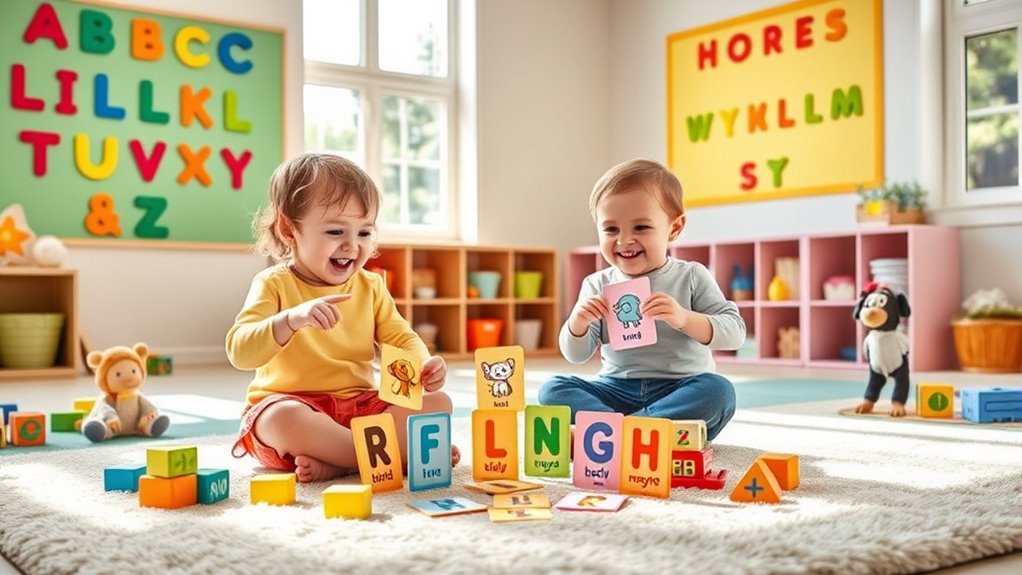
Playing speech games with your toddler is a fun and effective way to boost their language development. When you engage in these activities, you’re helping them develop vital skills like phoneme recognition and expanding their vocabulary. These early language skills set the foundation for more complex communication down the road, and making it enjoyable encourages your child to participate enthusiastically.
Playing speech games with your toddler boosts language skills and makes learning fun and engaging.
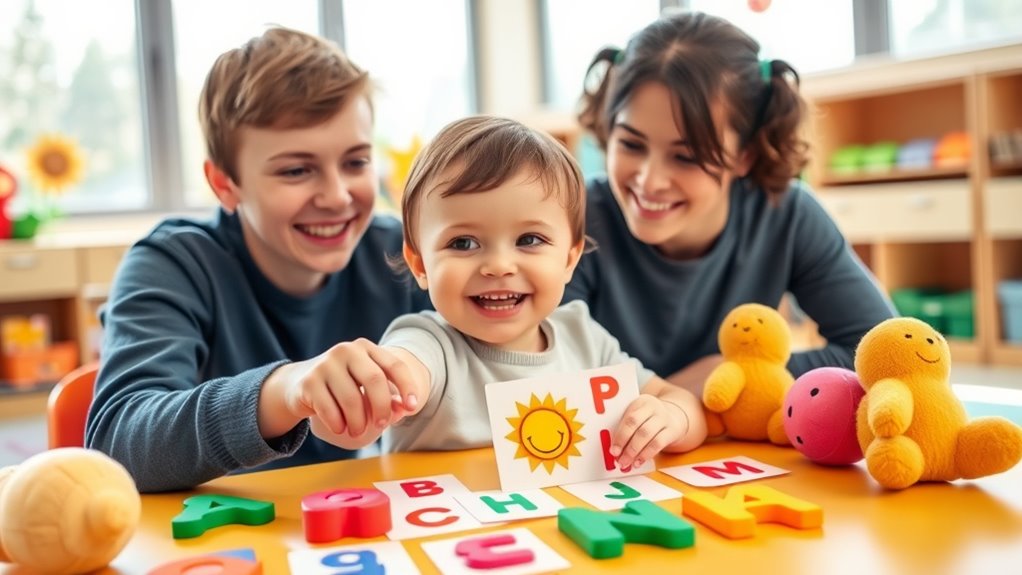
Start by focusing on phoneme recognition, which involves helping your toddler identify different sounds within words. For example, you can play simple sound-matching games where you say a word, like “dog,” and then ask your child to repeat it or find an object that starts with the same sound. Using everyday objects or picture cards makes this process more engaging. As your child begins to recognize different sounds, they’ll start to understand how words are constructed, which is key for reading and spelling later on. Keep the activities light and playful, praising their efforts to build confidence and enthusiasm.
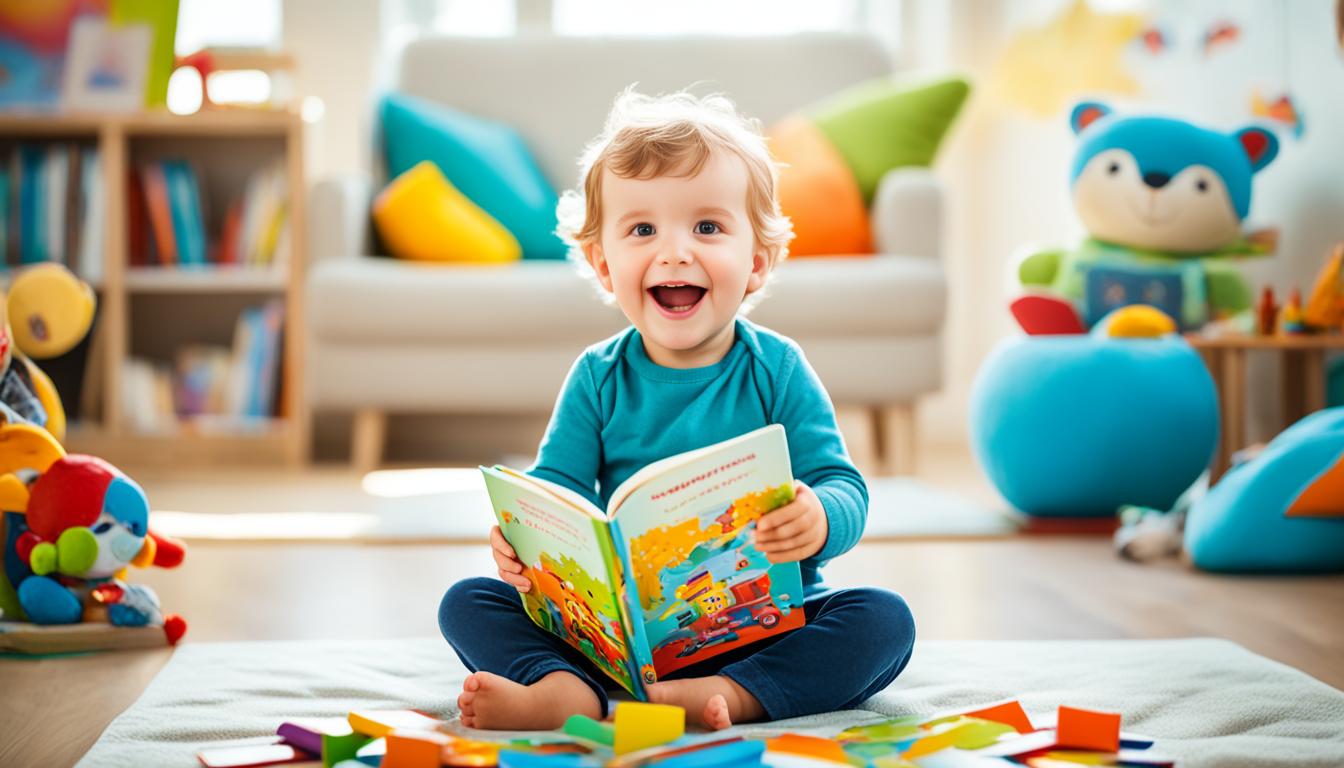
Vocabulary building is equally important, and you can incorporate it into fun word games. For instance, play a guessing game where you describe an object or animal without naming it, and your toddler guesses what it is. This encourages them to connect words with their meanings and expands their vocabulary naturally. Reading picture books together is another excellent way to introduce new words in context. Pause to point out objects, actions, and emotions, and ask questions like “What’s this?” or “Can you find the cat?” This interactive approach helps your child internalize new words and understand their usage.
You can also create themed games to reinforce learning. For example, dedicate a day to animals, where you focus on animal sounds and names. Make animal noises together, then ask your toddler to identify the animal or repeat its name. These themed activities make vocabulary building more memorable and enjoyable. Incorporate rhymes and songs, too—singing familiar tunes with new words or sounds helps your child recognize patterns in language, reinforcing phoneme recognition and expanding their vocabulary effortlessly.
Consistency is key. Incorporate these speech games into your daily routine, making them a natural part of playtime or storytime. Keep the tone upbeat and encouraging, celebrating small wins along the way. Remember, the goal is to make learning language a fun adventure. By doing so, you’re not only helping your toddler develop essential speech skills but also fostering a love for language that will serve them well throughout their life.
Conclusion
By playing these fun word games, you’ll ignite your toddler’s love for language and boost their speech skills. Remember, each giggle and guess brings you closer to their blossoming vocabulary. Think of these games as seeds—plant them with patience, and watch your child’s confidence and communication flourish. So, keep the laughter flowing and words blooming—because every playful moment is a step toward a brighter, more expressive future.