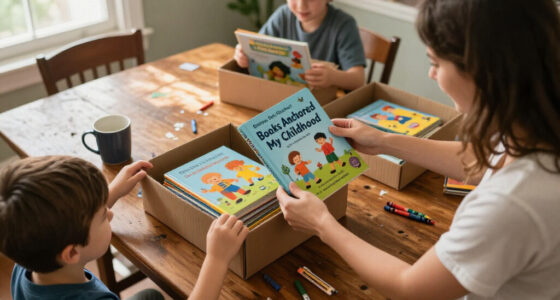
As your child grows, adapt storytime by choosing simple, repetitive books with colorful pictures for babies, adding interactive elements like sounds and gestures. During preschool years, use vivid illustrations, ask questions, and introduce role-playing to keep their curiosity alive. For early elementary kids, select more complex stories, encourage narration, and discuss themes, supplementing with visual aids like storyboards. By adjusting your approach, you’ll foster a love for stories at every stage—keep exploring to learn more.

Turn the school run and nap time into listening time
- Thousands of audiobooks, podcasts and originals
- Listen on your phone, tablet or Echo — also offline
- Cancel anytime
Key Takeaways
- Adjust storytelling complexity and themes to match the child’s developmental stage and growing cognitive skills.
- Use age-appropriate visual aids like colorful pictures, illustrations, or props to enhance engagement.
- Incorporate interactive elements such as questions, role-playing, or gestures to foster active participation.
- Gradually introduce longer and more nuanced stories as attention span and comprehension improve.
- Regularly assess interests to tailor content, balancing visual supports with verbal storytelling for continued enjoyment.

Storytime plays a vital role in a child’s development, but not all stories are suitable for every age. As your child grows, their interests, attention span, and understanding evolve, so it’s important to adapt your storytelling approach accordingly. When they’re very young, engaging them with simple, repetitive stories helps build their language skills and fosters a love for books. Incorporating visual aids like colorful picture books or puppets makes the experience more engaging and accessible for little ones. These visual aids not only hold their attention but also help them associate images with words, making it easier to grasp new concepts. Interactive storytelling becomes especially effective at this stage, encouraging your child to participate through sounds, gestures, or by pointing to pictures. This active involvement stimulates their senses and promotes early cognitive development. Using visual aids as vertical storage solutions can help organize storytelling materials and keep your space neat.
Engage young children with simple stories, colorful visuals, and interactive activities to foster early learning and love for books.
As your child moves into the preschool years, their curiosity and comprehension increase. You can start choosing stories that have more complex plots but still allow for interaction. Use visual aids to enhance understanding—large, vivid illustrations help them follow the story and connect emotionally with the characters. Make storytelling sessions dynamic by asking questions about the pictures, encouraging your child to predict what might happen next, or to relate the story to their own experiences. This not only keeps them engaged but also develops their critical thinking and language skills. Interactive storytelling at this stage can include role-playing or using props, which makes the experience more memorable and fun. Visual aids become tools for active participation rather than just passive observation.
By the time your child reaches early elementary school, their attention span lengthens, and they can handle more detailed stories. Now, you can introduce chapter books or stories with more nuanced themes. While visual aids still play a role, you might also encourage your child to read aloud or narrate parts of the story themselves. This promotes confidence and fluency. Continue to make storytelling interactive by discussing themes, morals, or character motivations. Using visual aids like storyboards or illustrations can help them analyze story structure and deepen comprehension. The key is to keep the sessions engaging and suited to their growing cognitive abilities, encouraging independence and a love for reading. Regularly assessing your child’s interests and adjusting the storytelling methods accordingly can help maintain their enthusiasm.
Throughout all these stages, adapting your storytelling approach ensures that storytime remains a meaningful, enjoyable activity that supports your child’s development at every age.
colorful picture books for babies
As an affiliate, we earn on qualifying purchases.
As an affiliate, we earn on qualifying purchases.
Conclusion
As your little one grows, adapting storytime keeps things exciting. Did you know that children who enjoy regular reading sessions are 40% more likely to develop strong language skills? By adjusting stories to match their age, you help foster a lifelong love for books and learning. So, keep exploring new stories and activities together—your efforts will shape their future and create cherished memories. Happy reading at every stage!
Halloween Picks
halloween
As an affiliate, we earn on qualifying purchases.