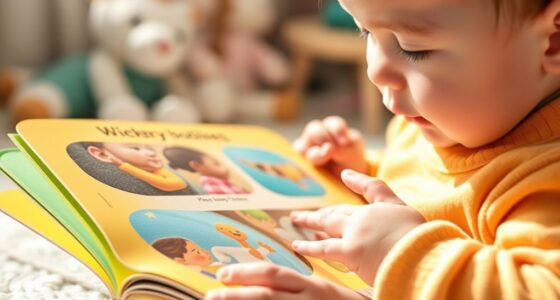

If you’re tired of rereading the same book, try making storytime more interactive and lively. Act out parts of the story, mimicking sounds and using fun props like puppets or stuffed animals. Ask questions to encourage curiosity, like “What happens next?” or “Can you find the red ball?” Incorporating colorful visuals and educational toys keeps things fresh and engaging. Keep exploring these ideas to turn storytime into a delightful adventure for your toddler.
Key Takeaways
- Incorporate interactive activities like acting out story parts and mimicking character sounds to boost engagement.
- Use visual aids such as colorful pictures, flashcards, and story-themed charts to make stories more vivid.
- Ask questions during reading, like “What happens next?” or “Can you find the red ball?” to promote curiosity.
- Break monotony with new visual elements each session, making stories more tangible and memorable.
- Include educational toys like puzzles or color sorting sets related to the story to enhance understanding and fun.

Rereading favorite stories can sometimes become monotonous for toddlers, but with a few simple strategies, you can turn it into an engaging and joyful experience. One effective way is to incorporate interactive activities that invite your child to participate actively. Instead of just reading aloud, encourage them to act out parts of the story, mimic characters’ sounds, or use props. For example, if the story mentions animals, bring out stuffed animals or puppets and let your toddler hold them while you read. This hands-on involvement keeps their attention and makes the story feel fresh each time. You can also ask questions like, “What do you think happens next?” or “Can you find the red ball on this page?” to promote curiosity and critical thinking. These activities transform a passive reading session into an exciting game, making your toddler enthusiastic to revisit the story again and again.
Visual aids are another powerful tool to spice up rereading sessions. Use colorful pictures, flashcards, or even simple drawings to help your child connect words with images. When you show them vivid illustrations or flashcards related to the story, it reinforces their understanding and makes the story more tangible. You can also create a story-themed visual chart that highlights key characters or events, allowing your toddler to follow along visually. This approach caters to their natural love of bright colors and pictures, making the story more engaging and easier to recall. Additionally, incorporating visual aids helps break the monotony by offering something new each time you read, even if the story remains the same. They also serve as conversation starters, helping your toddler develop language skills while having fun. Incorporating educational toys like magnetic puzzles or color sorting sets related to the story can further enhance engagement and understanding during rereading.

Thryvomniq Fairy Tales Felt Board Story Pieces Set for Toddlers Preschool Kindergarten Storytelling Early Felt Toys Interactive Teaching Play
Soft Felt Set for Storytelling Fun: Includes colorful, soft felt pieces that stick easily to flannel boards, helping…
As an affiliate, we earn on qualifying purchases.
As an affiliate, we earn on qualifying purchases.
Frequently Asked Questions
How Often Should I Reread the Same Book With My Toddler?
You should reread the same book with your toddler as often as it fits into your reading routine, typically a few times a week. This encourages familiarity and learning. Incorporate book rotation by swapping books regularly to keep things fresh. Repeating stories helps your child understand language and develop a love for reading. So, stay consistent, and don’t hesitate to revisit favorite books—rereading is a key part of early literacy.
Are There Specific Books That Are Better for Rereading?
You should look for books with your toddler’s favorite classics or engaging illustrations, which naturally invite multiple readings. These stories often have repetitive phrases and enthralling visuals that keep your little one interested. When you choose books they love, rereading becomes a fun, interactive experience. So, pick favorites with colorful, detailed images and familiar stories to make each session enjoyable and meaningful for your toddler.
How Can I Encourage My Toddler to Choose New Books?
To encourage your toddler to choose new books, try interactive reading by asking questions and making sounds related to the story. Offer a variety of books that cover different topics and formats, keeping choices exciting. Let your toddler pick what interests them most, and create a cozy reading nook to make exploring new books appealing. Your enthusiasm and involvement will inspire curiosity and foster a love for diverse stories.
What Are Signs My Toddler Is Bored With a Book?
If you notice your toddler’s visual cues, like staring off or fidgeting, it might mean they’re bored with the book. You can boost engagement techniques by changing your approach, like using expressive voices or adding interactive elements. If they repeatedly pull away or lose interest quickly, it’s a sign to switch it up and introduce new books or activities to keep their curiosity alive.
Can Rereading the Same Book Help With Language Development?
They say, “Practice makes perfect,” and rereading books definitely supports that. Your toddler’s language development benefits from repetition, which reinforces words and concepts. Repetition benefits your child by helping them recognize patterns, expand vocabulary, and improve comprehension. When you revisit familiar stories, you provide a safe space for language reinforcement, making it easier for your toddler to grasp new words and ideas, boosting their communication skills over time.

Cuddle Barn | Dalton The Storytelling Dragon with Light Up Book – Animated Stuffed Animal Plush Toy | Mouth Moves, Head Sways | Recites 5 Fairy-Tales – 11" Height
DALTON – Dalton is a purple dragon with blue and green iridescent details that reads from his magical…
As an affiliate, we earn on qualifying purchases.
As an affiliate, we earn on qualifying purchases.
Conclusion
So, spice up your story sessions with simple surprises, playful puzzles, and lively language. By blending boundless enthusiasm with bold, bright visuals, you’ll banish boredom and build beautiful, lasting bonds. Rereading can become a remarkable, memorable adventure when you add a dash of daring and delight. Keep your curiosity curious and your creativity contagious. Together, you and your toddler will turn every reading into a wonderful, whimsical world waiting to be explored again and again.

ZazzyKid Flash Cards for Toddlers Learning: 54 Double Sides Flashcards for Alphabets, Numbers, Colors, Shapes – Educational Toys for Preschool
Flash cards for Toddlers Leaning: Set of 54 double-sided toddler learning flash cards, including 26 lowercase and uppercase…
As an affiliate, we earn on qualifying purchases.
As an affiliate, we earn on qualifying purchases.

3 in 1 Bedtime/Morning/Weekly Astronaut Routine Chart for Kids, Magnetic Chore Chart for Toddlers, Visual Schedule for Kids Toddlers Schedule Board for Home
2024 ENHANCED DESIGN – Our upgraded 3-in-1 Routine Chart features smoother sliders and a sturdier feel for daily…
As an affiliate, we earn on qualifying purchases.
As an affiliate, we earn on qualifying purchases.