
To encourage your baby to play independently, create a safe, inviting space filled with age-appropriate toys that stimulate their senses and promote exploration. Stay nearby but avoid hovering, offering gentle encouragement as they discover their surroundings. Gradually increase playtime as your baby gains confidence and comfort. Remember to be patient and recognize their individual developmental pace. If you keep fostering independence, you’ll discover effective ways to support their growth and curiosity.
Key Takeaways
- Create a safe, clutter-free space with age-appropriate toys to encourage independent exploration.
- Stay nearby but avoid hovering, offering gentle encouragement and reassurance as your baby plays.
- Gradually increase playtime to build confidence and comfort in solo activities.
- Recognize and respect your baby’s developmental pace, providing consistent opportunities for independent play.
- Balance supervision with autonomy by setting up a secure environment that promotes self-motivation.

Are you wondering how to foster your baby’s curiosity and development through play? Encouraging independent play is a essential step toward helping your little one build confidence, develop essential skills, and enjoy exploring the world around them. When your baby plays alone, they engage in sensory exploration, which is key to understanding their environment. Providing safe, age-appropriate toys and materials allows your baby to investigate different textures, sounds, and visuals at their own pace. This kind of sensory play not only stimulates their curiosity but also strengthens their motor skills. As they reach, grasp, and manipulate objects, they refine their hand-eye coordination and develop fine motor abilities that are indispensable for later tasks like writing and self-care.
Encourage your baby’s independence through sensory play to boost confidence, skills, and curiosity in a safe, supportive environment.
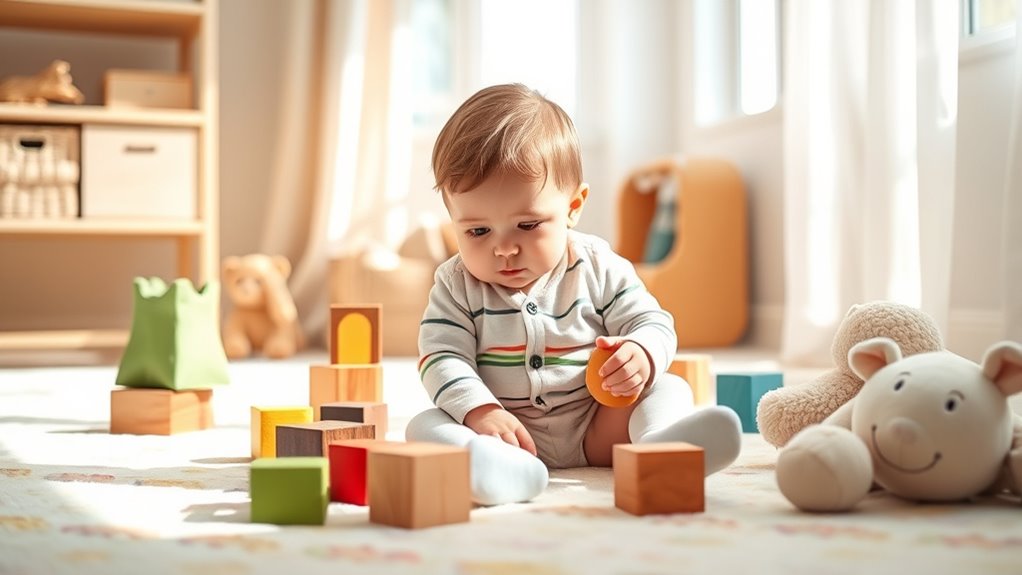
To foster independent play, start by creating a cozy, inviting space where your baby feels secure enough to explore freely. Keep the area simple and free of clutter, with a few carefully chosen toys that promote sensory exploration—think soft fabric books, textured balls, or rattles that make gentle sounds. When your baby begins to play, stay nearby but avoid hovering. Giving them some independence encourages self-motivation and helps them learn to entertain themselves. Remember that your presence is still important; offer gentle encouragement and be available for support if needed, but avoid interrupting their play to keep the experience positive.
It’s essential to recognize that each baby develops at their own pace. Some may enjoy solo play early on, while others might need more time to feel comfortable. Be patient and provide consistent opportunities for independent play, gradually increasing the duration as your baby becomes more confident. As they explore, they’ll learn cause and effect—like how shaking a rattle produces sound—and this understanding boosts their curiosity and problem-solving skills. These activities also promote cognitive development and help your baby gain a sense of autonomy.
Encouraging your baby to play independently doesn’t mean leaving them completely alone for long periods. Instead, it involves setting up a safe environment where they can explore with minimal supervision, fostering their independence while maintaining a supportive presence. Over time, this approach helps your baby become more confident and self-reliant, laying a foundation for future social and emotional growth. By emphasizing sensory exploration and motor skill development during independent play, you’re giving your baby the tools they need to thrive and discover joy in their own company.
Top picks for "play independent encourage"
Open Amazon search results for this keyword.
As an affiliate, we earn on qualifying purchases.
Conclusion
By fostering independent play, you’re giving your baby the gift of confidence and curiosity. Imagine a quiet afternoon, your little one exploring happily on their own, while you enjoy a peaceful moment nearby. Just as a garden blooms with care and patience, so does your child’s independence blossom through gentle encouragement. Embrace these moments of quiet exploration, knowing you’re nurturing their growth—one small, confident step at a time.