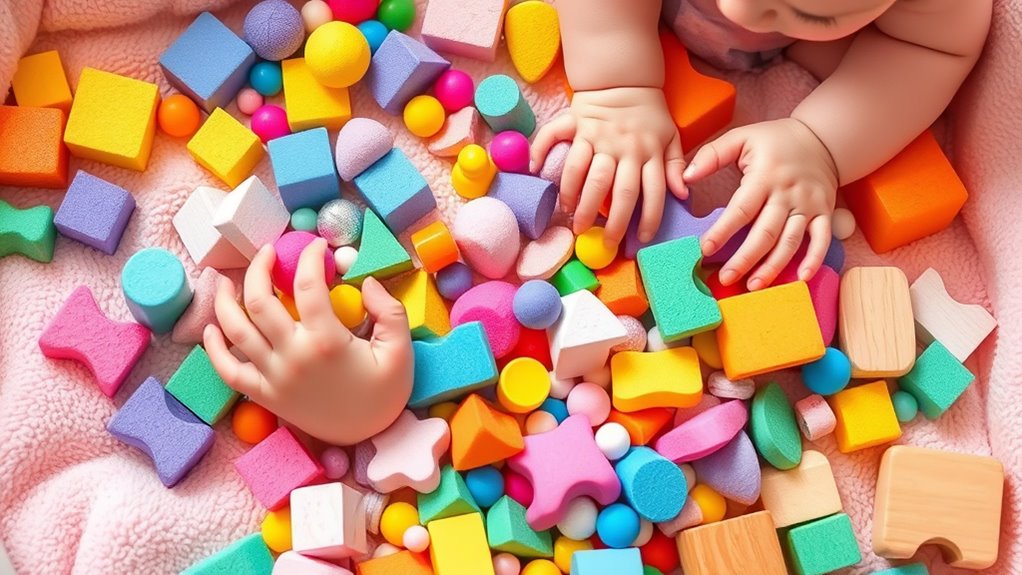

Sensory bins are a great way to help your baby learn by encouraging hands-on exploration of different textures and materials. They support developing fine motor skills, sensory processing, and cognitive growth through tactile experiences. As your baby manipulates objects, they strengthen brain connections and improve coordination. Sensory play also promotes emotional regulation and confidence, making learning enjoyable and soothing. Keep exploring to discover more ways sensory bins can support your little one’s development.
Key Takeaways
- Sensory bins provide hands-on exploration, helping babies develop tactile senses and cognitive skills.
- They promote sensory integration, improving how babies process and respond to different stimuli.
- Sensory play enhances fine motor skills and hand-eye coordination through manipulation of textured materials.
- Engaging with sensory bins fosters independence, curiosity, and confidence in early learners.
- Sensory activities support emotional regulation, calming babies and reducing overwhelm during play.
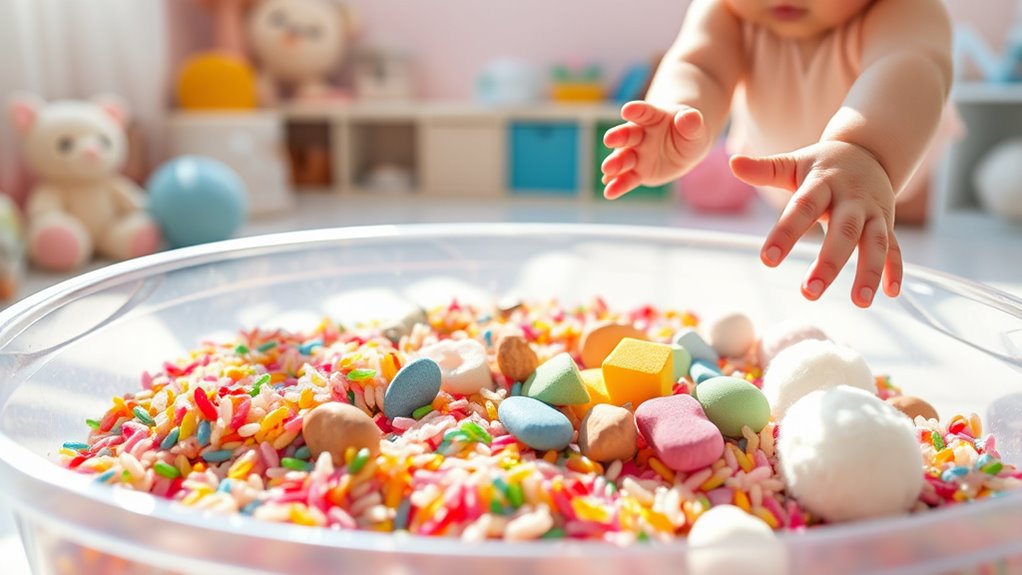
Have you ever wondered how to make learning fun and engaging for young children? One effective way is through sensory bins, which create a hands-on environment that encourages exploration and discovery. These bins are filled with various textured materials, allowing babies to engage in tactile exploration—an essential part of early development. When babies reach into a sensory bin, they’re not just playing; they’re actively practicing sensory integration, which helps their brains process and organize different sensory inputs. This process is essential for developing coordination, fine motor skills, and overall cognitive growth.
Sensory bins make learning fun by encouraging tactile exploration and supporting early cognitive development.
As you set up a sensory bin, think about the different textures you can include—smooth beads, soft fabrics, rough sand, squishy rice. When babies touch and manipulate these materials, they’re strengthening their tactile senses and building connections between their brain and their hands. This tactile exploration is more than just fun; it’s a foundation for more complex skills like writing, grasping, and spatial awareness. By offering a variety of textures, you’re helping babies develop their ability to differentiate between sensations, which is fundamental for sensory integration. This process guarantees they can interpret and respond appropriately to sensory stimuli from their environment, leading to better self-regulation and focus.
Sensory bins also support the natural curiosity of babies. They’re driven to explore their surroundings, and these bins provide a safe, contained space to do so. You can customize the contents based on your child’s interests or developmental needs, gradually introducing new textures or colors to keep things stimulating. Watching your baby reach, grasp, and transfer objects within the bin not only entertains but also enhances their hand-eye coordination and fine motor skills. It’s a straightforward way to foster independence and confidence as they learn through direct sensory experiences.
Furthermore, sensory play through bins encourages calmness and concentration. When babies are engaged with textures and materials, they often become more focused and less overwhelmed by external stimuli. This calming effect can be particularly helpful during busy or overstimulating days. It also provides an opportunity for bonding, as you can sit together, explore different textures, and talk about what they feel, fostering language development and emotional security. Overall, sensory bins are simple yet powerful tools that turn everyday play into meaningful, developmental experiences, helping your little one grow through tactile exploration and sensory integration. Engaging in sensory processing activities like these supports the development of neural pathways crucial for overall sensory integration.
Conclusion
Immerse yourself in delightful discoveries with sensory bins, where curiosity and creativity collide. By building basic bonds through engaging exploration, you provide your baby a beautiful boost in brain development and bonding. As you encourage exploration and excitement, you’ll see your little one’s senses sharpen and skills soar. So, set the scene, stir up the senses, and watch wonder work its magic—because sensory play is simply sensational for your little learner!