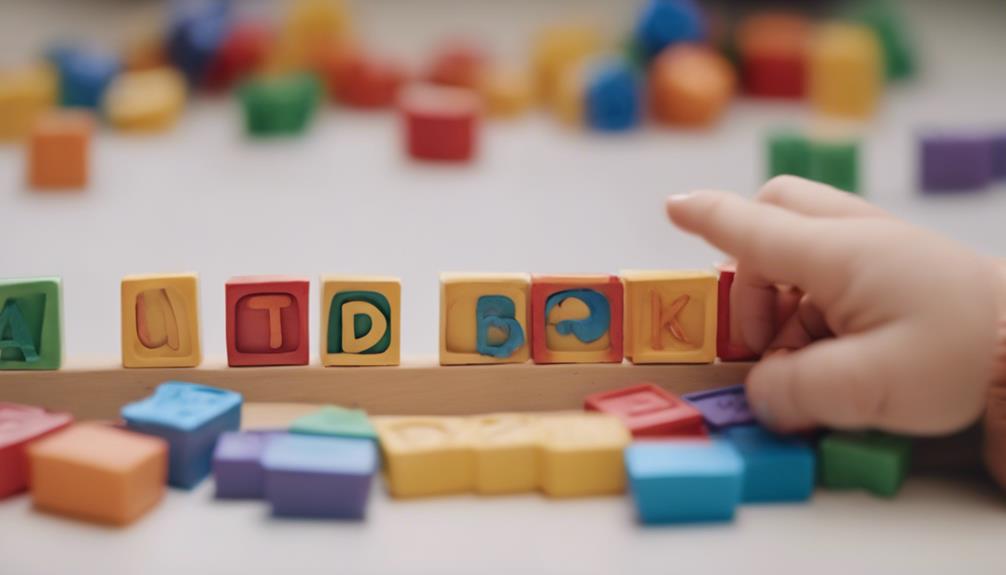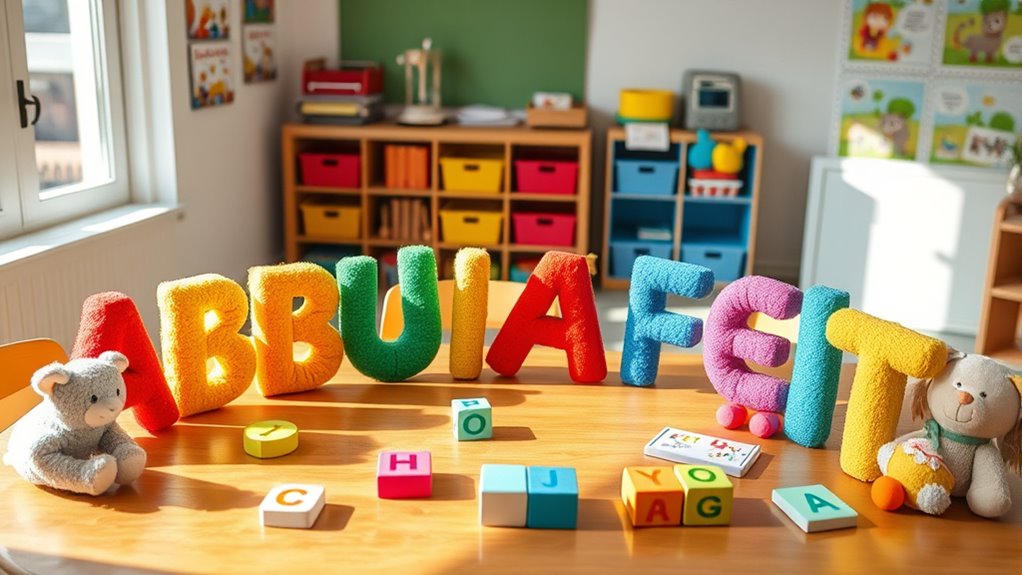

To introduce the alphabet in fun ways, try using engaging phonics games that turn learning into a lively challenge. Incorporate matching letters, identifying sounds in words, or playing letter-sound matching activities to keep children involved. Pair these with catchy alphabet songs that use rhythm and movement, like dance or hand gestures, to boost memory and enjoyment. Keep the mood playful and active, and you’ll discover creative strategies to make learning the alphabet an exciting experience.

Turn the school run and nap time into listening time
- Thousands of audiobooks, podcasts and originals
- Listen on your phone, tablet or Echo — also offline
- Cancel anytime
Key Takeaways
- Use phonics matching games to help children connect letters with their sounds interactively.
- Incorporate catchy alphabet songs with hand gestures to reinforce letter order and sounds.
- Engage kids with movement-based activities like dance or clapping to solidify alphabet memorization.
- Create fun, themed activities that combine storytelling and sound recognition to boost engagement.
- Regularly combine songs and games to make learning the alphabet enjoyable and build early literacy skills.

Letters and sounds form the foundation of reading and writing. When you introduce the alphabet to a young learner, making the process engaging is key. One effective way to do this is through phonics games. These games turn learning into a fun challenge, helping children recognize letter-sound relationships in an interactive way. For example, you might play matching games where kids pair uppercase and lowercase letters or identify sounds in simple words. These activities encourage active participation, making abstract concepts like phonemes more concrete and memorable. Phonics games also promote critical thinking and problem-solving skills as children figure out which sounds belong to which letters. They’re simple to set up and adapt to different skill levels, making them perfect for small groups or individual practice. Regularly incorporating letter recognition activities helps solidify understanding and boost confidence in early reading skills.
Another fantastic tool for introducing the alphabet is alphabet songs. These catchy tunes stick in your child’s mind, making it easier for them to memorize the sequence of letters. Singing alphabet songs can be a lively, energetic activity that creates a positive learning environment. The rhythm and repetition help children internalize the order of letters and develop phonemic awareness naturally. When you sing along, you also reinforce the sounds associated with each letter, which is *vital* for decoding words later on. Incorporate hand gestures or dance moves to make the experience even more engaging—movement helps solidify memory and keeps little ones focused. Repeating these songs regularly can help children become familiar with the alphabet so effortlessly that it feels more like a game than a lesson.
alphabet phonics matching games for kids
As an affiliate, we earn on qualifying purchases.
As an affiliate, we earn on qualifying purchases.
Conclusion
So, after all this fun with letters and sounds, you might think teaching the alphabet is a breeze. But don’t be fooled—those tricky little characters can still keep you on your toes! The irony? The more you enjoy the journey, the faster your kids will master the alphabet. So, embrace the chaos, have fun, and remember: the alphabet might be simple, but it sure isn’t boring!
Fall Picks
fall essentials
As an affiliate, we earn on qualifying purchases.