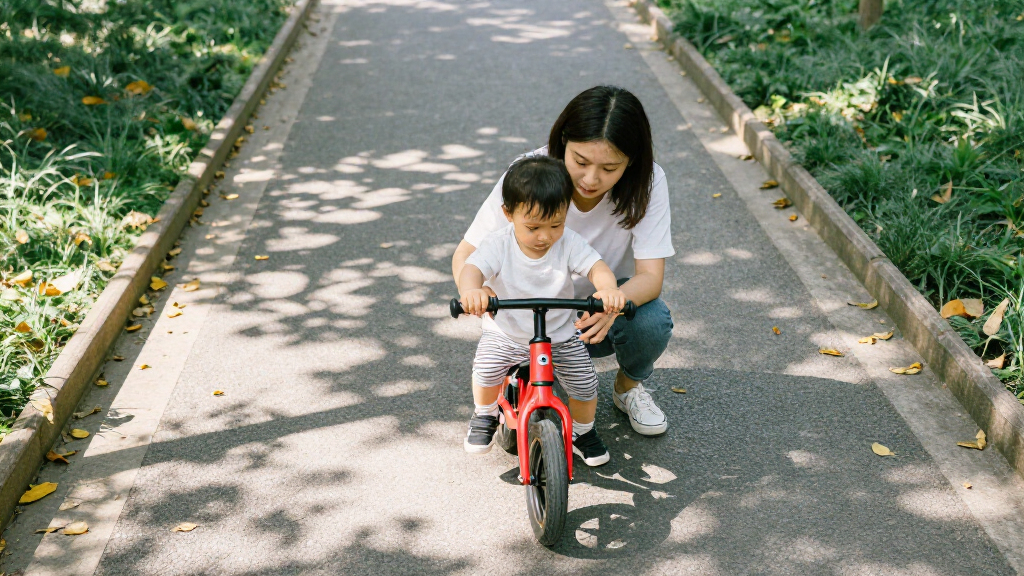
The best baby balance bikes give little riders a manageable way to practice steering and balance, but the right choice depends on fit, stability, and how long you want the bike to last. My best overall pick is the Strider 12 Classic for families who want a straightforward balance-bike design with room to adjust as a child grows. The Retrospec Cricket is a strong first-bike alternative for younger toddlers, while the Strider Sport 2-in-1 suits families who want a rocking mode before floor riding. Compact starter models can be easier for very small riders to handle, while adjustable or feature-rich bikes may offer more use over time but can add bulk or complexity. Read on for how all 15 options compare and which tradeoffs matter most.

Turn the school run and nap time into listening time
- Thousands of audiobooks, podcasts and originals
- Listen on your phone, tablet or Echo — also offline
- Cancel anytime
Complete the kit


Key Takeaways
- Strider 12 Classic leads for families prioritizing a conventional balance-bike setup and adjustability over novelty features.
- Retrospec Cricket stands out as a simpler fit for younger toddlers, while the Strider Sport 2-in-1 adds a rocking mode for children not ready to scoot.
- The lineup splits between basic starter bikes and models with extras such as baskets, lights, or rocking conversion; those extras do not replace a good fit.
- Several products target the 12–24-month stage, so age labels alone do not distinguish them; seat reach, stability, and the child’s confidence matter more.
- Radio Flyer Air Ride and the adjustable models make more sense for families planning longer use, while compact, simple bikes suit buyers focused on an easy first step.
| Retrospec Cricket Baby Balance Bike for Toddlers, 12–24 Months |  | Best for First-Time Riders | Brand: Retrospec | Model: Cricket (4504) | Age range: 12–24 months | VIEW LATEST PRICE | See Our Full Breakdown |
| SEREED Toddler Balance Bike with Adjustable Seat and Handlebars |  | Best Adjustable Fit | Frame material: Carbon steel | Wheel material: EVA | Wheel size: 11 inches | VIEW LATEST PRICE | See Our Full Breakdown |
| KidRoller Toddler Balance Bike with Adjustable Seat and Front Basket, Honeydew Green |  | Best Lightweight Two-Wheeler | Age range: 1–3 years | Frame material: Aluminum | Wheel material: EVA | VIEW LATEST PRICE | See Our Full Breakdown |
| Strider 12 Classic Balance Bike for Toddlers |  | Best for a Longer-Use Fit | Age range: 1 to 3 years | Wheel size: 12 inches | Frame material: Alloy steel | VIEW LATEST PRICE | See Our Full Breakdown |
| SEREED Baby Balance Bike for Toddlers, 12–24 Months |  | Best Lightweight Four-Wheel Pick | Recommended age: 12–24 months | Frame material: Aluminum alloy | Wheel size: 6.7 inches | VIEW LATEST PRICE | See Our Full Breakdown |
| Radio Flyer Air Ride Balance Bike for Kids Ages 1.5–5 |  | Best for Mixed-Surface Riding | Bike type: Balance bike | Age range: 18 months to 5 years | Wheel size: 12 inches | VIEW LATEST PRICE | See Our Full Breakdown |
| KRIDDO Baby Balance Bike for Toddlers, Black |  | Best for Early-Grip Confidence | Brand: KRIDDO | Age range: 12 months to 2.5 years | Wheel: 3.6-inch-wide PU wheel | VIEW LATEST PRICE | See Our Full Breakdown |
| Retrospec Baby Beaumont Kids’ Balance Bike |  | Best for Adjustable Outdoor Fit | Bike type: Balance bike | Age range: 18 months to 3 years | Wheel size: 12 inches | VIEW LATEST PRICE | See Our Full Breakdown |
| Umatoll Baby Balance Bike with Light-Up Rear Wheels |  | Best Lightweight Pick for Indoor Play | Bike type: Balance bike | Age range: 12–24 months | Frame material: Aluminum | VIEW LATEST PRICE | See Our Full Breakdown |
| Gamfeiny Toddler Balance Bike with Colorful Light-Up Wheels |  | Best Tool-Free Starter Bike | Recommended age: 10–36 months | Frame material: Carbon steel | Seat material: PU | VIEW LATEST PRICE | See Our Full Breakdown |
| Hape My First Balance Bike, Vespa Green |  | Best Lightweight Pick | Age range: 1–3 years; manufacturer recommended age 18 months and up | Weight: 3.2 lbs | Frame material: Aluminum | VIEW LATEST PRICE | See Our Full Breakdown |
| Radio Flyer Steady Start Balance Bike for Kids Ages 1–3, Red |  | Best for Stable First Rides | Age range: 1–3 years | Weight: 7 lbs | Wheel design: Wide front wheel and dual rear wheels | VIEW LATEST PRICE | See Our Full Breakdown |
| Strider Sport 2-in-1 Rocking Bike and Balance Bike, Blue |  | Best for Early Play That Grows | Age range: 6 months–4 years | Wheel size: 12 inches | Weight: 12.7 lbs | VIEW LATEST PRICE | See Our Full Breakdown |
| Liberry Baby Balance Bike, Adjustable Seat, Green |  | Best for a Higher Weight Limit | Age range: 12–24 months | Weight: 5 lbs | Frame material: Steel | VIEW LATEST PRICE | See Our Full Breakdown |
| PerKidern Baby Balance Bike for Ages 12–24 Months |  | Best Lightweight Four-Wheel Starter | Recommended age: 12–24 months | Weight: 4.6 lbs | Frame: Carbon steel | VIEW LATEST PRICE | See Our Full Breakdown |
| baby balance bike | Age range | Frame material | Weight | Wheel size |
|---|---|---|---|---|
| Retrospec Cricket Baby Balance | 12–24 months | — | — | — |
| SEREED Toddler Balance Bike wi | — | Carbon steel | 7.8 pounds | 11 inches |
| KidRoller Toddler Balance Bike | 1–3 years | Aluminum | 4.6 lbs (2.1 kg) | 7 inches |
| Strider 12 Classic Balance Bik | 1 to 3 years | Alloy steel | 6.5 lbs (2.9 kg) | 12 inches |
| SEREED Baby Balance Bike for T | — | Aluminum alloy | 3.5–3.6 pounds (listed) | 6.7 inches |
| Radio Flyer Air Ride Balance B | 18 months to 5 years | Steel | — | 12 inches |
| KRIDDO Baby Balance Bike for T | 12 months to 2.5 years | — | — | — |
| Retrospec Baby Beaumont Kids’ | 18 months to 3 years | Alloy steel | 9.3 pounds | 12 inches |
| Umatoll Baby Balance Bike with | 12–24 months | Aluminum | 3.3 lbs | 6 inches |
| Gamfeiny Toddler Balance Bike | — | Carbon steel | — | — |
| Hape My First Balance Bike | 1–3 years; manufacturer recommended age 18 months and up | Aluminum | 3.2 lbs | — |
| Radio Flyer Steady Start Balan | 1–3 years | — | 7 lbs | — |
| Strider Sport 2-in-1 Rocking B | 6 months–4 years | Alloy steel | 12.7 lbs | 12 inches |
| Liberry Baby Balance Bike | 12–24 months | Steel | 5 lbs | 6 inches |
| PerKidern Baby Balance Bike fo | — | — | 4.6 lbs | — |
More Details on Our Top Picks
Retrospec Cricket Baby Balance Bike for Toddlers, 12–24 Months
For a child just starting to scoot, the four-wheel layout and low feet-to-floor design put stability ahead of speed. A steering limit, soft handlebars, and cushioned seat also make this more approachable for very young riders than the two-wheel Strider 12 Classic, which asks for more independent balancing. Its floor-friendly wheels suit indoor practice as well as outdoor rides, so families can offer short sessions without needing smooth pavement. The Cricket arrives 95% assembled and is light enough for a caregiver to carry between play areas. The tradeoff is its narrow age and inseam range: children may outgrow it sooner than an adjustable, larger-wheel option like the Strider. It has no pedals, so it supports scooting and balance practice rather than powered riding.
Pros:- Four wheels give very young riders a stable platform for early scooting.
- Low feet-to-floor design helps toddlers plant their feet.
- Non-slip, no-scratch wheels work for indoor and outdoor use.
- Arrives mostly assembled and is lightweight to carry.
Cons:- The 12–24-month age range and 9–13-inch inseam recommendation limit how long many children can use it.
- No pedals, so it is for scooting and balance practice rather than pedaling.
Best for: Families introducing a 12–24-month-old with a 9–13-inch inseam to their first indoor or outdoor ride-on bike.
Not ideal for: Parents seeking a bike that will fit a child for several years or provide pedals; this is a small, pedal-free starter model.
- Brand:Retrospec
- Model:Cricket (4504)
- Age range:12–24 months
- Recommended inseam:9–13 inches
- Weight capacity:44 lbs (20 kg)
- Wheels:4
- Assembly:95% assembled
Our verdict“Choose the Cricket for a young beginner who needs a stable, mostly assembled starter bike, but pick the adjustable Strider 12 Classic for a longer-growing fit.”
SEREED Toddler Balance Bike with Adjustable Seat and Handlebars
The standout here is its tool-free seat and handlebar adjustment, which lets a family tune the fit as a child grows or share the bike between riders. Its 12.6–17.1-inch seat range is broader than the toddler-focused Retrospec Cricket’s listed 9–13-inch inseam range, while the 7.8-pound frame remains manageable for a child to push. Airless EVA tires avoid flat repairs, a practical advantage over any model that needs tire upkeep. This is a two-wheel, pedal-free design, so it offers a more conventional balance-bike setup than the four-wheel SEREED Baby Balance Bike, but it demands more balance from the rider. There are no brakes, and the stated 110-pound capacity should not be mistaken for an age or fit recommendation; families should prioritize whether the child can reach the ground comfortably.
Pros:- Seat and handlebars adjust without tools.
- Airless EVA tires do not go flat.
- At 7.8 pounds, it is relatively easy for children to push and carry.
- Includes a customizable plate and stickers for personalization.
Cons:- No brakes, so riders must slow with their feet.
- Two wheels require more balance than a four-wheel starter such as the SEREED Baby Balance Bike.
- Pedal-free design is for balance practice, not pedaling.
Best for: Families wanting an adjustable two-wheel starter bike that can accommodate changing seat and handlebar fit.
Not ideal for: Very young riders who need the extra stability of four wheels, or families who want a bike with brakes or pedals.
- Frame material:Carbon steel
- Wheel material:EVA
- Wheel size:11 inches
- Seat height:12.6–17.1 inches
- Handlebar height:19.6–22.5 inches
- Weight:7.8 pounds
- Maximum weight recommendation:110 pounds
- Brakes:None
- Warranty:2 years
Our verdict“Pick this SEREED for a child ready for two wheels and a fit that can be adjusted, but choose a four-wheel model for an earlier, more stable start.”
KidRoller Toddler Balance Bike with Adjustable Seat and Front Basket, Honeydew Green
At 4.6 pounds, this KidRoller is the lightest listed two-wheel option in this group, making it easier for a small rider to steer and for an adult to carry home. Its aluminum frame, enclosed widened wheel, and 135-degree steering limiter give it a toddler-oriented feel, while the adjustable seat can help refine fit. Compared with the four-wheel Retrospec Cricket, it asks children to balance on two wheels, so it better suits toddlers who are ready for that challenge rather than first-time riders who need a steadier platform. EVA wheels are designed for indoor and outdoor play, and the front basket adds a play feature, not a substitute for fit or safety. The 7-inch wheels and rigid suspension are less suited to rough, uneven routes than a larger-wheel model such as the Strider 12 Classic.
Pros:- Light 4.6-pound build is easier for toddlers to maneuver and adults to carry.
- Aluminum frame keeps the overall bike weight low.
- Steering limiter and widened enclosed wheel support a toddler-focused design.
- Adjustable seat, front basket, and EVA wheels suit play at home and outdoors.
Cons:- Seven-inch wheels and rigid suspension offer less comfort on uneven ground than the Strider 12 Classic’s 12-inch wheels.
- Two-wheel riding requires more balance than four-wheel options such as the Retrospec Cricket.
- Pedal-free design may be outgrown as a child moves on to pedal bikes.
Best for: Caregivers seeking a very lightweight two-wheel bike for a toddler who is ready to practice independent balancing on smooth paths.
Not ideal for: Families riding frequently over bumpy terrain or toddlers who still benefit from a four-wheel beginner bike.
- Age range:1–3 years
- Frame material:Aluminum
- Wheel material:EVA
- Wheel size:7 inches
- Weight:4.6 lbs (2.1 kg)
- Steering limiter:135°
- Drivetrain:Chainless
- Suspension:Rigid
- Color:Honeydew green
Our verdict“Choose the KidRoller for a confident toddler who needs a light two-wheeler for smooth surfaces, not for a beginner who needs four-wheel stability or rough-path comfort.”
Strider 12 Classic Balance Bike for Toddlers
The Strider 12 Classic suits families whose child is ready for a larger-wheel, two-wheel balance bike and needs room to grow. Its 11–16-inch seat adjustment and 12–17-inch recommended inseam span give it a wider fit range than the tiny-wheeled KidRoller, while the 12-inch flat-free tires avoid puncture maintenance. A built-in footrest gives riders somewhere to place their feet once they are coasting, adding a useful step beyond basic scooting. At 6.5 pounds, it is still relatively easy to lift, though heavier than the 4.6-pound KidRoller. Unlike the four-wheel Retrospec Cricket, this model expects the child to balance independently, so it is not the gentlest first ride for a very young beginner. It has no pedals and is limited to riders up to 60 pounds.
Pros:- Adjustable 11–16-inch seat and handlebar accommodate growing riders.
- Flat-free 12-inch foam rubber tires need no inflation or puncture repair.
- Lightweight 6.5-pound frame is easier to handle than many steel-framed bikes.
- Built-in footrest supports coasting practice.
Cons:- Two-wheel design requires more balance than the four-wheel Retrospec Cricket.
- The 60-pound rider limit and age range restrict how long some children can use it.
- No pedals, so it is not a conversion bike for learning to pedal.
Best for: Families with a toddler who can manage two wheels and want adjustable fit, larger wheels, and flat-free tires.
Not ideal for: Parents of a first-time 12-month-old who needs four-wheel stability, or families wanting a bike that converts to pedals.
- Age range:1 to 3 years
- Wheel size:12 inches
- Frame material:Alloy steel
- Tire type:Foam rubber, flat-free
- Weight:6.5 lbs (2.9 kg)
- Seat height range:11–16 inches
- Recommended inseam:12–17 inches
- Maximum rider weight:60 lbs (27 kg)
- Warranty:2 years
Our verdict“Choose the Strider 12 Classic for a toddler ready to balance independently who can benefit from a larger-wheel adjustable fit and flat-free tires.”
SEREED Baby Balance Bike for Toddlers, 12–24 Months
This SEREED is a four-wheel starter bike for children aged 12–24 months, with a 135-degree turning limit and non-slip wheels for early practice on indoor or outdoor surfaces. At about 3.5 pounds (the listing also gives 3.6 pounds), it is lighter than the Retrospec Cricket and easy for caregivers to carry between rooms or play areas. Its aluminum-alloy frame keeps weight down, while the 55-pound capacity is higher than the Cricket’s 44-pound limit. Both models target very young beginners, but this SEREED’s listed 6.7-inch wheels and turning limit make the setup distinct; neither is intended to replace a larger two-wheel bike such as the Strider 12 Classic when a child is ready to balance independently. There are no brakes, and the narrow recommended age range means it may serve as a short first stage.
Pros:- Four wheels provide a stable platform for early scooting and steering practice.
- Lightweight aluminum-alloy construction is easy to carry.
- Non-slip wheels are described as suitable for indoor and outdoor use.
- 135-degree turning limit helps constrain steering.
Cons:- No brakes, so adult supervision is required.
- Recommended only for ages 12–24 months, limiting its use as children grow.
- Product details list its weight as both 3.5 and 3.6 pounds.
Best for: Caregivers seeking a lightweight, four-wheel starter for a 12–24-month-old who will practice scooting under adult supervision.
Not ideal for: Families wanting brakes, a two-wheel bike for independent balancing, or a model with a clearly stated longer age range.
- Recommended age:12–24 months
- Frame material:Aluminum alloy
- Wheel size:6.7 inches
- Number of wheels:4
- Weight:3.5–3.6 pounds (listed)
- Maximum weight capacity:55 pounds
- Minimum user height:18 inches
- Turning limit:135°
- Warranty:2-year manufacturer warranty
Our verdict“Choose this SEREED for a light four-wheel first bike, especially when carrying weight matters, but move to a two-wheel model such as the Strider once the child is ready to balance independently.”
Radio Flyer Air Ride Balance Bike for Kids Ages 1.5–5
The Radio Flyer Air Ride is the strongest fit here for families whose toddler will ride beyond smooth indoor floors. Its 12-inch air tires can handle sidewalks, grass, and gravel more comfortably than the small EVA wheels on the Umatoll, though air tires do require attention to inflation. A steel frame and adjustable comfort seat give it a more substantial feel for growing riders, while grip tape for foot placement helps children find a stable position when gliding. The included bell adds a simple way for a child to signal nearby walkers. Compared with the toddler-focused KRIDDO, this bike is intended for a broader age span, from 18 months to 5 years. The tradeoff is that its larger-wheel format may not suit the youngest or smallest riders as readily, and it remains a balance bike rather than a pedal-ready option.
Pros:- 12-inch air tires are suited to a mix of paved and lightly uneven surfaces
- Adjustable comfort seat accommodates growth
- Grip tape gives gliding riders a marked place for their feet
- Steel frame and ringing bell add practical, child-friendly features
Cons:- Air tires need inflation checks and can be less convenient than solid wheels
- The 18-month starting age makes it less suitable for younger toddlers than the Umatoll or KRIDDO
- No pedals, so a separate bike is needed when the child is ready to pedal
Best for: Families with a child 18 months or older who will practice on sidewalks, grass, or packed gravel and want an adjustable bike with air tires.
Not ideal for: Caregivers seeking a first ride-on for a 12-month-old, a maintenance-free tire setup, or a bike that converts to pedal riding.
- Bike type:Balance bike
- Age range:18 months to 5 years
- Wheel size:12 inches
- Frame material:Steel
- Tire material:Rubber
- Maximum weight capacity:50 lbs
- Item weight:7.9 lbs
- Brakes:Coaster
- Color:Red
Our verdict“Choose the Radio Flyer Air Ride if your toddler needs a balance bike for varied outdoor surfaces and is ready for its 18-month age range.”
KRIDDO Baby Balance Bike for Toddlers, Black
The KRIDDO Baby Balance Bike is a toddler-first pick for children who need an easy-to-grip setup more than a bike built for longer outdoor rides. Its wide 3.6-inch PU wheel is designed to support stability at low speeds, while soft TPR details and non-slip handlebars give small hands a more secure hold. The lightweight frame also makes it less cumbersome than the 9.3-pound Retrospec Beaumont, which has larger air-filled tires and adjustable handlebars for a different, outdoor-oriented use. KRIDDO’s adjustable PU seat helps with fit as a young rider grows, and the listed age range is focused on 12 months to 2.5 years. That narrow window is also its main limitation: older toddlers may outgrow the intended fit sooner than they would the Radio Flyer Air Ride. Its no-pedal design supports balance practice, but it cannot serve as a pedal bike later.
Pros:- Wide PU wheel is designed to support stability for new riders
- Non-slip handlebars and soft TPR details suit small hands
- Adjustable PU seat allows some fit adjustment as a toddler grows
- Lightweight frame is easier to handle than the Retrospec Beaumont
Cons:- Listed age range ends at 2.5 years, limiting its usefulness for older children
- Single wide wheel differs from the conventional two-wheel layout of larger balance bikes
- No pedals, so it does not cover the later move to pedal-powered riding
Best for: Caregivers of 12-month to 2.5-year-old beginners who want a lightweight bike with a wide wheel and easy-grip contact points.
Not ideal for: Families looking for a bike for older preschoolers, longer mixed-surface outings, or a model that later supports pedal riding.
- Brand:KRIDDO
- Age range:12 months to 2.5 years
- Wheel:3.6-inch-wide PU wheel
- Seat:Adjustable PU seat
- Materials:BPA-free materials; TPR details
- Color:Black
- Included components:Tool kit
- Model number:KB004-Black
Our verdict“Pick the KRIDDO for a young beginner who benefits from an easy-grip, stability-focused design, not for a bike to carry a child through the preschool years.”
Retrospec Baby Beaumont Kids’ Balance Bike
For toddlers who are ready to practice outside and need room to adjust their fit, the Retrospec Beaumont combines a low step-through frame with adjustable seat and handlebars. That setup can make mounting less intimidating while giving caregivers more ways to match the bike to a growing rider. Its 12-inch air-filled tires with grippy treads are better suited to sidewalks and grass than the Umatoll’s smaller EVA wheels, but they add the upkeep associated with air tires. At 9.3 pounds, it is heavier than the Radio Flyer Air Ride, so carrying it between rides may take more effort. The Beaumont’s listed age range of 18 months to 3 years is also narrower than Radio Flyer’s range through age 5. Rigid suspension means rough ground may feel less forgiving, making this a better pick for smoother paths than bumpy trails.
Pros:- Low step-through frame makes mounting easier for small riders
- Adjustable seat and handlebars provide more fit options than the Radio Flyer Air Ride
- 12-inch air tires with grippy treads suit sidewalks and grass
- No-pedal design gives toddlers a dedicated way to practice balance and coordination
Cons:- At 9.3 pounds, it is heavier than the Radio Flyer Air Ride and may be harder to carry
- Age range ends at 3 years, limiting its useful span compared with Radio Flyer
- Rigid suspension offers less cushioning on rough surfaces, and air tires require upkeep
Best for: Families with an 18-month to 3-year-old who need an easy-to-mount bike with adjustable contact points for outdoor practice on sidewalks or grass.
Not ideal for: Caregivers prioritizing a very light bike, a long age span, or extra cushioning over rough ground.
- Bike type:Balance bike
- Age range:18 months to 3 years
- Wheel size:12 inches
- Weight:9.3 pounds
- Frame material:Alloy steel
- Wheel material:Rubber
- Maximum weight recommendation:50 pounds
- Seat height:Adjustable from 13 inches
- Suspension:Rigid
Our verdict“Choose the Beaumont if easy mounting and adjustable fit matter more than low carry weight or a longer age range.”
Umatoll Baby Balance Bike with Light-Up Rear Wheels
At just 3.3 pounds, the Umatoll is the easiest option in this group to lift and move between rooms or take along for short outings. Its battery-free light-up rear wheels add a playful cue for toddlers without requiring charging, while the steering limiter and enclosed wheels address common concerns around tight turns and small fingers. The small 6-inch EVA wheels are quiet and non-slip, a better match for indoor floors and smooth paths than the larger air tires on the Retrospec Beaumont or Radio Flyer Air Ride. That difference also limits where the Umatoll is comfortable: it is not the pick for grass or rougher ground. The three-position seat adjusts as a child grows, but its 12–24 month age range is brief, and it has no brakes. It suits early exploration more than longer-term riding practice.
Pros:- 3.3-pound frame is easy to carry and maneuver
- Rear wheels light up as they spin without batteries
- Three-position seat offers adjustment for a growing toddler
- Steering limiter and enclosed wheels add practical safeguards
Cons:- 6-inch EVA wheels are less suited to grass and rough ground than the 12-inch tires on the Retrospec Beaumont
- Listed age range is limited to 12–24 months
- No brakes are provided
Best for: Caregivers of 12- to 24-month-olds who want a very light, quiet bike for indoor floors and smooth, short outdoor rides.
Not ideal for: Families seeking one bike for several preschool years, rough-surface riding, or a model with brakes.
- Bike type:Balance bike
- Age range:12–24 months
- Frame material:Aluminum
- Wheel material:EVA
- Wheel size:6 inches
- Weight:3.3 lbs
- Maximum weight recommendation:55 lbs
- Seat:Three-position adjustable
- Brakes:None
Our verdict“Choose the Umatoll for a very young toddler’s light, quiet practice on smooth surfaces, but look elsewhere for outdoor versatility or a longer age span.”
Gamfeiny Toddler Balance Bike with Colorful Light-Up Wheels
The Gamfeiny is a practical choice for families who want a simple first ride-on that can be assembled without tools. Its buckle-style assembly reduces setup hassle, and the 4.6-pound frame is light enough to move around the house or carry to a nearby play area. Like the Umatoll, its wheels light up as they spin without batteries, but Gamfeiny is listed for ages 10–36 months rather than Umatoll’s narrower 12–24 month window. Four enclosed wheels, a 135-degree steering limit, soft PU seat, and non-slip EVA grips are aimed at early toddler use. Unlike the Radio Flyer Air Ride, however, it is not described with larger air tires for varied outdoor surfaces, and there is no maximum rider weight in the supplied specifications. That missing limit makes fit planning less certain as a child grows.
Pros:- Tool-free buckle assembly simplifies setup
- Light-up wheels operate without batteries
- Soft PU seat and non-slip EVA grips support toddler comfort and handling
- Enclosed wheels and a 135-degree steering limit are designed with safety in mind
Cons:- No maximum rider weight is provided, making the upper fit limit unclear
- Its toddler age range does not extend as far as the Radio Flyer Air Ride
- The supplied specifications do not list tire size or material, making surface suitability harder to judge
Best for: Caregivers seeking a lightweight first bike for a 10- to 36-month-old, especially when quick, tool-free assembly and light-up wheels appeal.
Not ideal for: Families who need a stated maximum rider weight, a conventional outdoor bike for varied terrain, or a balance bike for older preschoolers.
- Recommended age:10–36 months
- Frame material:Carbon steel
- Seat material:PU
- Handle material:EVA
- Wheels:4 enclosed wheels; rear wheels light up when spinning
- Steering limit:135°
- Assembly:Tool-free buckle design
- Item weight:4.6 lbs
- Dimensions:21.2 x 9.2 x 15.3 in
Our verdict“Pick the Gamfeiny as a lightweight, quick-assembly starter for a young toddler, provided its unspecified weight limit is not a concern.”
Hape My First Balance Bike, Vespa Green
At just 3.2 pounds, the Hape is the easiest option here to lift, carry, or move aside after play. Its adjustable seat and soft TPU foam wheels suit early practice on smooth floors, where quieter, floor-friendly rolling may matter more than tackling rough ground. Compared with the Radio Flyer Steady Start, this bike is much lighter, while Radio Flyer adds a padded seat and a stable three-wheel setup that can stand on its own. The Hape’s aluminum frame keeps its weight down, but the listed age guidance is inconsistent: one spec says 1–3 years, while the manufacturer recommendation starts at 18 months. Adult assembly is required, even though no tools are needed. I’d choose it for a child ready to scoot who needs a light, simple bike—not for families seeking a clear fit from the earliest toddler months.
Pros:- At 3.2 pounds, it is the lightest of these five options to carry and reposition.
- Horizontally adjustable seat can accommodate some growth.
- Soft TPU foam wheels are designed to be gentle on floors.
- Aluminum frame supports a lightweight build.
Cons:- Age guidance differs between 1–3 years and 18 months and up.
- Adult assembly is required.
- The product information does not specify a terrain range, so it is a less certain choice for outdoor surfaces.
Best for: Families looking for a very light first bike for a toddler who can already sit confidently and scoot on smooth indoor or paved surfaces.
Not ideal for: Buyers who want a clearly stated starting age, a self-standing three-wheel design, or a bike suited to uneven terrain.
- Age range:1–3 years; manufacturer recommended age 18 months and up
- Weight:3.2 lbs
- Frame material:Aluminum
- Wheel material:TPU foam
- Maximum weight capacity:25 kg
- Dimensions:22.83 × 11.61 × 15.65 inches
- Seat:Horizontally adjustable
- Assembly:Adult assembly required; no tools needed
Our verdict“Choose the Hape if low weight and soft wheels matter most, but pick the Radio Flyer Steady Start for a self-standing design and padded seat.”
Radio Flyer Steady Start Balance Bike for Kids Ages 1–3, Red
The wide front wheel and dual rear wheels make the Steady Start a sensible choice for toddlers who are still learning to steer and balance. Unlike the two-wheel Hape My First Balance Bike, this three-wheel design stands on its own, reducing the need for an adult to steady or pick it up between turns. Its tool-free adjustable padded seat also makes height changes straightforward as a young rider grows. Quiet treaded wheels support indoor practice and paved outdoor paths, but the stated terrain is limited to paved roads; this is not the pick for gravel or rough trails. At 7 pounds, it is notably heavier than the Hape, though still described as portable. I’d favor it for a beginner who benefits from a planted feel, while families wanting a bike for a longer age range should compare it with the Strider Sport 2-in-1.
Pros:- Three-wheel layout stands on its own and offers a stable feel for beginners.
- Padded seat adjusts without tools as a child grows.
- Quiet treaded wheels suit indoor use and paved outdoor surfaces.
- Pedal-free design lets children practice scooting and coordination.
Cons:- The stated recommended terrain is paved roads, limiting where it is suited to ride.
- At 7 pounds, it is heavier than the Hape My First Balance Bike.
- Its 1–3-year age range gives less room for longer-term use than the Strider Sport 2-in-1.
Best for: Parents of a 1–3-year-old beginner who wants a stable, pedal-free bike for indoor practice and smooth paved routes.
Not ideal for: Families hoping to ride on gravel or uneven paths, or buyers seeking a bike designed for use beyond the toddler age range.
- Age range:1–3 years
- Weight:7 lbs
- Wheel design:Wide front wheel and dual rear wheels
- Seat:Tool-free adjustable and padded
- Maximum weight recommendation:42 lbs
- Intended use:Learning to ride; indoor and outdoor
- Recommended terrain:Paved roads
- Brakes:Foot brake
Our verdict“Pick the Steady Start for a toddler who needs three-wheel stability on smooth surfaces, and look at the Strider Sport if you want a longer age range and a rocking mode.”
Strider Sport 2-in-1 Rocking Bike and Balance Bike, Blue
The Strider stands apart from the other picks by pairing a detachable rocking base with a balance-bike setup, giving families a way to start with rocking before moving to scooting. Its stated age range of 6 months to 4 years is broader than the Hape and Radio Flyer models, and the seat and handlebars both adjust to suit a growing rider. Built-in footrests, mini-grip handlebars, and flat-free EVA tires add useful details for practice. The tradeoff is weight: at 12.7 pounds, it is far heavier than the Hape or PerKidern, which may make it less convenient to carry. It also has no braking system, and its 40-pound maximum recommendation is below the Liberry’s 55-pound limit. I’d choose it for a household that values two stages of play over a lightweight frame.
Pros:- Detachable rocking base provides a rocking mode before balance-bike practice.
- Seat and handlebars adjust as a child grows.
- Flat-free EVA tires do not require inflation.
- Built-in footrests support coasting practice.
Cons:- At 12.7 pounds, it is much heavier than the Hape and PerKidern options.
- There is no braking system.
- The 40-pound maximum recommendation is lower than the Liberry’s 55-pound limit.
Best for: Families who want one product for rocking play and later balance-bike practice, with adjustable fit from infancy into the preschool years.
Not ideal for: Buyers who prioritize easy carrying, need a bike with a braking system, or expect use above the 40-pound maximum recommendation.
- Age range:6 months–4 years
- Wheel size:12 inches
- Weight:12.7 lbs
- Seat height range:9–17 inches
- Handlebar height range:18–22 inches
- Maximum weight recommendation:40 lbs
- Frame material:Alloy steel
- Wheel material:EVA
- Brakes:No braking system
Our verdict“Choose the Strider Sport for its rocking-to-riding format and wide age range, but skip it if low weight or a brake is a priority.”
Liberry Baby Balance Bike, Adjustable Seat, Green
The Liberry combines a four-wheel layout with a stated maximum weight recommendation of 55 pounds, the highest among these five products. That extra capacity does not change its intended fit: it is still aimed at children ages 12–24 months, with a 9.7–11-inch seat height and a suitable inseam range of 10–18 inches. Closed wheels help shield feet, while soft EVA tires are intended to reduce noise and skidding on smooth ground. Compared with the PerKidern, the Liberry weighs a little more at 5 pounds but gives specific seat-height and inseam figures that help families check fit. Neither four-wheel model is a substitute for a bike meant for uneven terrain; the Liberry is specifically not recommended for gravel. I’d shortlist it for a young beginner who fits its measurements and needs a stable indoor bike, not for a child likely to outgrow the age range soon.
Pros:- Four-wheel design offers a stable setup for early practice.
- Closed wheels help protect feet from the wheel area.
- Seat adjusts from 9.7 to 11 inches, with a stated 10–18-inch suitable inseam.
- 55-pound maximum recommendation is higher than the other four products here.
Cons:- Not recommended for gravel or other uneven surfaces.
- Its stated age range is limited to 12–24 months.
- At 5 pounds, it is slightly heavier than the PerKidern.
Best for: Parents of a 12–24-month-old who want a four-wheel starter bike, closed-wheel design, and clearly stated seat and inseam measurements.
Not ideal for: Families riding on gravel or uneven ground, or those seeking a bike for a child outside the stated 12–24-month age range.
- Age range:12–24 months
- Weight:5 lbs
- Frame material:Steel
- Wheel size:6 inches
- Wheel material:EVA
- Seat height:9.7–11 inches
- Suitable inseam:10–18 inches
- Maximum weight recommendation:55 lbs
- Brake style:Foot brake
Our verdict“Choose the Liberry for its four-wheel stability and generous stated weight limit when the child fits its measurements and rides on smooth surfaces.”
PerKidern Baby Balance Bike for Ages 12–24 Months
For families choosing a four-wheel bike for a young beginner, the PerKidern stands out for its 4.6-pound weight and soft EVA wheels. It is lighter than the Liberry, which may make it easier for an adult to carry, though the Liberry offers more specific fit guidance with a listed seat-height range and inseam range. The PerKidern’s padded PU seat and non-slip EVA handles give little riders comfortable contact points as they push along, and its four wheels support an initially stable feel. Its listed age range is only 12–24 months, and the description does not provide seat-height measurements or a weight limit, making it harder to judge how long it will fit. Assembly takes five steps. I’d consider it for a lightweight, simple starter on smooth surfaces, but choose the Strider Sport for a wider age span and adjustable seat and handlebars.
Pros:- At 4.6 pounds, it is lighter than the Liberry four-wheel bike.
- Four wheels provide a stable setup for new riders.
- Padded PU seat and non-slip EVA handles offer comfortable contact points.
- Soft EVA wheels are described as suitable for indoor and outdoor use.
Cons:- The recommended age is limited to 12–24 months.
- No seat-height range or maximum weight recommendation is provided.
- Assembly requires five steps, unlike the tool-free conversion of the Strider Sport.
Best for: Caregivers seeking a light four-wheel first bike for a 12–24-month-old who will practice scooting and steering on smooth surfaces.
Not ideal for: Buyers who need a stated seat-height range or maximum weight recommendation, or families looking for use beyond the 12–24-month age range.
- Recommended age:12–24 months
- Weight:4.6 lbs
- Frame:Carbon steel
- Wheels:Four high-density EVA wheels
- Seat:Padded PU
- Handles:Non-slip EVA
- Suspension:Dual
- Brake style:U brake
- Assembly:Five steps; instructions included
Our verdict“Pick the PerKidern for a lightweight four-wheel starter, but choose the Liberry if you need clearer fit measurements and a stated maximum weight.”
How We Picked
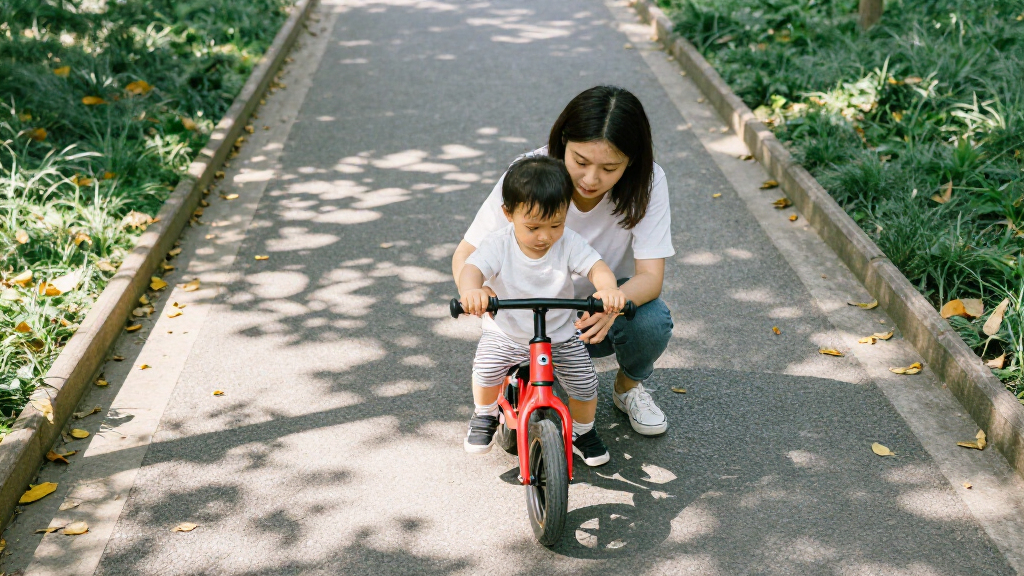
I ranked these bikes around the job a baby balance bike needs to do: let a young child sit securely, reach the ground, and practice pushing and steering without fighting the bike. I weighed stated age range alongside practical fit cues such as adjustability, overall simplicity, and whether the design appears aimed at very young beginners or children ready for a conventional balance bike. I also compared useful extras—such as a rocking mode, basket, or light-up wheels—against their likely value during everyday riding.
The highest positions go to options with a clear role, useful fit potential, and fewer distractions from the basic learning task. Models with distinctive features rank well for the families who need them, but those extras do not automatically outrank a simpler bike that better suits a child’s size or stage. Because listed features and product versions can vary, I recommend checking the current manufacturer specifications and measuring your child’s inseam before choosing.
| baby balance bike | Frame material |
|---|---|
| Retrospec Cricket Baby Balance | — |
| SEREED Toddler Balance Bike wi | Carbon steel |
| KidRoller Toddler Balance Bike | Aluminum |
| Strider 12 Classic Balance Bik | Alloy steel |
| SEREED Baby Balance Bike for T | Aluminum alloy |
| Radio Flyer Air Ride Balance B | Steel |
| KRIDDO Baby Balance Bike for T | — |
| Retrospec Baby Beaumont Kids’ | Alloy steel |
| Umatoll Baby Balance Bike with | Aluminum |
| Gamfeiny Toddler Balance Bike | Carbon steel |
| Hape My First Balance Bike | Aluminum |
| Radio Flyer Steady Start Balan | — |
| Strider Sport 2-in-1 Rocking B | Alloy steel |
| Liberry Baby Balance Bike | Steel |
| PerKidern Baby Balance Bike fo | — |
Factors to Consider When Choosing Best Baby Balance Bikes
Before choosing from this lineup, I would start with how the bike will fit your child today, then decide which extras are worth accommodating at home. These broader checks can prevent a common mistake: buying for a future age range while the child cannot comfortably use the bike now.
Fit the bike to the child, not the age label
Age ranges are useful starting points, but children of the same age can have very different inseams and confidence levels. Check the manufacturer’s seat-height range and compare its lowest setting with your child’s inseam, leaving enough room for feet to rest securely on the floor. A child who has to tiptoe or lean heavily to reach may find starting and stopping harder. Avoid sizing up on the assumption that a bike will soon fit; an awkward first ride can discourage practice. If measurements fall close to a stated limit, check the handlebar reach and overall proportions too, not just the seat height. Recheck fit as your child grows, since a bike that works now may need adjustment before the next growth spurt.
Choose stability that matches the learning stage
A very young beginner often benefits from a low, manageable bike that feels predictable when getting on and off. A wider stance or extra support can feel reassuring, but a design that is too bulky may be harder for a small child to steer or move. Think about whether your child is still learning to sit and push or already wants to glide with both feet lifted. For the earliest stage, a rocking option can provide a stationary introduction, while a standard balance bike gives more direct practice moving across the ground. Do not treat extra wheels or a rocking base as a substitute for supervision and a suitable surface. The best level of support is the one that helps your child try independently without making the bike cumbersome.
Decide how much adjustability you will use
An adjustable seat or handlebar can extend a bike’s useful fit, but adjustability only helps when the range suits your child and the changes are easy to make securely. A fixed or simpler design may be a better match when the bike is intended for one early stage or when straightforward setup matters most. Before paying more for a broader fit range, ask whether the bike can be adjusted low enough for your child now and high enough for likely growth. Check that adjustment points can be tightened as directed and do not shift during use. Families sharing a bike between children may value adjustment more than households buying for one child. Do not assume that more adjustment automatically means a better ride; fit at the current setting still comes first.
Look beyond the feature list to everyday handling
Baskets, lights, and themed styling can make a bike appealing, but they may add parts to maintain or distract from the core riding experience. Consider where the child will ride: a basket is more useful for short play trips than for a child still concentrating on steering, and light-up wheels are mainly a visual extra. For indoor practice, check whether the wheels and frame suit your floors and whether the bike is easy to lift and store. For outdoor use, think about the surfaces around your home and how much dirt or moisture the materials may encounter. Simpler builds can mean fewer extras to clean, while feature-rich models can keep a child interested. Choose the feature that solves a real household need rather than treating every add-on as an upgrade.
Match the bike to your space and routine
A bike that fits the child but is awkward to carry or store can see less use. Measure the space where it will live, and consider whether an adult will need to carry it between home, a car, and a riding area. Compact starter bikes can be convenient for quick practice, while larger or more adjustable designs may take up more room but suit a longer period of use. If the bike will travel often, check its assembled size and weight in the current product details rather than relying on photographs. Think through where the child will ride and where an adult can stay close by. A practical choice is one that is easy to bring out for short, repeated practice sessions.
Frequently Asked Questions
How do I know whether my toddler is ready for a balance bike?
Readiness depends less on a birthday than on whether your child can sit on the bike, reach the floor, and show interest in moving it. A child who is still uncertain about sitting independently may benefit from a stationary rocking mode or more time playing on the floor before riding. Keep early sessions short and let the child decide how quickly to progress. Choose a low seat setting that allows stable foot contact rather than expecting the child to learn while stretching to reach. If your child resists the bike, revisit fit and comfort before concluding that balance riding is not a good fit.
Should I choose a bike with a rocking mode or a regular balance bike?
A rocking mode can offer a low-motion introduction for a child who is not ready to push along, while a regular balance bike gives direct practice with steering and moving under their own power. The rocking feature is most useful if you expect to use it at home before outdoor riding. It can be unnecessary if your child already walks confidently and wants to scoot. Check how the bike converts and where you will store any parts or configuration changes. Choose based on the child’s current comfort and your routine, not on the assumption that every child needs both modes.
Is a bike with adjustable seat and handlebars worth choosing?
Adjustability can be worthwhile when the bike’s lowest setting fits your child now and the higher settings offer meaningful room to grow. It is less useful if the bike starts too tall or if the child is likely to outgrow the design before using its full range. Look at the actual adjustment limits and compare them with your child’s inseam and reach. Also consider whether you are comfortable making and checking adjustments as needed. A well-fitting simpler bike can be a better choice than a more adjustable model that is difficult for your child to handle today.
Do light-up wheels or a basket make a baby balance bike more useful?
These features can make a bike more engaging, but they do not improve fit or teach balance on their own. Light-up wheels are mainly a visual attraction, and a basket can be fun once a child is comfortable steering. For a new rider, extra parts may add distraction or require occasional cleaning and checks. If your child is motivated by lights or enjoys carrying toys, the extras may help the bike feel inviting. If you are choosing between those features and a better seat-height fit, prioritize fit.
When should I move from a baby balance bike to a larger model?
Move up when the child has outgrown the bike’s seat range, feels cramped, or can no longer ride comfortably with a secure foot position. A child who is confidently scooting and gliding may also be ready for a conventional balance bike with a larger fit range. Check the manufacturer’s height and weight guidance before changing models, and compare the next bike’s lowest seat setting with your child’s current inseam. A larger frame is not automatically the next step if it leaves the child reaching for the ground. Keep the current bike until it no longer fits or supports the kind of riding your child wants to do.
Conclusion
For most families seeking a straightforward first balance bike, I recommend the Strider 12 Classic as the best overall, with its conventional riding focus and adjustability setting it apart from feature-led alternatives. For a younger or more cautious beginner, the Retrospec Cricket is a strong simpler starting point; families who want a stationary introduction can choose the Strider Sport 2-in-1. My best value choice is the basic model that fits your child now without paying for extras you will not use—compare the SEREED, KRIDDO, Liberry, and PerKidern options by current fit specifications before deciding. For a more established brand and a bike aimed at a broader riding stage, consider the Radio Flyer Air Ride as the premium-leaning choice in this lineup. Pick the KidRoller if a basket is a specific draw, or the Umatoll and Gamfeiny if light-up wheels are likely to motivate your child; in every case, let fit and comfort break the tie.
Fall Picks

LEGO NINJAGO Movie Master Falls Building Kit 70608 (312 Pieces)
As an affiliate, we earn on qualifying purchases.