Active play like obstacle courses boosts your child’s brain development by stimulating sensory input, improving motor coordination, and encouraging problem-solving skills. It helps them organize sensory signals, develop focus, and regulate emotions. These activities also promote social interactions, teamwork, and emotional growth. Over time, your child builds resilience and confidence, preparing them for future challenges. Keep exploring to discover even more fun ways to support their overall growth through active play.
Key Takeaways
- Active play, like obstacle courses, stimulates multiple brain areas, enhancing cognitive skills and sensory integration.
- Such activities improve motor coordination, strength, and balance through varied physical challenges.
- Engaging in obstacle courses promotes problem-solving, decision-making, and executive functioning skills.
- Group active play fosters social skills, teamwork, cooperation, and emotional development.
- Overall, active play supports physical health, cognitive growth, and emotional resilience for lifelong benefits.

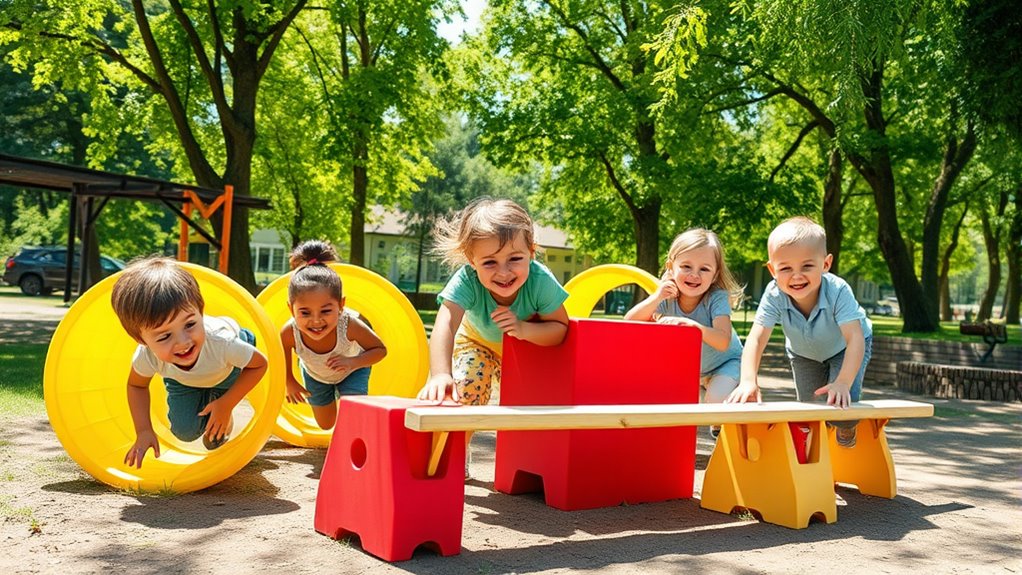
Active play is essential for children’s brain development because it stimulates multiple areas of the brain, enhancing cognitive skills, problem-solving abilities, and creativity. One of the key benefits of active play is its role in promoting sensory integration. When children navigate obstacle courses, they constantly process different sensory inputs—such as touch, balance, and spatial awareness—helping their brains organize and interpret these signals more effectively. This sensory integration is fundamental for developing a child’s ability to respond appropriately to their environment, fostering better focus and emotional regulation over time.
Active play boosts brain development through sensory integration, fostering focus, emotional regulation, and environmental responsiveness.
Moreover, obstacle courses and active games challenge children to refine their motor coordination. As you watch a child climb, jump, crawl, or balance, you’re witnessing the direct impact of physical activity on their fine and gross motor skills. These movements require precise control and timing, which improve with repeated practice. By engaging in varied physical challenges, children strengthen their muscles, enhance their balance, and develop coordination between different parts of their body. This improvement in motor coordination not only benefits their physical health but also lays the foundation for more complex tasks like writing, tying shoelaces, or participating in sports.
Active play also encourages children to think critically and problem-solve on the spot. When faced with an obstacle they haven’t encountered before, they figure out how to overcome it, testing different strategies until they find what works. This process stimulates their executive functioning skills, including planning, flexibility, and decision-making. As you set up obstacle courses, you’re providing opportunities for children to experiment with movement patterns and develop resilience when they encounter challenges. The thrill of completing a tricky section boosts their confidence and motivates them to tackle new problems, both physically and mentally.
Participating in obstacle courses and other active play activities also fosters social interaction and teamwork. Children learn to communicate, share ideas, and support each other as they navigate the course together. These social interactions further enhance brain development by reinforcing emotional intelligence and cooperation skills. Additionally, understanding the importance of diversification of activities can help prevent overuse injuries and promote overall development. Overall, active play not only develops essential physical abilities like sensory integration and motor coordination but also nurtures crucial cognitive and social skills that support lifelong learning. By encouraging children to engage in these dynamic activities, you’re helping their brains grow stronger, more adaptable, and better prepared for future challenges.
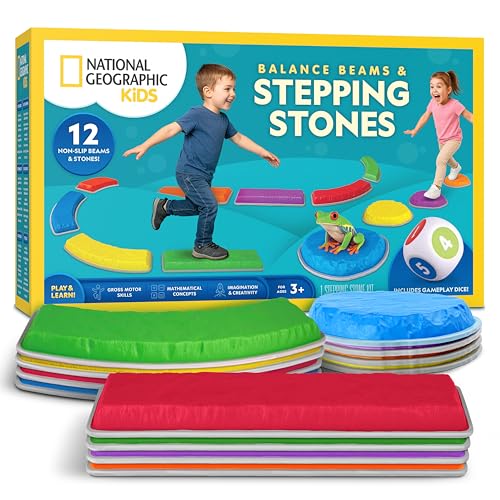
National Geographic Kids Stepping Stones & Balance Beams – 12 Piece Obstacle Course for Kids Ages 3+ with Foam Dice, Play & Learn Cards, Non-Slip Rubber Base, Toddler Indoor & Outdoor Active Play Set
12 COLORFUL PIECES – Includes 4 hard plastic stepping stones, 4 straight beams, and 4 curved beams, so…
As an affiliate, we earn on qualifying purchases.
As an affiliate, we earn on qualifying purchases.
Conclusion
By boosting brain growth through busy, bouncing, and brave obstacle courses, you give your child the best start. Active play promotes progress, provokes problem-solving, and provides plenty of playful fun. So, step outside, set up exciting challenges, and encourage energetic exploration. Remember, active adventures amplify learning, ignite imagination, and inspire incredible improvements. Make movement your mantra—molding minds, molding moments, and making memories. Active play truly creates clever, confident kids ready to conquer the world!

Hapinest Turtle Balance Stepping Stones for Kids, Obstacle Course Coordination Game for Kids & Family, Indoor Outdoor Sensory Play Equipment Toys Toddler Stepping Stones Ages 3 4 5 6 7 8 Years and Up
Balance Stepping Stones For Kids: Turtle Steps Balance Stepping Stones are designed to enhance coordination and balance in…
As an affiliate, we earn on qualifying purchases.
As an affiliate, we earn on qualifying purchases.
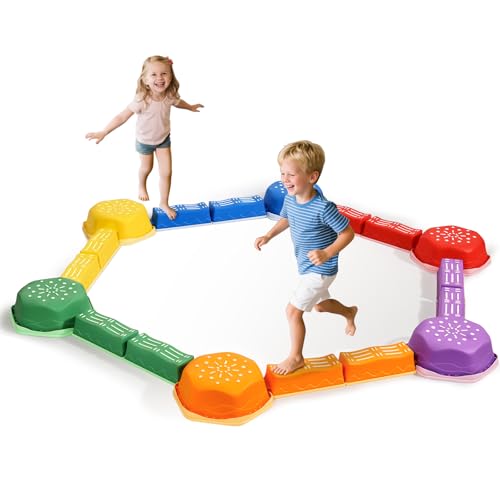
HappyField Balance Beam for Kids 18Pcs Non-Slip Stepping Stones Obstacle Course for Toddlers 3 Years + Indoor Outdoor Balance Board Kids Sensory Montessori Interactive Toys (Green)
Sensory Stepping Stones for Kids:In terms of design, scientific massage dots are used to stimulate the kid's foot…
As an affiliate, we earn on qualifying purchases.
As an affiliate, we earn on qualifying purchases.

Balance Beams Stepping Stones For Kids – 12 Piece Turtle Jumping Stepping Stones Balance Beams, Toddler Indoor or Outdoor Play Obstacle Course, Stocking Stuffers for Active Kid Ages 2 3 4 5 6 Year Old
12PCS DURABLE BALANCE BEAMS & STEPPING STONES – Includes 4piece tactile stepping stones and 8pcs balance beams equipments,perfect…
As an affiliate, we earn on qualifying purchases.
As an affiliate, we earn on qualifying purchases.