
TL;DR

Turn the school run and nap time into listening time
- Thousands of audiobooks, podcasts and originals
- Listen on your phone, tablet or Echo — also offline
- Cancel anytime
A MadeForMums report outlines personal trainer Lee Mitchell’s age-by-age advice for children who want to improve at football: prioritize play and movement when young, introduce supervised conditioning gradually, and protect recovery at every age. The report does not present clinical research or a training plan; Mitchell’s recommendations are expert advice, and children’s needs vary.
Personal trainer Lee Mitchell says parents should not treat extra sessions as a shortcut to football success, according to a MadeForMums report offering age-by-age guidance for young players. His advice emphasizes play, gradual physical development and recovery, rather than trying to reproduce the training routines of professional players such as Kylian Mbappé.
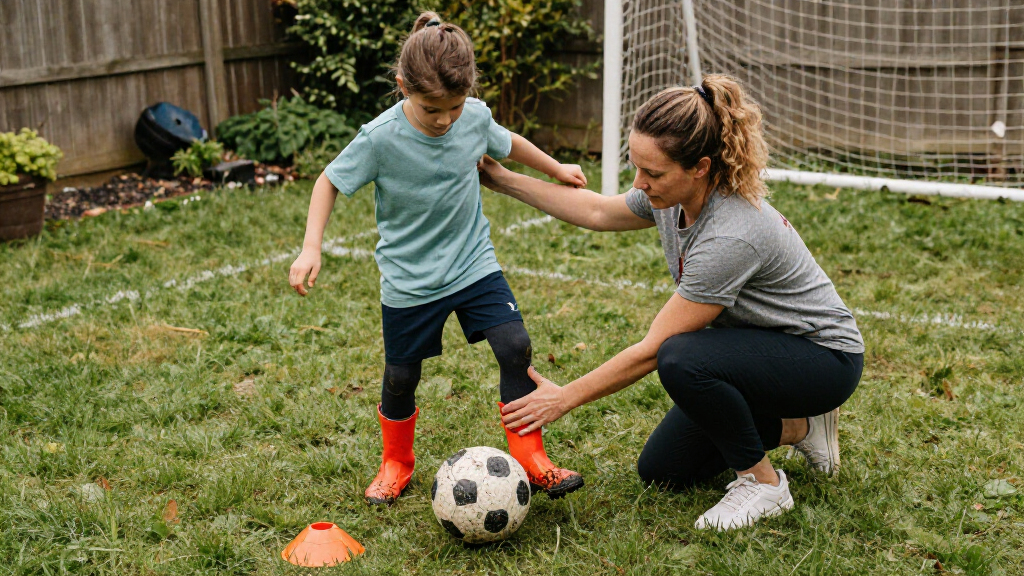
For children aged 6 to 9, Mitchell recommends making football enjoyable and building general movement skills, including running, jumping, balance and coordination. He advises against rushing into intensive fitness work or specialist coaching. Football can develop those abilities, while activities such as swimming and cycling give children other ways to move.
For older children, the report says parents can encourage basic habits away from the pitch: learning bodyweight exercises with sound technique, maintaining sleep routines, drinking water, eating a varied diet, doing mobility activities and taking regular rest days. Mitchell cautions against filling every available hour with training. Recovery is part of development, he says, and tiredness can affect training and match performance.
For ages 13 to 15, Mitchell says structured strength and conditioning can be introduced gradually, with technique and supervision taking priority over heavy weights. For players aged 16 and older with serious ambitions, training may be tailored to their position and strengths, with work on acceleration, power, strength, mobility and repeated sprints. At every stage, the report says, nutrition, sleep, hydration and rest should accompany training.
Why Rest Belongs in Youth Football
The advice matters to families who may interpret a child’s ambition or early promise as a reason to add more coaching and fitness sessions. Mitchell’s central point is that training volume is not the only measure of progress: development also includes physical foundations, enjoyment, confidence and time to recover.
The report also highlights that children do not mature at the same rate. Comparing a teenager’s speed or strength with teammates can create a misleading picture of progress, Mitchell says. Technical ability, creativity, decision-making and game awareness also contribute to football development. A player who is physically behind peers at one age is not necessarily falling behind overall.
There is a wider family consideration: young players often combine sport with school, matches and other commitments. Mitchell advises parents to watch for persistent tiredness, mood changes, recurring aches or pain, and a drop in performance as possible signs that a child needs more rest. The report says ongoing pain or concerning symptoms should be assessed by an appropriate healthcare professional; it does not provide an individual medical assessment.
children's bodyweight exercise equipment
As an affiliate, we earn on qualifying purchases.
As an affiliate, we earn on qualifying purchases.
Advice Across Three Age Groups
The MadeForMums feature is framed around children inspired by elite footballers, including Mbappé, and the question of whether more practice gives a young player a better start. It presents Mitchell’s recommendations in three broad stages: ages 6 to 9, ages 13 to 15, and ages 16 and older. It does not set out a detailed weekly schedule or a single training target for all children.
Mitchell’s guidance also distinguishes a developing child from a professional athlete. Elite players have specialist teams supporting training, nutrition and recovery, the report says, so copying a professional routine is not automatically suitable for a child. The feature encourages parents to value benefits that do not depend on a professional career, including confidence, coping with setbacks and a healthy relationship with exercise.
On food, the report says most young players should focus on a balanced diet that includes carbohydrates, protein, healthy fats, fruit and vegetables, alongside adequate hydration. Mitchell advises against unnecessary specialist nutrition products and supplements. The source does not provide product-specific guidance or assess any child’s individual dietary needs.
Limits of the Published Guidance
The report offers general recommendations attributed to Mitchell, not a clinical study, formal coaching standard or individualized program. It does not give a specific number of training hours, rest days or exercises for each age group, nor does it explain how to adapt the advice for a child’s health, experience, club schedule or level of competition.
The source also does not establish that following these habits will lead to professional football. Mitchell’s guidance is about supporting development and wellbeing; the feature explicitly recognizes that many talented young players will not become professionals. Parents seeking advice for a particular child’s recurring pain, symptoms or training needs may need input from an appropriate professional.
How Parents Can Apply the Advice
The report does not announce a new program, policy or follow-up study. Its practical next step for families is to match expectations to a child’s age and circumstances: keep younger children active through enjoyable play, introduce conditioning gradually with attention to technique and supervision, and tailor older teenagers’ training rather than simply adding sessions.
Parents can also monitor how a child responds to sport alongside school and matches. Mitchell’s warning signs—persistent fatigue, mood changes, recurring aches or pain, and falling performance—are reasons to reconsider the workload and, for persistent pain or concerning symptoms, seek appropriate professional assessment. The source gives no timeline for further developments.
Key Questions
Does the report recommend intensive football training for children aged 6 to 9?
No. Mitchell recommends fun, general movement and confidence at this age, rather than intensive fitness sessions or rushing into specialist coaching.
When does the advice suggest introducing strength and conditioning?
Mitchell says structured strength and conditioning can be introduced gradually for ages 13 to 15, with good technique and supervision prioritized over heavy weights. The report does not prescribe a particular program.
What signs might suggest a young player needs more rest?
The report lists persistent tiredness, changes in mood, recurring aches or pain, and a noticeable drop in performance. It advises having persistent pain or concerning symptoms assessed by an appropriate healthcare professional.
Does the report say these habits will make a child a professional footballer?
No. The advice concerns supporting a child’s development and relationship with exercise; it does not promise a professional career. The report says professional success should not be the only measure of achievement.
Source: rss
Cold & flu season Picks
humidifiers
As an affiliate, we earn on qualifying purchases.