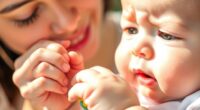
To raise a bilingual baby, create a natural language environment by speaking each language in different activities or times. Use books, songs, and stories in both languages to keep your child engaged. Stay consistent and patient, celebrating small progress along the way. Encourage immersion without expecting perfect fluency. Building routine and positive reinforcement helps language growth and cultural identity. Keep exploring more tips to support your child’s multilingual journey.
Key Takeaways
- Use each language naturally during specific activities or times to promote seamless learning.
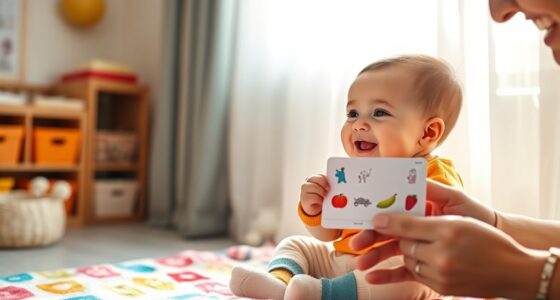
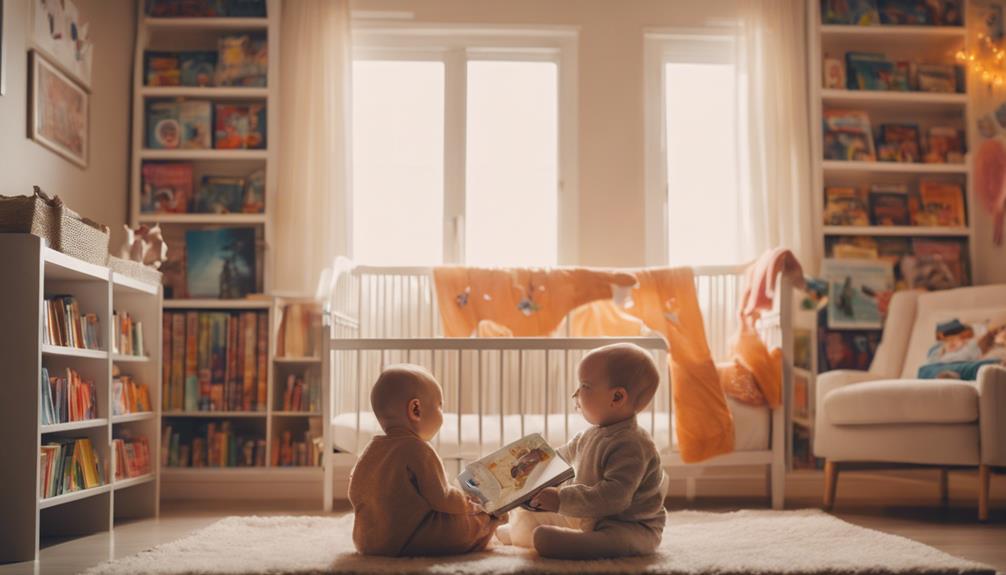
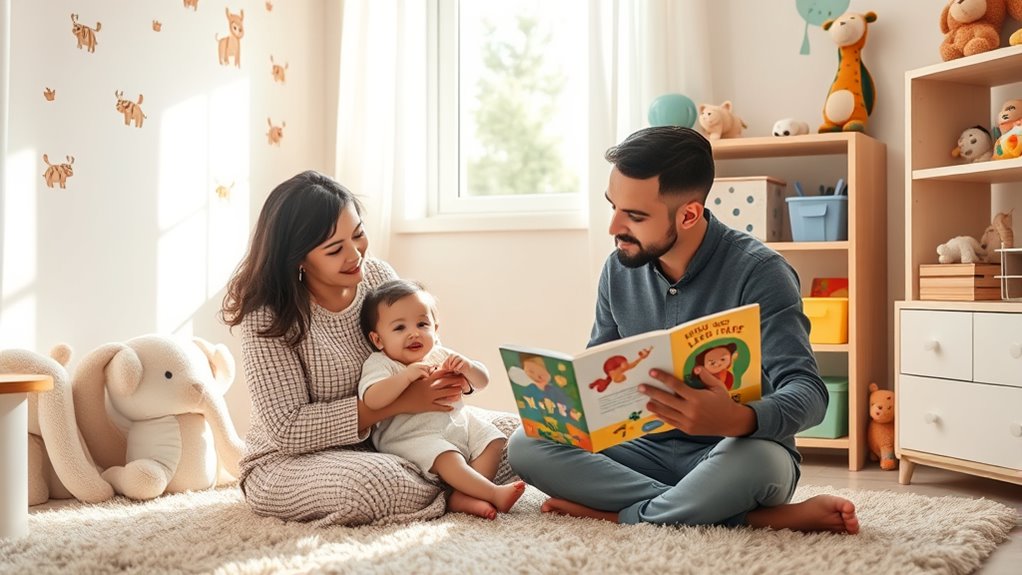
- Incorporate bilingual books, songs, and stories to engage your baby in both languages.
- Maintain consistency in language use across routines to support clear differentiation and development.
- Be patient and positive when your child faces language learning challenges, celebrating small progress.
- Foster cultural identity by sharing heritage stories, traditions, and celebrating diversity from an early age.

Have you ever wondered how creating a bilingual home can positively impact your family? When you decide to raise your child in a multilingual environment, you’re offering more than just the ability to speak multiple languages—you’re fostering a rich foundation for language development and cultural identity. As your baby grows, exposure to two or more languages can enhance their cognitive skills, making language acquisition more natural and flexible. Early bilingual exposure encourages your child to understand and differentiate between languages, boosting their overall communication skills. This process helps develop their ability to switch seamlessly between languages, a skill that can benefit them academically and socially as they mature.
By immersing your little one in multiple languages at home, you’re also reinforcing their cultural identity. It’s not just about words; it’s about connecting them with their heritage, traditions, and values. When you speak your native language alongside another, you’re transmitting cultural nuances and stories that shape how your child perceives themselves and the world around them. This dual exposure helps your child develop a strong sense of belonging and pride in their background, which is *vital* in our increasingly globalized society. They learn to appreciate diversity and become more open-minded, understanding that language and culture are intertwined.
Creating a bilingual environment doesn’t mean you have to be perfect or speak flawlessly. Consistency is key. Use each language naturally and in context—speak one language during specific activities or times of day, and switch smoothly as needed. Incorporate books, songs, and stories in both languages, making learning engaging and meaningful. This approach not only supports language development but also keeps your child interested and motivated. Remember, children are incredibly adaptable; they thrive on routine and repetition, which helps solidify their understanding of both languages.
It’s also important to be patient and encouraging. Some days might be more challenging than others, especially if your child is just starting to differentiate between languages. Celebrate small victories—every new word or phrase is progress. Your positive attitude and support will nurture their confidence and curiosity. Additionally, understanding how bilingual children differentiate languages can help you better support their development. Over time, your efforts will pay off, and your child will develop fluency and a deep-rooted cultural identity. Creating a bilingual home isn’t just about language; it’s about building a bridge to a richer, more inclusive worldview for your family.

The Very Hungry Caterpillar/La Oruga Muy Hambrienta: Bilingual Board Book
- Bilingual edition of The Very Hungry Caterpillar: Includes English and Spanish text
- Hardcover book: Durable hardcover binding
- Contains 32 pages: Engaging 32-page story
As an affiliate, we earn on qualifying purchases.
As an affiliate, we earn on qualifying purchases.
Conclusion
So, here’s the irony: while raising a multilingual baby might seem like a challenge, it actually makes your child’s future brighter—and your home more lively. Embrace the chaos of mixed languages, because in the end, you’re giving your little one a gift that no single language can provide. Sure, it’s tricky now, but someday they’ll thank you for turning your home into a vibrant, multilingual adventure. After all, who knew juggling languages could be so rewarding?