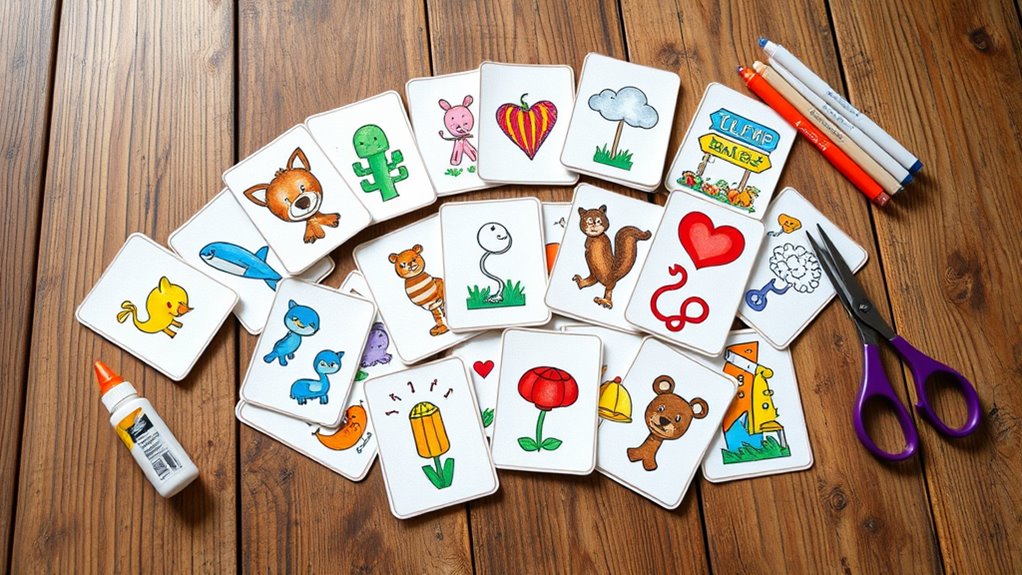
Making your own picture flashcards is an easy and budget-friendly way to boost your learning. You can use simple materials like index cards, markers, and printed images or drawings to create personalized visuals that help you remember concepts better. Incorporating images makes studying more engaging and supports active recall, which enhances long-term retention. By customizing your cards to suit your needs, you turn studying into a fun and effective activity. Keep exploring to discover more ways to create powerful learning tools.
Key Takeaways
- Use index cards and printed images or drawings to create personalized picture flashcards tailored to your learning needs.
- Incorporate visual cues by drawing or printing images that clearly represent vocabulary or concepts.
- Enhance memorization by actively engaging in the card creation process, such as coloring or adding stickers.
- Organize the cards systematically for easy review and incorporate memory games like matching for interactive learning.
- Customize the size, shape, and content of cards to fit your learning style and make study sessions more engaging.
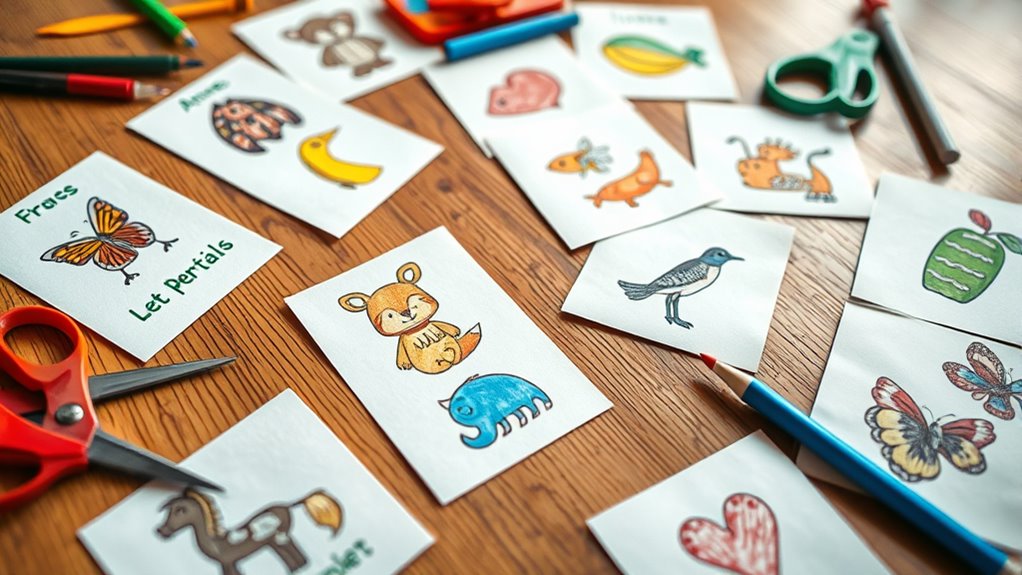
Have you ever wondered how to create effective study tools without spending a fortune? Making your own DIY flashcards is a simple, budget-friendly way to boost your learning. By crafting personalized picture cards, you can turn mundane study sessions into engaging activities that improve retention. One of the best ways to do this is by incorporating memory games and visual aids into your flashcards. These techniques make studying more interactive and memorable, especially when you’re working on complex concepts or vocabulary.
Start by gathering basic materials like index cards, markers, and printed images or drawings. You don’t need fancy supplies—just a little creativity and some household items. For visual aids, select images that clearly represent the information you’re trying to learn. For example, if you’re studying animals, find pictures of each species. If you’re learning new vocabulary, draw or print pictures that illustrate each word’s meaning. These visual cues help your brain associate images with concepts, making recall easier and more intuitive.
Memory games are a fantastic way to reinforce your knowledge using your DIY flashcards. For instance, you can shuffle your cards and test yourself by trying to recall the information on each one. Turn it into a game by setting a timer or competing against a friend or family member. You might also play matching games, where you pair picture cards with corresponding word cards, or group similar concepts together. These activities make studying less monotonous and more dynamic, helping you build stronger memory associations.
Designing your own flashcards is also a chance to tailor your learning process. You can customize the size, shape, and content to suit your needs, ensuring that each card is optimized for your study style. Use colorful markers or stickers to highlight key points, making important details stand out. The act of creating these cards actively engages your brain, which aids in memorization. Additionally, understanding how to properly store and organize your flashcards can improve your review efficiency, especially if you keep them in a dedicated box or digital folder for easy access. Because you’re involved in the process, you’ll feel more connected to the material and motivated to review your cards regularly.
Ultimately, DIY flashcards with visual aids and memory games turn studying into an interactive experience. They encourage active recall, which is proven to improve long-term retention. By customizing your own picture cards, you not only save money but also create a personalized learning tool that adapts to your unique needs. With a little effort and imagination, you’ll develop effective study aids that make learning more fun, engaging, and effective.
Conclusion
Creating your own flashcards is like painting a personalized map for your learning journey. While store-bought cards are neat and uniform, your handmade ones are vibrant and unique, reflecting your understanding. They may take a bit of time, but the effort transforms simple images into powerful tools that stick with you. So, embrace the contrast—crafting your own flashcards turns mundane memorization into a colorful, engaging adventure you control.