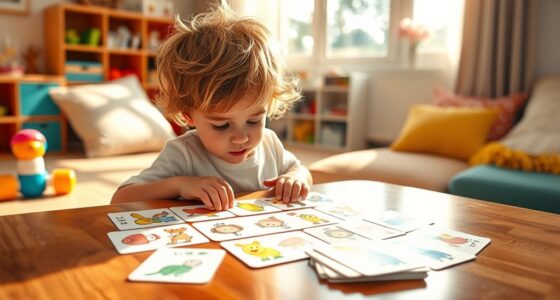

Imitation during play is a powerful tool for teaching your child essential life skills. When they copy actions like cooking or caring for dolls, they learn social norms, language, and emotional resilience. By participating and observing, you help them develop empathy, confidence, and problem-solving abilities. Engaging in copycat play also nurtures their creativity and self-expression. Keep exploring how role modeling can shape your child’s growth—they’ll discover even more ways to learn and thrive.
Listen free for 30 days with Audible
Thousands of audiobooks and originals — cancel anytime.
As an affiliate, we earn on qualifying purchases.
Key Takeaways
- Copycat play helps children learn social norms, behaviors, and routines through imitation of adult actions.
- Imitative play fosters emotional understanding, empathy, and effective communication skills.
- Repeating role-play scenarios builds confidence, problem-solving abilities, and adaptability.
- Imitation during play models positive traits like patience, kindness, and curiosity for children to emulate.
- Engaging in copycat activities encourages creativity, self-expression, and lifelong love of learning.
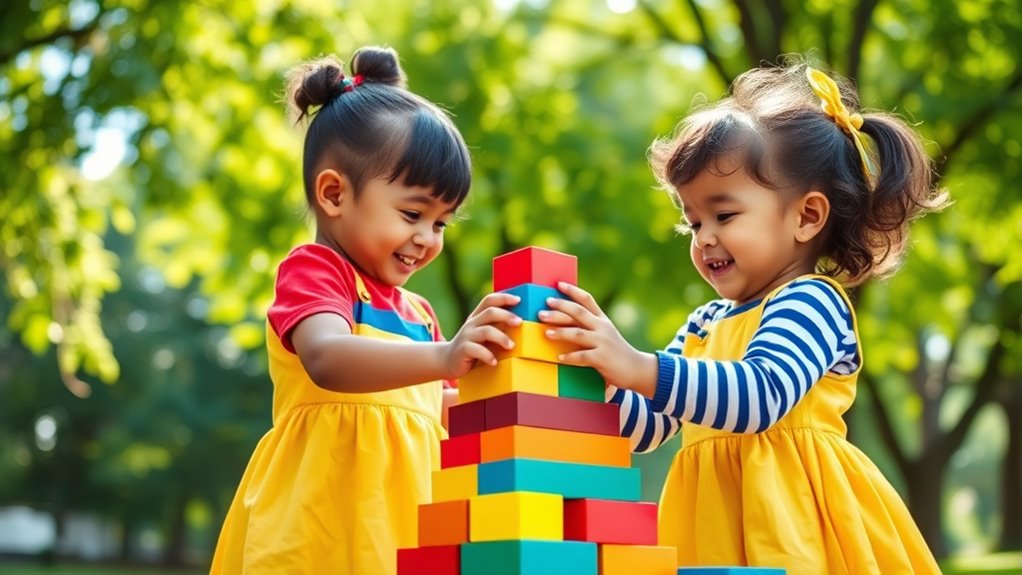
Have you ever noticed how children learn and explore the world around them through imitation and play? It’s fascinating how they absorb behaviors, language, and social cues simply by watching and mimicking those around them. This natural process, often called role modeling, is fundamental to their development. When children see a parent cooking in the kitchen, they don’t just watch—they imitate, grabbing pretend utensils or helping with toy food. Through these actions, they’re not only practicing motor skills but also understanding everyday routines. Role modeling provides them with a sense of security and clarity about social expectations, helping them steer through relationships and responsibilities later in life.
Play is a powerful tool for fostering creative expression, too. When kids imitate what they see, they’re engaging in a form of storytelling and imagination. For example, a child might pretend to be a doctor, a teacher, or a superhero, exploring different roles and scenarios. This imaginative play allows children to experiment with emotions, problem-solving, and decision-making in a safe environment. As they imitate and create, they’re fundamentally rehearsing real-life situations, building confidence and resilience. Creative expression through play isn’t just about fun; it’s about developing a flexible mind that can approach challenges from multiple angles.
By observing role models, children learn more than just specific actions—they internalize attitudes, values, and ways of thinking. When you actively participate in their play, you serve as a positive role model, demonstrating kindness, patience, and curiosity. Your involvement encourages them to take risks, try new ideas, and express themselves freely. This interaction also helps them understand the importance of communication and empathy, as they learn to interpret social cues during their role-playing scenarios. When children see adults engaging in creative expression, they’re inspired to explore their own talents and interests, fueling a lifelong love of learning and self-discovery. Additionally, understanding the importance of role modeling can enhance their social skills and emotional intelligence as they grow.
As an affiliate, we earn on qualifying purchases.
Frequently Asked Questions
How Early Can Children Start Learning Through Imitation?
You can start noticing imitation development in children as early as 6 months old. During this period, they reach key learning milestones by mimicking simple actions like facial expressions or sounds. Imitation helps them develop essential skills such as communication, social interaction, and problem-solving. The sooner they begin imitating, the quicker they refine these abilities, laying a strong foundation for future learning and growth.
Are There Risks Associated With Excessive Copying in Play?
Imagine a delicate dance with imitative boundaries as your child explores play. While imitation balance helps them learn, too much copying can blur their unique steps. Excessive imitation risks stifling creativity and independence. To keep the dance lively, guide your child gently, encouraging original ideas while setting healthy limits. This way, they develop confidence and life skills without losing their authentic rhythm.
How Can Parents Encourage Healthy Imitation Behaviors?
You can encourage healthy imitation behaviors by being a positive role model, demonstrating respectful and cooperative interactions. Engage in activities that promote social bonding, like shared play and open communication, which naturally inspire your child to imitate your actions. Praise their efforts to foster confidence and reinforce good habits. By modeling kindness and teamwork, you help your child develop essential social skills through natural and positive imitation.
Does Imitation Affect a Child’s Originality and Creativity?
Imagine a painter starting with a sketch before creating a masterpiece. Imitation can be a stepping stone in originality development, not a barrier. When children imitate, they explore ideas and develop their creative exploration skills. Studies show that imitation helps build a foundation for originality, encouraging kids to experiment and innovate. So, rather than stifling creativity, imitation acts as a launchpad for their unique expressions.
What Are Signs of Over-Reliance on Imitation in Play?
You might notice signs of over-reliance on imitation when your child consistently copies others without adding their own ideas, showing strong imitative tendencies. Play dependency becomes evident if they struggle to engage in independent or imaginative play. They may become anxious when not imitating, or rely heavily on copying behaviors, which indicates they’re leaning too much on imitation and may need encouragement to develop creativity and original thinking.
Conclusion
So, don’t underestimate the power of imitation during play. Every time you mimic a friend or copy a favorite activity, you’re opening a world of skills that could shape your entire future. It’s like holding the key to endless possibilities, turning simple games into life-changing lessons. Embrace these moments, because in the grand scheme, these tiny acts of copying are the most powerful tools you’ll ever have to conquer the world.
Flea & tick season Picks
flea and tick prevention
As an affiliate, we earn on qualifying purchases.