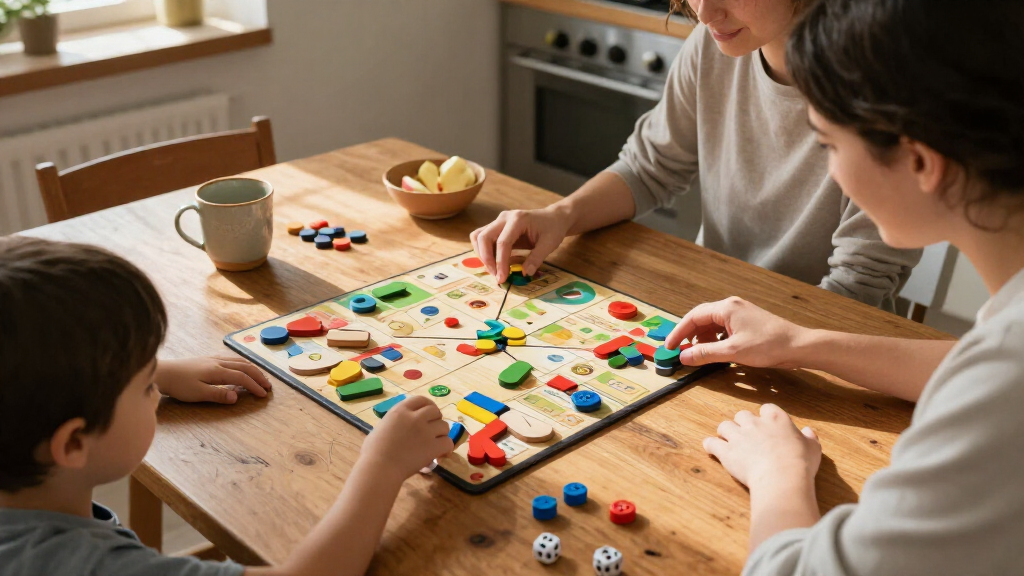
For the best kids board games, I’d start with Outfoxed!, my best overall pick for its cooperative mystery play, which gives children a shared goal instead of putting one player ahead of everyone else. Hedbanz is a lively choice for quick guessing rounds, while Candy Land keeps the rules simple for younger beginners. The main tradeoffs are age suitability, how much reading or strategy a game asks of children, and whether your group prefers teamwork, competition, or active play. Some games are easy to start but offer less variety, while more involved options may need an adult to help younger players. Read on for the full breakdown and a guide to matching a game to your family.

Give the gift of listening to the whole family
- Choose a 1-, 3-, 6- or 12-month membership
- They pick the audiobooks they love
- Easy to send by email
Complete the kit


Key Takeaways
- Outfoxed! stands out for cooperative play: its shared mystery gives younger players a reason to work together rather than compete for a single winner.
- Age fit changes the shortlist: Candy Land suits very young children, while Battleship, Taco Cat Goat Cheese Pizza, and Connect 4 call for older kids who can follow more demanding rules or tactics.
- Quick party play is not the same as a traditional board game: Hedbanz and Taco Cat Goat Cheese Pizza work well for lively group rounds, while Battleship and Connect 4 offer more focused head-to-head play.
- Complexity can come from different places: Mouse Trap adds a mechanical build-and-trigger element, The Uzzle emphasizes spatial puzzles, and Clue Junior asks players to use clues and deduction.
- Family fit matters more than a long feature list: group size, reading ability, patience for setup, and comfort with winning or losing separate the strongest picks for each household.
| Taco Cat Goat Cheese Pizza Card Game, Ages 7+, 2–8 Players | 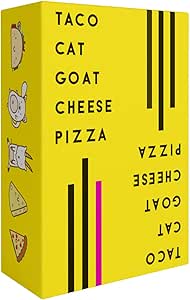 | Best for Fast, Lively Groups | Age range: 7+ | Players: 2–8 | Round length: 10–15 minutes | VIEW LATEST PRICE | See Our Full Breakdown |
| Hasbro Gaming Operation Electronic Board Game |  | Best for Fine-Motor Practice | Age range: 6 years and up | Players: 1 or more | Ailment pieces: 12 | VIEW LATEST PRICE | See Our Full Breakdown |
| Hasbro Gaming Battleship with Planes Strategy Board Game, Ages 7+ |  | Best Battleship Pick for Added Variety | Age range: 7 years and up | Players: 2 | Estimated playing time: 30 minutes | VIEW LATEST PRICE | See Our Full Breakdown |
| Hasbro Gaming Battleship Classic Board Game for 2 Players, Ages 7+ |  | Best for Straightforward Two-Player Strategy | Age range: 7 years and up | Players: 2 | Estimated playing time: 30 minutes | VIEW LATEST PRICE | See Our Full Breakdown |
| Sorry! Board Game for Kids (Ages 6+), Classic Hasbro, 4 Pawns per Player |  | Best for Family Race-and-Block Play | Age range: 6 years and up | Players: 2–4 | Estimated playing time: 120 minutes | VIEW LATEST PRICE | See Our Full Breakdown |
| Spin Master Games Hedbanz Classic Picture Guessing Game |  | Best for Conversation and Deduction | Brand: Spin Master Games | Edition: Hedbanz Classic Edition | Players: 2–6 | VIEW LATEST PRICE | See Our Full Breakdown |
| Mouse Trap Board Game for Kids Ages 6 and Up |  | Best for Hands-On Cause and Effect | Brand: Hasbro Gaming | Edition: Standard Edition | Players: 2–4 | VIEW LATEST PRICE | See Our Full Breakdown |
| The Uzzle 3.0 Family Board Game |  | Best for Solo and Pattern-Matching Play | Brand: The Uzzle | Edition: 3.0 | Age range: 4 years and up | VIEW LATEST PRICE | See Our Full Breakdown |
| Hasbro Gaming Candy Land Board Game for Kids, Ages 3+ |  | Best First Board Game | Brand: Hasbro Gaming | Players: 2–4 | Recommended age: 3 years and up | VIEW LATEST PRICE | See Our Full Breakdown |
| Hasbro Twister Party Classic Board Game – 2 to 4 Players, Indoor & Outdoor, Ages 6+ |  | Best Active Party Game | Brand: Hasbro Gaming | Age range: 6 years and up | Players: 2–4 | VIEW LATEST PRICE | See Our Full Breakdown |
| Hasbro Connect 4 Game, 2025 Edition |  | Best for Quick Two-Player Strategy | Brand: Hasbro Gaming | Edition: 2025 Edition | Players: 2 | VIEW LATEST PRICE | See Our Full Breakdown |
| Taco vs Burrito Card Game |  | Best for Fast, Flexible Family Rounds | Players: 2–4 | Recommended age: 6 years and up | Playing time: About 15 minutes | VIEW LATEST PRICE | See Our Full Breakdown |
| Clue Junior Board Game – Case of the Broken Toy, for Ages 5+, 2–6 Players |  | Best for First Mystery Games | Brand: Hasbro Gaming | Age range: 5+ | Number of players: 2–6 | VIEW LATEST PRICE | See Our Full Breakdown |
| Outfoxed! Cooperative Mystery Board Game |  | Best Cooperative Game for Young Kids | Brand: Gamewright | Game type: Cooperative board game | Players: 4 | VIEW LATEST PRICE | See Our Full Breakdown |
| Hasbro Gaming Trouble Board Game for Kids, Ages 5+, 2–4 Players |  | Best for Simple, Hands-On Race Play | Brand: Hasbro | Edition: Classic Edition | Age range: 5 years and up | VIEW LATEST PRICE | See Our Full Breakdown |
| kids board game | Players | Included components | Brand | Age range |
|---|---|---|---|---|
| Taco Cat Goat Cheese Pizza Car | 2–8 | Cards | Taco Cat Goat Cheese Pizza | 7+ |
| Hasbro Gaming Operation Electr | 1 or more | Gameboard with Cavity Sam, tweezers, 26 cards, 12 Funatomy parts, play money, rubber band, and instructions | — | 6 years and up |
| Hasbro Gaming Battleship with | 2 | 2 portable battle cases, 10 plastic ships, 2 plastic planes, 84 red hit pegs, 168 white miss pegs, label sheet, and instructions | Hasbro Gaming | 7 years and up |
| Hasbro Gaming Battleship Class | 2 | 2 portable battle cases, 10 plastic ships, 73 red hit pegs, 168 green miss pegs, and instructions | Hasbro Gaming | 7 years and up |
| Sorry! Board Game for Kids | 2–4 | Gameboard, 12 pawns, 45 cards, and instructions | — | 6 years and up |
| Spin Master Games Hedbanz Clas | 2–6 | — | Spin Master Games | 6 years and up |
| Mouse Trap Board Game for Kids | 2–4 | — | Hasbro Gaming | — |
| The Uzzle 3.0 Family Board Gam | 1–4 | — | The Uzzle | 4 years and up |
| Hasbro Gaming Candy Land Board | 2–4 | Gameboard, 4 pawns, card deck, instructions | Hasbro Gaming | — |
| Hasbro Twister Party Classic B | 2–4 | Vinyl mat, spinner board, instructions | Hasbro Gaming | 6 years and up |
| Hasbro Connect 4 Game | 2 | Grid and tray, 42 discs (21 red and 21 yellow), game rules | Hasbro Gaming | — |
| Taco vs Burrito Card Game | 2–4 | 56 cards, 4 taco/burrito card holders, 3 quick-start cards, and 1 instruction booklet | — | — |
| Clue Junior Board Game | — | Board, pawns, furniture tokens, detective notepad, and die | Hasbro Gaming | 5+ |
| Outfoxed! Cooperative Mystery | 4 | Board game | Gamewright | — |
| Hasbro Gaming Trouble Board Ga | 2–4 | Gameboard, plastic game unit with Pop-O-Matic die roller, 16 pegs, and instructions | Hasbro | 5 years and up |
More Details on Our Top Picks
Taco Cat Goat Cheese Pizza Card Game, Ages 7+, 2–8 Players
Quick rounds and a chant-and-slap mechanic make this a strong pick when kids want action without a long rules explanation. Players match spoken words to cards, while surprise action cards keep the rhythm from feeling too predictable. It accommodates up to eight players, giving it a group-play advantage over Battleship Classic, which is limited to two. Its card-only format also packs more easily than board games such as Sorry!, and 10–15-minute rounds suit short breaks or a second game-night choice. The tradeoff is physical speed: children need to react quickly and slap the pile, which may frustrate players who prefer calm turns or have difficulty with fast hand movements. It also needs at least two players, so it cannot fill a solo-game role.
Pros:- Simple rules make it quick for new players to learn.
- Supports groups of 2–8, more than the two-player Battleship games in this roundup.
- Short 10–15-minute rounds fit brief play sessions.
- Compact card format is convenient for travel.
Cons:- Fast reactions and slapping the pile are central to play.
- Requires at least two players.
Best for: Families with children ages 7 and up who want a portable, short game that can include a larger group.
Not ideal for: Children who dislike rapid reactions or slap-based play, and anyone looking for a game that works solo.
- Age range:7+
- Players:2–8
- Round length:10–15 minutes
- Included components:Cards
- Edition:Original
- Brand:Taco Cat Goat Cheese Pizza
- Manufacturer:Dolphin Hat Games
Our verdict“Choose this card game for lively, quick group play; skip it if your child prefers slower turns or needs a solo option.”
Hasbro Gaming Operation Electronic Board Game
Steady hands matter more here than they do in the turn-based race of Sorry!: players guide tweezers around 12 ailment pieces without touching the metal edges. The buzzer and flashing nose give each near miss an immediate, playful consequence, while play money adds a simple reward for successful removals. Solo play is a useful distinction from Battleship with Planes, which requires an opponent, and the tweezers create a different kind of challenge from the card and movement games elsewhere in this roundup. The main tradeoff is that the electronic feedback depends on two D batteries, and the careful hand control can be frustrating for younger children or players who want fast, free-flowing turns. This is best as a focused dexterity game rather than a broad group strategy choice.
Pros:- Solo or multiplayer play gives it more flexibility than two-player Battleship.
- Buzzer and flashing nose make mistakes immediately noticeable and playful.
- Twelve ailment pieces give players several removal challenges.
- Tweezers encourage fine motor coordination and careful play.
Cons:- Requires two D batteries.
- Precise tweezer control can be difficult for younger or less patient players.
- The buzzer can interrupt play whenever a piece touches the metal sides.
Best for: Families with children ages 6 and up who want a hands-on dexterity challenge that can also be played solo.
Not ideal for: Children who find careful tweezer control frustrating, or families who do not want a game that requires batteries.
- Age range:6 years and up
- Players:1 or more
- Ailment pieces:12
- Included components:Gameboard with Cavity Sam, tweezers, 26 cards, 12 Funatomy parts, play money, rubber band, and instructions
- Skills:Fine motor coordination and strategy
- Batteries:2 D batteries required
- Instructions:English and Spanish
- Model number:4545
Our verdict“Pick Operation for a tactile, precision-focused game with solo play, but choose a calmer turn-based game if buzzer-driven pressure will frustrate your child.”
Hasbro Gaming Battleship with Planes Strategy Board Game, Ages 7+
Ships plus planes give this edition a broader attack mix than Battleship Classic, making it the better fit for children who already know coordinate-guessing games and want an extra tactical element. Players call locations to find an opponent’s fleet, then use red and white pegs to track hits and misses. The two portable cases keep the components together, which makes it easier to bring along than a board-and-pawn game such as Sorry!. The tradeoff is its strict two-player format: it cannot bring a larger family into one match, unlike Taco Cat Goat Cheese Pizza. A roughly 30-minute playing time also asks for more commitment than that quick card game. Choose this version for head-to-head strategy and the added aircraft; choose Classic Battleship for the more direct ship-only setup.
Pros:- Adds two plastic planes to the ship-based coordinate strategy.
- Portable cases store game pieces between sessions and during travel.
- Red and white pegs provide separate markers for hits and misses.
- The familiar format is suited to head-to-head play for ages 7 and up.
Cons:- Designed for exactly two players.
- Estimated playing time of about 30 minutes is longer than a quick card game.
- Numerous small pegs can be misplaced during setup or cleanup.
Best for: Two children or a parent and child who enjoy coordinate-based strategy and want more attack options than the classic ship-only game.
Not ideal for: Families seeking a game for three or more players, or children who want quick rounds and frequent turn-taking.
- Age range:7 years and up
- Players:2
- Estimated playing time:30 minutes
- Included components:2 portable battle cases, 10 plastic ships, 2 plastic planes, 84 red hit pegs, 168 white miss pegs, label sheet, and instructions
- Edition:Standard Edition
- Brand:Hasbro Gaming
- Model number:C3890
Our verdict“Choose the planes edition when two players want a more varied Battleship match; opt for a group game if more children need to join.”
Hasbro Gaming Battleship Classic Board Game for 2 Players, Ages 7+
Classic coordinate play is the appeal here: each player calls locations, records hits and misses, and tries to sink the opposing fleet. Compared with Battleship with Planes, this edition leaves out aircraft, so it offers a simpler ship-only contest rather than extra attack variety. That makes it a good entry point for children who want to learn the familiar strategy without an added piece type. Its portable cases keep ships and pegs organized, though the small markers still call for careful cleanup. The Salvo option can add a more advanced way to attack, giving returning players a change of pace. Like its planes-equipped counterpart, it is limited to two players and takes about 30 minutes, so Taco Cat Goat Cheese Pizza is a better fit for larger groups or shorter sessions.
Pros:- Straightforward ship-and-coordinate rules provide a clear strategy challenge.
- Salvo option offers a more advanced way to play.
- Portable battle cases store ships and pegs.
- Five ships per player create varied targets to track.
Cons:- Designed for exactly two players.
- Small pegs can be easy to lose.
- The roughly 30-minute game is less suited to very short play sessions.
Best for: Two players ages 7 and up who want a familiar, head-to-head strategy game with a simpler ship-only setup.
Not ideal for: Families with three or more children looking to play together, or buyers who want the added planes found in the other Battleship edition.
- Age range:7 years and up
- Players:2
- Estimated playing time:30 minutes
- Included components:2 portable battle cases, 10 plastic ships, 73 red hit pegs, 168 green miss pegs, and instructions
- Edition:Classic
- Language:English
- Brand:Hasbro Gaming
- Model number:F4527
Our verdict“Choose Classic Battleship for a familiar two-player strategy game with an optional advanced rule, not for group play or added aircraft.”
Sorry! Board Game for Kids (Ages 6+), Classic Hasbro, 4 Pawns per Player
Easy movement rules and the chance to send an opponent’s pawn back make Sorry! a lively family choice for ages 6 and up. Its 2–4 player range gives it a group advantage over both Battleship Classic and Battleship with Planes, which are strictly head-to-head. Compared with Taco Cat Goat Cheese Pizza, this game offers a board-based race rather than quick reflexes, so children who prefer taking turns may find it a better match. The catch is control: card draws drive movement, meaning lucky draws can outweigh a player’s plans. The listing includes 12 pawns, despite the title’s reference to four pawns per player, so I would not assume each player has four. Its stated playing time is also much longer than the short rounds of the card game.
Pros:- Supports 2–4 players, more than either Battleship edition.
- Card-driven movement is straightforward for many children to learn.
- Sending opponents back adds direct interaction and changing race positions.
- Includes a board, pawns, cards, and instructions for play.
Cons:- Card draws can outweigh strategic decisions.
- Limited to four players.
- The listed 120-minute estimated playing time is long for a children’s game.
Best for: Families with children ages 6 and up who want a turn-based board game for two to four players, with direct competition and simple movement choices.
Not ideal for: Players who want strategy to outweigh luck, groups larger than four, or families seeking a reliably short game session.
- Age range:6 years and up
- Players:2–4
- Estimated playing time:120 minutes
- Included components:Gameboard, 12 pawns, 45 cards, and instructions
- Genre:Family
- Edition:Standard Edition
- Language:English
- Model number:A5065
Our verdict“Choose Sorry! for a family race game with direct pawn-blocking, but skip it if you want a short session or a strategy-first experience.”
Spin Master Games Hedbanz Classic Picture Guessing Game
Hedbanz makes asking questions the main event. Each player wears a headband holding a picture card, then uses yes-or-no questions to work out what it shows. That simple loop gives kids practice with deduction and clear communication, while the picture cards keep the game accessible to children who are still building reading skills. Compared with Candy Land, it asks more of players than color matching; compared with The Uzzle 3.0, it centers on talking rather than visual pattern speed. The tradeoff is that children need to understand how to phrase questions and wait for useful answers, so younger or quieter players may need adult help. Its 2–6 player limit also makes it less suitable for a large group.
Pros:- Quick pick-a-card setup makes it easy to start a round.
- Yes-or-no questions encourage deduction and thoughtful communication.
- Includes 69 picture cards and six themed headbands for group play.
- More conversational than visual matching games such as The Uzzle 3.0.
Cons:- Limited to two to six players.
- Children need to read or understand question prompts and form their own questions.
- The game depends on players giving clear, consistent answers.
Best for: Families with children ages six and up who enjoy guessing games and want to practice asking clear questions together.
Not ideal for: Large gatherings or children who are not yet comfortable reading simple prompts and asking yes-or-no questions.
- Brand:Spin Master Games
- Edition:Hedbanz Classic Edition
- Players:2–6
- Age range:6 years and up
- Picture cards:69
- Included headbands:6
- Other components:6 headplates, 16 scoring badges, 1 timer, 3 sample question cards, instructions
- Material:Paper
Our verdict“Choose Hedbanz for a small group of school-age kids who enjoy talking through clues more than racing to match patterns.”
Mouse Trap Board Game for Kids Ages 6 and Up
Mouse Trap is the pick for kids who want the board itself to put on a show. Players collect cheese and assemble a chain of parts into a moving contraption, making construction and cause-and-effect the focus rather than the question-and-answer play of Hedbanz. The moving mechanism gives children a tangible payoff, and the game also practices counting and decision-making. It accommodates up to four players, like Candy Land, but asks for more setup and attention to pieces than that simpler color-matching race. That complexity is also its main drawback: components must be assembled during play, and small parts can slow the game if they get misplaced. Choose it for a family willing to manage the build; skip it if you want a fast, low-fuss round.
Pros:- Moving trap gives construction and cause-and-effect ideas a visible payoff.
- Supports counting, decision-making, and cooperative interaction.
- Includes pieces for up to four players.
- Instructions are provided in English and Spanish.
Cons:- Trap parts need to be assembled during play.
- Many small pieces can be easy to misplace and require active supervision.
- The build-and-trigger format takes more setup attention than Candy Land.
Best for: Families with children ages six and up who enjoy building mechanisms and can keep track of multiple small game pieces.
Not ideal for: Caregivers seeking a quick setup or children who find multi-step assembly and loose components frustrating.
- Brand:Hasbro Gaming
- Edition:Standard Edition
- Players:2–4
- Recommended age:6 years and up
- Estimated playing time:30 minutes
- Trap-building parts and accessories:25
- Other components:Game board, 4 plastic mice, 2 metal marbles, 52 cheese pieces
- Instruction languages:English and Spanish
Our verdict“Pick Mouse Trap for kids who enjoy assembling and triggering a contraption, provided your family is comfortable managing its many parts.”
The Uzzle 3.0 Family Board Game
The Uzzle 3.0 stands apart by letting kids play alone or race through visual puzzles together. Players flip, spin, and combine blocks to copy a card pattern, with 100 challenges spread across four difficulty levels. That range makes it more adaptable as children gain confidence than Candy Land, which sticks to a straightforward color-matching path, and solo play is a useful option when no opponent is available. Larger blocks are easier for younger hands to handle, though the faster matching format may suit some kids better than the conversation in Hedbanz. The challenge rises substantially at the hardest levels, so younger players may need help or may prefer easier cards. It supports no more than four players, and larger groups need another set.
Pros:- 100 challenges across four levels give families room to adjust difficulty.
- Solo play works when a child does not have a game partner.
- Larger blocks are easier for young players to handle.
- Fast-to-learn pattern matching offers a different challenge from Candy Land’s color path.
Cons:- The hardest puzzles may frustrate younger children.
- One set supports only one to four players.
- Fast pattern matching may be less appealing to kids who prefer conversation or story-based play.
Best for: Families with children ages four and up who want a visual puzzle game that can work for solo play or a small group.
Not ideal for: Large families hoping to play together with one set, or younger children likely to be discouraged by the toughest puzzle levels.
- Brand:The Uzzle
- Edition:3.0
- Age range:4 years and up
- Players:1–4
- Puzzles:100 unique challenges
- Difficulty levels:4, with 25 puzzles per level
- Included blocks:4 sets of 10 blocks
- Dimensions:8 × 8 × 4 inches
- Material:Plastic
Our verdict“Choose The Uzzle 3.0 if you want a reusable visual puzzle with solo play, and avoid it for groups larger than four unless you have another set.”
Hasbro Gaming Candy Land Board Game for Kids, Ages 3+
Candy Land is the easiest entry point here for preschoolers who are not reading yet. Players draw cards and move gingerbread pawns by color, so children can learn turn-taking and color recognition without needing to read instructions or plan a strategy. That simplicity makes it a better fit for very young players than Hedbanz or The Uzzle 3.0, both of which ask kids to use more developed language or visual reasoning. It also supports up to four players and is listed with a 15-minute playing time, making it a manageable choice for a short family session. The tradeoff is limited control: moves depend on the cards drawn, so older children may find the play repetitive.
Pros:- No reading is required to follow the basic play.
- Color matching supports recognition and turn-taking.
- The simple movement rules suit young first-time players better than Hedbanz.
- Includes four pawns and instructions in English and Spanish.
Cons:- Card draws control movement, leaving little room for player decisions.
- Limited to two to four players.
- Older children may find the repeated color-matching turns too simple.
Best for: Families introducing children ages three and up to taking turns in a game, especially when players are not reading yet.
Not ideal for: Older kids who want meaningful choices, strategy, or varied actions beyond drawing a color card.
- Brand:Hasbro Gaming
- Players:2–4
- Recommended age:3 years and up
- Estimated playing time:15 minutes
- Genre:Family
- Included components:Gameboard, 4 pawns, card deck, instructions
- Instruction languages:English and Spanish
Our verdict“Choose Candy Land as a first board game for preschoolers, but pick a more decision-focused game for older children.”
Hasbro Twister Party Classic Board Game – 2 to 4 Players, Indoor & Outdoor, Ages 6+
Twister is the choice when a kids’ game night needs movement more than a traditional board. Players follow the spinner’s color and body-part prompts, stretching and balancing on a mat; that makes coordination and physical activity the draw, unlike Mouse Trap, where the excitement comes from building a mechanical chain. It also suits mixed-age family play and can be used indoors or outdoors, so it works well for parties with room to move. Compared with Hedbanz, it asks little of reading or conversation, but it does require players to follow instructions and feel comfortable moving around one another. Its four-player limit can leave larger groups waiting, and the vinyl mat may slip on smooth floors, so floor choice matters.
Pros:- Physical prompts encourage movement, balance, and coordination.
- Indoor or outdoor use makes it flexible for parties and family gatherings.
- Team tournament instructions offer another way to organize play.
- Needs less reading and verbal clue-making than Hedbanz.
Cons:- Only two to four players can use the mat at a time.
- The vinyl mat can become slippery on smooth surfaces.
- Players need enough open space to stretch and move safely.
Best for: Families with children ages six and up who want an active indoor or outdoor party game and have a nonslip playing surface.
Not ideal for: Large groups needing everyone to play at once, or households with smooth floors where the mat may slide.
- Brand:Hasbro Gaming
- Age range:6 years and up
- Players:2–4
- Number of packs:1
- Included components:Vinyl mat, spinner board, instructions
- Mat material:Vinyl
- Play settings:Indoor and outdoor
Our verdict“Choose Twister for an active small-group gathering if you have clear floor space and a mat surface that will not slide.”
Hasbro Connect 4 Game, 2025 Edition
Connect 4 is a strong pick for head-to-head play when kids are ready to plan a move ahead but the family wants rounds that stay short. Players drop discs into the grid to make a line of four, so the rules are simpler to pick up than a deduction game such as Clue Junior, while each move still gives children a chance to block an opponent. Its fold-up case, built-in disc storage, and sliding score trackers make it easier to pack and replay than Trouble, which uses a larger board and loose pegs. The main tradeoff is the player count: this is strictly for two, so it does not suit a whole family playing together. The small discs can also go missing during travel, despite the storage tray.
Pros:- Foldable grid and handle make the game easier to carry and store.
- Built-in tray storage keeps the discs together between rounds.
- Sliding trackers let players keep score across several games.
- Simple rules and short rounds work well for casual play.
Cons:- Limited to two players, leaving other children out of each round.
- Small discs may be easy to lose when playing away from home.
Best for: Families looking for a compact, repeatable strategy game for one child and one adult or sibling.
Not ideal for: Households that usually play with three or more people, or families who want pieces that are hard to misplace on outings.
- Brand:Hasbro Gaming
- Edition:2025 Edition
- Players:2
- Recommended age:6 years and up
- Included components:Grid and tray, 42 discs (21 red and 21 yellow), game rules
- Storage:Discs store in the tray; grid and tray fold into a carrying case with handle
- Model number:G1500
Our verdict“Choose Connect 4 for portable, quick strategy between two players; pick a multiplayer game if the whole family needs to join in.”
Taco vs Burrito Card Game
Taco vs Burrito suits families who want quick turns and a playful theme without learning a long set of rules. Players build meals with ingredient and action cards, and the five ways to play offer room to change the experience after the basic version feels familiar. Compared with Connect 4, it accommodates up to four players and centers on card choices rather than blocking moves on a grid; compared with Outfoxed!, it is more about building a meal than solving a shared mystery. The quick-start cards help groups get going, and the small box is convenient to bring along. Its paper cards and holders are less robust than a hard board and molded pieces, and the two-to-four-player limit still leaves larger groups needing another option.
Pros:- Rules can be introduced quickly, making it easy to start a casual game.
- Five ways to play add variety beyond the initial rules.
- Short sessions fit between activities or into a family game night.
- Compact box includes card holders and quick-start cards.
Cons:- Supports only two to four players, which can limit larger gatherings.
- Paper components may wear more quickly than sturdier game pieces.
Best for: Families with children six and up who want a portable card game with quick rules and a few play variations.
Not ideal for: Large groups, or families whose cards are likely to see rough handling and need sturdier components.
- Players:2–4
- Recommended age:6 years and up
- Playing time:About 15 minutes
- Ways to play:5
- Included components:56 cards, 4 taco/burrito card holders, 3 quick-start cards, and 1 instruction booklet
- Material:Paper
- Language:English
- Dimensions:7 x 5 x 2 inches
- Edition:Original
Our verdict“Pick Taco vs Burrito for quick, portable play with a small group that enjoys changing up the rules.”
Clue Junior Board Game – Case of the Broken Toy, for Ages 5+, 2–6 Players
Clue Junior gives younger players a gentler introduction to deduction: they investigate which toy was broken, who broke it, and when, using familiar Clue characters and a detective notepad. Its two-to-six-player range makes it more flexible for family groups than Connect 4, which is built for exactly two, while the mystery gives children a different kind of thinking challenge from the race-and-luck play in Trouble. The board, pawns, furniture tokens, notepad, and die provide a ready-to-play set without a separate app or extra materials. This junior case is intentionally simpler than a more involved mystery, so older children and experienced Clue players may solve it too easily. Families seeking cooperative play should also look at Outfoxed!, where everyone works toward one shared outcome.
Pros:- Kid-friendly mystery gives young players a clear deduction task.
- Classic Clue characters may make the theme familiar to children.
- Supports two to six players, more than two-player options such as Connect 4.
- Includes board, pawns, tokens, notepad, and die for straightforward setup.
Cons:- Simplified gameplay may not hold the interest of older or experienced players.
- The mystery theme is less suited to families looking for cooperative team play.
Best for: Families with children around five to eight who are ready to practice clues and elimination in a familiar mystery format.
Not ideal for: Older kids or experienced mystery-game players who want a deeper case, or families specifically seeking a cooperative game.
- Brand:Hasbro Gaming
- Age range:5+
- Number of players:2–6
- Set name:Case of the Broken Toy
- Included components:Board, pawns, furniture tokens, detective notepad, and die
- Item weight:1.3 pounds
- Item dimensions:1.63 x 13.13 x 10.5 inches
- Manufacturer part number:C1293
Our verdict“Choose Clue Junior to introduce younger children to clue-based reasoning, but move to a richer mystery for older players.”
Outfoxed! Cooperative Mystery Board Game
Outfoxed! is the cooperative choice in this group: players gather clues, use an evidence decoder to rule out suspects, and try to catch the fox before it escapes. That shared goal changes the family dynamic compared with Clue Junior, where players investigate a case individually, and it avoids the direct one-on-one rivalry of Connect 4. Its short 15–20 minute play time and simple rules make it approachable for younger children, while clue gathering gives everyone a reason to discuss what the evidence means. The tradeoff is group fit: the supplied player information lists four players, which may not suit every household, and the age guidance is not consistent across product details. If precise player-count flexibility matters, Taco vs Burrito lists a clearer range of two to four.
Pros:- Cooperative format encourages children to communicate and solve clues together.
- Evidence decoder supports deduction and clue comparison.
- Short rounds and simple rules suit younger players.
- Shared objective avoids eliminating the fun for a child who falls behind.
Cons:- Product data lists four players, which may limit use in smaller or larger groups.
- Age recommendations vary across the product details.
Best for: Families with young children who prefer teamwork, shared decisions, and a short mystery rather than competing against one another.
Not ideal for: Households that need a game for a specific player count other than four, or buyers who want consistent age guidance before choosing.
- Brand:Gamewright
- Game type:Cooperative board game
- Players:4
- Recommended age:5 years and up
- Playing time:15–20 minutes
- Language:English
- Included components:Board game
- Model number:CSG-OUTF
Our verdict“Choose Outfoxed! for young families who want a brief, team-based mystery rather than a competitive game.”
Hasbro Gaming Trouble Board Game for Kids, Ages 5+, 2–4 Players
Trouble makes sense for families who want a simple race game with a tactile centerpiece: children press the Pop-O-Matic bubble to roll, then move pegs around the board toward the Finish zone. The enclosed roller keeps a loose die from wandering off, a practical advantage over Clue Junior, which includes a separate die and several small investigation pieces. It is easier to grasp than the clue-gathering in Outfoxed!, and the optional Power Up Spaces add a different mode without changing the basic goal. The catch is that landing on another player’s space can send a peg back to the beginning, which may frustrate children who prefer collaborative play. It also needs a flat surface for the board and pieces, so it is less convenient to pack than Connect 4‘s folding case.
Pros:- Pop-O-Matic roller keeps the die attached to the game.
- Basic race rules are easy for young children to follow.
- Optional Power Up Spaces provide an alternate play variation.
- Two-to-four-player setup works for siblings or a small family group.
Cons:- A peg can be sent back to the beginning when another player lands on its space.
- Board and loose pegs need a flat playing area and can be less travel-friendly than folding Connect 4.
Best for: Families with children five and up who want a straightforward race game for two to four players and enjoy light competition.
Not ideal for: Children who get upset by setbacks, families seeking cooperative play, or households short on space for a board and pegs.
- Brand:Hasbro
- Edition:Classic Edition
- Age range:5 years and up
- Players:2–4
- Included components:Gameboard, plastic game unit with Pop-O-Matic die roller, 16 pegs, and instructions
- Gameplay variation:Optional Power Up Spaces version
Our verdict“Pick Trouble for easy-to-learn, competitive race play at home, but choose Outfoxed! if your family prefers working together.”
How We Picked
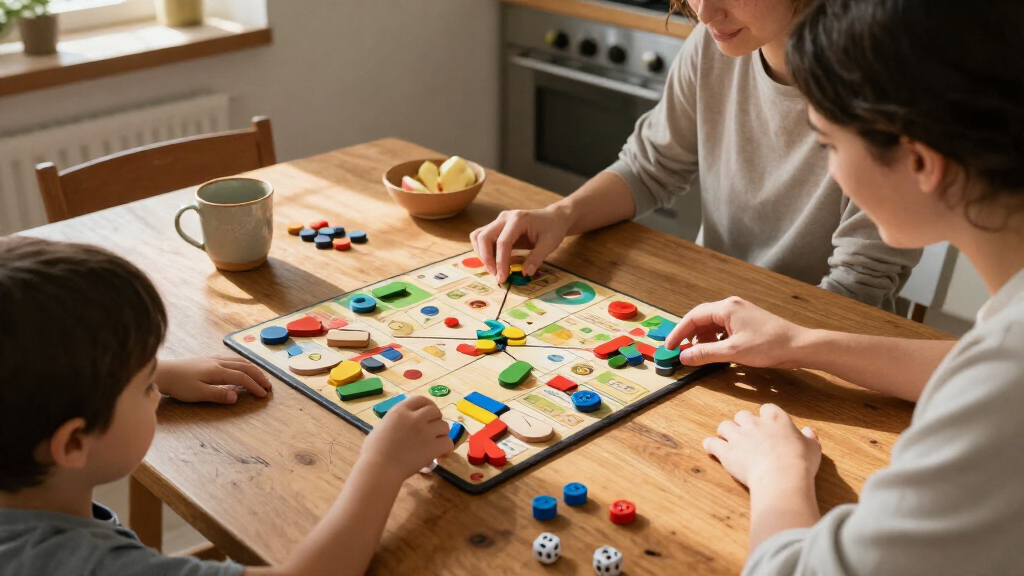
I compared these 15 games by how well their rules, pace, and play style suit children and the adults or siblings joining them. I weighed age guidance alongside the skills each game asks for, such as reading, memory, deduction, spatial reasoning, coordination, or simple turn-taking. I also looked at player count, how easy a game is to teach, whether it can hold a child’s attention, and what kind of interaction it creates: cooperative, head-to-head, party-style, or active.
The ranking favors games with a clear use case and a strong fit for a broad range of family game nights, not simply the most familiar names. That puts Outfoxed! first for its cooperative structure and child-friendly mystery, while Hedbanz earns a standout spot for easy group participation. Simple early-learning games such as Candy Land serve a narrower age range, and specialist picks such as The Uzzle or Twister are better for families seeking a particular kind of play. I also account for drawbacks: a game may be less appealing if it needs adult help, accommodates only a small group, or relies on a specific mood and energy level.
| kids board game | Brand |
|---|---|
| Taco Cat Goat Cheese Pizza Car | Taco Cat Goat Cheese Pizza |
| Hasbro Gaming Operation Electr | — |
| Hasbro Gaming Battleship with | Hasbro Gaming |
| Hasbro Gaming Battleship Class | Hasbro Gaming |
| Sorry! Board Game for Kids | — |
| Spin Master Games Hedbanz Clas | Spin Master Games |
| Mouse Trap Board Game for Kids | Hasbro Gaming |
| The Uzzle 3.0 Family Board Gam | The Uzzle |
| Hasbro Gaming Candy Land Board | Hasbro Gaming |
| Hasbro Twister Party Classic B | Hasbro Gaming |
| Hasbro Connect 4 Game | Hasbro Gaming |
| Taco vs Burrito Card Game | — |
| Clue Junior Board Game | Hasbro Gaming |
| Outfoxed! Cooperative Mystery | Gamewright |
| Hasbro Gaming Trouble Board Ga | Hasbro |
Factors to Consider When Choosing Best Kids Board Games
Before choosing a kids’ game, I’d match the experience to the children who will actually play it—not just the age printed on the box. The following factors help separate a reliable family-night choice from a game that may stay on the shelf.
Match the rules to the youngest regular player
Age labels are a starting point, but the youngest child’s reading, counting, and attention skills matter more than their exact birthday. A game can be technically age-appropriate and still frustrate a child if it asks them to track several rules or wait through long turns. For a mixed-age group, look for a basic objective that younger players can grasp while older children still have choices to make. Avoid buying a game solely because an older sibling likes strategy; the younger player may need an adult to interpret every move. When a child is just learning how games work, short turns and visible progress often matter more than a clever theme.
Choose competition, cooperation, or a mix
Think about how the children in your household respond to winning and losing before picking a game. Competitive games can teach turn-taking and decision-making, but repeated losses may put a younger child off playing. Cooperative games give players a shared goal and can make it easier for siblings with different skill levels to participate together. Some families prefer a mix so no single game-night mood dominates. A common mistake is choosing a cooperative title because it sounds gentler without checking whether children enjoy solving problems as a team. If sibling rivalry is a concern, prioritize shared tasks or games where a round ends quickly and everyone gets another chance.
Check the real group size and waiting time
Box player counts do not tell the whole story: a game may technically include several players but leave some children waiting for long stretches between turns. Consider who will play most often, including visiting cousins or adults, and whether the game stays engaging at that number. Head-to-head options make sense for one-on-one play, while party-style games can involve a larger group more actively. If your family often has an odd number of players, check that the rules do not depend on fixed teams or a particular player count. Short rounds can also help when children have different patience levels, even if the game supports a larger group.
Account for setup, pieces, and cleanup
A game’s appeal depends partly on how quickly children can get to the fun. Building a mechanism, sorting many small pieces, or setting up a large play area may suit a planned family session but frustrate a child looking for a quick game. Check whether components need careful handling, adult supervision, or space that is hard to clear afterward. Small pieces can be a poor match for homes with toddlers, even when the intended players are older. A simple setup is often the better choice for everyday use, while a more elaborate game may be worth keeping for weekends when an adult can help.
Prioritize replay variety over a long first session
Children often return to a game when each round gives them a slightly different challenge or a chance to improve. A simple game can still have strong replay value if the interaction changes with the players, but a fixed sequence may feel repetitive once the novelty wears off. Look for variety in prompts, clues, routes, or decisions rather than assuming more rules automatically mean more longevity. For younger children, familiar repetition may be a feature because it helps them learn and play independently. For older kids, a game that offers choices can hold attention longer than one where the next move is mostly determined by chance.
Decide what kind of energy the room can handle
Not every family game belongs at the same moment of the day. Active games can help children burn energy, but they need enough clear floor space and may not suit a quiet evening or a crowded table. Fast reaction games bring excitement, though they can feel chaotic for children who dislike noise or pressure. Puzzle and deduction games offer a calmer pace, but may need an adult to help children who get stuck. Think about the room, the time available, and the children’s temperaments before choosing. A small collection with contrasting energy levels can be more useful than several games that all create the same kind of play.
Frequently Asked Questions
Which of these games is a good first board game for a preschooler?
Candy Land is the clearest starting point in this lineup for very young children because its basic play is easy to follow. Before buying, check that the child is ready to take turns and accept a game outcome; those social skills can matter as much as understanding the rules. A parent or older sibling may still need to help keep the game moving. If your preschooler prefers movement or guessing, a different play style may hold their attention better than a traditional turn-based board game. Choose the game the child will want to play again, not simply the one with the youngest age label.
What should I choose for siblings who often argue about winning?
I’d start with a cooperative game such as Outfoxed!, where players work toward a shared outcome. This can reduce direct rivalry, though it will not suit every child: some enjoy competition and may find teamwork less exciting. Another option is to choose short rounds so a loss does not define the whole evening. Adults can also make the first few sessions about learning the rules rather than keeping score or emphasizing who won. If conflict is mostly about one child dominating, pick a game that gives each player a clear turn or contribution.
Can one game work for children of different ages?
Often, but the best fit depends on whether the younger child can take part without an adult explaining every move. Games with simple turns and visible actions tend to bridge age gaps better than ones relying heavily on reading, memory, or multi-step strategy. Older children may need to agree not to rush or coach every turn, while younger players may need extra time. A game that allows adults to join can make a mixed-age session more balanced, but adults should avoid taking over decisions. If the age gap is wide, having one simpler option and one more challenging option can prevent either group from feeling held back.
Should I choose a fast card game or a longer board game?
Choose a fast card game when you need a short activity, a flexible group size, or a game that is easy to bring along. A longer board game may be a better fit when the children enjoy a steady goal, building a strategy, or spending more time together around the table. Consider attention span and the time available, not just the game’s format. Fast reaction play can be exciting but may frustrate children who need more time to process a turn. If you are unsure, a quick game is a lower-commitment way to learn what kind of play your child enjoys.
When is it worth choosing a more involved game over a simple one?
A more involved game makes sense when children already enjoy taking turns and can manage the setup, rules, and play time without losing interest. It can offer a richer challenge, but extra components or steps do not guarantee more fun. Check whether the child likes the specific skill involved, such as deduction, spatial puzzles, or physical coordination. If an adult needs to supervise every move, that may be fine for a planned family session but less practical for independent play. For a first purchase, a game that gets played often is usually a better fit than one chosen for complexity alone.
Conclusion
My best overall pick is Outfoxed! for families who want children to solve a mystery together. For best value in versatility, I’d look to Hedbanz, which suits lively group play without the feel of a long strategy session; for a best premium-style challenge, choose The Uzzle if your household enjoys spatial puzzles and wants a more focused thinking game. Candy Land is my pick for beginners who need a simple introduction to turn-taking, while Twister is the specific choice for families seeking active play rather than a sit-down game. If your priority is head-to-head strategy, compare Battleship and Connect 4; if you want silly, fast group energy, consider Taco Cat Goat Cheese Pizza. Choose based on the children’s ages, group size, and preferred pace, and the right game is the one they’ll ask to play again.
Black Friday Picks

Vitamix Propel Series 510 Professional-Grade Blender, Black
As an affiliate, we earn on qualifying purchases.