
Choosing the best board games for families requires balancing age appropriateness with engaging mechanics that keep adults interested. Hues and Cues stands out as the best overall pick because it removes math and reading barriers, allowing players aged 8 and up to compete on equal footing through color intuition. For those seeking high-energy interaction, Herd Mentality offers a faster, more chaotic alternative that prioritizes social deduction over strategy, while CATAN remains the gold standard for families with older children who enjoy resource management. The primary tradeoff in this category is between accessibility and depth; simple games often bore parents, while complex strategy games can frustrate younger siblings. This guide breaks down these dynamics to help you select titles that suit your specific family demographic and gaming preferences.

Turn the school run and nap time into listening time
- Thousands of audiobooks, podcasts and originals
- Listen on your phone, tablet or Echo — also offline
- Cancel anytime
Complete the kit


Key Takeaways
- Games with no reading or math requirements, like Hues and Cues, significantly reduce age gaps and frustration levels.
- Party-style games such as Herd Mentality and Taco Cat Goat Cheese Pizza offer shorter playtimes (15-30 minutes), making them easier to fit into busy schedules.
- Classic titles like Monopoly and CATAN require significantly more time commitment (60-90+ minutes) and are better suited for weekends or holidays.
- Cooperative or semi-cooperative mechanics in games like Flip 7 reduce direct conflict, which is beneficial for families with competitive young children.
- The ‘best’ game depends heavily on the youngest player’s age; games rated for 5+ often lack depth for adults, while 10+ games may exclude younger siblings.
| Hues and Cues Color Guessing Board Game |  | Best for Big, Mixed-Age Groups | Players: 3–10 | Recommended age: 8 years and up | Playing time: 30 minutes | VIEW LATEST PRICE | See Our Full Breakdown |
| Herd Mentality Family Party Board Game |  | Best for Large Family Gatherings | Players: 4–20 | Recommended age: 10 years and up | Playing time: 20 minutes | VIEW LATEST PRICE | See Our Full Breakdown |
| Mattel Games UNO Card Game for Ages 7+, 2–10 Players |  | Best for Flexible Family Game Nights | Players: 2–10 | Recommended age: 7 years and up | Included components: 112 cards and instructions | VIEW LATEST PRICE | See Our Full Breakdown |
| The Uzzle 3.0 Family Board Game |  | Best for Puzzle-Loving Families | Players: 1–4 | Recommended age: 4 years and up | Puzzles: 100 unique challenges | VIEW LATEST PRICE | See Our Full Breakdown |
| Do You Really Know Your Family? Family Card Game |  | Best for Family Conversation | Players: 3–8 | Recommended age: 8 and up | Game type: Card game | VIEW LATEST PRICE | See Our Full Breakdown |
| Hasbro Gaming Trouble Board Game |  | Best for Young Children | Age Range: 5 years and up | Players: 2–4 | Included Components: Gameboard, plastic game unit with Pop-O-Matic die roller, 16 pegs, instructions | VIEW LATEST PRICE | See Our Full Breakdown |
| Taco Cat Goat Cheese Pizza Card Game | 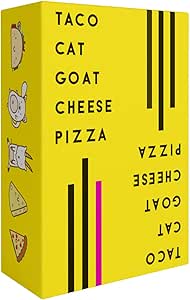 | Best for Travel and Quick Play | Age Range: 7 and up | Players: 2–8 | Round Length: 10–15 minutes | VIEW LATEST PRICE | See Our Full Breakdown |
| Sorry! Classic Board Game |  | Best for Strategic Interaction | Brand: Hasbro Gaming | Players: 2–4 | Recommended Age: 6 years and up | VIEW LATEST PRICE | See Our Full Breakdown |
| Clue Board Game (2023 Refresh) |  | Best for Cooperative Deduction | Brand: Hasbro Gaming | Players: 2–6 | Recommended Age: 8 years and up | VIEW LATEST PRICE | See Our Full Breakdown |
| Mount Cleverest Original Edition True or False Trivia Game |  | Best for Large Groups | Brand: Mount Cleverest | Game Type: True or false trivia card game | Players: 2–12 | VIEW LATEST PRICE | See Our Full Breakdown |
| CATAN Board Game, 6th Edition |  | Best Strategic Gateway | Edition: 6th Edition | Players: 3–4 | Recommended Age: 10 years and up | VIEW LATEST PRICE | See Our Full Breakdown |
| Monopoly Classic Board Game with Storage Tray and Larger Tokens |  | Best Classic for Large Groups | Players: 2 to 6 | Recommended Age: 8 years and up | Tokens: 8 larger metal tokens | VIEW LATEST PRICE | See Our Full Breakdown |
| Flip 7 Card Game |  | Best Portable Risk Game | Brand: USAOPOLY | Number of Players: 3+ | Recommended Age: 8 years and up | VIEW LATEST PRICE | See Our Full Breakdown |
| Tapple Family Word Game |  | Best High-Energy Word Game | Brand: USAOPOLY | Number of Players: 2–8 | Age Range: 8 years and up | VIEW LATEST PRICE | See Our Full Breakdown |
| Blank Slate Party Word Game |  | Best Social Deduction Game | Brand: USAopoly | Players: 3–8 | Recommended Age: 8 years and up | VIEW LATEST PRICE | See Our Full Breakdown |
| board games for familie | Players | Recommended age | Included components | Brand |
|---|---|---|---|---|
| Hues and Cues Color Guessing B | 3–10 | 8 years and up | Game board, 100 color cards, 30 player pieces, rulebook, and scoring frame | — |
| Herd Mentality Family Party Bo | 4–20 | 10 years and up | — | — |
| Mattel Games UNO Card Game for | 2–10 | 7 years and up | 112 cards and instructions | Mattel Games |
| The Uzzle 3.0 Family Board Gam | 1–4 | 4 years and up | 4 sets of 10 blocks | — |
| Do You Really Know Your Family | 3–8 | 8 and up | Cards | — |
| Hasbro Gaming Trouble Board Ga | 2–4 | — | Gameboard, plastic game unit with Pop-O-Matic die roller, 16 pegs, instructions | — |
| Taco Cat Goat Cheese Pizza Car | 2–8 | — | Cards | — |
| Sorry! Classic Board Game | 2–4 | 6 years and up | Gameboard, 12 pawns, 45 cards, instructions | Hasbro Gaming |
| Clue Board Game | 2–6 | 8 years and up | Gameboard, 6 character tokens, 6 weapon tokens, 50 cards, solve envelope, notepad, 2 dice, rules | Hasbro Gaming |
| Mount Cleverest Original Editi | 2–12 | 6 years and up | Cards and 30 betting discs | Mount Cleverest |
| CATAN Board Game | 3–4 | 10 years and up | — | — |
| Monopoly Classic Board Game wi | 2 to 6 | 8 years and up | Game board, money, Title Deeds, houses, hotels, Banker’s storage tray | Hasbro |
| Flip 7 Card Game | — | 8 years and up | 94 cards, rules | USAOPOLY |
| Tapple Family Word Game | — | — | — | USAOPOLY |
| Blank Slate Party Word Game | 3–8 | 8 years and up | Scoreboard, 8 dry-erase slates, 250 cards | USAopoly |
More Details on Our Top Picks
Hues and Cues Color Guessing Board Game
Hues and Cues turns color perception into the whole game: players give short clues and try to guide others to one target among 480 shades. Its 3–10 player range and roughly 30-minute playtime make it a flexible choice for family gatherings, while the simple clue format is easier to teach than a strategy-heavy game such as CATAN. The fun comes from how differently relatives interpret the same words, but that subjectivity can also frustrate players who expect one clearly correct answer. Compared with Herd Mentality, which rewards matching the group’s likely opinion, this game asks players to communicate a specific visual idea. It suits families who enjoy wordplay and discussion, but it is less compelling for anyone who finds color distinctions difficult or wants a more competitive, rules-driven challenge.
Pros:- 480 color squares give clues plenty of room for interpretation and repeat play.
- Supports a broad range of group sizes, from three to ten players.
- Quick-to-learn rules and an estimated 30-minute playing time fit casual game nights.
- Includes the board, color cards, player pieces, scoring frame, and rulebook.
Cons:- Color clues are subjective, so players may disagree even when everyone understands the rules.
- Requires an indoor surface and enough space to view the large color board.
Best for: Families with three to ten players who enjoy word clues, visual guessing, and conversation across age groups.
Not ideal for: Players who struggle to distinguish similar colors or prefer games with objective answers and strategic choices.
- Players:3–10
- Recommended age:8 years and up
- Playing time:30 minutes
- Game mechanics:Word game
- Game board colors:480
- Included components:Game board, 100 color cards, 30 player pieces, rulebook, and scoring frame
- Dimensions:2.5 × 10 inches
- Weight:1.22 kg
Our verdict“Choose Hues and Cues for a lively group game built around visual clues, rather than a more structured challenge like CATAN.”
Herd Mentality Family Party Board Game
When the guest list stretches beyond the usual game-night group, Herd Mentality stands out by accommodating 4–20 players. Everyone answers a prompt and tries to match the majority; the pink cow marks the player who ends up out of step. At about 20 minutes, it moves faster than Hues and Cues and is simple to explain to a room full of relatives. Its central tradeoff is that the game rewards predicting the group, not expressing an original answer. That can make it a hit with sociable families, but a poor fit for players who dislike being singled out or prefer individual puzzles. The Kids Edition includes 20 extra questions, though it still requires at least four people, unlike UNO, which can work with two.
Pros:- Accommodates groups of four to twenty players.
- Short, straightforward rounds are easy to introduce to mixed-age gatherings.
- Includes 20 extra questions for additional variety.
- The majority-guessing format encourages players to read the group’s sense of humor.
Cons:- Needs at least four players, so it is not a dependable option for a small family night.
- Winning depends on matching the group rather than giving a personally preferred answer.
- The pink-cow penalty may feel uncomfortable for players who dislike being singled out.
Best for: Families hosting gatherings of four or more who want a quick, easy-to-teach group game.
Not ideal for: Smaller households, or players who prefer individual strategy and may dislike being the odd one out.
- Players:4–20
- Recommended age:10 years and up
- Playing time:20 minutes
- Edition:Kids Edition
- Game mechanics:Social deduction
- Included content:Main game and 20 extra questions
- Material:Cardboard
- Dimensions:7.4 × 5.8 × 0.04 inches
Our verdict“Pick Herd Mentality for a large, chatty gathering; choose UNO instead if you need a game that also works with two or three players.”
Mattel Games UNO Card Game for Ages 7+, 2–10 Players
UNO earns its place as the most flexible pick here: it supports 2–10 players, so families can play without waiting for a big group to arrive. Matching by color or number is easy to teach, while action and Wild Cards give turns enough unpredictability to keep younger and older players involved. Graphic symbols help identify colors, a useful accessibility feature that gives it an advantage over Hues and Cues, where color distinction is central to play. The tradeoff is that UNO’s familiar matching loop offers less conversation and puzzle variety than Hues and Cues or The Uzzle. Its three customizable Wild Cards allow house rules, but those rules can change the feel of the game from one family to another. This is a practical, low-barrier choice, not a deep strategy game.
Pros:- Works with two to ten players, making it more flexible for small households than Herd Mentality.
- Matching by color or number is quick for new players to learn.
- Graphic symbols help players identify card colors.
- Three customizable Wild Cards let families adapt some rules.
Cons:- The repeated matching loop may feel less varied than the puzzles in The Uzzle.
- Customizable Wild Cards can lead to different house rules between groups.
- Card colors and decorations may vary.
Best for: Families with children aged seven and up who want one compact card game that works for two to ten players.
Not ideal for: Players looking for a substantial board, longer strategic decisions, or a game centered on conversation and creative clues.
- Players:2–10
- Recommended age:7 years and up
- Included components:112 cards and instructions
- Special features:Color-identifying graphic symbols and three customizable Wild Cards
- Language:English
- Game:UNO
- Brand:Mattel Games
- Model number:GDJ85
Our verdict“Choose UNO when you want an easy-to-teach game that scales from a small family to a larger group, rather than a more involved board game.”
The Uzzle 3.0 Family Board Game
The Uzzle 3.0 is the lineup’s strongest choice for families who want hands-on pattern puzzles rather than trivia or wordplay. Players flip, spin, and combine blocks to match cards, with 100 puzzles across four difficulty levels. That progression helps a family with different ages find challenges at suitable levels, and the game also allows solo play—something the group-based Herd Mentality cannot offer. Its larger blocks are a practical fit for younger players, but the game tops out at four players, making it less useful for gatherings than UNO or Hues and Cues. The harder puzzles can also be demanding, so younger children may need help or may stick to easier cards. Pick it for spatial problem-solving and repeat challenges, not for a lively, large-group party game.
Pros:- 100 puzzles provide a range of challenges across four difficulty levels.
- Supports solo play as well as games with up to four players.
- Larger blocks are easier for young players to handle.
- Pattern matching gives families a hands-on alternative to the word and social games in this roundup.
Cons:- Play is limited to four players, fewer than Hues and Cues or UNO can accommodate.
- The higher difficulty levels may be challenging for younger children.
- Puzzle-focused play offers less group conversation than Herd Mentality.
Best for: Families with children aged four and up who enjoy visual puzzles and want solo or small-group play.
Not ideal for: Large families or party hosts who need a game for more than four players, or children who may find harder puzzles frustrating.
- Players:1–4
- Recommended age:4 years and up
- Puzzles:100 unique challenges
- Difficulty levels:4, with 25 puzzles per level
- Included components:4 sets of 10 blocks
- Block size:2× bigger blocks
- Material:Plastic
- Dimensions:8 × 8 inches
Our verdict“Choose The Uzzle 3.0 for a small family that enjoys visual challenges, but pick UNO or Hues and Cues for larger groups.”
Do You Really Know Your Family? Family Card Game
Do You Really Know Your Family? puts shared stories and playful questions ahead of tactics, making it a natural pick for relatives who want a game to get people talking. Trivia prompts and silly challenges create opportunities to learn how family members think, while the 3–8 player range suits a household or a modest gathering. Compared with Herd Mentality, it focuses on knowing specific people rather than guessing what a majority will say; compared with UNO, it offers more conversation but less of a structured card-matching contest. The tradeoff is that the experience depends on players being comfortable answering personal or silly prompts. It also needs at least three people, so it cannot fill the small-group role that UNO can. The portable tin helps with storage, but this remains an indoor, conversation-led game.
Pros:- Trivia questions and silly challenges encourage family conversation.
- Designed for children, teens, and adults to play together.
- The tin container makes the card game easy to store and carry.
- Offers a more personal conversation format than the majority-guessing prompts in Herd Mentality.
Cons:- Requires at least three players, unlike UNO, which supports two.
- Players who prefer strategy or objective challenges may find the prompts too conversation-led.
- Intended for indoor play.
Best for: Families with three to eight players who enjoy personal trivia, silly challenges, and conversation across generations.
Not ideal for: Two-player households or families who prefer competitive strategy and do not enjoy answering personal questions.
- Players:3–8
- Recommended age:8 and up
- Game type:Card game
- Included components:Cards
- Theme:Trivia
- Material:Cardstock
- Container:Tin
- Dimensions:2 × 4.7 × 6.7 inches
Our verdict“Choose this game when your family wants prompts and shared laughs more than a competitive card or puzzle challenge.”
Hasbro Gaming Trouble Board Game
This game stands out for families with children aged 5 to 7 who need a tactile, low-stakes introduction to board gaming. The Pop-O-Matic roller solves the common frustration of rolling dice off the table, keeping the action contained and engaging for small hands. Compared to Sorry!, which requires more reading and strategic card play, Trouble offers simpler movement mechanics that reduce cognitive load for younger kids. However, the optional Power Up mode adds complexity that might overwhelm beginners if introduced too early. The primary drawback is the frustration of setbacks; landing on an opponent’s peg sends their peg back to start, which can cause emotional meltdowns in sensitive children. It is less strategic than Clue, making it purely a race game rather than a puzzle, but this simplicity is its greatest strength for the youngest players in your family.
Pros:- The Pop-O-Matic bubble prevents dice from rolling off the table.
- Rules are simple enough for a five-year-old to grasp immediately.
- Two gameplay modes allow for adjustable difficulty levels.
- Setup is minimal, with only pegs and a single unit to manage.
Cons:- Sending opponents back to start can cause significant player frustration.
- Lacks strategic depth, relying heavily on dice luck.
- The plastic bubble can become sticky or hard to press over time.
Best for: Families with children aged 5–7 who need simple rules and tactile components.
Not ideal for: Older children or adults who find pure luck-based races boring or frustrating.
- Age Range:5 years and up
- Players:2–4
- Included Components:Gameboard, plastic game unit with Pop-O-Matic die roller, 16 pegs, instructions
- Edition:Classic Edition
- Model Number:A5064
- Game Type:Racing Board Game
Our verdict“This is the ideal entry point for preschoolers and early elementary kids who need physical engagement and simple rules.”
Taco Cat Goat Cheese Pizza Card Game
This card game earns its spot as the best travel companion due to its ultra-compact box and rapid 10–15 minute rounds. Unlike Monopoly, which can dominate an entire afternoon, Taco Cat Goat Cheese Pizza fits easily into a pocket or carry-on bag, making it perfect for road trips or waiting rooms. The gameplay hinges on reflexes and chanting, creating high-energy moments that contrast sharply with the slower, deduction-based pace of Clue. However, the core mechanic—slapping the card pile—requires physical dexterity and quick reactions. This makes it less suitable for players with motor skill limitations or those who prefer thoughtful, turn-based strategy. While UNO offers similar portability, this game relies more on auditory and visual matching than color or number matching, offering a different kind of chaotic fun. It is best enjoyed in short bursts rather than as the main event of a game night.
Pros:- Extremely portable box fits in pockets or small bags.
- Rounds last only 10–15 minutes, ideal for short attention spans.
- Rules are learned in under two minutes.
- Action cards introduce unpredictable twists that keep players alert.
Cons:- Physical slapping of the pile may be too aggressive for some households.
- Relies heavily on speed, disadvantaging slower-reacting players.
- Can become repetitive once the card patterns are memorized.
Best for: Families needing a portable, low-setup game for travel, restaurants, or short breaks.
Not ideal for: Players who dislike physical slap-mechanics or have difficulty with quick reflexes.
- Age Range:7 and up
- Players:2–8
- Round Length:10–15 minutes
- Included Components:Cards
- Manufacturer:Dolphin Hat Games
- Game Type:Reflex and Matching Card Game
Our verdict“Choose this for high-energy, short-duration fun that travels anywhere without setup.”
Sorry! Classic Board Game
Sorry! occupies the middle ground between the pure luck of Trouble and the complex deduction of Clue. It introduces card-based strategy, allowing players to make choices about movement and targeting, which adds a layer of decision-making absent in simpler race games. The slide mechanic is a standout feature, letting players leapfrog others to gain a significant advantage, a dynamic that encourages active engagement rather than passive waiting. However, the high variance in luck can still lead to frustrating comebacks, where a player is sent back to Start just before victory. Compared to UNO, which is purely reactive, Sorry! requires planning your pawn positions. The listed 120-minute playtime is often an overestimate for experienced players, but new groups may find games drag due to the back-and-forth setbacks. It is best for families who enjoy interactive conflict but aren’t ready for heavy strategy.
Pros:- Card-based movement allows for tactical decision-making.
- Slide and collision mechanics create dynamic board interactions.
- Suitable for a wide age range, bridging kids and adults.
- Rules are simple enough to teach quickly despite strategic depth.
Cons:- Being sent back to Start can feel punishing and demoralizing.
- Games can stretch long if players repeatedly block each other.
- Luck often outweighs strategy in the final stages.
Best for: Families who want more player interaction and strategic choices than pure luck-based games.
Not ideal for: Players who get upset when their progress is completely reset by another player’s move.
- Brand:Hasbro Gaming
- Players:2–4
- Recommended Age:6 years and up
- Playing Time:120 minutes
- Included Components:Gameboard, 12 pawns, 45 cards, instructions
- Edition:Standard
- Game Type:Racing Board Game
Our verdict“This is the perfect bridge game for families ready to move beyond simple races into interactive strategy.”
Clue Board Game (2023 Refresh)
The 2023 refresh of Clue modernizes the classic mystery with textured weapon tokens and a clearer board layout, making it more accessible than older editions. It serves families who enjoy logical deduction and role-playing, a stark contrast to the reflex-heavy Taco Cat Goat Cheese Pizza or the luck-driven Sorry!. The addition of Clue cards introduces special events that can accelerate or hinder investigation, adding variety to each session. However, the game requires players to track clues meticulously on the notepad, which demands attention to detail and memory. This makes it less suitable for very young children or those who dislike bookkeeping during games. Compared to CATAN, which involves resource management, Clue is purely about information gathering. It is the best choice for families who want a cerebral challenge that doesn’t involve complex economic mechanics, but it requires a minimum age of 8 for full comprehension.
Pros:- High-quality components including sculpted tokens and textured weapons.
- Clue cards add dynamic events that change game flow.
- Supports up to 6 players, ideal for larger family groups.
- Clearer rule explanations in the 2023 edition reduce confusion.
Cons:- Requires careful note-taking and memory to succeed.
- Games can drag if players fail to eliminate options efficiently.
- Not suitable for children under 8 due to complexity.
Best for: Families with children aged 8+ who enjoy mysteries, logic puzzles, and role-playing.
Not ideal for: Players who find tracking clues and deductive reasoning tedious or mentally taxing.
- Brand:Hasbro Gaming
- Players:2–6
- Recommended Age:8 years and up
- Playing Time:45 minutes
- Included Components:Gameboard, 6 character tokens, 6 weapon tokens, 50 cards, solve envelope, notepad, 2 dice, rules
- Model Number:F6420
- Game Type:Deduction Board Game
Our verdict“Pick this for a thoughtful, mystery-solving experience that rewards logic over luck or speed.”
Mount Cleverest Original Edition True or False Trivia Game
Mount Cleverest fills a unique niche by supporting up to 12 players, far exceeding the capacity of Clue or Sorry!. This makes it an excellent choice for large family reunions or parties where you need everyone involved simultaneously. The betting mechanic adds an element of risk management to trivia, as players wager tokens on their answers, which is more engaging than the passive listening often found in traditional quiz games. However, the game relies on cardboard components that may feel less durable than the plastic sets from Hasbro. While Taco Cat Goat Cheese Pizza is faster, Mount Cleverest offers more intellectual stimulation through trivia. The true-or-false format is accessible to a wide age range, starting at 6, but the betting aspect might confuse younger kids without guidance. It is best for hosts who want a low-barrier trivia game that accommodates big groups without taking up much table space.
Pros:- Accommodates 2–12 players, ideal for large groups.
- Betting mechanic adds excitement to standard trivia.
- Portable mountain-shaped box is easy to store and transport.
- True-or-false format is accessible to a wide age range.
Cons:- Cardboard components may wear out faster than plastic alternatives.
- Limited player count cap compared to some digital or massive party games.
- Trivia questions may skew toward general knowledge, excluding younger kids.
Best for: Hosts of large family gatherings or parties needing a trivia game for up to 12 people.
Not ideal for: Those seeking high-durability components or deep strategic complexity.
- Brand:Mount Cleverest
- Game Type:True or false trivia card game
- Players:2–12
- Recommended Age:6 years and up
- Included Components:Cards and 30 betting discs
- Dimensions:1.75 × 5.75 × 6.5 inches
- Weight:8 ounces
Our verdict“This is the go-to choice for large family events where trivia and betting create inclusive fun.”
CATAN Board Game, 6th Edition
CATAN stands as the definitive entry point for families ready to move beyond simple luck-based games. Unlike Monopoly Classic Board Game, which often leads to player elimination and frustration, CATAN keeps everyone engaged through negotiation and trading until the very end. The modular hexagonal board ensures no two games play alike, offering immense replay value that static boards lack. However, this depth comes with a cost: the 60–90 minute playtime demands patience, and the base game strictly limits play to 3–4 players. Families needing to accommodate larger groups will face the additional hurdle of buying a separate extension. It is a robust choice for those willing to invest time in learning rules, but it may overwhelm younger children who prefer immediate action.
Pros:- Modular board creates unique layouts every game
- Engages all players simultaneously through trading
- High-quality wooden components feel durable and premium
Cons:- Base game restricts play to only 3–4 players
- Longer playtime requires significant family commitment
- 5–6 player support requires a separate paid extension
Best for: Families with children aged 10+ who enjoy negotiation, resource management, and strategic planning over long sessions.
Not ideal for: Groups of 5+ who don’t want to buy add-ons, or families seeking quick, under-30-minute games.
- Edition:6th Edition
- Players:3–4
- Recommended Age:10 years and up
- Playing Time:60–90 minutes
- Mechanics:Trading and area control
- Manufacturer:Asmodee
- Model Number:CN3081
Our verdict“This is the ideal choice for families ready to graduate to deeper strategy without the risk of early elimination.”
Monopoly Classic Board Game with Storage Tray and Larger Tokens
This updated Monopoly edition solves the two biggest complaints about the classic: messy storage and tiny pieces. The banker’s storage tray keeps bills and deeds organized, a significant upgrade over the chaotic piles typical of older versions. Larger tokens and houses are easier for small hands to handle, making it more accessible than the original. While it supports 2 to 6 players, it remains a game of attrition; unlike Tapple Family Word Game, which ends quickly, Monopoly can drag on if no one goes bankrupt. It is best suited for families who enjoy the ritual of property trading but want a tidier experience. Be prepared for long sessions where luck plays a dominant role.
Pros:- Storage tray keeps cards and money organized
- Larger tokens and houses improve ease of use
- Supports up to 6 players, more than many strategy games
Cons:- Gameplay relies heavily on luck and can drag on
- Player elimination can leave early losers waiting
- Requires a banker, which can be tedious for young kids
Best for: Families who want the iconic Monopoly experience with better organization and easier-to-handle components for kids.
Not ideal for: Groups who dislike long playtimes or player elimination mechanics, or those who prefer cooperative play.
- Players:2 to 6
- Recommended Age:8 years and up
- Tokens:8 larger metal tokens
- Included Components:Game board, money, Title Deeds, houses, hotels, Banker’s storage tray
- Mechanics:Property trading, collection management
- Brand:Hasbro
Our verdict“Choose this if your family loves the Monopoly tradition but needs help managing the physical components.”
Flip 7 Card Game
Flip 7 offers a refreshing break from heavy board games like CATAN by stripping gameplay down to pure tension. The core mechanic is simple: flip cards to build a set without duplicating a number. Action and modifier cards add strategic layers that prevent it from feeling like a pure gamble. Its portable, travel-sized format makes it far easier to pack than any board game. However, the minimum of 3 players limits it for duos, and the risk of busting can feel punishing for younger children who struggle with probability. It serves as an excellent filler game for families who want high engagement without setting up a board.
Pros:- Ultra-portable and requires zero setup
- Press-your-luck mechanics create constant tension
- Special cards add variety to simple rules
Cons:- Requires at least 3 players to function
- Busting can feel unfair to younger players
- Lacks the depth of a full board game
Best for: Families who need a compact, fast-paced game for travel or quick evenings that emphasizes risk management.
Not ideal for: Players who prefer long-term strategic planning or families with only two members.
- Brand:USAOPOLY
- Number of Players:3+
- Recommended Age:8 years and up
- Included Components:94 cards, rules
- Material:Paper
- Special Features:Portable, travel sized
- Model Year:2025
Our verdict“This is the perfect pocket-sized companion for families who want strategic depth without the bulk.”
Tapple Family Word Game
Tapple injects adrenaline into family game nights with its 10-second timer wheel. Unlike the slower deduction of Blank Slate Party Word Game, Tapple demands rapid-fire vocabulary recall, making it ideal for groups with mixed ages who want laughter over strategy. The portable wheel neatly stores 36 cards, solving the common issue of scattered game pieces. However, the fast pace can induce stress for players who need time to think, and the game relies heavily on individual quick-thinking rather than teamwork. It is a fantastic party starter but may not suit families who prefer relaxed, conversational gameplay.
Pros:- Built-in timer keeps rounds short and energetic
- Wheel design stores cards securely for travel
- Supports 2–8 players for flexible group sizes
Cons:- 10-second limit can feel overwhelming for some
- Requires quick vocabulary recall, which may exclude slow readers
- Less strategic depth compared to deduction games
Best for: Families with multiple generations who enjoy competitive, fast-paced word association and quick rounds.
Not ideal for: Players who find time pressure stressful or families seeking cooperative, relaxed gaming experiences.
- Brand:USAOPOLY
- Number of Players:2–8
- Age Range:8 years and up
- Playing Time:15 minutes
- Components:Portable Tapple wheel, 36 cards, instructions
- Material:Paper, plastic
- Educational Objective:Vocabulary and word association
Our verdict“Pick this if your family loves competitive word games and thrives under time pressure.”
Blank Slate Party Word Game
Blank Slate focuses on empathy and shared understanding rather than speed, contrasting sharply with the frantic pace of Tapple. Players write answers on dry-erase slates to match the most common word associations, rewarding consensus over creativity. This mechanic makes it surprisingly inclusive for families with varying vocabulary levels, as you don’t need to be the fastest. With 500 word cues, it offers substantial replayability. However, it requires 3–8 players to work well, and the writing component can slow down the game flow. It is a strong choice for families who want to learn how their relatives think, though it lacks the strategic complexity of CATAN.
Pros:- Encourages social interaction and family bonding
- Reusable dry-erase slates reduce paper waste
- Inclusive for players with different vocabulary strengths
Cons:- Requires at least 3 players to be fun
- Writing answers can slow down game pace
- Small parts pose a choking hazard for toddlers
Best for: Families who enjoy learning about each other’s perspectives and prefer social guessing over competitive skill.
Not ideal for: Groups smaller than 3, or players who dislike writing answers or slow-paced deduction.
- Brand:USAopoly
- Players:3–8
- Recommended Age:8 years and up
- Playing Time:20–35 minutes
- Word Cues:500 across 250 double-sided cards
- Included Components:Scoreboard, 8 dry-erase slates, 250 cards
- Dimensions:9.84 x 9.84 x 0.1 inches
- Weight:0.94 kg
Our verdict“This is the best pick for families who want a low-stress, high-conversation party game.”
How We Picked
I evaluated these fifteen titles based on three core criteria: intergenerational accessibility, replayability, and setup complexity. A game qualifies as a strong family pick only if it allows a seven-year-old and a forty-year-old to compete meaningfully without one dominating due to cognitive advantages. I also assessed how quickly each game teaches new players, as complex rule explanations often kill the momentum of a family night.
Ranking was determined by the balance between engagement and friction. Games that require constant reference to rulebooks or have lengthy downtime between turns were ranked lower than those with simultaneous action or quick turns. I prioritized titles that offer scalable difficulty or variable player powers, allowing families to adjust the challenge level as children grow, ensuring the game remains relevant for years rather than just one season.
| board games for familie | Brand |
|---|---|
| Hues and Cues Color Guessing B | — |
| Herd Mentality Family Party Bo | — |
| Mattel Games UNO Card Game for | Mattel Games |
| The Uzzle 3.0 Family Board Gam | — |
| Do You Really Know Your Family | — |
| Hasbro Gaming Trouble Board Ga | — |
| Taco Cat Goat Cheese Pizza Car | — |
| Sorry! Classic Board Game | Hasbro Gaming |
| Clue Board Game | Hasbro Gaming |
| Mount Cleverest Original Editi | Mount Cleverest |
| CATAN Board Game | — |
| Monopoly Classic Board Game wi | Hasbro |
| Flip 7 Card Game | USAOPOLY |
| Tapple Family Word Game | USAOPOLY |
| Blank Slate Party Word Game | USAopoly |
Factors to Consider When Choosing Best Board Games For Families
Selecting the right family board game is less about finding the ‘best’ game globally and more about finding the best fit for your specific household dynamics. The following factors highlight common pitfalls and strategic considerations that product descriptions often overlook.Age Range vs. Cognitive Reality
Manufacturers often label games as ‘Ages 8+’ based on reading level, not strategic complexity. CATAN, for example, is technically playable by an eight-year-old who can read, but the resource trading negotiation often favors adults with stronger social skills and long-term planning abilities. When choosing, I recommend looking beyond the age label to the cognitive load required. Games like Hues and Cues rely on intuition rather than calculation, creating a fairer playing field. If your family has a wide age gap, prioritize games where luck or intuition plays a larger role than pure strategy to keep younger players engaged.
The Downtime Factor
Downtime, or the time spent waiting for your turn, is the silent killer of family game nights. In games like Monopoly or Clue, a player might wait five to ten minutes between actions, during which younger children may lose focus or get distracted. I prioritized games with simultaneous play or quick resolution phases, such as Taco Cat Goat Cheese Pizza or Tapple, where everyone is active most of the time. If you choose a turn-based strategy game, consider whether your family members have the patience for extended turns or if you need a ‘filler’ game to play in between.
Conflict Tolerance and Competitive Style
Family dynamics vary greatly in how they handle competition. Some families thrive on the direct conflict of Sorry! or UNO, where one card can change the entire outcome, while others find this frustrating or hurtful. Herd Mentality and Blank Slate offer a middle ground: they are competitive but rely on guessing what others are thinking rather than direct elimination. Assess your family’s emotional regulation skills. If losing triggers meltdowns, avoid games with player elimination mechanics. If your family enjoys trash talk and high stakes, direct conflict games are often more entertaining.
Setup and Storage Logistics
A game is only fun if you actually play it, and friction in setup or storage can prevent that. CATAN requires assembling a modular board and sorting dozens of small wooden resources, which can take ten minutes and requires careful storage to prevent piece loss. In contrast, UNO or Hues and Cues fit in a pocket and set up in seconds. I recommend matching game complexity to your storage space and patience. If you have limited shelf space or small hands that lose pieces easily, prioritize games with fewer components or integrated storage solutions like the Monopoly version with a tray.
Scalability for Growing Families
The best family games grow with your children. A game that is too simple becomes boring by age ten, while one that is too complex is inaccessible until age twelve. I looked for titles with variable player counts and optional rule layers. CATAN can be simplified for younger players by removing the robber or using open resources. Flip 7 allows for simple push-your-luck decisions that are easy for kids but offer enough probability management to keep adults interested. Choose games that offer a ‘gateway’ into strategy rather than one-off novelty items.
Frequently Asked Questions
How do I choose a game if my family has a wide age gap, like a 6-year-old and a 12-year-old?
For large age gaps, avoid games that rely heavily on reading speed or advanced math, as this creates an unfair advantage for the older player. Instead, look for games based on intuition, color matching, or physical dexterity, such as Hues and Cues or The Uzzle 3.0. These mechanics allow the younger child to compete on equal footing because success depends on perception and quick reactions rather than strategic depth. You can also introduce ‘handicaps’ or team play, where the older child pairs with the younger one against the other parent, to balance the skill levels without making the game feel rigged.
Are cooperative board games better for families than competitive ones?
Cooperative games are excellent for families who struggle with losing or conflict, as everyone wins or loses together. However, they can suffer from the ‘alpha gamer’ problem, where one experienced player dictates everyone’s moves, rendering the others passive. Competitive games like UNO or Sorry! offer more agency for each player but require emotional resilience. I recommend starting with semi-cooperative or team-based games like Herd Mentality to bridge the gap, allowing for interaction and competition without the harshness of direct elimination.
How important is replayability when buying a family board game?
Replayability is critical because a game that feels stale after two plays is a poor investment of time and space. Games with variable setups, like CATAN or Clue, offer different board layouts or scenarios each time, which keeps the experience fresh. Card games like UNO or Flip 7 rely on randomization, which provides endless variety without needing new components. Avoid games with a fixed, linear path or those that are purely trivia-based unless the trivia pool is massive, as the answers become memorized and the game loses its challenge.
What is the best way to introduce strategy games to children who only want to play simple games?
Start with games that have simple rules but deep emergent strategies, such as Flip 7. These games allow children to make simple decisions (hit or stop) while subtly teaching probability and risk management. Avoid introducing heavy strategy games like CATAN immediately; instead, use them as a ‘next step’ once the family is comfortable with basic turn-based mechanics. You can also play simplified versions of complex games, such as removing negative events or trading restrictions, to lower the barrier to entry while preserving the core strategic loop.
Do I need to buy expansions for family board games?
For most families, base games are sufficient and often better balanced than expansions. Expansions typically add complexity, which can alienate younger players or increase downtime. I recommend holding off on expansions until the base game has been played at least ten times and the family actively asks for more variety. In games like CATAN, expansions are designed for experienced players and may disrupt the pacing for casual family nights. Focus on mastering the base mechanics before adding more layers of complexity.
Conclusion
Choosing the right game depends on your family’s specific needs and current gaming habits. Hues and Cues is the Best Overall choice for its universal accessibility and ability to bridge age gaps without sacrificing fun. For families on a budget or those with limited storage, UNO or Taco Cat Goat Cheese Pizza offer the Best Value with minimal setup and maximum replayability. If your children are older (10+) and enjoy strategic depth, CATAN is the Best Premium investment that will serve you for years. For families with very young children or short attention spans, Flip 7 or Sorry! are the Best for Beginners, offering quick rounds and simple rules. Ultimately, the best game is the one that gets pulled off the shelf most often, so prioritize low friction and high engagement over complexity.