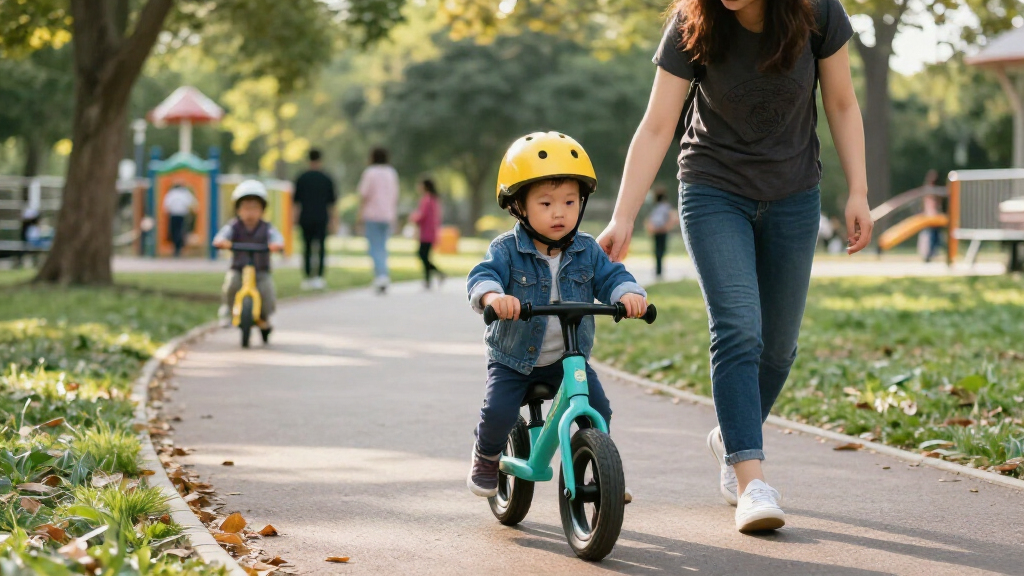

The best baby balance bikes give young toddlers a stable way to practice steering and pushing with their feet, without pedals to manage. My best overall pick is the KRIDDO Baby Balance Bike, while the newyoo TR007 suits families who want several riding modes and the Radio Flyer Steady Start stands out as a familiar, simple first-bike option. The main tradeoffs are between a straightforward, stable design and extras such as adjustable parts, lights, or convertible modes. Fit matters more than a long feature list: a child should be able to sit comfortably and put both feet on the ground. Read on for the full comparison and help matching a bike to your child and space.

Turn the school run and nap time into listening time
- Thousands of audiobooks, podcasts and originals
- Listen on your phone, tablet or Echo — also offline
- Cancel anytime
Complete the kit


Key Takeaways
- KRIDDO ranks first as the strongest all-around choice for families seeking a dedicated baby balance bike rather than a convertible ride-on.
- newyoo TR007 offers the most format flexibility with its 5-in-1 design, but buyers should decide whether they will use its extra modes or prefer a simpler bike.
- Adjustable-seat models such as Liberry, Phobby, and SEREED can offer more room for fit changes, though adjustability only helps when the bike’s full size range suits the child.
- Light-up wheel options from Umatoll and Gamfeiny add visual appeal, while the Gotrax BA1’s silent wheels speak more directly to families focused on indoor noise.
- Several entries target a similar 12–24-month stage, so age labels alone do little to separate them; seat height, foot reach, steering control, and storage needs are more useful filters.


| baby balance bike | Age range | Frame | Wheel size |
|---|---|---|---|
| KRIDDO Baby Balance Bike for A | 12 months to 2.5 years | Lightweight | — |
| PerKidern 4-Wheel Balance Bike | — | — | 6.3 inches |
| Gotrax BA1 Baby Balance Bike w | 12–24 months | — | 7 inches |
| Retrospec Cricket Baby Balance | — | — | — |
| Liberry Baby Balance Bike with | 12–24 months | — | 6 inches |
| Phobby Baby Balance Bike with | 12–24 months | Steel | 6.1 inches |
| Umatoll Baby Balance Bike with | 12–24 months | Aluminum | 6 inches |
| newyoo TR007 5-in-1 Tricycle a | 1–3 years | Carbon steel | — |
| Colorful Lighting Baby Balance | 10–36 months | Carbon steel | 6.8 inches |
| Gamfeiny Toddler Balance Bike | — | Carbon steel | — |
| PerKidern Baby Balance Bike fo | — | Carbon steel | — |
| Radio Flyer Steady Start Balan | 1–3 years | — | — |
| Bobike Baby Balance Bike for T | 12–36 months | — | — |
| SEREED Toddler Balance Bike wi | — | — | 11 inches |
| SEREED Baby Balance Bike for 1 | — | Aluminum alloy | 6.7 inches |
More Details on Our Top Picks
KRIDDO Baby Balance Bike for Ages 1–2, Black
The KRIDDO stands out for its wide PU seat and adjustable fit, useful for little riders who need a comfortable place to sit while pushing along with their feet. Its wide rear wheel is designed to add stability, while the lightweight frame and non-slip handlebars keep the bike manageable for young children. Compared with the Retrospec Cricket, which has four wheels and a low feet-to-floor setup, this is a different kind of first bike: it has a broad rear wheel rather than the Cricket’s four-wheel layout. That may suit families seeking a simple, lightweight scoot-and-steer option, but it does not offer pedals or a longer riding lifespan. The stated age range ends at 2.5 years, so fit may become a limiting factor as a child grows.
Pros:- Adjustable, wide PU seat supports a more accommodating fit.
- Wide rear wheel is designed to improve stability.
- Lightweight frame is manageable for young riders.
- Non-slip handlebars and soft TPR details provide grippy touchpoints.
Cons:- No pedals, so children move it forward by pushing with their feet.
- The 12-month-to-2.5-year age range limits its useful fit window.
Best for: Families seeking a lightweight first bike with an adjustable seat and a broad rear wheel for a child aged 12 months to 2.5 years.
Not ideal for: Parents who want four enclosed wheels, or a bike their child can pedal as they grow.
- Brand:KRIDDO
- Model:KB004-Black
- Age range:12 months to 2.5 years
- Seat:Adjustable, wide PU
- Rear wheel:3.6-inch-wide TPU
- Frame:Lightweight
- Handlebars:Non-slip
- Materials:BPA-free materials; TPR details
Our verdict“Choose the KRIDDO if seat comfort and an adjustable fit matter more to you than a four-wheel layout or a longer age range.”
PerKidern 4-Wheel Balance Bike for Toddlers, 12–24 Months
The PerKidern is geared toward new riders who benefit from four enclosed wheels and a defined limit on how far the handlebars can turn. Its 135° steering limit gives parents a more controlled setup than a conventional freely steering bike, and the adjustable seat spans 10.6 to 13.4 inches. At 4.12 pounds, it is lighter than the Gotrax BA1, though the Gotrax has a tighter 45° steering limit and specified silent EVA wheels. PerKidern instead pairs plastic wheels with wide EVA tires, which are intended for indoor and outdoor use. The listed terrain is paved roads, and the rigid suspension offers no adjustment, so this is better suited to smooth routes than rough ground. Its age range also stops at 24 months.
Pros:- Four enclosed training wheels are designed to help keep feet away from wheel openings.
- 135° steering limit offers more controlled turning than unrestricted steering.
- Seat adjusts from 10.6 to 13.4 inches.
- At 4.12 pounds, it is lighter than the Gotrax BA1.
Cons:- Rigid suspension is not adjustable for uneven surfaces.
- Recommended for paved roads rather than rough terrain.
- The 12-to-24-month age range may mean a short period of use.
Best for: Parents of 12-to-24-month-old beginners who want enclosed training wheels, adjustable seating, and limited steering for smooth-surface rides.
Not ideal for: Families looking for a bike for rough or uneven terrain, or one that fits beyond the toddler age range listed.
- Recommended age:12–24 months
- Maximum weight:77 lbs (35 kg)
- Weight:4.12 lbs
- Seat height:10.6–13.4 inches
- Wheel size:6.3 inches
- Number of wheels:4
- Steering limit:135°
- Frame material:Carbon steel
- Tire material:EVA
Our verdict“Pick the PerKidern for a light, four-wheel beginner bike with a defined steering limit, provided your rides stay on smooth surfaces.”
Gotrax BA1 Baby Balance Bike with 7-Inch Silent Wheels
The Gotrax BA1 makes a strong case for families who expect most early scooting to happen indoors: its silent EVA wheels are designed for quieter rolling, and the four-wheel layout supports beginner stability. The 45° steering limit is tighter than the PerKidern’s 135° limit, which may suit parents who prefer less wheel movement as a toddler learns to steer. Gotrax also lists soft edges, a one-piece handle, and a curved PU seat, plus a quick-lock assembly system advertised for setup in about two minutes. Those details give it a more comfort- and setup-focused profile than the Retrospec Cricket, which arrives 95% assembled. The tradeoff is a 5.9-pound weight and a 66-pound capacity; its rigid suspension also does little to soften uneven ground.
Pros:- Silent EVA wheels are suited to quieter indoor riding.
- Four-wheel design and 45° steering limit support controlled beginner riding.
- Curved PU seat, TPR handle material, and soft edges address comfort and touchpoints.
- Quick-lock assembly system is listed for setup in approximately two minutes.
Cons:- At 5.9 pounds, it is heavier than the PerKidern.
- Rigid suspension offers no adjustment for rougher surfaces.
- The 12-to-24-month age range may limit how long it fits.
Best for: Caregivers wanting a four-wheel first bike with quiet wheels for indoor use and a specific steering limit for new riders.
Not ideal for: Buyers who prioritize the lightest bike, need adjustable suspension, or expect frequent riding on rough terrain.
- Age range:12–24 months
- Wheel size:7 inches
- Number of wheels:4
- Frame material:Steel alloy
- Wheel material:EVA
- Steering:Lean-to-steer with 45° limit
- Maximum weight capacity:66 lbs (30 kg)
- Item weight:5.9 lbs
- Assembly time:Approximately 2 minutes
Our verdict“Choose the Gotrax BA1 if quiet indoor rolling and tightly limited steering matter more than low weight or suspension adjustment.”
Retrospec Cricket Baby Balance Bike for Toddlers 12–24 Months
The Retrospec Cricket is the clearest pick here for families who want a beginner bike with very little assembly: it arrives 95% assembled, leaving less setup than the Gotrax BA1’s quick-lock assembly process. Its low, feet-to-floor design lets toddlers walk, scoot, and ride without needing to lift their feet onto pedals. Four non-slip, no-scratch wheels also make it a practical option for indoor floors, while the soft handlebars and cushioned seat focus on basic comfort. Compared with the KRIDDO, the Cricket has four wheels rather than a wide rear wheel, but its fit details are narrower: the listed inseam range is 9–13 inches and the weight capacity is 44 pounds. It is a simple first-riding choice, not a bike for children who need a longer fit window or pedals.
Pros:- Arrives 95% assembled, reducing setup work.
- Low design lets toddlers walk, scoot, and ride with feet near the floor.
- Four non-slip, no-scratch wheels suit indoor and outdoor use.
- Soft handlebars, cushioned seat, and lightweight construction support beginner handling.
Cons:- The stated 9–13-inch inseam range may limit fit as a child grows.
- 44-pound weight capacity is lower than the listed capacities of the Gotrax BA1 and PerKidern.
- No pedals, so children propel it by scooting.
Best for: Caregivers who want a nearly assembled, feet-to-floor first bike for a toddler with a 9–13-inch inseam.
Not ideal for: Families whose child is outside the listed inseam range or who want pedals and a bike that can serve beyond the early toddler years.
- Brand:Retrospec
- Model:Cricket (4504)
- Recommended age:12 months–2 years
- Suitable inseam:9–13 inches
- Weight capacity:44 lbs (20 kg)
- Wheels:Four non-slip, no-scratch wheels
- Assembly:95% assembled
- Components included:Balance bike
Our verdict“Pick the Cricket if you want a nearly ready-to-ride, low-sitting starter bike and your toddler fits its stated inseam range.”
Liberry Baby Balance Bike with Adjustable Seat, Green
The Liberry’s standout is its adjustable 9.7-to-11-inch seat, giving parents a way to fine-tune fit as a toddler grows within its intended age range. Its four enclosed wheels and steel frame make it a stable-feeling option for smooth-surface practice, while EVA tires are designed to reduce noise and cushion the ride. Compared with the Retrospec Cricket, Liberry offers a stated adjustable seat height and a 55-pound maximum weight recommendation; the Cricket instead has the simpler setup advantage, arriving 95% assembled. Liberry’s limitations matter for families who ride beyond indoor floors: it is not recommended for uneven surfaces such as gravel, and the listed 10-to-18-inch inseam range may not make individual fit obvious. Its 90-day warranty is also shorter than the one-year term listed for the Gotrax BA1.
Pros:- Seat adjusts from 9.7 to 11 inches to fine-tune toddler fit.
- Four-wheel design and enclosed wheels support stability and help keep feet away from wheel openings.
- EVA tires are designed to reduce noise and cushion rides on smooth surfaces.
- Steel frame and rubber handlebars are specified for durable construction and grip.
Cons:- Not recommended for uneven surfaces such as gravel.
- The listed 10–18-inch inseam range may not make fit clear for every child.
- 90-day warranty is shorter than the one-year warranty listed for the Gotrax BA1.
Best for: Families seeking an adjustable-seat, four-wheel starter bike for smooth indoor floors or paved surfaces.
Not ideal for: Parents who ride on gravel or uneven paths, or who want a longer stated warranty and clearer fit guidance.
- Age range:12–24 months
- Frame material:Steel
- Wheel material:EVA
- Wheel size:6 inches
- Seat material:PU
- Seat height:Adjustable from 9.7 to 11 inches
- Maximum weight recommendation:55 lbs
- Inseam range:10–18 inches
- Warranty:90 days
Our verdict“Choose the Liberry for adjustable seating and smooth-surface scooting, but skip it if your routes include gravel or rough ground.”
Phobby Baby Balance Bike with Adjustable Seat, Green and Brown
For a toddler just starting to push along, the Phobby’s four-wheel layout puts stability ahead of nimble steering. Its steel frame and adjustable, soft PU seat make it a straightforward choice for children aged 12–24 months, while the quiet TPU wheels suit smooth floors and paved paths. Compared with the lighter Umatoll B402, this model has a steel rather than aluminum frame and does not list a bike weight, so it may be less convenient to carry. Its steering limit and enclosed wheels are intended to help reduce side falls and foot entrapment, but they do not replace adult supervision. The main compromise is its narrow use case: uneven ground is a poor fit, and the 12–24-month age range gives less room to keep using it as a child grows.
Pros:- Four-wheel design prioritizes stability for early riding practice.
- Adjustable soft PU seat can accommodate some growth.
- Quiet TPU wheels suit smooth indoor surfaces and paved paths.
- Steering limit and enclosed wheels are designed to reduce side falls and foot entrapment.
Cons:- Recommended for smooth surfaces rather than uneven roads.
- The 12–24-month age range limits its useful window.
- No bike weight is provided, making portability harder to judge.
Best for: Caregivers of 12–24-month-olds who want a four-wheel starter bike for smooth indoor floors or paved paths.
Not ideal for: Families seeking a bike for rough or uneven routes, or one a child can keep using beyond the toddler age range.
- Age range:12–24 months
- Frame:Steel
- Wheel configuration:Four wheels
- Wheel material:TPU
- Wheel size:6.1 inches
- Seat:Adjustable PU
- Maximum weight capacity:55 pounds
- Intended terrain:Paved roads
- Warranty:90 days
Our verdict“Choose the Phobby for a stability-focused first bike on smooth surfaces, but skip it if you need rough-terrain versatility or a longer age range.”
Umatoll Baby Balance Bike with Adjustable Seat and Light-Up Rear Wheels
At 3.3 pounds, the Umatoll is the easiest pick here to lift into a car or carry back when a first ride ends early. Its three-position seat and aluminum frame make it more portable than the steel-framed Phobby, while the battery-free glowing rear wheels add a playful detail without adding a charging routine. The enclosed wheels and steering limiter are useful design choices for young riders, though they are not a substitute for supervision. Quiet EVA wheels are intended for smooth surfaces; the bike has no brake, so the child controls pace with their feet. The age range is limited to 12–24 months, so families wanting a bike to last through later toddler years may prefer the broader stated range of the Gamfeiny. Its practical strengths are light carrying weight and adjustable seating, not long-term use.
Pros:- Lightweight 3.3-pound aluminum frame is easy to carry.
- Three-position adjustable seat offers fit flexibility.
- Rear wheels glow when spun without batteries.
- Enclosed wheels and a steering limiter are designed with young riders in mind.
Cons:- No brake is listed.
- The 12–24-month age range limits continued use as a child grows.
- EVA wheels and the listed design are better suited to smooth riding surfaces.
Best for: Families with 12–24-month-olds who regularly carry a small bike between home, car, and smooth riding areas.
Not ideal for: Buyers who want a hand brake, a longer age range, or a bike intended for uneven terrain.
- Age range:12–24 months
- Frame:Aluminum
- Weight:3.3 lb (1.5 kg)
- Wheel material:EVA
- Wheel size:6 inches
- Seat:Three-position adjustable
- Maximum weight recommendation:55 lb
- Brake:None
- Model:B402
Our verdict“Pick the Umatoll if carrying ease and an adjustable seat matter most, but choose another option if you want a brake or a longer age window.”
newyoo TR007 5-in-1 Tricycle and Balance Bike for Toddlers
The newyoo TR007 is the lineup’s clearest choice for families who want more than a simple balance bike: five modes cover tricycle and balance-bike configurations as a child develops. Adjustable seat, handlebar, and pedal positions, plus a parent steering handle that rotates 135 degrees, give caregivers more ways to tailor the setup than the fixed-purpose Phobby. That versatility comes with a cost in simplicity: at 12 pounds, it is substantially heavier than the 3.3-pound Umatoll, and switching modes is part of ownership. Its 35-pound capacity is also lower than the 55-pound figures listed for Phobby and Umatoll, narrowing the useful fit as a child grows. The stated height limit is 43.3 inches. This makes most sense for caregivers who value guided riding and changing configurations, rather than a light, easy-to-carry first bike.
Pros:- Five configurations can suit different stages of early riding.
- Adjustable parent handle can accommodate adult steering preferences.
- Seat, handlebar, and pedal positions are adjustable.
- Listed EN188 and ASTM safety standards provide specific compliance information.
Cons:- At 12 pounds, it is heavier to carry than the Umatoll.
- The 35-pound weight capacity is lower than those listed for Phobby and Umatoll.
- Multiple modes add setup complexity compared with a dedicated balance bike.
Best for: Caregivers of children aged 1–3 who want parent steering and multiple ride configurations in one product.
Not ideal for: Families prioritizing a lightweight carry, a higher weight capacity, or a simple single-mode balance bike.
- Modes:5
- Age range:1–3 years
- Maximum height:43.3 in (110 cm)
- Weight:12 lb
- Weight capacity:35 lb
- Frame:Carbon steel
- Wheel material:EVA
- Parent handle rotation:135 degrees
- Safety standards:EN188 and ASTM
Our verdict“Choose the TR007 if you want parent-guided versatility across several ride modes, but skip it if low weight or a higher capacity matters more.”
Colorful Lighting Baby Balance Bike Toys for 1 Year Old Boy Girl Gifts, 10-36 Month Toddler Balance Bike, No Pedal 4 Silence Wheels & Soft Seat First Bike, One Year Old Boy Girl Birthday Gifts.
Among these starter bikes, this model lists the broadest age span: 10–36 months, compared with 12–24 months for the Phobby and Umatoll. That makes it worth a look for families hoping to start earlier and keep the bike in use longer, although the listing does not provide a weight capacity or seat adjustment details to confirm how well it will fit as a child grows. Its four enclosed wheels, 135-degree steering limit, and no-tool buckle assembly are aimed at early riders; rear wheels glow when spun, with no batteries required. The supplied product information conflicts on weight, stating both 4.6 and 4.9 pounds, so portability is less certain than with the Umatoll’s listed 3.3 pounds. Treat the stated 10–36-month range as guidance, not a guarantee of fit throughout.
Pros:- Stated 10–36-month age range is broader than the Phobby and Umatoll ranges.
- Rear wheels glow when spun without batteries.
- Enclosed wheels and a 135-degree steering limit are designed for early riders.
- Buckle-style assembly is described as tool-free.
Cons:- Product information gives conflicting weights of 4.6 and 4.9 pounds.
- No maximum weight capacity or seat adjustment details are provided.
- Listed for paved roads, so it is not positioned for rough terrain.
Best for: Caregivers seeking a four-wheel starter bike with a stated 10–36-month age range and tool-free assembly.
Not ideal for: Buyers who need a clearly specified weight capacity, confirmed seat adjustability, or a consistently reported product weight.
- Age range:10–36 months
- Frame:Carbon steel
- Wheel configuration:Four enclosed wheels
- Wheel size:6.8 inches
- Seat material:PU
- Handle material:Non-slip EVA
- Steering limit:135 degrees
- Assembly:Tool-free buckle design
- Reported weight:4.6 lb in description; 4.9 lb in product information
Our verdict“Consider this model for its broad stated age range and simple assembly, but choose a better-documented bike if fit and carrying weight need to be certain.”
Gamfeiny Toddler Balance Bike with Colorful Lighting Wheels
The Gamfeiny pairs a 10–36-month stated age range with a lightweight 4.6-pound build and buckle assembly that needs no tools. That combination suits caregivers who want a bike they can set up and move without much fuss. Like the Colorful Lighting model, its rear wheels glow as they spin without batteries, and both use enclosed wheels and limited steering for young riders. The Gamfeiny’s product data is clearer on its 21.2 × 9.2 × 15.3-inch dimensions and weight, while the Colorful Lighting listing supplies a 6.8-inch wheel size and specifies a linear-pull brake; the Gamfeiny does not list a brake. It remains a four-wheel, pedal-free starter rather than a bike that develops into a pedal model, so the age range and lack of pedals limit its longer-term role.
Pros:- Lightweight 4.6-pound design is easier to carry than the 12-pound newyoo TR007.
- Buckle assembly requires no tools.
- Rear wheels glow when spun without batteries.
- Enclosed wheels and a 135-degree steering limit are designed for young riders.
Cons:- Pedal-free design does not provide a route into pedal riding.
- The stated 10–36-month age range limits use as a child grows.
- No brake is listed in the supplied specifications.
Best for: Caregivers of 10–36-month-olds who want a light, pedal-free starter with no-tool assembly and glowing wheels.
Not ideal for: Families looking for pedals, a listed brake, or a bike suited to use beyond the toddler years.
- Recommended age:10–36 months
- Frame:Carbon steel
- Wheel configuration:Four enclosed, pedal-free wheels
- Handle material:Non-slip EVA
- Seat material:PU
- Lighting:Rear wheels glow when spun; no batteries required
- Steering limit:135 degrees
- Assembly:Tool-free buckle design
- Weight:4.6 lb
Our verdict“Choose the Gamfeiny for a light, easy-to-assemble first bike with glowing wheels, but look elsewhere if you want pedals or a listed brake.”
PerKidern Baby Balance Bike for Ages 12–24 Months, Four Wheels, No Pedals
At 4.6 pounds, this PerKidern is a practical choice for caregivers who expect to carry the bike between rooms, pack it for an outing, or lift it after a short toddler ride. Its four soft EVA wheels suit supervised practice indoors or outdoors, while the padded seat and grippy handles add comfort during foot-powered scooting. Compared with the Radio Flyer Steady Start, this model has four wheels rather than a three-wheel layout, but its listed details do not include an adjustable seat or the Radio Flyer’s stated 42-pound weight limit. The age range is also narrow at 12–24 months, and the bike has no pedals, so children must push themselves along. I’d choose it for portability and early practice, not for a long period of use as a child grows.
Pros:- Light 4.6-pound build is easier for an adult to carry and store.
- Four soft EVA wheels are intended for indoor and outdoor use.
- Padded PU seat and non-slip EVA handles support comfortable scooting.
- Pedal-free layout gives toddlers a simple way to practice steering and coordination.
Cons:- The stated 12–24-month age range gives it a limited window of use.
- Children must propel it with their feet; it does not offer pedals.
- No adjustable seat is listed, limiting fit changes as the child grows.
Best for: Caregivers of 12–24-month-olds who want a lightweight four-wheel bike for short, supervised rides at home or on smooth outdoor paths.
Not ideal for: Families seeking a bike that adjusts to accommodate a growing child or supports riding beyond age two; the listed age range is limited and no seat adjustment is specified.
- Recommended age:12–24 months
- Wheel configuration:Four high-density EVA wheels
- Frame:Carbon steel
- Seat:Padded PU
- Handles:Soft, non-slip EVA
- Weight:4.6 pounds
- Brakes:U brake
- Pedals:None
Our verdict“Choose this PerKidern if low carrying weight matters most and your toddler is within its 12–24-month age range.”
Radio Flyer Steady Start Balance Bike for Kids Ages 1–3, Red
The three-wheel layout is the main reason to pick the Radio Flyer Steady Start: it stands on its own, which can make getting on and off feel less fiddly for a new rider. Its padded seat adjusts without tools, and the small-hand grips are designed to keep the fit comfortable as a toddler grows. Compared with the four-wheel Bobike Baby Balance Bike, this model has two rear wheels and a listed 42-pound weight limit; Bobike instead specifies a 135° steering limit and a broader 12–36-month age range. The Radio Flyer’s wide, treaded wheels are aimed at quiet riding on indoor floors and paved paths, not rough trails. Its 1–3-year range and fixed rigid setup make it less compelling for families who want longer-term fit flexibility or more varied terrain.
Pros:- Three-wheel configuration stands on its own for easier starts and pauses.
- Padded seat adjusts without tools to accommodate growth.
- Child-sized comfort grips suit small hands.
- Wide, treaded wheels are designed for quiet use indoors and on paved paths.
Cons:- Its listed 1–3-year range may limit usefulness as the child grows.
- Designed for indoor floors and paved surfaces rather than rough terrain.
- At 7 pounds, it weighs more than the 4.6-pound PerKidern.
Best for: Families with a new rider aged 1–3 who want a bike that stays upright during starts and stops on indoor floors or paved paths.
Not ideal for: Parents planning rides on rough ground or looking for a bike with a wider age window; this model is intended for smooth surfaces and has a 42-pound maximum recommendation.
- Age range:1–3 years
- Wheel configuration:Wide front wheel and dual rear wheels
- Seat:Padded, tool-free adjustable
- Brake style:Foot brake
- Terrain:Paved roads and indoor use
- Item weight:7 pounds
- Maximum weight recommendation:42 pounds
- Power source:Manual
Our verdict“Pick the Radio Flyer for a beginning toddler who needs a bike that stands on its own for smooth-surface practice.”
Bobike Baby Balance Bike for Toddlers, 12–36 Months
Bobike stands out for a feature aimed at keeping early steering manageable: its 135° steering limit restricts how far the handlebars can turn. Paired with four closed, non-slip wheels, it offers a stable-feeling format for supervised indoor or outdoor practice. Its stated 12–36-month range is broader than the PerKidern’s 12–24-month window, which may appeal to families hoping to get more use as a toddler grows. The tradeoff is that the product details do not list an adjustable seat, bike weight, or maximum rider weight, so fit and carrying convenience are harder to judge from the specifications. Compared with the Radio Flyer Steady Start, Bobike has four wheels rather than three and calls for adult supervision; the Radio Flyer, by contrast, specifies a padded tool-free adjustable seat.
Pros:- 135° steering limit restricts the handlebar turning range.
- Four closed, non-slip wheels support a stable-feeling setup.
- Steel frame and comfortable seat provide a straightforward toddler-bike design.
- Quick assembly and included tool kit simplify setup.
Cons:- Adult supervision is required during use.
- No seat adjustment, bike weight, or maximum rider weight is listed in the supplied specifications.
- The 12–36-month intended age range still limits use as children grow.
Best for: Caregivers of 12–36-month-olds who want a four-wheel starter bike with a stated steering limit for supervised practice.
Not ideal for: Buyers who need documented seat adjustability, a listed maximum rider weight, or a confirmed lightweight frame for frequent carrying.
- Age range:12–36 months
- Model:HB001-3
- Frame material:Steel
- Material type:Plastic
- Wheels:Four closed, non-slip wheels
- Steering limit:135°
- Assembly:Quick assembly; tool kit included
- Certifications:ASTM F963-11 and EN71
Our verdict“Choose Bobike if you want a four-wheel starter bike with restricted steering and can supervise every ride.”
SEREED Toddler Balance Bike with Adjustable Seat and Handlebars, White
For a family prioritizing a fit that can change, this SEREED’s tool-free seat and handlebar adjustments are more useful than a fixed setup: the seat ranges from 12.6 to 17.1 inches, while the handlebars move from 19.6 to 22.5 inches. That adjustability separates it from the PerKidern Baby Balance Bike, whose supplied specifications do not list adjustable parts or a height range. The 11-inch airless EVA tires also avoid the upkeep associated with inflatable tires and are designed for quiet, non-slip riding. The tradeoff is a 7.8-pound weight, making it heavier than both PerKidern and the 3.5-pound SEREED baby model. There are no brakes, and the listed age range is simply “Kids,” so buyers should check the stated measurements against their child rather than assume a toddler-specific fit.
Pros:- Seat and handlebars adjust without tools to change the fit.
- Airless EVA tires resist flats and are designed for quiet, non-slip riding.
- 11-inch wheels provide a larger-wheel format than the SEREED baby model’s 6.7-inch wheels.
- Customizable plate and stickers let children personalize the bike.
Cons:- No brakes are fitted.
- At 7.8 pounds, it is heavier than the other SEREED option and the PerKidern.
- The age range is listed only as “Kids,” without a more specific toddler range.
Best for: Families seeking a balance bike with adjustable seat and handlebar heights for a child who fits its stated measurements.
Not ideal for: Caregivers who want a very light bike for frequent carrying, or riders who need a brake; this model weighs 7.8 pounds and has none.
- Frame material:Carbon steel
- Wheel material:EVA foam
- Wheel size:11 inches
- Seat height:12.6–17.1 inches
- Handlebar height:19.6–22.5 inches
- Weight:7.8 pounds
- Maximum weight capacity:110 pounds
- Brakes:None
- Warranty:2 years
Our verdict“Pick this SEREED if adjustable fit matters more than low weight or having a brake.”
SEREED Baby Balance Bike for 1-Year-Old Boys and Girls – First Birthday Gift
At 3.5 pounds, this SEREED is the lightest pick in this batch, making it easier for a toddler to push and for a caregiver to carry than the 7-pound Radio Flyer Steady Start. Its aluminum alloy frame, four quiet wheels, and non-slip TPU handle are aimed at early practice on paved roads or unpaved trails. The listed 18-inch minimum user height and 55-pound maximum recommendation give buyers useful fit boundaries, though the intended age range is 12–24 months. Unlike the adjustable-seat SEREED Toddler Balance Bike, this model’s supplied details do not include seat or handlebar adjustment. It also has no brake, so caregivers should keep rides supervised and away from slopes. This is a compact first bike, not a choice for a child who needs a growing fit or braking hardware.
Pros:- At 3.5 pounds, it is lighter than the Radio Flyer Steady Start and the other SEREED model.
- Aluminum alloy frame supports a low overall weight.
- Four silent, wear-resistant wheels are intended for indoor and outdoor use.
- Listed minimum user height and maximum weight recommendation help clarify fit limits.
Cons:- No brakes, so the bike is a poor choice for unsupervised or sloped riding.
- The stated 12–24-month age range may mean a short period of use.
- No seat or handlebar adjustment is listed.
Best for: Caregivers of a beginner aged 12–24 months who want a very light, compact bike for supervised practice on smooth paths or suitable trails.
Not ideal for: Families seeking a bike with brakes, adjustable fit, or a longer age range; this model has no brake and is specified for 12–24 months.
- Intended age:12–24 months
- Frame:Aluminum alloy
- Wheel size:6.7 inches
- Weight:3.5 pounds
- Maximum weight recommendation:55 pounds
- Minimum user height:18 inches
- Brake style:No brake
- Intended terrain:Paved roads and unpaved trails
- Color:Orange
Our verdict“Choose this SEREED for a very light first bike, provided your child fits the specified size limits and rides under supervision.”
How We Picked
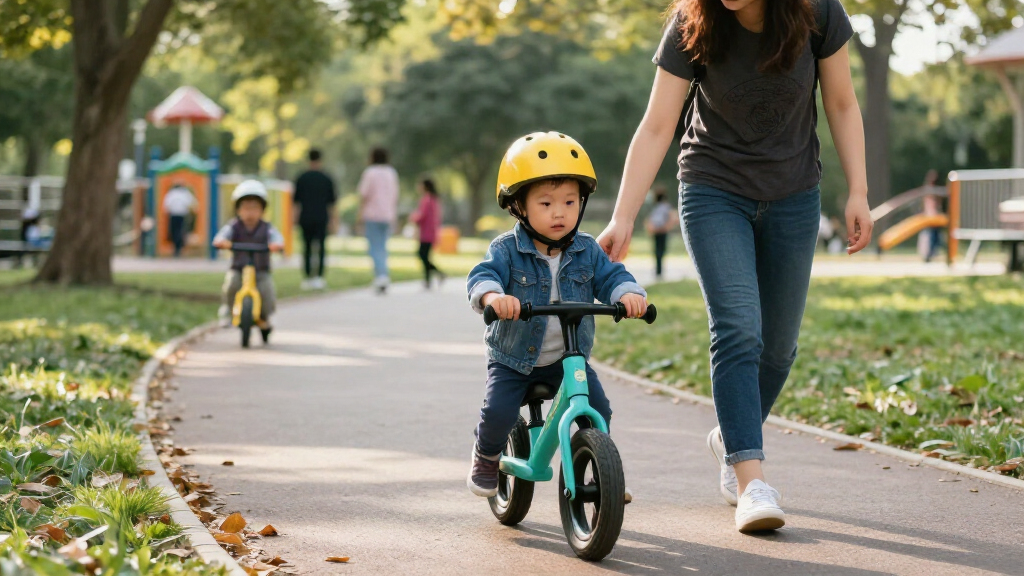
I ranked these bikes around what matters for a first ride: stable, manageable movement, a child-friendly fit, and a design that makes it easier to practice pushing and steering. I also compared adjustability, wheel and seat details, likely maintenance demands, versatility, and whether added features solve a real family need. Because product listings do not provide a consistent set of measurements or test results, I avoid treating age ranges or feature claims as proof that a bike will fit every child; buyers should confirm dimensions and instructions before ordering.
Dedicated, easy-to-understand designs rank ahead of novelty features when they appear better suited to the core job of a baby balance bike. Convertible models earn attention for flexibility, while light-up wheels and styling are secondary benefits rather than substitutes for fit or control. I also distinguish closely matched products by their stated features, such as silent wheels or adjustable components, instead of assuming that similar age labels make them interchangeable.
| baby balance bike | Frame |
|---|---|
| KRIDDO Baby Balance Bike for A | Lightweight |
| PerKidern 4-Wheel Balance Bike | — |
| Gotrax BA1 Baby Balance Bike w | — |
| Retrospec Cricket Baby Balance | — |
| Liberry Baby Balance Bike with | — |
| Phobby Baby Balance Bike with | Steel |
| Umatoll Baby Balance Bike with | Aluminum |
| newyoo TR007 5-in-1 Tricycle a | Carbon steel |
| Colorful Lighting Baby Balance | Carbon steel |
| Gamfeiny Toddler Balance Bike | Carbon steel |
| PerKidern Baby Balance Bike fo | Carbon steel |
| Radio Flyer Steady Start Balan | — |
| Bobike Baby Balance Bike for T | — |
| SEREED Toddler Balance Bike wi | — |
| SEREED Baby Balance Bike for 1 | Aluminum alloy |
Factors to Consider When Choosing Best Baby Balance Bikes
Choosing between these 15 bikes is less about collecting features and more about finding a shape and setup your child can control. I would start with the child’s current size and riding space, then weigh how much flexibility the family will actually use.
Check Fit With Feet on the Ground
A baby balance bike should let a seated child place both feet flat or nearly flat on the floor, with knees slightly bent. Age ranges are rough guidance, not a substitute for comparing the listed seat height with your child’s inseam. A bike that is too tall can make starting and stopping feel difficult, even if it offers several appealing features. A very low seat may be comfortable now but leave little room to grow. Check the manufacturer’s measurements and adjustment range before choosing, and leave room for footwear. If the fit is uncertain, prioritize a return policy and clear sizing information over decorative extras.
Choose Stability for the First Few Rides
For a child just learning to push and steer, a broad, stable base can feel easier to manage than a design that asks for more balance right away. Four-wheel or multi-wheel layouts in this roundup, including the PerKidern options, are aimed at very young riders who benefit from added support. More wheels do not guarantee that a bike will suit every floor or turning space, so check how it is meant to move and where your child will ride. Avoid expecting a baby bike to teach the same skills as a two-wheel balance bike; early models often focus on getting comfortable with movement. Choose the least complicated design that matches your child’s confidence. A steady start can matter more than a feature-rich frame.
Decide Whether Adjustability Will Get Used
An adjustable seat or handlebar can extend usefulness, but only if the adjustment range fits your child’s size and the mechanism is easy to set securely. Compare the minimum and maximum measurements, not just the word adjustable. Some families may prefer a fixed, simpler setup if the bike is for a short early-riding stage or a specific gift occasion. Recheck fasteners after adjustments and follow the maker’s assembly directions. A bike that grows with a child may be a better household fit, while a simpler model may be easier to store and hand down. Do not pay attention to adjustability without confirming how it changes the riding position.
Match the Wheel Design to Your Riding Surface
Where the bike will be used affects both noise and handling. The Gotrax BA1 is described with silent wheels, a potentially useful detail for indoor floors, while other models highlight lighting rather than quiet operation. Wheel material, tread, and the maker’s surface guidance can influence whether a bike is suited to smooth indoor floors or outdoor paths. Avoid assuming that a quiet wheel is also suitable for every outdoor surface, or that a light-up wheel improves control. Check whether the wheels need cleaning and whether they may mark floors. If most rides will happen outdoors, prioritize the manufacturer’s surface guidance and a suitable helmet over visual effects.
Treat Convertible Modes as a Tradeoff
A 5-in-1 model such as the newyoo TR007 may appeal to a family that wants one product to serve more than one riding stage. That flexibility can also mean more setup choices and a larger role for assembly instructions than with a dedicated bike. Before choosing a convertible model, identify which modes are appropriate for your child’s age and skill, and whether changing modes is practical for your household. A dedicated balance bike may be simpler to store, carry, and understand. Extra modes add value only when they solve a real need rather than sitting unused. Compare the assembled footprint and storage plan as well as the feature list.
Weigh Fun Extras Against Everyday Use
Lights, colors, and gift-ready styling can make a bike exciting to a toddler, but they should come after fit, stable movement, and suitable construction. Light-up wheels on options such as Umatoll and Gamfeiny are a clear preference feature, not a reason to overlook sizing. Ask whether the lighting needs batteries or charging, whether it can be switched off, and how easy the bike is to clean. For a first birthday gift, a memorable appearance may matter, but parents will still need a bike that fits the child and the home. Simple designs can be easier to maintain and pass along. Choose extras your family will enjoy using, rather than features that only sound useful in a listing.
Frequently Asked Questions
Should I choose a four-wheel baby bike or a two-wheel balance bike?
A four-wheel baby bike can feel steadier for a child who is still learning to push, steer, and stop. A two-wheel balance bike asks more of a child’s balance and may suit a later stage, depending on the specific model and the child’s abilities. The PerKidern listings in this roundup emphasize four-wheel layouts, while the overall choice should still come down to fit and the maker’s intended age range. Think about where the child is now rather than buying for a future skill level. Follow the product instructions and supervise every ride.
How do I know if a bike will fit a one-year-old?
Start with the child’s inseam and compare it with the bike’s minimum seat height, then check that the child can sit comfortably and reach the ground. A one-year-old can vary widely in height and coordination, so the age label by itself is not enough. Check handlebar reach, seat adjustment, and any stated weight or use limits as well. If measurements are missing, ask the seller or manufacturer before buying rather than guessing from photos. A child should ride only when the bike is a suitable fit and an adult is supervising.
Is an adjustable-seat model worth choosing over a simpler bike?
It can be worthwhile if the listed adjustment range matches your child’s current size and leaves room for growth. Models such as Liberry, Phobby, and SEREED feature adjustable components, but the exact fit and range still need checking. A fixed design may be a better choice when the child fits it now and a simpler setup is the priority. Adjustable parts can add setup and maintenance steps, so confirm that they can be secured as directed. Make the decision from measurements and expected use, not from the adjustment feature alone.
Can a baby balance bike be used indoors?
Some families use baby bikes indoors, but suitability depends on the floor, wheel design, available space, and product instructions. The Gotrax BA1’s silent-wheel description may be relevant for households concerned about noise, though it does not by itself confirm floor protection or surface compatibility. Clear a wide area away from stairs, furniture, and breakable objects, and supervise closely. Check whether the wheels can mark floors and clean them before moving from outdoors to indoors. If space is tight, compare the bike’s footprint and turning room before purchase.
Is a convertible 5-in-1 bike better than a dedicated first bike?
Not automatically. The newyoo TR007 may suit a household that wants multiple riding configurations and is willing to follow the setup instructions as the child grows. A dedicated bike may be easier to assemble, store, and use when the only goal is early balance-bike practice. Consider whether you have space for the product and whether you expect to change modes. If the extra configurations will go unused, a simpler option may be a clearer fit. Confirm each mode’s intended age and use before letting a child ride.
Conclusion
For most families, I would start with the KRIDDO Baby Balance Bike as the best overall choice in this lineup because it is the clearest all-around pick for dedicated early riding. For value, compare the straightforward PerKidern four-wheel options against your child’s fit and the features included rather than choosing by age label alone. The newyoo TR007 is my best premium-style pick for families who will use its multiple configurations; skip that flexibility if you want the simplest setup. For beginners who need a stable-feeling starting point, look closely at the four-wheel PerKidern models. For quieter indoor use, the Gotrax BA1 is the specific standout, while Umatoll or Gamfeiny may suit families who put wheel lighting high on their wish list. Check measurements, riding surface guidance, and supervision requirements before deciding.