
To manage and prevent baby eczema flare-ups, focus on keeping your baby’s skin well-hydrated with gentle, fragrance-free moisturizers applied immediately after baths. Avoid triggers like harsh soaps, dust, pet dander, and certain foods by creating a clean, allergen-free environment. Use lukewarm water for baths and keep skin cool and moist. Consistent skincare, trigger avoidance, and early intervention make a big difference—discover more tips to soothe your baby’s skin effectively.
Key Takeaways
- Keep skin moisturized with gentle, fragrance-free moisturizers immediately after bathing to lock in hydration.
- Identify and avoid common allergy triggers like dust, pet dander, and certain foods to prevent flare-ups.
- Use lukewarm water for baths and pat skin dry gently, then apply moisturizer promptly.
- Maintain a cool, humid environment and use allergen-proof bedding to reduce skin irritation.
- Seek medical advice for persistent or inflamed skin; follow prescribed treatments and monitor for infections.
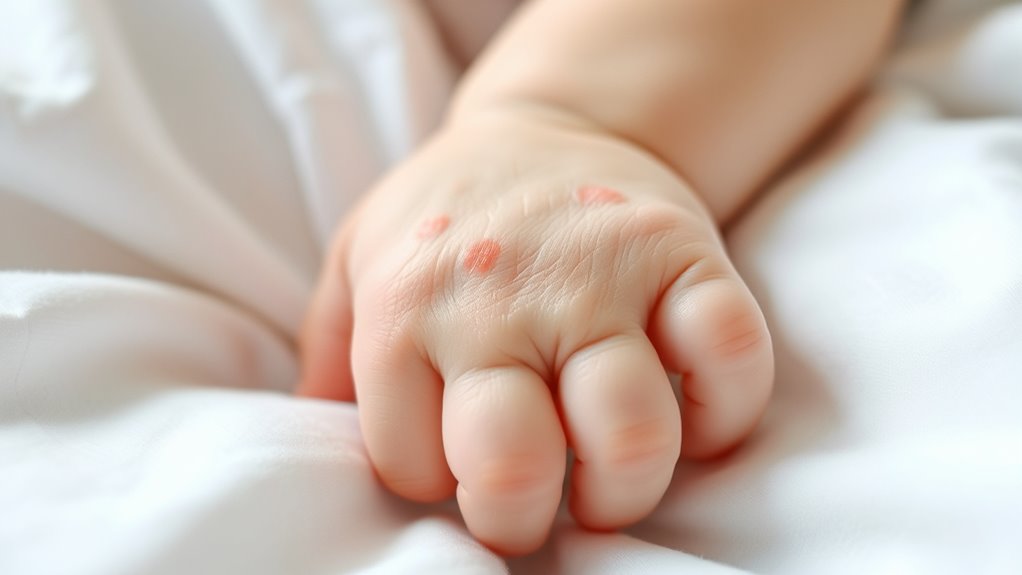
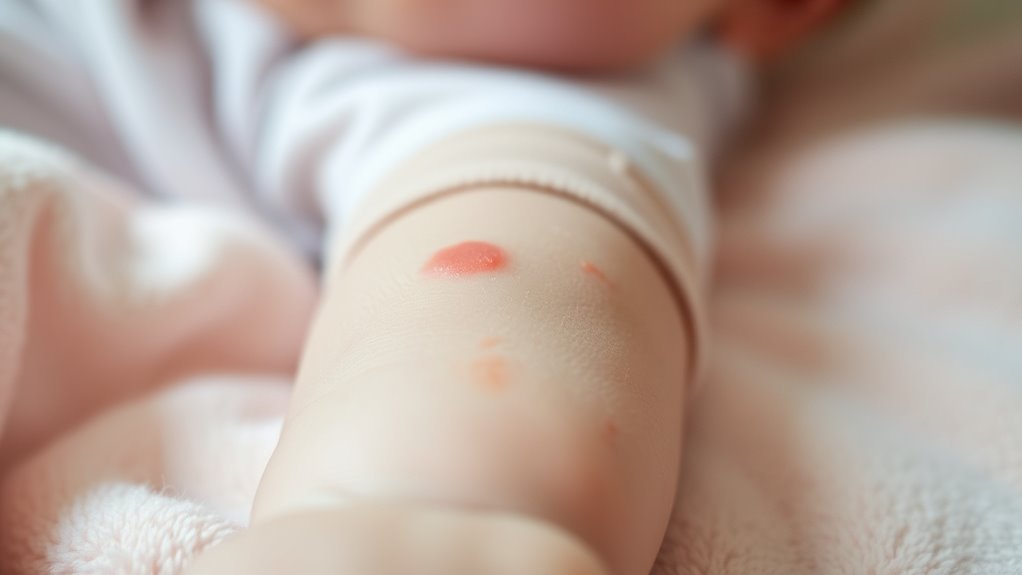
Have you noticed your baby scratching or developing red, inflamed patches on their skin? If so, you’re probably concerned about what’s causing their discomfort and how to help. Baby eczema, also known as atopic dermatitis, can be distressing for both of you. One of the most essential things you can do is focus on maintaining skin hydration. Keeping your baby’s skin moisturized helps create a barrier that prevents dryness and reduces itching. Use gentle, fragrance-free moisturizers regularly, especially after baths, to lock in moisture. Avoid harsh soaps and detergents that strip the skin of natural oils, and opt for mild, fragrance-free cleansers designed for sensitive skin. Proper skin hydration not only soothes your baby’s skin but also minimizes the chances of flare-ups by reinforcing the skin’s protective barrier.
Another key aspect is identifying and managing allergy triggers that might worsen eczema. Common allergy triggers include certain foods, dust mites, pet dander, and environmental irritants like pollen or cigarette smoke. Pay close attention to when your baby’s eczema worsens, as this can help you identify specific triggers. For example, if you notice flare-ups after feeding certain foods, consult your pediatrician about allergy testing or elimination diets. Similarly, keeping your home clean and reducing exposure to dust and pet dander can make a significant difference. Using allergen-proof covers on bedding and regularly washing your baby’s clothes and bedding in hot water can reduce exposure to potential irritants. Avoiding fragrances, dyes, and harsh chemicals in laundry products and skincare items is also vital, as these can serve as allergy triggers and irritate sensitive skin.
Additionally, it’s important to create a consistent skincare routine and environment. Bathe your baby in lukewarm water for short periods to prevent skin dryness, and gently pat their skin dry rather than rubbing. Applying moisturizer immediately afterward helps seal in moisture. Keep your baby’s environment cool and humid, especially during dry seasons, to prevent their skin from becoming even more dry and irritated. If your baby’s skin becomes inflamed or infected, consult your pediatrician promptly. They might recommend medicated creams or other treatments to control inflammation and prevent infection. Remember, managing baby eczema is a continuous process that involves careful attention to skin hydration and avoiding allergy triggers. With patience and consistent care, you can help soothe your baby’s skin, reduce flare-ups, and improve their comfort and well-being.
Conclusion
Remember, prevention is better than cure when it comes to baby eczema. Keep your little one’s skin moisturized, avoid triggers, and stay attentive to changes. Consistent care can make a big difference in preventing flare-ups. As the saying goes, “A stitch in time saves nine.” By taking proactive steps now, you’ll help your baby stay comfortable and happy, making this journey a little easier for both of you.