
To help your older child adjust to a new sibling, involve them early in preparations and discuss sharing in a positive way. Keep routines consistent to provide security and involve your child in caregiving tasks to foster bonding. Reassure them of their special role and give plenty of one-on-one attention. Incorporate cultural traditions or rituals that strengthen family bonds, making the shift smoother. Continue exploring these strategies to support your child’s emotional security during this exciting change.
Key Takeaways
- Involve the older child early in preparations and discuss sharing to foster understanding and reduce jealousy.
- Maintain consistent routines to provide stability and reassurance during the transition.
- Communicate openly about the new baby’s arrival, emphasizing the older child’s valued role.
- Include the older child in gentle caregiving tasks to promote bonding and responsibility.
- Incorporate cultural traditions to strengthen family bonds and ease feelings of rivalry or insecurity.
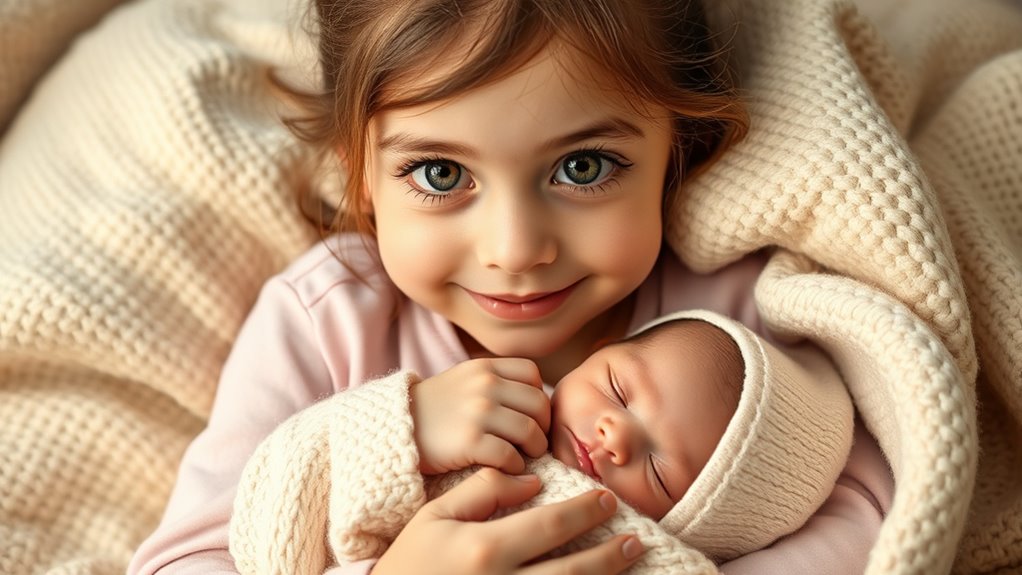
Have you ever wondered how to make the changeover smoother when introducing a new sibling to your family? It’s a big transition for your older child, and helping them adjust requires some thoughtful planning. One effective way to ease the process is by focusing on sharing toys and establishing routines. These strategies can make your older child’s world feel more predictable and safe, reducing feelings of jealousy or confusion.
Start by involving your older child in the process of preparing for the new baby. Talk about sharing toys early on, emphasizing that some toys will need to be shared with the baby once they arrive. You can even set aside special toys that remain just for your older child, giving them a sense of ownership and control. When the baby comes home, encourage your older child to share their toys, but also praise them for being generous. Reinforcing positive sharing behaviors helps them understand that sharing is a way to show love and care, rather than a threat to their possessions.
Involve your older child early, set aside special toys, and praise sharing to foster love and security.
Establishing routines is another key element. Children thrive on predictability, so sticking to familiar daily schedules helps your older child feel secure amid the changes. Keep routines consistent around mealtimes, naps, and bedtime, and explain that these routines will continue even with the new baby around. If possible, involve your older child in age-appropriate chores or activities within these routines. For example, they can help get the diaper bag ready or choose clothes for the day, which makes them feel important and included.
As you prepare for the baby’s arrival, talk openly with your older child about what to expect. Reassure them that they are still loved and valued, and that their role as an older sibling is special. During this time, spend quality one-on-one moments with them, reinforcing that your attention isn’t going away. When the baby arrives, keep routines as normal as possible, and involve your older child in gentle caregiving tasks—like fetching diapers or singing to the baby. This participation fosters a sense of responsibility and connection.
Additionally, understanding the importance of cultural practices can help you incorporate meaningful traditions or rituals that strengthen the sibling bond and ease feelings of rivalry or insecurity.
Conclusion
Remember, welcoming a new sibling is like planting a tree—you need patience, nurture, and time to see it flourish. My friend’s older child initially felt left out, but with gentle reassurance and shared moments, they grew inseparable, like branches reaching toward the sun. Studies show that children who adjust well to new siblings develop stronger empathy and resilience. So, stay patient and loving—your family will blossom together, creating a beautiful, lasting bond.