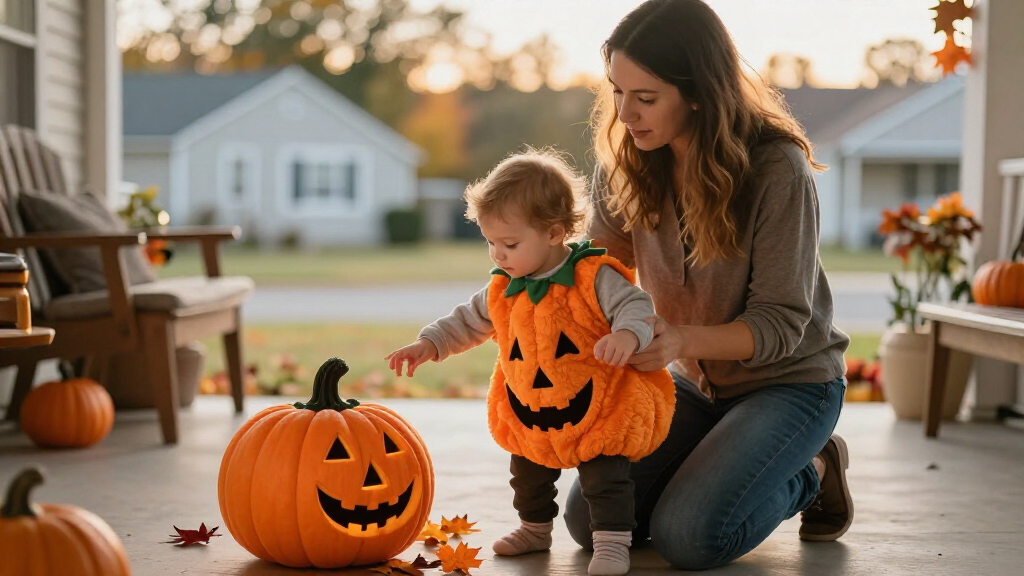

Choosing a baby Halloween costume is less about an elaborate look than finding one that works for a short outing, a particular temperature, and a baby who may not enjoy being dressed up. The real choice is between a store-bought costume, which is ready to wear and usually designed around a familiar character or theme, and a DIY costume, which can be adapted to clothing your baby already tolerates.

Turn the school run and nap time into listening time
- Thousands of audiobooks, podcasts and originals
- Listen on your phone, tablet or Echo — also offline
- Cancel anytime
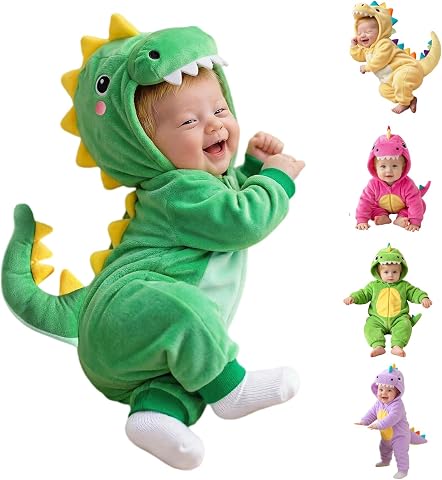
Baby Dinosaur Hooded Onesie Costume
- ✔ Fabric: Polyester blend
- ✔ Design: Hooded one-piece with contrasting belly and plush tail
- ✔ Closure: Full front zipper

MICHLEY Baby Animal Costume Flannel Hooded Romper
- ✔ Material: Flannel
- ✔ Closure: Two-way zipper
- ✔ Design: Hooded romper with sewn-on ears

Baby Caterpillar Plush Fleece Hooded Romper
- ✔ Fabric: 65% cotton, 35% elastane
- ✔ Design: Green striped romper with red hood, soft antennae, and embroidered eyes
- ✔ Fit: Unisex
Store-bought is the easier choice when time is short or you want a coordinated, recognizable outfit. DIY is often better when comfort, a specific fit, reusing clothes, or personal creativity matters more than a polished finish. Either route needs the same practical checks: keep the face clear, avoid loose or small parts, and make sure the baby can stay at a comfortable temperature. The comparison below focuses on those everyday differences, not on appearance alone.
At a Glance
| Criteria | Store-bought baby Halloween costume | DIY baby Halloween costume | Winner |
|---|---|---|---|
| Upfront cost | Varies by brand and materials; a packaged outfit can cost more than using clothes already at home. | Can be inexpensive with existing clothes; bought materials and last-minute supplies can add up. | Depends |
| Time and convenience | Usually quick to choose and put on, though sizing and delivery can take planning. | Takes planning and assembly, with the amount of work depending on the design. | A |
| Fit and comfort | Convenient sizing, but the cut or fabric may not suit every baby. | Can be built around familiar, well-fitting clothes and adjusted to the baby. | B |
| Safety and visibility | Designed as a costume, but still needs inspection for loose parts, face coverage, and restricted movement. | Caregivers control the design, but must avoid hazards and attach decorations securely. | Depends |
| Warmth and layering | May provide coverage, but can be too warm or awkward over everyday layers. | Easy to adapt using layers, provided added pieces do not overheat or obstruct movement. | B |
| Design and personalization | Recognizable themes and coordinated details with limited customization. | Highly adaptable to family ideas, available clothes, and simple themes. | B |
| Reuse and cleanup | May be worn again or passed along, but some novelty pieces have limited everyday use. | Can reuse ordinary garments and supplies, though adhesives or craft materials may complicate cleanup. | B |
Baby Dinosaur Hooded Onesie Costume
When we want a costume that reads immediately in photos and still looks like a comfortable one-piece outfit, the Baby Dinosaur Hooded Onesie is the most balanced choice here. Plush fleece, a contrasting belly, and a colorful tail provide the familiar dinosaur silhouette without relying on a complicated multi-piece costume. Its full front zipper also makes getting the outfit on and off more straightforward than a design that must be pulled over the baby’s head and torso.Compared with the MICHLEY romper, this pick emphasizes a plush costume feel rather than a two-way zipper for diaper access. That makes the MICHLEY more convenient for repeated changes, but the dinosaur has a stronger classic Halloween look. The caterpillar is more unusual and described as lightweight; the dinosaur is the more convincing choice when we want a warmer-looking outfit for a cool evening or a cozy indoor photo.The tradeoff is sizing: only 3M, 6M, and 9M are listed, so families shopping outside those options should look elsewhere. The listing also cautions that fit may vary, which matters if we plan to layer clothes underneath. Four color choices add some flexibility, but they do not solve the limited size range. Check measurements before ordering, and consider whether plush fleece will be comfortable in the temperature where the baby will wear it.
Pros:
- Plush fleece gives the costume a cozy feel for cool-weather plans.
- Full front zipper simplifies putting the one-piece outfit on and taking it off.
- Hood, contrasting belly, and tail create an easy-to-recognize dinosaur look.
- Available in yellow, green, pink, and purple.
Cons:
- Only three infant sizes are listed, limiting its usefulness as babies grow.
- Fit may vary, so buyers need to consult the size chart and account for layers.
Best for: Families seeking a recognizable, cozy dinosaur costume for an infant who falls within the listed 3M, 6M, or 9M options.
Not ideal for: Buyers needing toddler sizing, a specifically described two-way diaper-change opening, or a lightweight costume for warm indoor conditions.
Bottom line: We recommend this as the best all-around pick for a cozy, classic baby dinosaur costume, provided the limited sizing works for your child.
“We recommend this as the best all-around pick for a cozy, classic baby dinosaur costume, provided the limited sizing works for your child.”
MICHLEY Baby Animal Costume Flannel Hooded Romper
The MICHLEY romper is the most day-to-day practical option in this group. Its two-way zipper opens from the top and bottom, a useful distinction when we want to handle a diaper change without fully undressing a baby. Soft flannel and a hood with sewn-on ears give it a costume identity, while the design is also presented for cool-weather wear and everyday use. Compared with the dinosaur, it prioritizes changing convenience and an unusually broad listed size range over one specific, fully described creature design.That range—from 2–5 months through 3–4T—makes this the clearest choice for families shopping beyond early infancy or hoping to find a size for a toddler. The dinosaur only lists three infant sizes, and the caterpillar listing has conflicting age-range information. Still, a broad range is not a guarantee of fit: MICHLEY specifically calls for checking the measurement chart, so we should not select a size by age label alone.Its main limitation is seasonal. Flannel is described as suitable for cool weather, so this may be a better match for a crisp evening or a cooler home than for a warm party. The supplied description calls it an animal costume but does not identify a particular animal, which makes its visual theme less specific than the dinosaur or caterpillar. Choose it for flexibility and changing access; skip it if a clearly defined character look is the main priority.
Pros:
- Two-way zipper supports easier diaper changes without fully opening the outfit.
- Soft, breathable flannel is intended for cool-weather use.
- Hood with sewn-on ears creates a playful animal-costume look.
- Listed size options extend from early infancy to 3–4T.
Cons:
- The description does not specify which animal the hood represents.
- Designed primarily for cool-weather use, so it may feel too warm in heated settings.
- The wide age range still requires careful measurement-chart checking.
Best for: Parents who value a two-way zipper, machine-washable flannel, and listed sizes that include babies and toddlers.
Not ideal for: Shoppers wanting a clearly named animal design or a lighter costume for warm indoor Halloween events.
Bottom line: We would choose the MICHLEY when practical diaper access and a broad listed size range matter more than a highly specific costume theme.
“We would choose the MICHLEY when practical diaper access and a broad listed size range matter more than a highly specific costume theme.”
Baby Caterpillar Plush Fleece Hooded Romper
For families who would rather skip the usual bear or dinosaur theme, the caterpillar costume is the most visually distinctive option. Bright green stripes, a red hood, soft antennae, and embroidered eyes build the character into a single outfit, making it especially suited to party pictures and dress-up. Its fabric blend is listed as 65% cotton and 35% elastane, and the costume is described as soft, lightweight, and breathable—a useful contrast with the plush polyester-blend dinosaur, which sounds cozier for colder settings.This is the choice we would consider for a baby who will be crawling, moving around, or wearing the costume indoors, where a lighter feel may be preferable. It also has a broader stated size selection than the dinosaur, with options listed from 0–6 through 18–24 months. Against the MICHLEY, however, it gives up the two-way zipper feature that makes diaper changes more convenient; the provided details do not specify a comparable closure.The most important caution is a conflict in the sizing information: the listing shows sizes through 18–24 months but also says the package covers 0–18 months. We cannot treat that as a settled range, so buyers should verify the exact size and package details before relying on it. The caterpillar look is memorable, but families who need dependable age-range clarity or easy-access closure may prefer MICHLEY, while those seeking a classic costume silhouette may favor the dinosaur.
Pros:
- Striped body, red hood, antennae, and embroidered eyes create a distinctive caterpillar character.
- Cotton-and-elastane blend is described as soft, lightweight, and breathable.
- Designed for Halloween, parties, photoshoots, crawling, and dress-up.
- Machine washable according to the supplied details.
Cons:
- Size information conflicts: the listing goes up to 18–24 months but also states 0–18 months.
- The supplied description does not specify a diaper-access closure.
Best for: Families looking for a less common, photo-ready baby costume in a lightweight-feeling fabric and willing to confirm the sizing details.
Not ideal for: Buyers who need unambiguous size coverage, a stated two-way diaper-access zipper, or the warmest-sounding option for a cold outdoor evening.
Bottom line: We recommend the caterpillar for a standout, lighter-feeling costume, but only after confirming which sizes are actually available.
“We recommend the caterpillar for a standout, lighter-feeling costume, but only after confirming which sizes are actually available.”
As an Amazon Associate we earn from qualifying purchases.
Key Differences
The most practical distinction is control versus convenience. A ready-made costume reduces the work of designing an outfit and gives you a coordinated look quickly. That advantage matters when Halloween is close, when siblings need matching themes, or when you want a recognizable character without sourcing separate pieces. The tradeoff is that you must accept the costume’s materials and construction; a cute outfit is not automatically comfortable for a baby or suitable for the weather.
A DIY costume lets you begin with a familiar bodysuit, pajamas, or other clothing that already fits. This can make dressing and layering easier, and ordinary garments may remain useful after the holiday. But DIY is not automatically cheaper or safer: supplies can add up, and every added decoration needs to be secured and kept away from the baby’s face and hands. For most families, the best choice is the simplest outfit that suits the baby’s comfort and the planned activity—not the most detailed costume.
Detailed Comparison
Upfront cost (moderate difference)
Neither option wins for every household (gap: moderate). A store-bought costume has a visible purchase price, which can be worthwhile when it saves time or includes the complete look. DIY can cost very little if you already have suitable clothing and can make the theme with a few simple additions. If you need to buy fabric, a base outfit, tools, and decorations, however, the total can match or exceed a ready-made option. Compare the whole outfit cost, not just the price of one craft item.
Time and convenience (Store-bought baby Halloween costume wins — moderate)
Store-bought wins (gap: moderate to major). Once selected and available, a ready-made costume avoids planning a design and assembling its pieces. That is especially useful for busy caregivers or last-minute plans, although ordering online still requires checking delivery dates and size information. DIY takes more effort, even when the design is simple. Choose DIY only if you have time to prepare it, or if the finished idea is genuinely easy to assemble.
Fit and comfort (DIY baby Halloween costume wins — moderate)
DIY usually wins (gap: moderate). Starting with clothes that already fit gives you more control over the baby’s range of motion and the feel of the fabric. A ready-made costume may fit well, but its shape, closures, or decorative layers can be less familiar. Check that either outfit allows comfortable movement and does not bunch, pinch, or interfere with a carrier or stroller. If a baby is unhappy in the costume, a themed everyday outfit is a sensible alternative.
Safety and visibility (major difference)
This is a design-dependent tie (gap: major if either outfit blocks movement or vision). A commercial label does not remove the need to inspect an outfit, and a homemade design is not automatically safer. Keep the baby’s face visible and unobstructed; avoid loose pieces that can detach, small items that may become choking hazards, long trailing fabric, and anything that restricts breathing or movement. DIY gives you more direct control over what you add, while a store-bought design may arrive with details you need to remove or adjust. Safety depends on the finished costume, not its source.
Warmth and layering (DIY baby Halloween costume wins — moderate)
DIY has a modest edge (gap: moderate). A costume based on ordinary layers is easier to adapt to indoor parties, chilly outdoor walks, and changing weather. Some packaged outfits provide coverage, but their fabric or shape may make extra layers uncomfortable. Dress for the actual conditions and check the baby regularly; do not assume a thick-looking costume will be suitable outside or a light costume will be comfortable indoors. Keep blankets and loose coverings from obstructing the baby’s face.
Design and personalization (DIY baby Halloween costume wins — moderate)
DIY wins (gap: moderate). Making the outfit yourself makes it easier to use a family theme, match siblings, or adapt a costume to the clothes and accessories you already own. Ready-made choices can be more immediately recognizable and neatly coordinated, but you are limited to what is available in the desired size. The practical value of customization depends on how much the particular look matters; it is not a reason to add uncomfortable pieces.
Reuse and cleanup (DIY baby Halloween costume wins — minor)
DIY often wins (gap: minor to moderate). An outfit built from everyday clothing can go back into regular use, and simple accessories may be saved for another occasion. A store-bought costume can also be reused or handed down, though novelty pieces may be less versatile. DIY decorations can bring their own cleanup challenges, particularly if they use adhesives, paint, or materials that are not suited to the garment. Favor removable additions and check care instructions before committing to a design.
Store-bought baby Halloween costume: Pros and Cons
Pros:
- Less planning and assembly for a coordinated costume.
- Broad choice of familiar characters and themes.
- A practical fit for families short on time.
Cons:
- The fabric, cut, and closures may not suit the baby.
- A packaged costume still needs a safety and comfort check.
- The full outfit may cost more than adapting clothes already on hand.
DIY baby Halloween costume: Pros and Cons
Pros:
- Can start with familiar clothes that already fit.
- More control over layers, theme, and decorative details.
- Everyday garments and simple accessories can be reused.
Cons:
- Requires time to plan and assemble.
- Materials can become costly if you need to buy everything.
- The maker is responsible for attaching details securely and avoiding hazards.
Who Should Choose What
Choose Store-bought baby Halloween costume if:
- You need a coordinated costume quickly and have found a size and design that lets your baby move comfortably.
- You want a recognizable theme without spending time finding or assembling separate pieces.
- You have checked the outfit and can remove or adjust any uncomfortable or unsafe details.
Choose DIY baby Halloween costume if:
- Your baby does best in familiar clothes and you want the costume built around a known fit.
- You already have useful clothing or craft supplies and can make a simple design without a major time commitment.
- You need to adapt the outfit for weather, a family theme, or a particular activity.
Skip both if: Your baby is uncomfortable, the costume obstructs the face or movement, or the planned activity makes dressing up impractical; use comfortable everyday clothes and a simple theme instead.
Value for Money
Store-bought is worth paying more for when the convenience and coordinated design solve a real problem, such as limited preparation time or a specific family theme. It is poor value if the costume is uncomfortable, usable only once, or requires extra purchases to fit the weather. DIY offers better value when you can reuse clothes and make the look with materials already available. It is not a guaranteed bargain: buying a base outfit and many decorations can erase the savings, while construction time also has value.
For most families, a simple hybrid approach gives the strongest practical value: choose comfortable everyday clothes as the base, then add one or two secure, removable details. That keeps the look festive without paying for a full novelty outfit or spending hours on construction. Whichever route you choose, do not pay extra for elaborate details that interfere with comfort, visibility, or movement.
Final Verdict
Choose a store-bought baby Halloween costume if convenience and a coordinated, recognizable look are your priorities, provided the fit and construction work for your baby. Choose DIY if you have the time and want greater control over familiar fabrics, layers, or personalization; it is the better value when it makes use of clothing and supplies you already own. For most babies, comfort and a clear, unobstructed face matter more than a detailed costume. If neither option meets those needs, skip the full costume and use a comfortable themed outfit instead.
Frequently Asked Questions
Are DIY baby Halloween costumes always cheaper?
No. DIY can be inexpensive when you use clothes and supplies you already have, but buying a base outfit, fabric, and decorations can add up. Compare the total cost with a ready-made costume and count the time required to finish it.
Which option is safer for a baby?
Neither is automatically safer. Check any costume for small detachable pieces, loose or trailing fabric, face coverage, and anything that restricts movement or breathing. Keep the baby’s face visible and remove details that could come loose.
How can I keep a baby costume comfortable outdoors?
Use layers suited to the weather and avoid bulky additions that make movement difficult. A costume based on familiar clothes can be easier to adjust, but either option needs regular checks for signs that the baby is too warm or cold.
Is a store-bought costume worth paying more for?
It can be if you need a finished, coordinated look and the outfit fits comfortably without extra purchases. Pay less—or make a simple DIY outfit—if an elaborate costume would be worn briefly and ordinary clothes can create a comfortable theme.
Fall Picks
fall essentials
As an affiliate, we earn on qualifying purchases.