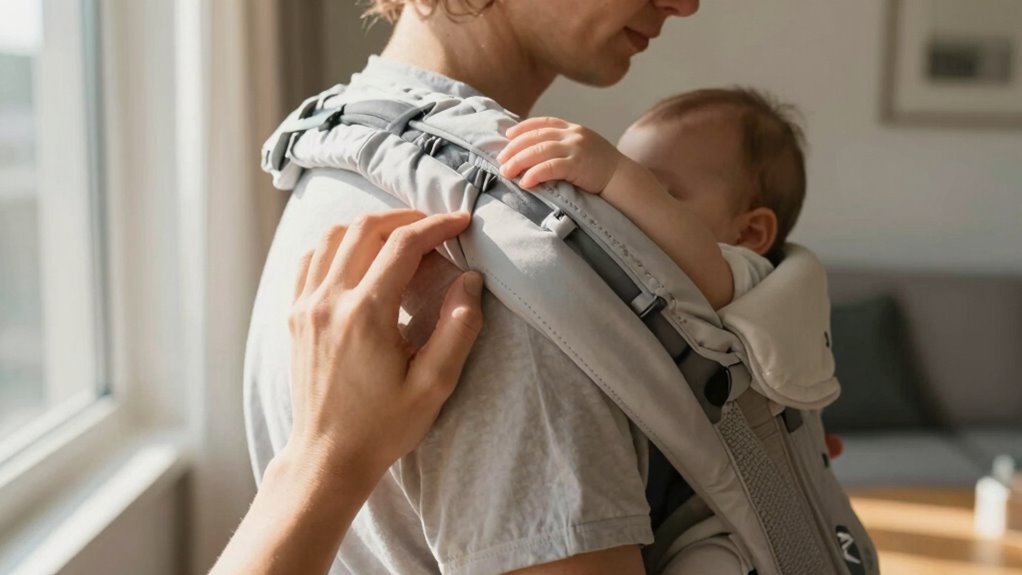

The key to making babywearing easier is getting the proper fit right away. When your carrier is snug but not too tight, it supports your baby’s hips, back, and shoulders, making both of you comfortable and secure. Adjusting straps evenly and ensuring the carrier sits close to your body helps prevent discomfort and slipping. If you keep the fit right as your baby grows, babywearing becomes smoother and safer. Keep going to discover more helpful tips.

Turn the school run and nap time into listening time
- Thousands of audiobooks, podcasts and originals
- Listen on your phone, tablet or Echo — also offline
- Cancel anytime
Key Takeaways
- Ensure the carrier is properly snug against your body for secure support and comfort.
- Adjust straps evenly to prevent slack or tightness, maintaining proper fit as the baby moves.
- Confirm the baby’s face is visible with chin off the chest to avoid airway obstruction.
- Keep hips in an ergonomic, spread-squat position for optimal comfort and safety.
- Regularly reassess and tighten the carrier to accommodate your baby’s growth and maintain proper positioning.
As an affiliate, we earn on qualifying purchases.
Why Is Proper Babywearing Fit So Important for Comfort and Safety?
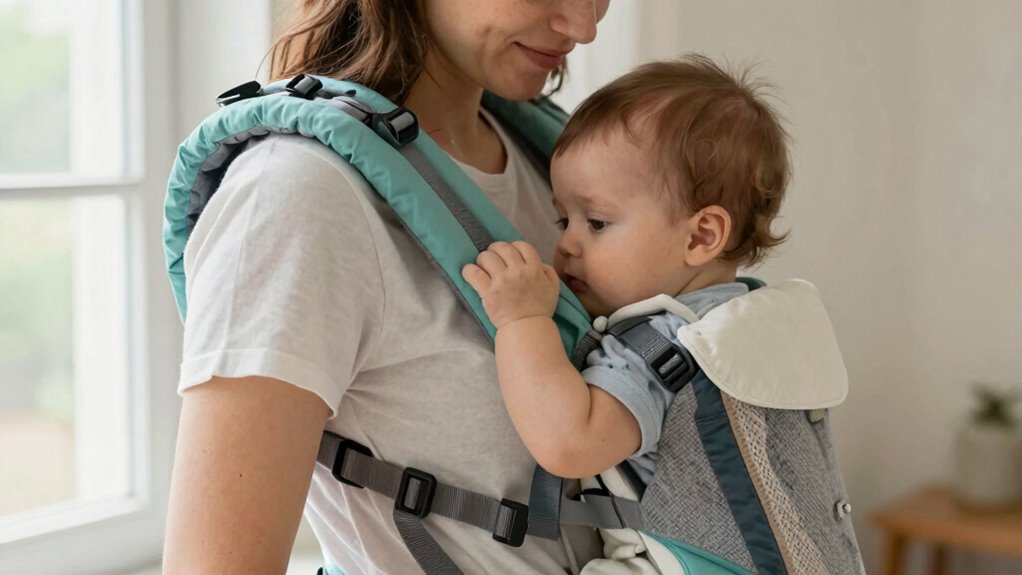
Proper babywearing fit is essential because it directly affects both your comfort and your baby’s safety. When your carrier fits well, it supports your back and shoulders, making extended wear easier. It also guarantees your baby is held securely, reducing the risk of falls or discomfort. Many people fall for parenting myths, thinking that a snug fit means it’s too tight, but that’s not true—comfort and safety depend on correct positioning. Fashion trends can sometimes influence how carriers look, but functionality should always come first. A proper fit helps you stay comfortable and keeps your baby safe, fostering a positive, enjoyable babywearing experience. Additionally, understanding how to adjust your carrier properly can prevent strain and ensure optimal spinal alignment. Recognizing the importance of proper fit can make a significant difference in your overall babywearing journey. Being aware of ergonomic design can further enhance both safety and comfort for you and your baby. Incorporating regional flavors and insights into your knowledge can also help you choose the best carrier suited to your needs and environment. A well-designed carrier that considers ergonomic principles can greatly improve the overall experience for both parent and child.
How Can You Tell If You’re Wearing Your Baby Too Loose or Too Tight?
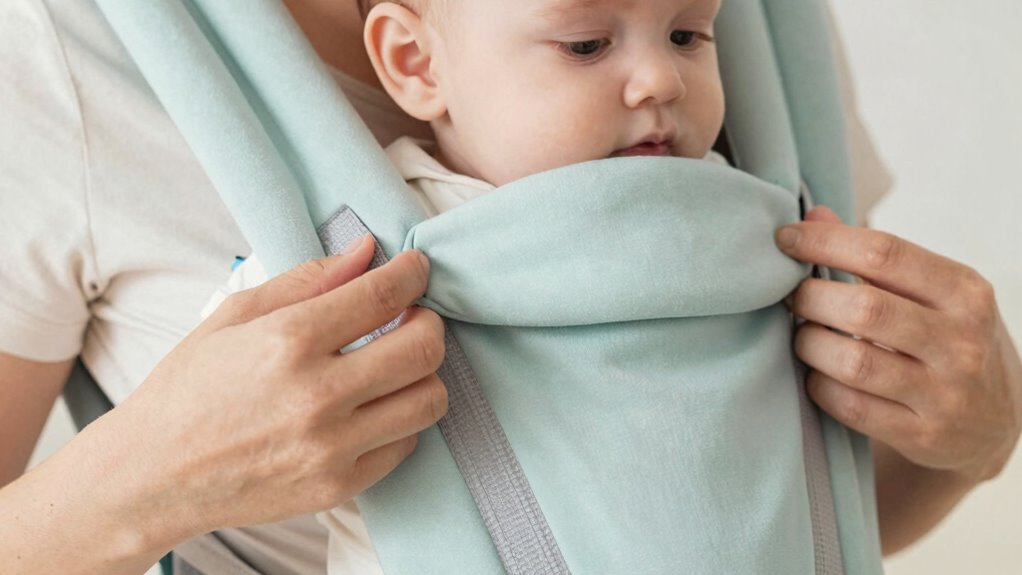
You’ll notice if your baby feels unsteady or slides down easily, which signals a loose fit. If the carrier feels uncomfortably tight or causes pressure, it’s likely too snug. Regular comfort and safety checks help guarantee you’re wearing your baby at the right tension for both of you. Additionally, ensuring proper fit and positioning is essential for maintaining optimal support and safety. Proper requirements traceability can also help you track adjustments and ensure consistent, safe use over time. Being mindful of how the backpack design supports your baby’s posture can also improve your wearing experience and safety. Incorporating eco-friendly disposal tips into your routine can help reduce waste and promote sustainability in your parenting tools, ensuring your gear remains in good condition for longer.
Signs of Loose Fit
When your babywearing setup isn’t snug enough, it can lead to discomfort for both you and your little one. You might notice these signs of a loose fit:
- Your baby wobbles or slips down easily, making it hard for them to stay secure.
- You feel constant readjustments are necessary, disrupting your comfort and confidence.
- The carrier looks saggy or gaps between your body and the baby, contradicting fashion trends that emphasize sleek, supportive styles.
- Properly adjusting your carrier ensures safety and comfort, especially when choosing supportive options like beetroot recipes for baby-led weaning that promote healthy development.
Many parents believe a loose wrap is more comfortable, but it often stems from parenting myths. If your carrier isn’t snug, it can compromise safety and support. Recognizing these signs helps ensure your babywearing setup stays secure and comfortable for both of you. Additionally, selecting the right supportive carrier is crucial for optimal fit and safety.
Indicators of Tightness
Feeling discomfort or difficulty moving confidently while babywearing can be a sign that your carrier is either too tight or too loose. If it’s too tight, you might feel pressure on your hips or chest, making breathing or bending uncomfortable. Conversely, if it’s too loose, your baby may feel unstable, slipping or bouncing excessively. Here’s a visual to help you gauge tightness:
| Too Tight | Too Loose |
|---|---|
| Crushed against you, breathless | Baby bouncing freely, wobbling |
| Restrictive, pinching skin | Loose fabric, gaps at edges |
| Hard to adjust or reposition | Constant readjustments needed |
| Feels like fashion trends, rigid | Feels sloppy, insecure |
Comfort and Safety Checks
To guarantee your babywearing setup is safe and comfortable, it’s important to perform regular checks for proper fit. If your carrier feels too loose or too tight, it can affect both comfort and safety. Avoid falling for parenting myths that tightness always equals security; comfort matters too. Here’s how to check:
- Ensure your baby’s face is visible and their chin isn’t pressed against their chest—this promotes proper airflow.
- Check that their hips are in an ergonomic position, not strained or dangling.
- Feel for snugness—your carrier should feel secure but not restrict your baby’s movement or breathing.
- Remember to consider waterpark safety tips when adjusting your babywearing gear, especially if you’re planning to visit a waterpark or similar environment.
- Regularly inspecting proper fit ensures your babywearing experience remains safe and comfortable over time. Consistent checks are essential because technical SEO guidelines highlight that well-maintained content and practices support overall safety and reliability—whether for your plant or your babywearing safety.
Fashion trends come and go, but a proper fit stays timeless. Regular safety checks keep your babywearing experience safe, comfortable, and enjoyable.
How Do You Adjust Your Baby Carrier for the Perfect Fit?

Adjusting your baby carrier for the perfect fit guarantees both comfort and safety for you and your little one. To do this, start by positioning the carrier snugly against your body, ensuring your baby’s hips are properly supported. Check that the straps are evenly tightened—neither too loose nor too tight—so your baby feels secure without restricting their movement. Many people fall for parenting myths that tight straps are uncomfortable, but the right fit actually provides better support. Stay aware of current fashion trends in babywearing, such as ergonomic designs that promote healthy hip development. Remember, adjusting the carrier isn’t a one-time task; it’s an ongoing process to keep both of you comfortable and safe as your baby grows. Proper fit and support are essential components of effective babywearing. Additionally, regularly reassessing the carrier’s positioning ensures optimal comfort and safety as your baby gains weight and movement. Being mindful of ergonomic design features can help you choose the best carrier for your needs. Regularly checking the carrier’s adjustment can prevent discomfort and ensure your baby remains correctly positioned for healthy development. Incorporating whole-home water system optimization principles into your routine can also help maintain overall comfort and safety in your environment.
What Tools and Accessories Help Improve Babywearing Comfort?
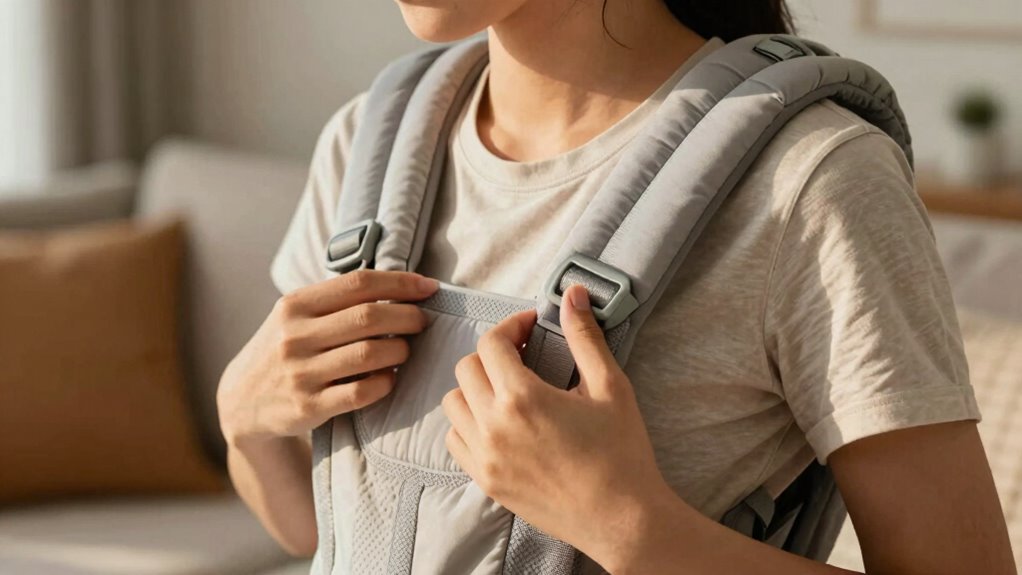
Using the right tools and accessories can considerably enhance your babywearing experience by increasing comfort and ease. They help you follow safety guidelines and address clothing considerations, making wearing your baby more comfortable for both of you. Proper user consent management ensures you are aware of how your data is used when selecting accessories that involve third-party services. Here are three helpful items: 1. Padded Shoulder Straps – Reduce strain on your shoulders, especially during extended wear. 2. Carrier Liners – Keep the carrier clean and prevent sweat buildup, maintaining comfort. 3. Adjustable Waist Belts – Improve fit and distribute weight evenly, decreasing back pain. These accessories support proper ergonomics of standing and proper positioning, which are essential for safe and comfortable babywearing. Choosing the right charger settings for your carrier’s accessories can help prolong their lifespan and ensure safety. When selecting accessories, consider the clothing considerations and ensure they don’t interfere with the carrier’s safety features.
Step-by-Step: Fixing the Fit of Your Baby Carrier
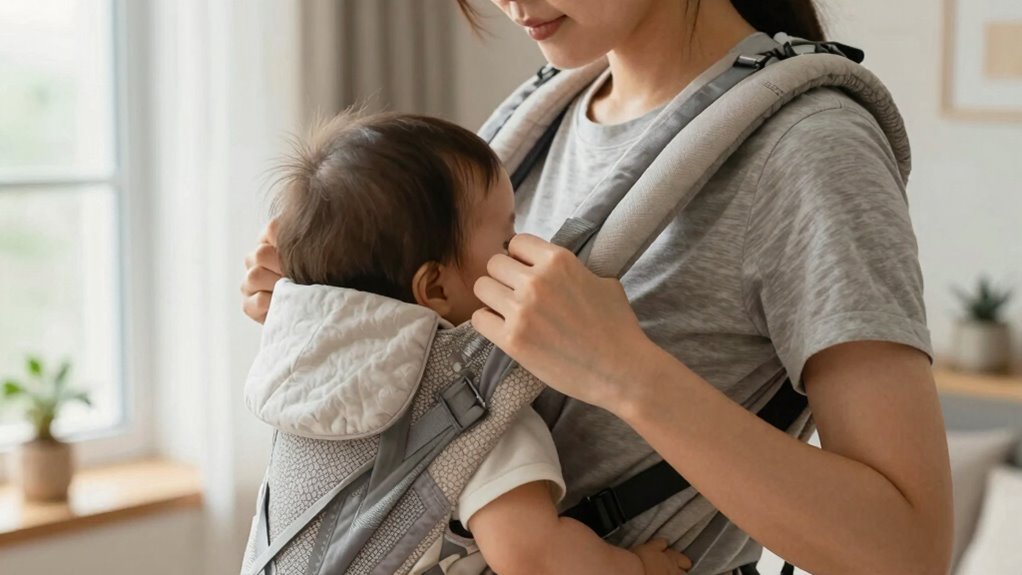
To guarantee your baby carrier fits comfortably and securely, start by adjusting the straps so they’re snug but not tight. Make sure your baby is positioned correctly, with their hips supported and facing the right direction. Finally, check that the carrier is tight enough to hold your baby close without restricting movement or breathing.
Adjust Straps Properly
Getting the straps just right is essential for a comfortable and safe babywearing experience. Properly adjusted straps ensure your baby stays secure and you remain comfortable all day. To achieve the perfect fit, consider these steps:
- Check strap length—make sure straps aren’t too tight or loose, adjusting for your body and your baby’s size.
- Align straps evenly—uneven straps can cause discomfort and may reinforce parenting myths that babywearing isn’t for everyone.
- Keep pace with fashion trends—modern carriers offer sleek designs, but always prioritize fit over style. Remember, some fashion trends can influence how we perceive proper fit, so trust your comfort and safety over fleeting trends. Proper strap adjustment keeps you feeling confident, safe, and connected with your baby.
Position Baby Correctly
Ever wonder if your baby is positioned correctly in the carrier? Proper positioning is key for comfort and safety. Keep your baby’s hips in a natural spread-squat position, with knees higher than their bottom, supporting healthy hip development. Make certain their face is visible and close enough to kiss, with their chin off their chest. This not only improves comfort but also aligns with modern babywearing fashion, where style meets function. Understanding the baby carrier history helps you appreciate how ergonomic designs support this correct positioning. Adjust the carrier so your baby’s back is rounded slightly, mimicking a natural sitting posture. Correct placement reduces strain on both of you, making babywearing more enjoyable and secure.
Ensure Carrier Tightness
Ensuring your carrier is snug enough is essential for both safety and comfort. A properly tight fit keeps your baby secure and prevents slipping, making babywearing safer and more enjoyable. To fix the fit, consider these parenting hacks:
- Adjust straps so they’re firm but not too tight, aligning with current fashion trends that favor sleek, comfortable styles.
- Check the panel to ensure it’s close enough to your body—about an inch or two from your chest.
- Pull the waistband snug around your hips or waist to distribute weight evenly, reducing strain and improving stability.
Tightening your carrier correctly not only boosts safety but also enhances comfort, making babywearing a seamless part of your daily routine.
Common Mistakes That Make Babywearing Uncomfortable: And How to Avoid Them
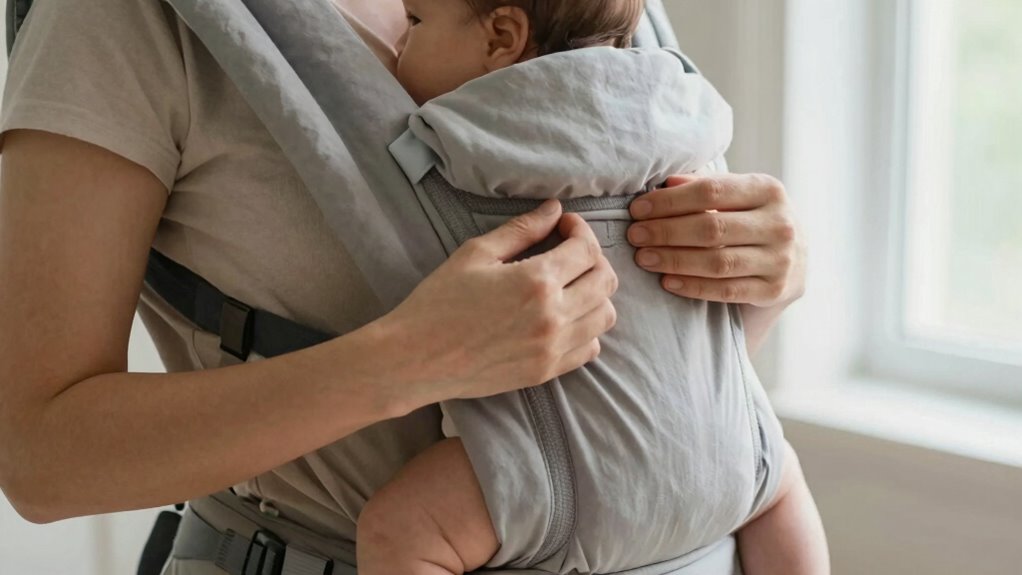
One common mistake that can make babywearing uncomfortable is improper positioning of the baby or the carrier. If your baby isn’t held high enough or if the carrier isn’t snug, it can cause discomfort for both of you. Poor positioning can also lead to back or shoulder pain. Remember, babywearing fashion has evolved, but understanding the history of babywearing helps you appreciate the importance of correct fit and support. Ensuring your baby’s hips are in a healthy, ergonomic position and that the carrier distributes weight evenly will improve comfort. Avoid slouching or loose fittings; instead, double-check that everything is secure and properly aligned. Correct positioning not only makes babywearing more comfortable but also supports your baby’s safety and development.
How Does Proper Babywearing Fit Strengthen Your Bond and Keep Your Baby Safe?
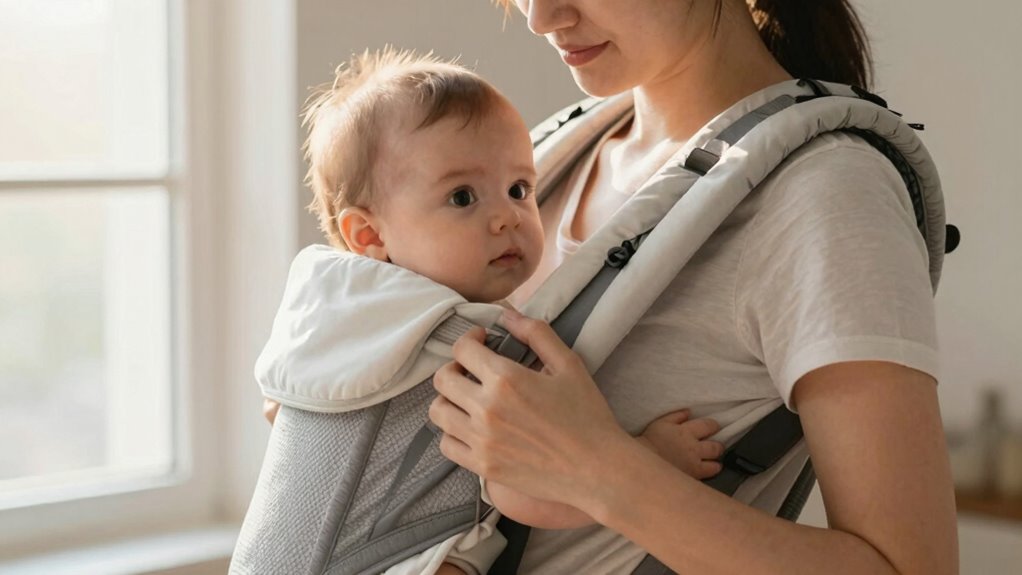
When you properly fit your baby in the carrier, it creates a secure environment that naturally fosters closeness and trust. This strong bond enhances your parenting techniques, making your interactions more responsive and comforting. Correctly fitted babywearing also dispels common babywearing myths, like it being unsafe or uncomfortable, ensuring your baby is always secure.
Here are three ways proper fit strengthens your bond and safety:
- It keeps your baby close, promoting emotional connection and early attachment.
- It allows you to monitor your baby’s cues easily, responding quickly to their needs.
- It ensures safety by distributing weight evenly, preventing discomfort or accidental falls.
Proper fit isn’t just about comfort—it’s essential for nurturing trust and keeping your baby safe.
Tips for Maintaining a Consistently Comfortable Babywearing Experience
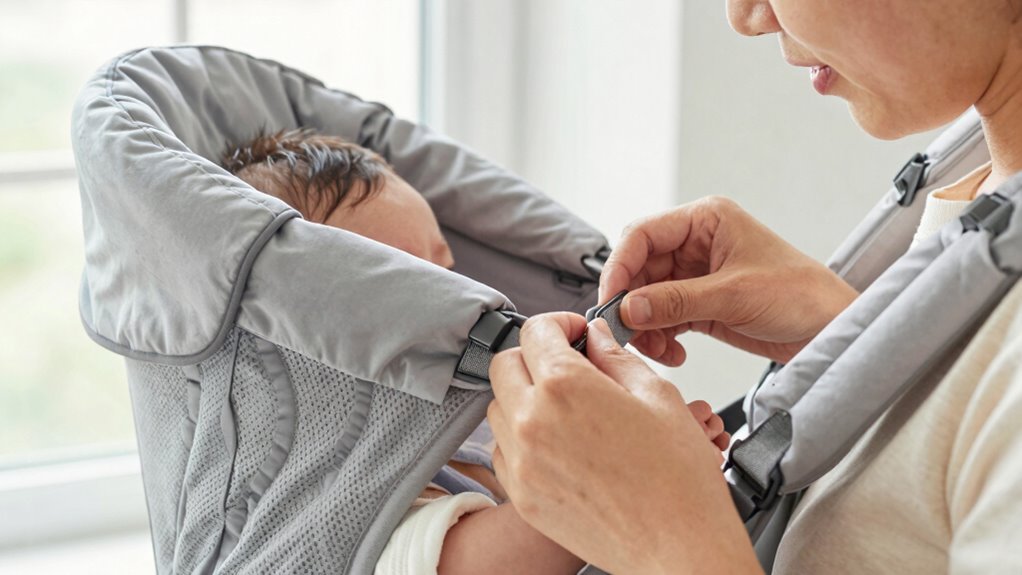
Maintaining a comfortable babywearing experience requires you to pay attention to both your and your baby’s needs regularly. Stay updated on fashion trends, choosing ergonomic carriers that support proper posture for both of you. Avoid parenting myths that suggest tight wraps are best; instead, guarantee your baby is snug but not restricted, with clear airflow. Adjust straps and carriers as your baby grows to prevent discomfort or strain. Regularly check for signs of fatigue or soreness in your shoulders and back, and take breaks when needed. Comfort is key, so prioritize ergonomic designs over fleeting fashion trends. By listening to your body and your baby’s cues, you’ll create a consistent, enjoyable babywearing routine that stays comfortable and supportive over time.
Frequently Asked Questions
What Are Signs of a Poorly Fitted Baby Carrier?
Signs of a poorly fitted baby carrier include discomfort for both you and your baby, such as pinching or slipping straps. If the carrier material feels too tight or loose, or if the ergonomic design doesn’t support your baby’s hips and spine, it’s time to readjust. An ill-fitting carrier can cause strain or poor positioning, so make certain straps are secure yet comfortable, and the design promotes healthy hip development for your little one.
Can Wrong Fit Cause Back or Shoulder Pain?
You might not realize it, but a wrong fit can definitely cause back or shoulder pain. When your carrier isn’t properly adjusted, it compromises ergonomic benefits and strains your muscles. This discomfort is a clear sign you need to improve comfort enhancement by fixing the fit. Ensuring your carrier sits correctly distributes weight evenly, reducing pain and making babywearing more enjoyable for both of you.
How Often Should I Recheck My Babywearing Fit?
You should recheck your babywearing fit every time you put on the carrier, especially if your baby has grown or if you’re feeling discomfort. Regular checks guarantee carrier safety and proper weight distribution, reducing strain. Also, consider fabric breathability—if the carrier feels damp or uncomfortable, adjust the fit or switch to a more breathable material. Frequent rechecks keep both you and your baby comfortable and safe during wear.
Are There Specific Carriers Better for Different Ages?
Think of choosing carriers like selecting different tools for a medieval quest. For newborns, opt for soft, ergonomic carriers that prioritize carrier safety and offer gentle support, like a wrap or ring sling. As your baby grows, switch to structured carriers with sturdy fabric choices for added stability. Always make certain the fit remains snug and comfortable, adapting to your child’s size and developmental stage for safe, comfortable babywearing at any age.
How Does Proper Fit Influence My Baby’s Development?
Proper fit improves your baby’s development by supporting infant motor skills and encouraging natural movement. When the carrier fits well, your baby can move freely, strengthening muscles and coordination. It also enhances bonding opportunities, as close contact fosters emotional connection and trust. You’ll notice your baby feels more secure and comfortable, which promotes healthy growth and development. Ensuring a proper fit makes babywearing both safer and more beneficial for your little one.
Conclusion
Remember, a well-fitted baby carrier is like a well-tuned instrument—perfect harmony guarantees comfort, safety, and a deeper bond. When you address that one key detail, everything falls into place, allowing you to enjoy those precious moments without distraction. Just as a master painter knows each stroke matters, so does your attention to fit. Embrace the small adjustments, and watch your confidence—and your baby’s happiness—rise in harmonious tandem.
Cold & flu season Picks
humidifiers
As an affiliate, we earn on qualifying purchases.